Masei – What do we owe the person who broke something they never meant to break?

Masei spends its final chapters on legal architecture, tribal borders, and inheritance rules. But it also includes the law of the arei miklat, the cities of refuge, built for the person who kills b’shogeg by accident. The neighbor whose axe head flew off the handle. The driver who looked down for just one second.

The Hebrew is doing something specific. Miklat shares a root with klitah, meaning absorption. It’s the word Israel still uses to describe how it takes in immigrants. An ulpan klitah is an absorption center. A city of refuge isn’t a jail cell or a technicality that lets someone off the hook. It’s a place built to take a person in, fully, the way a body absorbs what it’s given.

But the text refuses to keep this simple. The one who fled must remain there, not for a fixed sentence, but until the death of the sitting High Priest, a mortality with no connection to what he did. Step outside the walls before that day, and the victim’s own kinsman, the go’el ha-dam, may kill him without guilt. There is no release date. No parole board, no moment when remorse itself triggers freedom. The clock belongs to no one in the story. Not the guilty. Not the grieving. Not even the community that built the walls.

I think about this law when I’m sitting with people who never swung an axe. The hardest conversations I have as a chaplain are with those left behind after someone they loved has taken their own life. The question always comes, in some form. Why couldn’t I have stopped them? What could I have done differently? The law in Masei is written for the hand that acted. But the ache it names reaches beyond the letter of the text. It reaches the parent who didn’t call back, the spouse who went to sleep instead of staying up, the friend who sensed something was wrong and said nothing. No court can rule on that kind of guilt, because there was no crime. It is its own kind of b’shogeg, harm without intent, and it deserves its own klitah, its own absorption. There is only the unbearable arithmetic of what might have been different, run again and again, with no verdict ever arriving.

We want closure on a schedule, closure being a word that means to shut something. We want five stages of grief with a finish line, a program that promises healing by a set week, and a story the culture is ready to call resolved. Masei suggests some ruptures don’t run on anyone’s calendar. What I have seen console the otherwise inconsolable is not an answer, because there isn’t one. It is something closer to what the city of refuge offered before anyone had ruled on guilt or innocence, before any judgment was handed down. A sacred space of empathy and love. Built to absorb a person exactly as they are, guilt and all, for exactly as long as it takes. No release date there either.

So the harder question isn’t who needs a city of refuge right now. It’s whether we can build one, not to explain away the guilt, but to hold it and stay standing at the gate for as long as someone needs us there.

Parashat Pinchas: Who Told You That Was God?

The most dangerous sentence in religious life is not “God is dead.” It is “God told me to.”

Grant everything. God rewarded Pinchas. The plague stopped. The covenant was real. Let’s sit with that fully, without deflecting into questions of fallacy or anthropomorphism.

Then what?

Parashat Pinchas forces us to ask the question we would rather avoid: how do we distinguish between someone who genuinely heard a divine command and someone who dressed their own violent, irrational certainty in holy language?

Pinchas did not announce a prophecy. He did not consult Moses. He did not wait for the cloud to move. He felt something burning within him, seized a spear, and acted. The text calls it kana’ut, zealotry. And zealotry, by definition, does not pause to ask whether the voice it hears is God’s or its own.

This is not a theoretical problem. Yigal Amir was certain that God wanted Yitzhak Rabin dead and pulled the trigger on Israel’s Prime Minister. The settlers who burn Palestinian villages invoke divine command. The men who flew planes into buildings on September 11th believed, with everything in them, that they were doing God’s bidding. Every act of religious extremism in our lifetime has been committed by someone who felt what Pinchas felt: a burning, urgent, absolute conviction that the holy cause could not wait for process, permission, or the slower work of community discernment.

Pinchas heard God. We have stipulated that. But that settled question raises an unsettled one: what did the rest of us receive when God rewarded him? A record of a single grace, given to a single person in an unrepeatable moment? Or a template, permission for anyone who burns with enough certainty to act without constraint?

The tradition answers this with unusual clarity: it is not a template. The rabbis ruled explicitly that kana’ut cannot be taught, authorized, or legislated. What Pinchas did cannot be commanded because the moment you command it, you hand a weapon to anyone who has ever mistaken their own rage for the voice of God.

But this only sharpens the question. If we cannot rule it out, cannot authorize it, cannot teach it, then how does anyone know, in the burning moment, whether what they feel is revelation or self-deception?

Two traditions offer guardrails. The American tradition answers with the rule of law: no private conviction, however burning, overrides the collective agreement. The Jewish tradition answers with machloket l’shem shamayim, an argument for the sake of heaven. Hillel and Shammai disagreed about nearly everything, passionately, for decades. What made their argument holy was not that one of them was right. It was that neither of them picked up a spear. The argument itself was the faithfulness.

Korach, by contrast, was certain. He even had a point: all Israel is holy; why does Moses alone lead? But his argument was for himself, not for heaven. Certainty in service of the self, dressed in the language of principle, is exactly what kana’ut looks like from the inside. The difference between Hillel and Shammai and Korach is not the passion. It is whether you can stay in the room when you don’t prevail.

Both guardrails say the same thing in different languages: subordinate private certainty to collective process. Neither is sufficient on its own, and neither holds forever.

The law is corrupted. The argument for heaven devolves into paralysis. The judges weep at the entrance to the tent as the plague spreads. This is precisely the condition that makes Pinchas feel righteous, as he confronts a genuine emergency and a genuinely failed institution.

What does the tradition say, then? Not: pick up the spear. But also not: keep weeping. Stay in the argument, even when the argument is failing. Bear witness. Refuse both the violence and the paralysis. What we surrender is the clean story, the one where we acted, the plague stopped, and we knew we were right. What we keep is harder: the argument, the relationship, the refusal to let our certainty become someone else’s catastrophe.

Right now, both are under assault. The rule of law is openly contested by people certain their cause overrides it. The capacity for machloket l’shem shamayim, good-faith disagreement within a shared relationship, is nearly impossible to sustain in a world that rewards the spear and punishes the pause.

That means Pinchas is not an ancient problem we have learned to contain. He stands at the center of this moment, spear in hand, absolutely certain.

The question is not whether we recognize him. It is whether we recognize him in ourselves.

“The most dangerous sentence in religious life is not ‘God is dead.’ It is ‘God told me to.’”

The Palace of Redactions: A Modern Megillah

On Purim, we wear masks to hide our faces. But the Megillah is a story about taking masks off. It is about a world—much like our own in 2026—where wealth and status are the ultimate masks. Behind the silk curtains of Shushan and behind the redacted lines of the Epstein files, the same crime is hidden: the belief that some people are “taken” (lekach) for the pleasure of those who are untouchable. Today, we aren’t just celebrating a victory; we are demanding a revelation.

The Megillah is a crime report of systemic objectification. The “law of the women” (Esther 2:12, Sefaria) turned state-sponsored trafficking into a standardized procedure. This mirrors our modern “Dat” (decree): the Non-Prosecution Agreements and Non-Disclosure Agreements (NDAs) that transformed silence into a contractual obligation. When abuse is cloaked in the law, it becomes invisible.

Neither Ahasuerus nor Epstein acted alone. Ahasuerus relied on seven advisors—the enablers who legalized cruelty to protect the throne and the men in power. Today, we see this in the strategic redactions that shield the powerful while the victims’ trauma remains exposed.

A just society cannot be built on the minimum files the system is willing to release. Our call to action is to mirror Esther’s courage. She moved from being a nameless body to an active agent of justice who acted lo chadat—not according to the “rules” of the elite.

We must demand accountability from the enablers, not just from the predator. Mordecai’s challenge echoes today: “And who knows, perhaps you have attained to royal position for just such a crisis.” (Esther 4:14, Sefaria)

We are called to be the generation that finally tears down the palace walls and unmasks the truth.

May we be blessed with the eyes of Esther, to see through the redactions and masks of our own time. May we be granted the voice of Vashti, to say NO to the commodification of our bodies and our dignity. And may we be filled with the resolve of Mordecai, to understand that our positions of safety are not for our comfort but for the protection of those still trapped behind palace walls.

May the light of truth scatter the darkness of the inner court, and may we see a day when justice is a shared inheritance for all.


Thoughts on our current War-A War of Choice vs. a War of Necessity

The distinction between a war of choice and a war of necessity can be ambiguous. Most individuals fall into one of three categories: support, opposition, or uncertainty.

I find myself in the third category. War is a profoundly destructive force that aims to annihilate and devastate. Beyond the immediate destruction, the future remains shrouded in uncertainty. Which threats are imminent? The question defies a straightforward answer.

The First World War was a precursor to the Second World War, which in turn led to the reconstruction of Europe and the onset of the Cold War.

Explanations justifying the actions of the United States and Israel in the present context are imperative. Congress should have been adequately informed in advance and must exercise its constitutional authority to authorize war. The support of allies is crucial, though not indispensable. However, without their consultation, the partnership’s strength is significantly diminished.

Once the initial damage is done, it is time to transition to the next phase. If a complete repair is not undertaken, we risk fomenting another round of dissatisfaction and hatred, perpetuating the cycle indefinitely.

I earnestly desire peace, not merely the cessation of war but the capacity to coexist harmoniously despite our differences, marked by empathy, respect, and mutual understanding. Then, might the path forward be hopeful.


Do You Care?

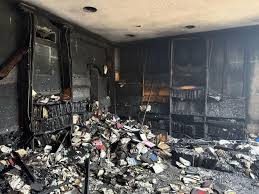
We are horrified that Temple Beth Israel in Jackson, MS, was firebombed. It is a violent act of hatred targeting Jews. As antisemitism continues, we find ourselves vulnerable and seeking support.

The community of Jackson, MS, has rallied around its Jewish community in wonderful ways. Many of us, however, feel abandoned by others across the country who have not expressed support for their local Jewish communities amid escalating threats. This is counterproductive, creating divisions and exacerbating tensions where they should not be.

Sadly, there is too much violence and hatred. It is impossible to respond to every incident. The Jewish communities could not meet that standard either. We would spend substantial time issuing statements of outrage and comfort instead of devoting ourselves to the important work of uniting against these blights and working toward changes in our society to create a safer space for all.

Too many understand the pain, often through lived experience. We need solidarity and action, not just words.


Chanukah

We prepare for the first night of Hanukkah, deeply shaken by the murderous assault on Bondi Beach and at Brown University.

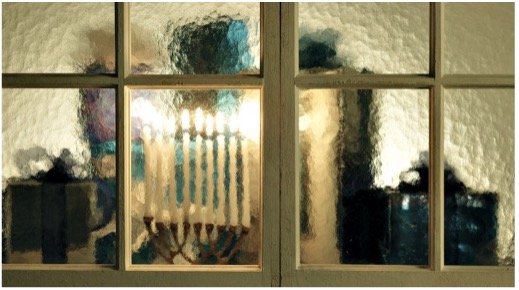
The wanton hatred and violence are almost overwhelming. But we must find a way to gather this evening around our chanukiot, light our candles, place them in the window, and be with each other, letting the miracle of rededication take hold with an additional layer of meaning, overcoming the darkness of the moment and shining a light of love and hope.

Chag Urim Sameach,

Rabbi David Levin

President

The Board of Rabbis of Greater Philadelphia


The Dead Child- a prayer from the ashes of October 7

As we remember the horror of October 7 and the aftermath, the words of Menachem Rosensaft bring us a somber resonance. Let this day of remembrance stir us to mercy for the child, not because we doubt our cause, but because we cherish our conscience.

“the dead child

in gaza city

khan younis

rafah

is cried over

with the same tears

by the same God

the same Allah

the same Adonai

as the dead child

in kfar aza

nahal oz

be’eri

and it is

for the not yet dead child

palestinian child

israeli child

muslim child

jewish child

that the killing must end

the war must end

the terror must end

the hatred must end”

—Menachem Rosensaft, from Burning Psalms: Confronting Adonai after Auschwitz (Ben Yehuda Press, 2025)


Children slaughtered again

What does it say about a society that allows, even supports, the murder of its children? That society is headed to Hell, if it isn’t already there.

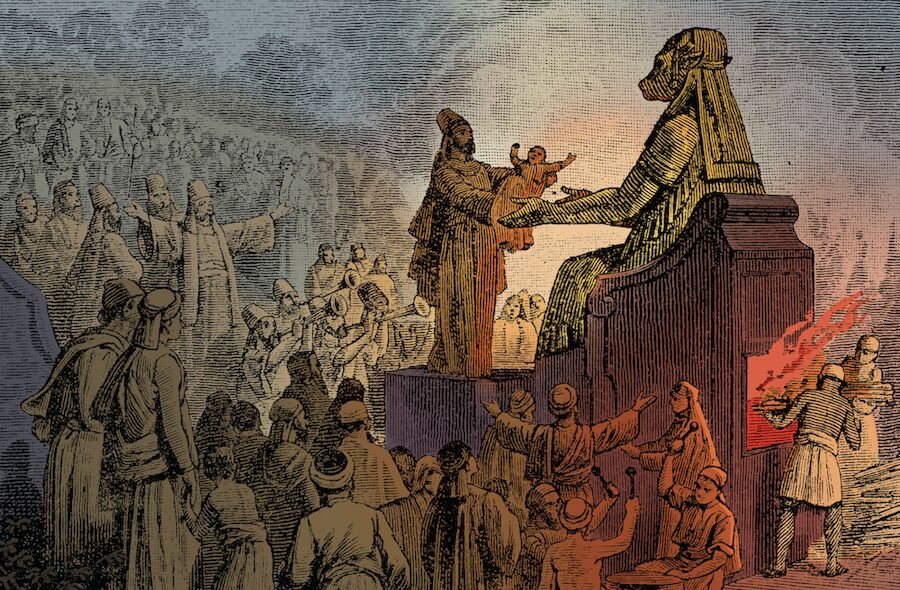
In biblical times, the Valley of Hinnom was a place where people practiced child sacrifice to the god Molech. The name of that place became Gehenna, which is now synonymous with Hell.

As strange as it may seem, we appear to accept child murder. The ways to prevent it are within our reach. However, we prefer to keep the right for people to wield deadly weapons unfettered rather than to protect the lives of our youth. Once again, a disturbed individual obtained guns, brought them to a church, and slaughtered children while they were praying. Two dead, 17 injured. It is almost incomprehensible, but true. It is another episode of the carnage of our kids by guns.

Furthermore, we are to blame.  The blood of those innocent children is on our hands because we refuse to enforce oversight to keep guns out of the hands of people who do such heinous things—shame on us.

There is something profoundly wrong here. A society that accepts child murder as the price of freedom to bear arms has a name. Welcome to Hell.

What does it take for fear to be overcome by courage?

What does it take for fear to be overcome by courage? To dare, to risk, and to fight for what you believe in rather than cower?

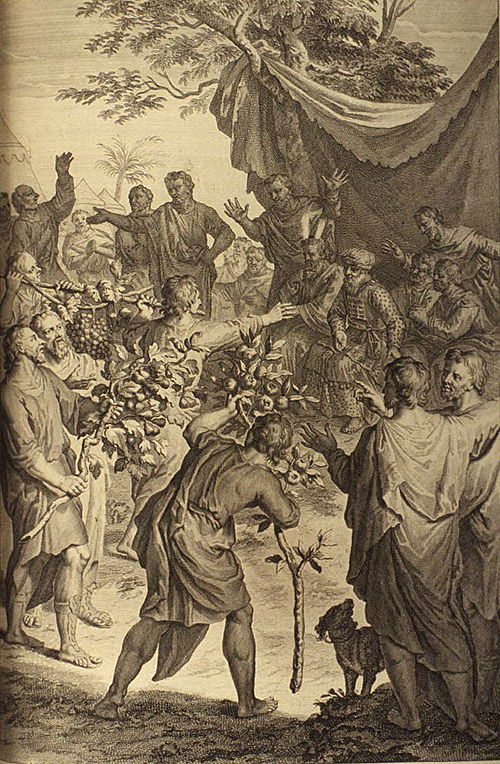
The recent Torah portion Shlach begs these questions. Shlach, translated as “Send,” narrates the story of the 12 spies. As you recall, the unit was dispatched on a reconnaissance mission to survey Canaan. They returned with tales of a bountiful land, but one inhabited by giants, making it seem impossible to conquer. Only Caleb and Joshua believed that the Israelites could be victorious, but they were overruled.

Fear gripped the spies; the Giants were too formidable, and their fear raised paralyzing questions. Perhaps they thought—we could live without realizing the promise of the land; maybe we could make do in Mitzrayim or confined spaces. The reticence of these people exploited the vulnerabilities of this nascent nation. They defeated themselves before they were ever tested. Their doubt in themselves, their destiny, their values, and indeed their God meant that this entire generation of recently freed people needed to be replaced by those whose spirit and strength were forged by the trials and tribulations of the harsh Midbar or desert. This spirit and strength are the answers to my initial question: what does it take to overcome fear with courage?

With this strength and spirit, you know in your heart that what you possess and believe is worth fighting for and to have enough faith and courage to take the next step even into the unknown. At the same time, you remain true to your values and morals despite the horrors of warfare, facing the battle with bravery yet not losing your soul in the fog of war.

Now is the time for us moderns to embrace these lessons. More than ever in our recent history, we need to lean into our values — the things we love deeply enough to champion and fight for.

For Israel, the boldness and cunning displayed—from exploding pagers and covert Mossad agents to an aggressive air strike aimed at preemptively striking Iran, a country whose nuclear ambitions threaten Israel—are significant. It is crucial to understand that waiting and hoping, along with economic sanctions, are not always the correct responses. However, it is also necessary to honestly recognize that the costs of this fight will be high, both in lives and resources. Staying morally superior during battles against a stubborn enemy has been especially difficult during the war in Gaza.

And just like there, we face challenges here as well. Domestic rabid Jew-hatred must unite us. We must stand up for our right to live freely, securely, and safely in the United States, a land of great abundance and blessings. We will not cower in silence or fear.

This is the time to stand up and defend our values because this is our home. To those who hate Jews or anyone labeled as “the other,” we fight for the fundamental rights that form the foundation of this great country, both for ourselves and everyone else, to protect the principles of equality, justice, and liberty. The hopes of our people and our traditions are at risk, but we cannot back down.

As Americans and Jews, much is at stake. Indeed, maybe everything is at stake. The fear of the unknown cannot silence us, nor can it allow us to disregard our sacred values and act with impunity against perceived threats. By standing together and believing in ourselves, each other, and the sacredness of our tradition’s values, we will be strong, and we will prevail—Chazak v’Umatz, strength, and courage.

Barukh atah adonai eloheinu melekh ha’olam asher kidshanu b’mitzvotav v’tzivanu la’asok betzorkhei tzibur.

Blessed is the Eternal One who commands us to work on behalf of the needs of our community.

Amen


United

Rabbi Adrienne and I first met at Temple Micah years ago when we shared the High Holidays there in Lawrenceville, NJ. It was wonderful to see her again at the United for Security Emergency Leadership Mission in Washington, D.C., last week. Our smiles show the joy of reconnecting, but they also mask the urgent issues facing the American Jewish community. This is a time for us to come together, setting aside denominational differences, and recognizing that we are all part of the larger community of Am Yisrael.  This national fly-in was to advocate on the Hill for increased funding for security and a commitment to

With Congressman Brendan Boyle

fighting Antisemitism.

We hope our advocacy efforts helped Congress and the Senate understand the unacceptable risks to our community and encouraged them to take action to protect us from those who mean us harm.