What Are We Willing to Believe?-Parashat Shelach

The ten spies weren’t lying. That’s what makes Parashat Shelach so difficult to sit with.

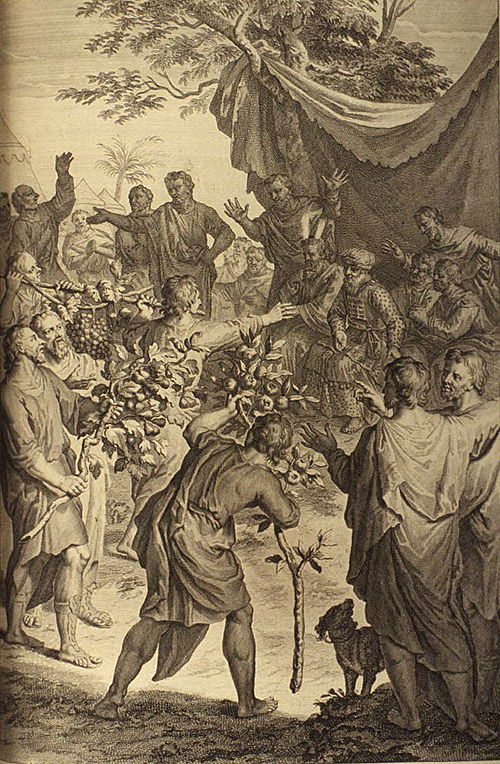
They went. They looked. They came back and reported exactly what they saw: a land flowing with milk and honey, yes, and also giants and fortified cities. And as we so often feel, they add: we felt like grasshoppers in our own eyes, and so were we in theirs. Numbers 13:33.

This is not dishonesty. It is about perception.

It is also a deeply human thing. The spies were not weak people. They were the chosen leaders of their tribes, sent precisely because they were capable. And yet standing before the walls of Canaan, something in them collapsed inward. The text doesn’t tell us why. It doesn’t need to. We know why. We have felt it ourselves. Fear has a way of shrinking our self-image before we have had a chance to act. We look at what is in front of us and conclude, before taking the first step, that we are not enough. The journey’s end is determined. Before they ever walk into Canaan.

The word for spies in the Torah is meraglim, from the root regel, foot. They were sent to walk the land. To touch it. To feel its soil. But what the ten spies brought back wasn’t the earth. It was their terror, projected onto the landscape. They looked at the land through the lens of their own smallness and concluded that the smallness was the land’s fault.

This is not a report on Canaan. It is a teaching about how fear shapes what we are capable of seeing.

Caleb and Joshua walked the same hills and tasted the same grapes. They came back with a different report, not because they were braver or stronger, or had seen something the others had not. They came back differently because they remembered differently. They carried with them the sea splitting, the manna falling, the cloud by day and the fire by night. They understood that they had not arrived at this border by their own strength alone. That memory, of miracle, of deliverance, of promise fulfilled along the way, gave them a self-image the ten could not sustain. They looked at what stood before them and saw not the size of the obstacle but the fullness of what they were capable of becoming.

Fear doesn’t lie to us about what’s in front of us. It lies to us about what we’re capable of.

B’nai Yisrael. In their fear, they condemned themselves to forty more years of wandering. Not as divine punishment but as the consequence of having decided before the battle was joined that they had already lost. You cannot enter a land you have already surrendered in your imagination.

We have all stood at the edge of a promise, one made to us, or one we made. And the voice insisting the battle is already lost before it has begun is most often our own.

We each carry more proof of what we have survived than fear would have us remember.

The giants are real. That was never the question.

The question is whether you are willing to believe in yourself enough to walk through your fear anyway.
What does it take for fear to be overcome by courage?

What does it take for fear to be overcome by courage? To dare, to risk, and to fight for what you believe in rather than cower?

The recent Torah portion Shlach begs these questions. Shlach, translated as “Send,” narrates the story of the 12 spies. As you recall, the unit was dispatched on a reconnaissance mission to survey Canaan. They returned with tales of a bountiful land, but one inhabited by giants, making it seem impossible to conquer. Only Caleb and Joshua believed that the Israelites could be victorious, but they were overruled.

Fear gripped the spies; the Giants were too formidable, and their fear raised paralyzing questions. Perhaps they thought—we could live without realizing the promise of the land; maybe we could make do in Mitzrayim or confined spaces. The reticence of these people exploited the vulnerabilities of this nascent nation. They defeated themselves before they were ever tested. Their doubt in themselves, their destiny, their values, and indeed their God meant that this entire generation of recently freed people needed to be replaced by those whose spirit and strength were forged by the trials and tribulations of the harsh Midbar or desert. This spirit and strength are the answers to my initial question: what does it take to overcome fear with courage?

With this strength and spirit, you know in your heart that what you possess and believe is worth fighting for and to have enough faith and courage to take the next step even into the unknown. At the same time, you remain true to your values and morals despite the horrors of warfare, facing the battle with bravery yet not losing your soul in the fog of war.

Now is the time for us moderns to embrace these lessons. More than ever in our recent history, we need to lean into our values — the things we love deeply enough to champion and fight for.

For Israel, the boldness and cunning displayed—from exploding pagers and covert Mossad agents to an aggressive air strike aimed at preemptively striking Iran, a country whose nuclear ambitions threaten Israel—are significant. It is crucial to understand that waiting and hoping, along with economic sanctions, are not always the correct responses. However, it is also necessary to honestly recognize that the costs of this fight will be high, both in lives and resources. Staying morally superior during battles against a stubborn enemy has been especially difficult during the war in Gaza.

And just like there, we face challenges here as well. Domestic rabid Jew-hatred must unite us. We must stand up for our right to live freely, securely, and safely in the United States, a land of great abundance and blessings. We will not cower in silence or fear.

This is the time to stand up and defend our values because this is our home. To those who hate Jews or anyone labeled as “the other,” we fight for the fundamental rights that form the foundation of this great country, both for ourselves and everyone else, to protect the principles of equality, justice, and liberty. The hopes of our people and our traditions are at risk, but we cannot back down.

As Americans and Jews, much is at stake. Indeed, maybe everything is at stake. The fear of the unknown cannot silence us, nor can it allow us to disregard our sacred values and act with impunity against perceived threats. By standing together and believing in ourselves, each other, and the sacredness of our tradition’s values, we will be strong, and we will prevail—Chazak v’Umatz, strength, and courage.

Barukh atah adonai eloheinu melekh ha’olam asher kidshanu b’mitzvotav v’tzivanu la’asok betzorkhei tzibur.

Blessed is the Eternal One who commands us to work on behalf of the needs of our community.

Amen