From Grief to Geulah-Holding mourning and miracle in the same breath

No other nation on earth asks its people to do what Israel asks each spring: to sit in the ashes of devastating loss on one day, and dance in the streets the next. Yom Hazikaron — Israel’s Day of Remembrance for fallen soldiers and victims of terror — flows directly, by design, into Yom Ha’atzmaut, Independence Day. The transition is not an accident of the calendar. It is a theological statement.

In Israel, when the siren sounds, an entire country stops — on highways, in markets, mid-sentence. Over 24,000 soldiers and thousands of civilians are remembered not as statistics but as names and faces, beloved. Then, within hours, fireworks rise over the same sky. The whiplash is intentional. Joy built on forgotten grief is shallow. And grief without the horizon of hope becomes a tomb.

During my year as a rabbinical student in Jerusalem, I had the privilege of standing on Har Herzl, Mount Herzl, Israel’s national cemetery, for the ceremony that bridges these two days. There, among the graves of soldiers and statesmen, surrounded by thousands of Israelis, young and old, grief transformed in real time. The final notes of the memorial prayers gave way to the lighting of the torches, and the air itself seemed to shift. It was not that the sadness lifted; rather, hope rose to stand alongside it. I experienced more than a transition. This is a theology. In that moment, the narrative of the Jewish state and the narrative of my own Jewish heart were woven together into a whole cloth; each thread distinct yet inseparable from the other.

That sequence — lived in the body, not merely studied in a book — is the pedagogy. You cannot fully understand Yom Ha’atzmaut without first standing in the silence of Yom Hazikaron. The independence feels different when you know what it cost.

We are not asked to choose between memory and celebration. We are asked to hold both and to let the weight of one lend depth to the other.

As American Jews, we stand at a particular intersection in these days. We did not lose children in those wars. We were not present for 1948’s desperate birth, 1967’s breathtaking turn, or October 7th’s shattering grief. And yet, we are not strangers. Israel is not a foreign country to the Jewish soul. It is the address of our deepest longings, the landscape of our prayers, and at the core of our peoplehood.

These two days invite us into belonging, not as spectators but as members of an ancient family. To observe Yom Hazikaron is to say: their loss is part of our story. To celebrate Yom Ha’atzmaut is to say: their miracle is part of our story, too. The spiritual architecture of this sequence teaches us that meaning is forged at the intersection of sorrow and hope. This is the Jewish way. This has always been the Jewish way.

May we honor those who fell, celebrate what they made possible, and carry both truths — as one people, from wherever in the world we stand.

 

The Empty Chair at the Chessboard: Why the Influence Narrative Fails


The persistent claim that American foreign policy is being dictated by Israeli pressure regarding the Iranian regime is as common as it is misguided. However, my frustration with this narrative isn’t rooted in a defense of the special relationship of the United States and Israel. Rather, it stems from a refusal to acknowledge a much more uncomfortable truth: the current chaos in the Middle East is not the result of a Jewish conspiracy, but a symptom of Donald Trump’s reckless, superficial, and dangerously transactional leadership.

To suggest that an ally can force the United States into a conflict against its own will is a profound admission of American weakness. It paints a picture of a superpower without a rudder. If the administration is being led into a fight, it isn’t because of the strength of the lobby in Washington; it is because of a vacuum of leadership in the Oval Office.

There are legitimate reasons to debate the extent of U.S. involvement in this region. Many of us remain deeply ambivalent—caught between a sincere desire for peace and a cold-eyed recognition of the threat the Iranian regime poses to Western stability. How imminent that threat is remains a valid question for debate. Israel, facing an existential threat on its doorstep, has its own compelling reasons to seek regime change—a position Benjamin Netanyahu has held for three decades. He is a leader seizing a strategic opportunity for his nation’s survival.

While the United States and Israel may share the broad goal of a neutralized Iran, their specific national interests are not identical. A strong American president would recognize these overlapping interests while maintaining a firm grip on the U.S. strategic compass. Instead, we see a Commander-in-Chief who has consistently approached a high-stakes geopolitical chess match with the mindset of a checkers player.

The tragedy here isn’t that we’re being bullied into a fight we didn’t choose. The real tragedy is that we have a leader who is fundamentally unqualified to operate in a world where the U.S. has historically been the stabilizing superpower. By acting on impulse and self-interest instead of broad strategy, the administration has created havoc that our allies must endure and our enemies can exploit.

If we believe another country can truly force the United States to do its bidding, it confirms our worst fears: that the most powerful man in the world is also the most impulsive and easily swayed. We deserve more than a presidency that acts as a series of erratic transactions. We deserve leadership that understands the weight of its authority and the complexities of the world it aims to lead.

NB. I do not normally write about politics, however, given the current conspiracy claims regarding Israel and the war, I thought this was necessary. ~ Rabbi David Levin


What’s in a name?

Genocide is a highly charged word.

In Shakespeare’s Romeo and Juliet, Juliet asks, ‘What’s in a name?’ Names are simply labels we use to identify things, but the true nature of those things exists regardless of what we call them. Genocide is a highly charged word. We get so caught up in the word and all of the intense emotional baggage it carries that we forget the underlying tragedy: it is an attempt to understand what is happening in Gaza.

One side calls it a genocide; the other disputes that term, accusing the accusers of deliberately misusing the word, targeting the victims of such an experience as if they were the perpetrators of that very same horror. We get caught up in definitions, a kind of territorialism, claiming ownership of that word, and in doing so, we completely miss the point.

The people suffering in the war in Gaza are truly experiencing pain. It’s not just about numbers—whether it’s one person or many—innocent victims of the Hamas-Israel conflict have died. They go hungry. They are homeless. They are victims. Although I do not trust the statistics from the Gaza Health Ministry, there’s no way to measure the full extent of the carnage accurately, and Hamas’s role in this is dehumanizing Palestinians, echoing what the Nazis did to Jews.

We must navigate this challenging space and find ways to offer humanity and hope that we were denied, and, sadly, to the Palestinians as well. From the ashes of Auschwitz, we proclaimed Never Again. Was this declaration meant only for us? Our Jewish duty to be a light to the nations requires that it not be. We must uphold our tradition’s promise by maintaining our humanity and embracing the virtues of Pirkei Avot (2:5); in a world that has no worthy men, strive to be a man.

Whatever you call it, the war and anguish must end.


Difficult and loving conversations about Israel

I had the honor of moderating a conversation for the New Israel Fund (NIF) at Beth Am Israel, located on the Main Line in suburban Philadelphia.

Our speakers, Rabbi Noa Sattath and Libby Linkenski are dedicated to fostering a shared society that upholds our Jewish values. Our values endure, even in challenging times like these, when they are stressed and tested as rarely before in our history. Indeed, our values are more important than ever for maintaining perspective. Libby shared three points to remember as we navigate these difficult times:

  1. People are not their governments. 

Palestinians are not Hamas. Israelis are not Benjamin Netanyahu. Americans are not Donald Trump. We are more than the actions of our extremist leaders and are not directly complicit in their worst acts.

  1. Don’t defend the indefensible. 

The conflict didn’t begin on October 7, and October 7 itself was indefensible. So is the ongoing assault on the people of Gaza. We can’t lose our moral clarity, regardless of politics.

  1. Two peoples, one land. 

Two peoples have always existed between the river and the sea, and both will continue to exist. Any vision that erases one side is a vision of unimaginable violence. The question is not whether we coexist but how. That’s where the conversation begins—and where it must end.

We must continue working to lay the foundation for a future where both people can live with dignity and security.


Free Palestine

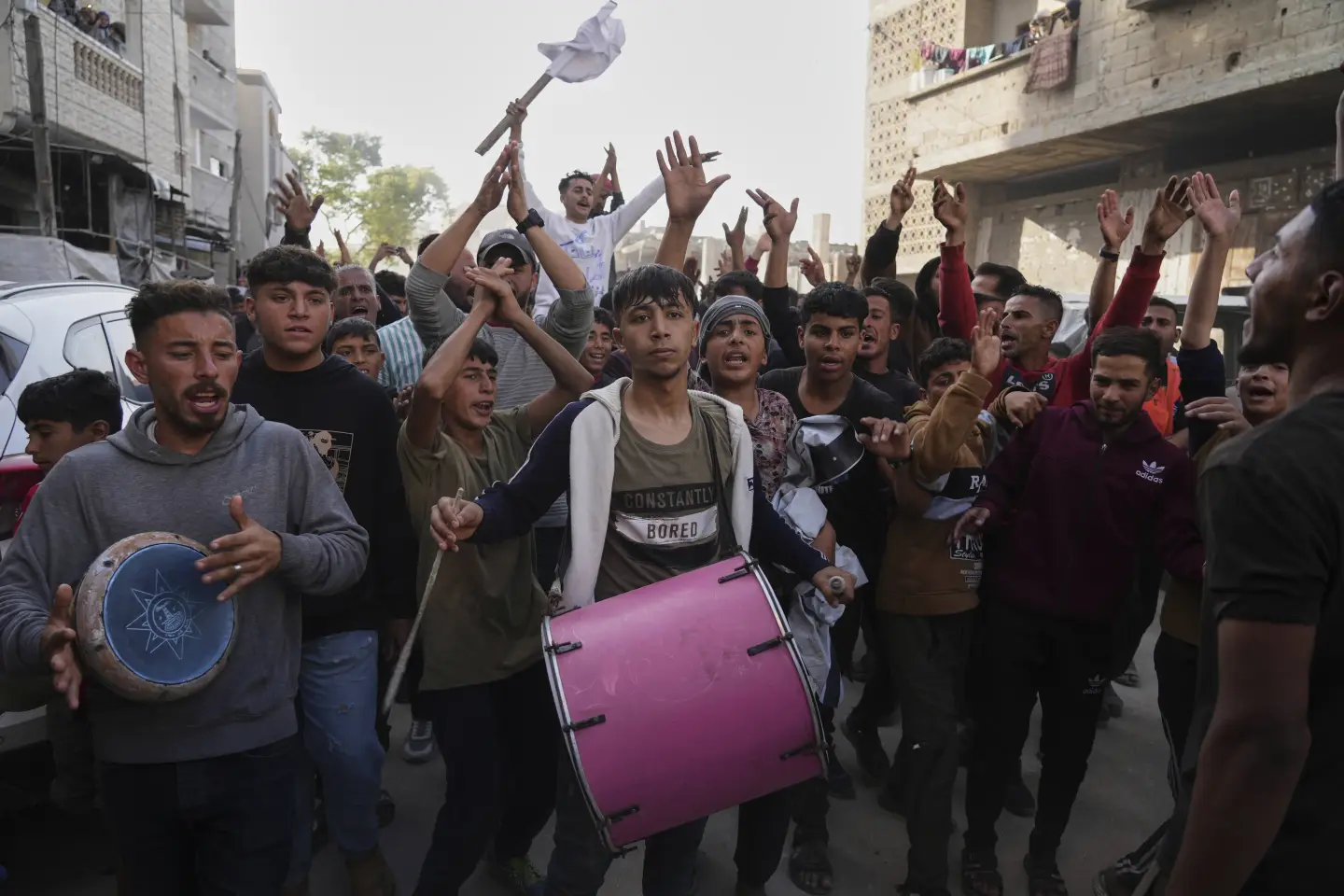
AP Photo/ Jehad Alshrafi

We are witnessing the most extraordinary acts of courage.  Thousands of Palestinians are in the streets demanding an end to the war and an end to the brutal Hamas regime.  Knowing the severe punishment for this act of defiance by tyrants, they are protesting the horrors they endure.

Such bravery is rarely displayed; we must move quickly to bolster this movement before it is brutally repressed and these leaders killed.

These individuals are the ones with whom peace can be achieved.  These Palestinians are ready to fight for their rights with a passion that recognizes the longing for a future for their children and surpasses the ideology that exploits them as instruments of war in support of a distorted Hobson’s choice of endless death and destruction.

We have a vested interest in helping these people by strengthening their voices through aid and security, providing them with a foothold and a respectful path to self-rule with dignity and safety alongside their neighbor, Israel.

Palestinians have been victimized for far too long.  The perpetuation of their refugee status on their land is unacceptable.  These people have been subject to the manipulation of outside powers seeking political regional hegemony and the destruction of the State of Israel.  It must come to an end.  Now.

The United States and countries in the region all recognize the value of peace.  There are Palestinians courageous enough to advocate for peace, even in these incredibly difficult times.  We must support them.

Disastrous Brinksmanship

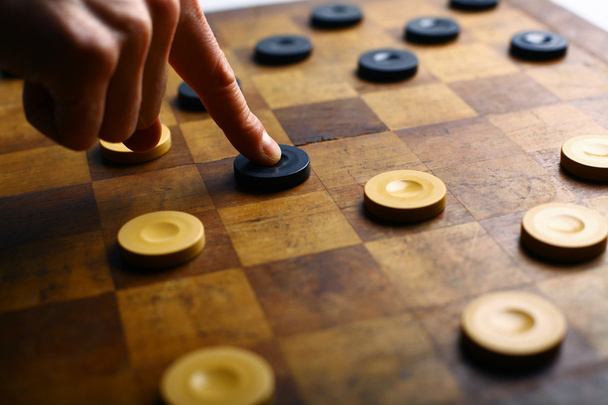
Color shot of a vintage draughts or checkers board game.

On the checkboard of foreign policy, we are careening to a terrible end.

Hamas’ delay of the planned hostage release this week, combined with the horrible physical condition of the returned hostages, outraged Trump to set a Saturday deadline for the return of all hostages or else.  Netanyahu, already under internal pressure, has now threatened the resumption of brutal war in Gaza.  This leaves two options for Hamas:  capitulate to the threats or defy them.  Defiance likely would be killing some or all of the hostages.

Although Hamas does not respect human life, sending the message of defiance is the only opportunity to demonstrate resilience and, in the opinions of many, victory.  The hostages and the Palestinians will be readily sacrificed in the name of ideology.

This is a dangerous game, ultimately without winners, only losers. Hopefully, leaders will step forward to pull back from the precipice. This requires courage, a bold vision for moving forward, and the support of countries genuinely interested in peace.

Stop the Genocide-Sue for Peace!

Although there is not a Genocide happening in Gaza, there is devastating suffering and death.

It can be stopped immediately.  Declare peace.  Accept the existence of Israel and Return the hostages.  You can immediately focus on building a State of Palestine, and most of the world’s nations, including Israel, will support the enterprise.   Outside forces of hegemony and oppression (Hamas, Iran, Hezbollah) that have imposed themselves are back on their heels, allowing Palestinians an opportunity for self-determination that has not been seen since 2000 at Camp David.

This is a pragmatic solution.  Israel exists.  Whether you question Israel’s legitimacy will not make the nation go away.  Remaining belligerent only continues the harm to both Israelis and Palestinians.  Negotiations are fraught.  Negotiating requires leaving some things behind in exchange for other things we determine are more critical.  Peace and a Sovereign State would be two extraordinary wins for the Palestinians. Peace is the only way for our children to know something beyond hatred and death.

It is time.

May you be protected

To all of my friends and family in Israel, I wish you safety.

We all understand the certainty of this uncertain situation. Iran’s response to the Haniyeh assassination could be on Tisha B’Av, or it could be tomorrow, but regardless of the date, it will be.

May you be protected by the IDF and all the defensive systems. May the United States stand shoulder to shoulder, and may many others seeking to limit the destruction also step into the breach.

This is a difficult time, and I wish I could do more than pray, but that is what I have to offer for now.

Chazak v’umatz

May the Divine spread Your canopy of Peace over us, over all the people Israel, and over Jerusalem

Baruch atah Adonai, ha-poreis sukkat shalom aleinu v’al kol amo Yisrael, v’al Yerushalayim


Waiting for the other shoe to drop

Israel made it clear that it was prepared to engage in a broader war.  Targeted attacks, particularly the one that assassinated Haniyeh in Tehran, sent an unambiguous message.

The recent barrage from Iran in the conflict’s latest phase serves as a stark reminder that Iran and its allies are equally committed to intensifying the fight.

We sit on the edge.  The words of reprisal portend a substantial response intended to be punishing.

Despite the current turmoil, the potential for peace is not lost.  Coexistence, though distant, is not unattainable.

As we enter Shabbat, let us find solace in this sacred moment and fervently pray for the peace of Shabbat to soon embrace us all.

Shabbat Shalom