Masei – What do we owe the person who broke something they never meant to break?

Masei spends its final chapters on legal architecture, tribal borders, and inheritance rules. But it also includes the law of the arei miklat, the cities of refuge, built for the person who kills b’shogeg by accident. The neighbor whose axe head flew off the handle. The driver who looked down for just one second.

The Hebrew is doing something specific. Miklat shares a root with klitah, meaning absorption. It’s the word Israel still uses to describe how it takes in immigrants. An ulpan klitah is an absorption center. A city of refuge isn’t a jail cell or a technicality that lets someone off the hook. It’s a place built to take a person in, fully, the way a body absorbs what it’s given.

But the text refuses to keep this simple. The one who fled must remain there, not for a fixed sentence, but until the death of the sitting High Priest, a mortality with no connection to what he did. Step outside the walls before that day, and the victim’s own kinsman, the go’el ha-dam, may kill him without guilt. There is no release date. No parole board, no moment when remorse itself triggers freedom. The clock belongs to no one in the story. Not the guilty. Not the grieving. Not even the community that built the walls.

I think about this law when I’m sitting with people who never swung an axe. The hardest conversations I have as a chaplain are with those left behind after someone they loved has taken their own life. The question always comes, in some form. Why couldn’t I have stopped them? What could I have done differently? The law in Masei is written for the hand that acted. But the ache it names reaches beyond the letter of the text. It reaches the parent who didn’t call back, the spouse who went to sleep instead of staying up, the friend who sensed something was wrong and said nothing. No court can rule on that kind of guilt, because there was no crime. It is its own kind of b’shogeg, harm without intent, and it deserves its own klitah, its own absorption. There is only the unbearable arithmetic of what might have been different, run again and again, with no verdict ever arriving.

We want closure on a schedule, closure being a word that means to shut something. We want five stages of grief with a finish line, a program that promises healing by a set week, and a story the culture is ready to call resolved. Masei suggests some ruptures don’t run on anyone’s calendar. What I have seen console the otherwise inconsolable is not an answer, because there isn’t one. It is something closer to what the city of refuge offered before anyone had ruled on guilt or innocence, before any judgment was handed down. A sacred space of empathy and love. Built to absorb a person exactly as they are, guilt and all, for exactly as long as it takes. No release date there either.

So the harder question isn’t who needs a city of refuge right now. It’s whether we can build one, not to explain away the guilt, but to hold it and stay standing at the gate for as long as someone needs us there.

Chukat-Balak: We rarely know what someone was holding for us until it’s gone.

We rarely know what someone was holding for us until it’s gone.

That is not a metaphor. The Talmud teaches (Ta’anit 9a) that a well of living water, Be’er Miriam (Miriam’s Well), traveled with Israel through the wilderness because Miriam could find water. Not through magic, but through a capacity she possessed, an instinct for locating what sustains life even in the harshest terrain.

And then she died. And no one else knew where to look.

What follows is painful to read. The people howl at Moses. God tells him to speak to the rock. Instead, Moses, exhausted and grieving, strikes it. Twice. Water pours out. And Moses is told he will never enter the Promised Land. Not because he struck a rock, but because he couldn’t demonstrate what Miriam had demonstrated for decades: that the desert holds life within it, waiting to be invited out.

The question I keep returning to is not why Moses failed. It’s why no one had learned what Miriam knew. Who had been watching? Whose hands had been placed alongside hers?

Later in the passage, when the Israelites follow the foreign god Baal Peor, whose very name means “to lay bare, to be exposed,” I wonder whether this is what happens to a people who have lost their inner compass. Not weakness. Exposure. The kind of vulnerability that comes from having nothing to hold on to.

This Shabbat, I want to hold three questions with you. Who have we been teaching? What are we actually passing on, not the titles but the capacities? And can we trust, even in the middle of the wilderness, that what comes next can be good?

I hope to see you.

עוֹשֶׂה שָׁלוֹם בִּמְרוֹמָיו הוּא יַעֲשֶׂה שָׁלוֹם עָלֵינוּ וְעַל כָּל יִשְׂרָאֵל וְעַל כָּל יוֺשְׁבֵי תֵבֶל וְאִמְרוּ אָמֵן


We continue to pray for peace in the Middle East, a region that has endured war for too long; and we pray for the safety of our troops. May they stay safe and return home soon.


Chanukah

We prepare for the first night of Hanukkah, deeply shaken by the murderous assault on Bondi Beach and at Brown University.

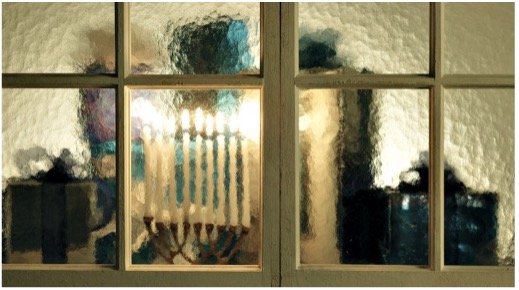
The wanton hatred and violence are almost overwhelming. But we must find a way to gather this evening around our chanukiot, light our candles, place them in the window, and be with each other, letting the miracle of rededication take hold with an additional layer of meaning, overcoming the darkness of the moment and shining a light of love and hope.

Chag Urim Sameach,

Rabbi David Levin

President

The Board of Rabbis of Greater Philadelphia


We still wait for the return of all

I have had an electric candle burning in the window of my study as a way to publicly share my prayers for the return of the hostages.

With the return of the 20, I initially unplugged the candle but quickly realized we cannot forget those who died in captivity. We want them back and hope that this cynical act by Hamas is not the last word. The agreement was to return everyone. We still wait for the return of the rest, and my candle will burn to help remember.

#BringThemHomeNow

We mourn the loss of Pope Francis

The world mourns the passing of Pope Francis.  He was an extraordinary and holy man. At the age of 88, it is difficult to consider his death untimely, yet indeed, it feels that way.  His pursuit of love remains a lesson unfulfilled despite his tireless efforts to lead the world toward such a place.

Naomi and I had the privilege of an audience with the Pope while in Rome a few years back.  The charismatic presence was matched only by the exuberance of a faithful crowd. The encounter was memorable and moving.

His work on behalf of the poor and the suffering in the pursuit of peace and love was incredible, a mixture of Herculean and Sisyphean.  But as our sage, Rabbi Tarfon shares in Pirkei Avot, although we may never complete the task, we cannot desist from it.  Pope Francis leaned into the daunting, hard work of bringing a voice to the voiceless and the best values of the Church as a beacon into the darkness.

May his soul be bound in everlasting life.  May he rest in Peace.