Keep your eye on the ball – Focus on the Truth

The truth is hard to find. We often argue over the “what happened” instead of searching for the real truth.

Hunger in Gaza is real. Accusations of false pictures or the number of trucks entering Gaza distract us from the fact that people there are suffering from a lack of food and water.

Yes, horrible famines are occurring in other parts of the world, such as Yemen and Sudan. That we are not assisting the hungry is shameful. However, the starvation there does not diminish the suffering in Gaza.

Who’s responsible?

There is no shortage of blame to go around. Hamas cynically uses civilians as pawns of war. Israel blocked humanitarian aid while trying to bring Gaza to capitulation, and the US has let these tactics continue. Other countries have done little to provide aid or creative solutions. The Palestinian people are also partly responsible for their situation in Gaza. We all share in the tragedy affecting the Palestinian people.

There is no shortage of blame. But we can take control now. The airdrops of food are one part of the solution. Expanding food stations in Gaza from the current four managed by the GHF is also essential. And we can give money to World Central Kitchen and other groups on the ground providing hot meals.  If we “flood the zone” with food and water, we will eliminate the ability to profiteer from food shortages.

We can do this now.  It is our responsibility and duty. We cannot stand by while our neighbor’s children wither.

#BringThemHomeNow


We are in a Moral and Ethical crisis.

The events in Gaza and the West Bank demand us to speak out for those suffering from violence and hunger.

This isn’t about assigning blame or claiming whose cause is righteous. True righteousness calls on all people of faith to speak out against the horrors inflicted on victims. The duty to feed the hungry is a core part of our tradition.

The path that brought us to this moment is long and complicated. But that’s a story for another day. We Jews around the world are deeply distressed that Israel is involved in tactics we condemn, using food as a weapon. This must stop. The current system for distributing food is inadequate. Israel cannot control Hamas; Israel can control itself. Israel needs to do better.

Perpetuating the cycle of hatred through such harsh punitive measures poses an existential threat to Israel’s safety and security. Palestinian widows and orphans will view revenge as their goal, making them vulnerable to anyone offering retribution as part of a vision for them.

Being moral and ethical in a place where those things may not exist is one of the hardest things to do, but it is in these situations that the best values of our tradition must shine through the darkness. I urge Israelis to pressure their government to change its policy. I ask Donald Trump to urge all parties to provide an overwhelming infusion of humanitarian aid.

Finally, I urge all of us to financially support food initiatives like those offered by the New Israel Fund or World Central Kitchen. I am often asked what we can do, and this is something we can do. We cannot stand idly by while our neighbors blood is shed or starved.

Pincus-From Righteousness to Self-Righteousness: The Peril of Unchecked Zeal

How do you respond to the following:  We will destroy Hamas even if we must sacrifice every remaining hostage and countless thousands of Palestinian women and children?

For some, this is a statement that requires no analysis. For some, this is a righteous stand; for others, it is self-righteousness. 

There is a moment when a subtle but important shift can happen within us, a transition from genuine righteousness to the often-destructive path of self-righteousness. It is a journey from trying to do what is right according to a higher calling to becoming convinced that we are inherently right, unwilling to consider anything else. Often, this occurs without our awareness.

Pinchas in this week’s Torah Portion offers timely insight into today’s tense social environment. Pinchas was zealous for God.  In a moment of crisis, he acted decisively with deep conviction. He kills Zimri, the blaspheming Israelite, and the Midianite princess/seductress/ and lover, catching and killing them in the act, so to speak. In response to these gruesome murders, the plague that was decimating the Israelites comes to a halt, and God recognizes Pinchas as righteous.

We have struggled with this text. Was Zimri righteous, or someone deranged or delusional? But the text is clear that he acted rightly.  This extreme example prompts us to ask ourselves a similar question: How do we know if our actions are righteous, or if they are self-serving? How can we distinguish between selflessness and self-righteousness? Does the greater good drive our response, or ego and selfishness?

To answer this, I try to step back and ask myself, How am I reacting and why? What does this moment require from me?

It’s so easy to lash out, especially when we feel threatened. That primal “fight or flight” reflex can make us feel trapped, and the only option may seem to be to attack and fight our way out. But even in those moments of intense pressure, thoughtfulness and strategy are essential. What do I want to achieve right now? Am I the conciliator, seeking understanding and resolution, or the vanquisher, determined to win at all costs? Or is the right path somewhere in between?

Understanding my motivations makes all the difference. Whether it’s a heated issue like the Israel-Palestine conflict or something more personal like a disagreement with a family member, we need our inner compass to guide our outward actions and help us make decisions about the best way to proceed.

Finding our shared values often helps us find common ground. This is a powerful tool for navigating disagreements.

For example, we all agree that hunger is bad—everyone should have enough food to eat. There is the value we share.  But we can differ on how to achieve this goal.  Some will take the “give a man a fish” approach, others will opt for the “teach a man to fish” method. This is a question of process. We are arguing about the method to achieve the goal.  We are not vilifying the person offering an opinion.  We can be respectful even when we disagree with each other’s ideas.  Otherwise we can lapse from righteousness to self-righteousness.

Zeal can be misleading and deceptive. Do zealots truly hear God’s word, or are they only hearing their own amplified voices inside their heads, mistaking them for divine commands? Pinchas is shown as hearing God’s command, but history also provides many examples of those who, in their zeal, caused great destruction—like the Sicarii, whose self-righteous fervor led to the destruction of the Second Temple, the tragedy of Masada, and the slaughter of Israelites. Their conviction was unwavering, but they profaned God’s name, and their actions resulted in ruin. Some of us might rationalize this behavior instead of taking the time to analyze the issues critically.

Patriotism and love for America can sometimes make it hard for many of us to recognize when harmful actions are justified in its name. Consider the dark chapters of our nation:

The attacks of 9/11 triggered a wave of revenge, transforming us both at home and abroad. Our history is replete with other examples, including Japanese internment camps, ethnic cleansing of Native Americans, turning away Jews fleeing the Nazis, and more.

And as Jews, we grapple with settler violence in the West Bank and the prosecution of the Gaza war. Perceived righteousness can blind us to the humanity and legitimate grievances of the other side.

Anger, fear, insult, anxiety, and even joy—our emotions are triggered in the moment. But our reactions don’t have to be reflexive. They can’t be.

This brings me back to the core question: What are my values, and how are they shaping my life right now? Reflecting on this calls for a mindful pause—a moment to breathe and assess my position before facing a challenge. It’s important even in everyday, mundane moments. That’s why I avoid writing emails directly in the app when the stakes are high. Instead, I open a word processor and draft my message. I review the draft to make sure it clearly communicates what I want to say. If it aligns with my values and is likely to produce the outcome I want, I then copy and paste.

Reflection is our safeguard. It creates space for righteousness to emerge, rather than fostering a rigid, unforgiving sense of self-righteousness. It encourages us to be passionate about what is truly good while remaining open to understanding, compassion, and the shared humanity that connects us all.

Let us all strive to stand up for what is right, to embrace the humanity of others, and to act with humility, guided by honest assessments of our hearts and motivations. Shabbat Shalom.

#BringThemHomeNow
 

What does it take for fear to be overcome by courage?

What does it take for fear to be overcome by courage? To dare, to risk, and to fight for what you believe in rather than cower?

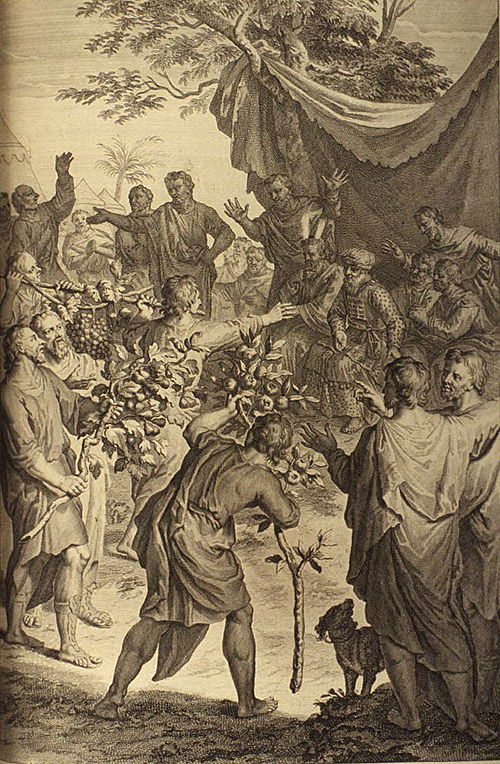
The recent Torah portion Shlach begs these questions. Shlach, translated as “Send,” narrates the story of the 12 spies. As you recall, the unit was dispatched on a reconnaissance mission to survey Canaan. They returned with tales of a bountiful land, but one inhabited by giants, making it seem impossible to conquer. Only Caleb and Joshua believed that the Israelites could be victorious, but they were overruled.

Fear gripped the spies; the Giants were too formidable, and their fear raised paralyzing questions. Perhaps they thought—we could live without realizing the promise of the land; maybe we could make do in Mitzrayim or confined spaces. The reticence of these people exploited the vulnerabilities of this nascent nation. They defeated themselves before they were ever tested. Their doubt in themselves, their destiny, their values, and indeed their God meant that this entire generation of recently freed people needed to be replaced by those whose spirit and strength were forged by the trials and tribulations of the harsh Midbar or desert. This spirit and strength are the answers to my initial question: what does it take to overcome fear with courage?

With this strength and spirit, you know in your heart that what you possess and believe is worth fighting for and to have enough faith and courage to take the next step even into the unknown. At the same time, you remain true to your values and morals despite the horrors of warfare, facing the battle with bravery yet not losing your soul in the fog of war.

Now is the time for us moderns to embrace these lessons. More than ever in our recent history, we need to lean into our values — the things we love deeply enough to champion and fight for.

For Israel, the boldness and cunning displayed—from exploding pagers and covert Mossad agents to an aggressive air strike aimed at preemptively striking Iran, a country whose nuclear ambitions threaten Israel—are significant. It is crucial to understand that waiting and hoping, along with economic sanctions, are not always the correct responses. However, it is also necessary to honestly recognize that the costs of this fight will be high, both in lives and resources. Staying morally superior during battles against a stubborn enemy has been especially difficult during the war in Gaza.

And just like there, we face challenges here as well. Domestic rabid Jew-hatred must unite us. We must stand up for our right to live freely, securely, and safely in the United States, a land of great abundance and blessings. We will not cower in silence or fear.

This is the time to stand up and defend our values because this is our home. To those who hate Jews or anyone labeled as “the other,” we fight for the fundamental rights that form the foundation of this great country, both for ourselves and everyone else, to protect the principles of equality, justice, and liberty. The hopes of our people and our traditions are at risk, but we cannot back down.

As Americans and Jews, much is at stake. Indeed, maybe everything is at stake. The fear of the unknown cannot silence us, nor can it allow us to disregard our sacred values and act with impunity against perceived threats. By standing together and believing in ourselves, each other, and the sacredness of our tradition’s values, we will be strong, and we will prevail—Chazak v’Umatz, strength, and courage.

Barukh atah adonai eloheinu melekh ha’olam asher kidshanu b’mitzvotav v’tzivanu la’asok betzorkhei tzibur.

Blessed is the Eternal One who commands us to work on behalf of the needs of our community.

Amen


United

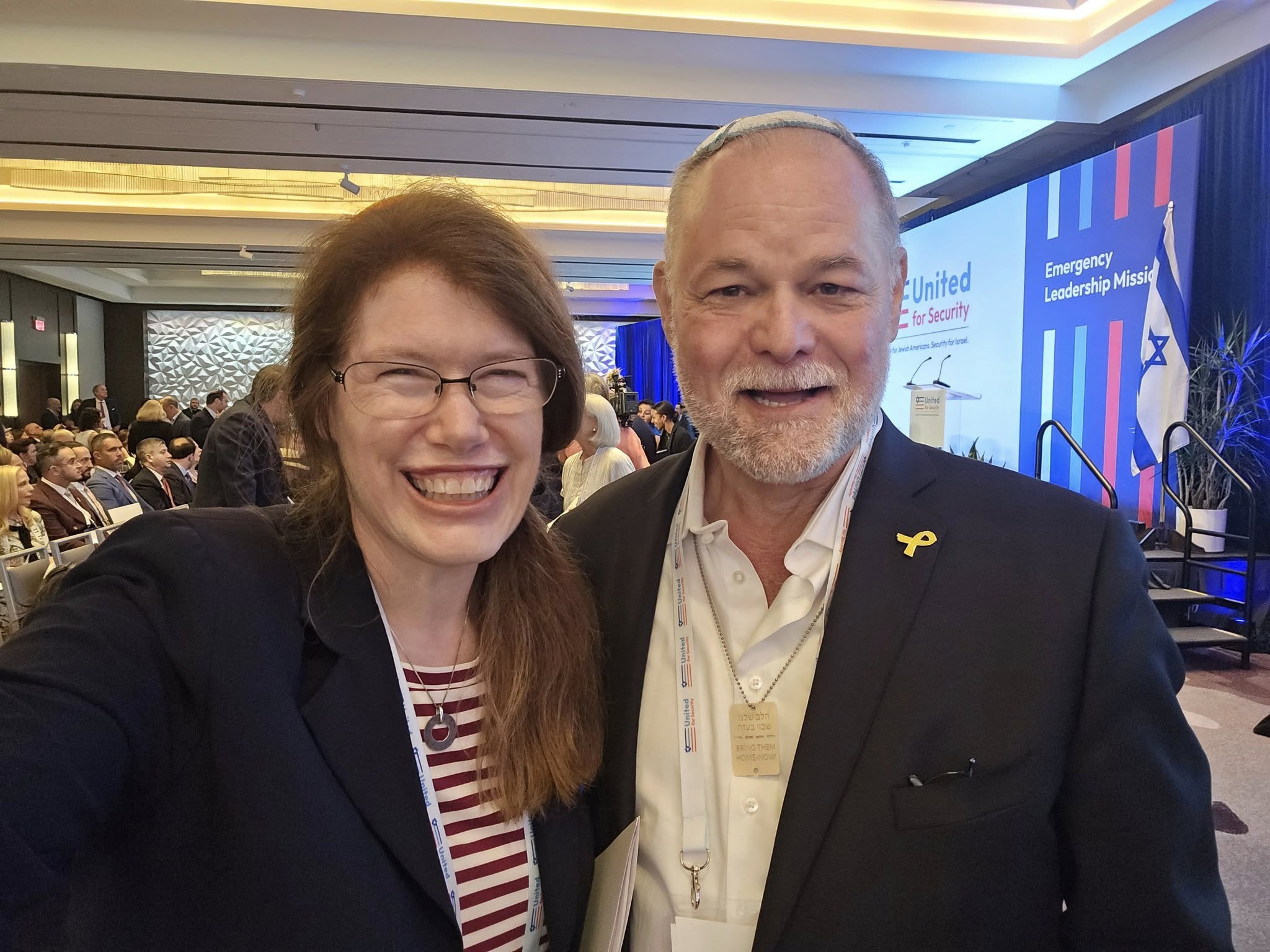
Rabbi Adrienne and I first met at Temple Micah years ago when we shared the High Holidays there in Lawrenceville, NJ. It was wonderful to see her again at the United for Security Emergency Leadership Mission in Washington, D.C., last week. Our smiles show the joy of reconnecting, but they also mask the urgent issues facing the American Jewish community. This is a time for us to come together, setting aside denominational differences, and recognizing that we are all part of the larger community of Am Yisrael.  This national fly-in was to advocate on the Hill for increased funding for security and a commitment to

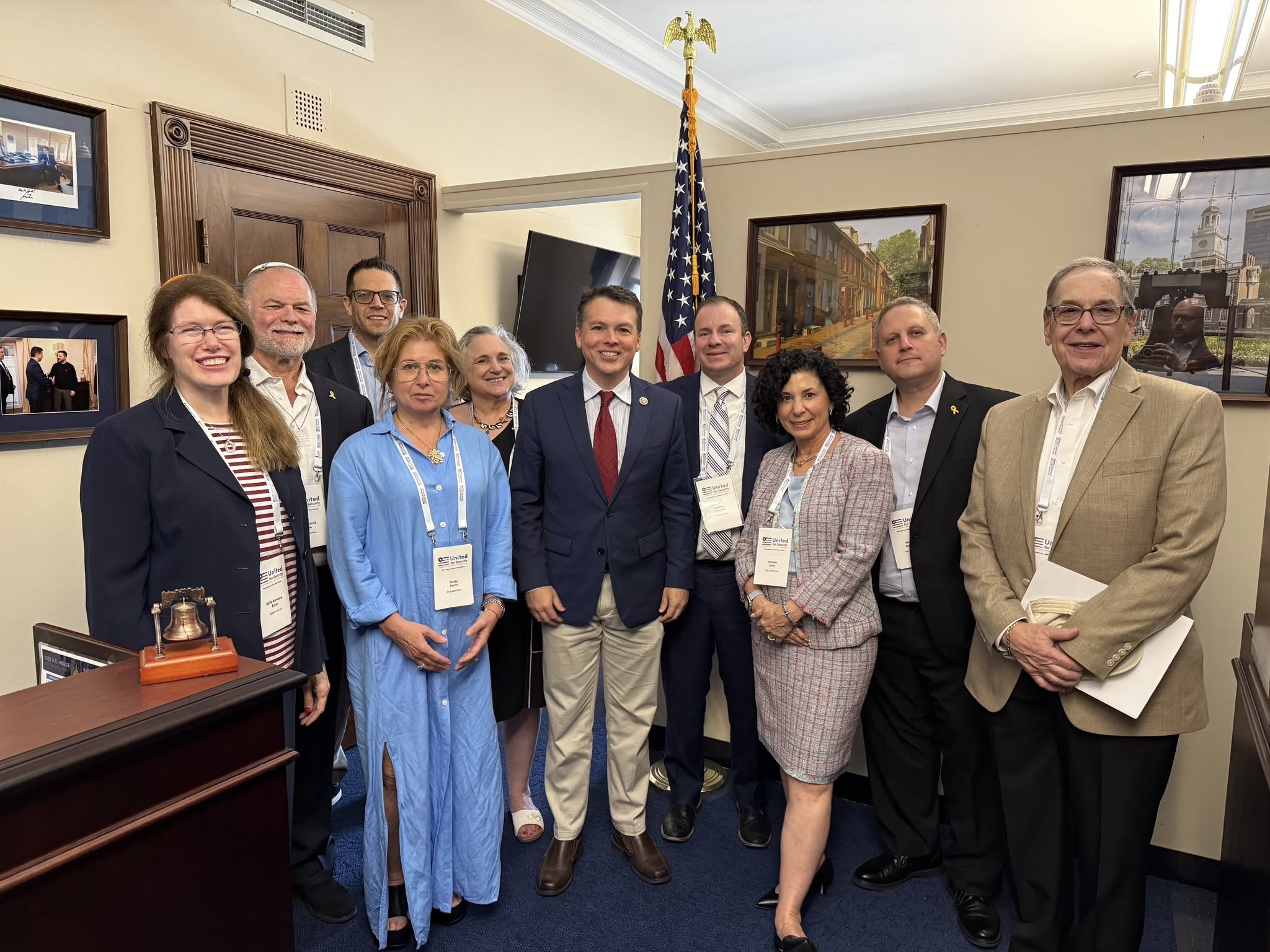
With Congressman Brendan Boyle

fighting Antisemitism.

We hope our advocacy efforts helped Congress and the Senate understand the unacceptable risks to our community and encouraged them to take action to protect us from those who mean us harm.


And Our Flag Was Still There…

This weekend marked two important, deeply related yet profoundly different events: a Military Parade at the Washington Mall and a No Kings protest across the country.

Democracy endures. Many were deeply moved to celebrate the 250th anniversary of the Army. Most Americans are genuinely proud of our country and the Army, which has fought to keep us free since before the nation was established. They are patriots who eagerly watched the troops march and the extraordinary weaponry that has upheld our status as the leader of the world.

The No Kings marches were equally patriotic. Our right to assemble and peacefully protest against our government was clearly demonstrated in over 2,000 locations across the United States. Thousands opposing the current administration gathered to express their grievances.

This should be encouraging for all of us. Both things can be true at the same time. We celebrate and protest, and both are deeply patriotic expressions of commitment and love for this nation. Many are concerned that our rights to free speech are under attack. This past weekend shows us that we still have our voices. Dissent may be under assault, but it will not be taken away.

The challenge is to find ways to advance an agenda and, importantly, recognize that even when we disagree profoundly on so many issues, there must be a way to communicate with one another. We need to identify civil means of expressing our grievances and refrain from resorting to violence. The tragedy in Minnesota seems to be the act of a lone wolf. However, that is not reassuring. There appears to be an ever-increasing number of lone wolves willing to take matters into their own hands through violence.  We must reject that.

We are a nation of laws. We do not murder those we oppose politically. We fight our battles in the streets through peaceful protest, in the courts, and at the ballot box.

This past weekend demonstrates that our fundamental principles as a free people under the rule of law endure. As in the Star-Spangled Banner from the War of 1812, our flag remains. We must not fail her.

Lean In

I am reeling from the attacks on my fellow Jews here in the United States. I struggle to understand the apparent fight against anti-Semitism by targeting institutions like Harvard, which seems to provoke a backlash. It appears that Jew-hatred has been normalized enough for these miscreants to heed the words that sanction violent acts. Recent horrific attacks on Jews leave us wondering if we are safe. What should we do?

LEAN IN

I take pride in my heritage, the values of my tradition, and the prophetic call to make the world a better place. I connect with people who share my beliefs, and I also reach out to those who do not. I stand up for what I believe and engage in conversation with others.

I will proudly defend my identity, including that of an American who upholds the aspirations of our founding documents and the struggle for equality, justice, and liberty.

Now is not the time to cower in fear but to realize that many others are like me, seeking a safe and secure world for our children, believing in something greater than myself, and understanding that the “other” is not a threat; they are just someone I have yet to know. It can be scary and difficult to do.

I attend my synagogue.  If you haven’t done so recently, now is a great time to find community.  And there are so many causes that demand our attention, for our charge is to make the world a better place.  It is more important than ever to fulfill our mission.  There is strength in numbers, and besides our Jewish community, we have many allies.

I am a Jew; I am an American.  I fight for the causes I believe in because they are righteous and good.  Join me and Lean In.

at the Cusp of Shabbat and Pesach

Shabbat is approaching and Pesach follows immediately thereafter.  I am taking a moment from the preparations to share the beautiful rendition of Stand By Me.  It is a fitting prayer seeking Divine connection.  Enjoy Music Travel Love as they share their beautiful rendition.

Shabbat Shalom

#BringThemHome