The Metaphor of the Moment: Finding Meaning in the Exodus

The rituals and stories of Passover, like many others, are rarely about the literal meaning; they serve as invitations to explore the richer metaphors of human experience. During Pesach, we engage with texts that connect Divine mystery with human limitation, urging us to find hope in the most difficult circumstances.

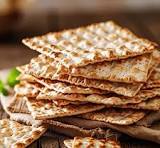
A provocative and often-overlooked metaphor lies in the Matza. Tradition holds that the Israelites had so little time to escape Egypt that they couldn’t let their bread rise, yet the modern “halachic” or “kosher” process of Matza-making allows the dough to rise for up to 18 minutes. The text notes that, in the chaos of packing and rushing to leave, there was no time to let the dough rise. But surely, 18 minutes could have been found.

This raises a profound question: if we could have made the time, but the story insists we did not, what is the message? It suggests that the Exodus is more than just a historical event; it is a metaphor conveying a larger, universal message. The Matza symbolizes a deliberate choice to embrace the incomplete or unleavened. It serves as a reminder that when an extraordinary moment arrives, we must seize it, ready to leave behind the familiar, the influence, or relative comfort of our old lives before it can rise and hold us back.


Keep your eye on the ball – Focus on the Truth

The truth is hard to find. We often argue over the “what happened” instead of searching for the real truth.

Hunger in Gaza is real. Accusations of false pictures or the number of trucks entering Gaza distract us from the fact that people there are suffering from a lack of food and water.

Yes, horrible famines are occurring in other parts of the world, such as Yemen and Sudan. That we are not assisting the hungry is shameful. However, the starvation there does not diminish the suffering in Gaza.

Who’s responsible?

There is no shortage of blame to go around. Hamas cynically uses civilians as pawns of war. Israel blocked humanitarian aid while trying to bring Gaza to capitulation, and the US has let these tactics continue. Other countries have done little to provide aid or creative solutions. The Palestinian people are also partly responsible for their situation in Gaza. We all share in the tragedy affecting the Palestinian people.

There is no shortage of blame. But we can take control now. The airdrops of food are one part of the solution. Expanding food stations in Gaza from the current four managed by the GHF is also essential. And we can give money to World Central Kitchen and other groups on the ground providing hot meals.  If we “flood the zone” with food and water, we will eliminate the ability to profiteer from food shortages.

We can do this now.  It is our responsibility and duty. We cannot stand by while our neighbor’s children wither.

#BringThemHomeNow


Chag Urim Sameach! Happy Chanukah

How do you light the Chanukah Menorah?

As you can imagine, this was a discussion among the Rabbis.  The Talmud famously pits the House of Shammai against the House of Hillel, our preeminent first pair of rabbis.
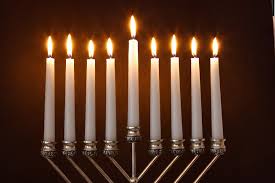
Do you light one candle the first night and increase another candle every night until all are lit on the eighth day?

Or do you light all the candles on the First day and decrease the number until you reach one candle?

Most of us know Hillel won that argument, so we increase the light with every passing day.
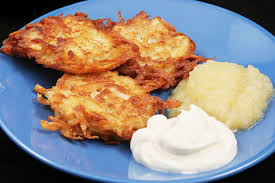
Do you use Applesauce or Sour Cream when you eat latkes?  They never decided on this argument, so we do both! (actually, I am pretty sure they never engaged in this discussion- I am making it up)

Do you light one Menorah for the family, or does everyone get to light their own?
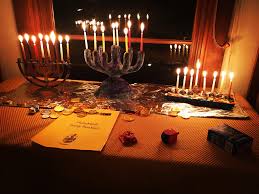
 

Did you know the Menorah we use for Chanukah is called a Chanukiah?  (it is an eight-light, plus Shamash, candelabra as distinguished from the seven-armed menorah used in the Temple).

Do you put the menorah in your front window for the community to view?

Why do I always seem to lack the right number of candles?

And when I buy candles on sale after Chanukah, I can’t remember where I put them for the next year.

Last but not least, is it Chanukah, Hannukah, or Channukah, Hanukah, Hanukkah, etc.?

We can get all caught up in both the fun and serious questions as we determine how we want to celebrate our holiday.  But remember it is about celebrating the holiday.

It is a time of celebration and rededication. We remember the story of Jewish victory, which instilled pride in our heritage and gave us strength and confidence as we face seemingly enormous challenges today. We spend time with our family, sharing the light’s glow, the pleasure of the food, and the fun of the games. May your Chanukah be wonderous!

Chag Urim Sameach, Happy Hanukah!
The Core Idea of Thanksgiving- Be Thankful and Do Thankful

The wedding ritual of breaking the glass is central to the Jewish marriage ceremony. One meaning is to recall the destruction of Jerusalem.  It reminds us that even in times of joy, we are reminded of sadness and brokenness.

I am ambivalent about this. Is it appropriate to remember sadness all the time? The answer is probably no. There is enough sadness in our world without being reminded of its presence; time enough to cry and too little time to celebrate. We should lean into the joy without any equivocation or hesitation.

Many people felt compelled during Thanksgiving to remind us of the less fortunate. While this is important as a thought, it is more important to translate it into positive action.

We should find joy in our moment, celebrating its beauty.  And instead of lamenting another’s plight, we can do something positive. Even on the days after Thanksgiving, we can provide food for the hungry, bring clothing for the naked, and support shelters for the homeless. These are the positive experiences that will reinforce the true meaning of being thankful by sharing the blessings that we have with those who are less fortunate. So, this Thanksgiving and throughout the holiday season, embrace the joy. Wishing everyone a happy holiday.

Fess up– Hanukkah is the Jewish Christmas!

Fess up– Hanukkah is the Jewish Christmas!

Before I continue, I will let those of you gasping for air catch your breath.

Yes, indeed, the rabbi went there! But it is hard to refute the statement. And you know what else? It is okay.

Here in the United States, we have thought longingly of the Christmas portrayed ironically by Irving Berlin- replete with a white (from the snow, that is) Christmas with cards, sleigh bells, and glistening trees. The Coca-Cola Santa Claus brings presents to everyone traveling on a flying sleigh powered by eight reindeer (nine including Rudolph), Christmas Trees, gifts, love, and good cheer. Of course, once the marketers got hold of this, they commercialized the holiday even further. Everyone who ever sang anything now records an album of Christmas songs or has a television Christmas special.

Who wouldn’t want to be a part of this party?

So we have amped up Hanukkah, a minor yet complicated holiday, not even part of the Jewish Bible. Our Acceptance in this country is the great miracle of our time. And if we could place the menorah in the window without fear of retribution, what else might we enjoy? The secularized Christmas is at the center of the American holiday season, bounded by Thanksgiving and New Year’s.

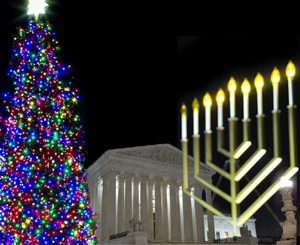
So we are in full bloom- we have Hanukkah bushes, lights of blue and white to decorate the house, and latkes and sufganiyot are now things in the American public space! Giant menorahs are lit alongside the Christmas trees, eclipsing the simple manger scenes of the holiday’s religious roots. It is a mash-up of the best our traditions have to offer, and we all join together in the kind of unity we could only pray might somehow extend to all the other days of the year (either 364 if you are Christian or 357 if you are Jewish).

They say competition is a good thing.  And arguably, Hanukkah is a bigger, better celebration because of Christmas.

Let us wish everyone Happy Holidays and a year of bounty and joy. Let us thank God for bringing us to a time when our lights can burn brightly, and we can be with our brothers and sisters; whatever their faith traditions, we are together here in the United States.

Shabbat Shalom (and Chag Urim Sameach)

As we welcome Shabbat, Hanukkah comes immediately after on the 18th.  Six13, the outstanding a capella group shares “Elton Johnukah.” Take a listen and enjoy the music and the joy.

Shabbat Shalom

(PS shout out to Jeff and Ilene for sharing this video with me so I can share it here)

Do not stand idly by


Do not stand idly by while your neighbor’s blood is being shed- Lev 19:16

There is something we can do; Contribute to the organizations on the ground aiding the victims of war.  Choose from among many humanitarian groups trying to ease the suffering.  Consider a donation to Doctors without Borders; HIAS, JDC, World Central Kitchen.  Everything helps, no amount is too small.  Thank you.