Category: morality
Does the kippah on my head place a target on my back?
 With the increasing violence in public spaces, maybe the answer is yes. What should I do about it? I could cower; many people have said they remove their Jewish symbols, like a Chai or Magen David, because they fear being targeted.
I have been wearing a kippah for many years, and since the war started, I wear a kippah with the Israeli flag and the words “Am Yisrael Chai” stenciled inside. I am proud to show who I am and what I stand for. But does it come with any risks?
My kippah has actually been an invitation for people from all walks of life to approach me. At a Costco, on a turnpike rest stop, or while walking on the street, people offer words of encouragement and support. Most people are decent folks. Most are not looking to harm others; they are living their lives and caring for their loved ones, just as I strive to do.
We must not allow acts of violence from uncontrolled radicals to control us. Those responsible for protecting us face a significant challenge, and a system based on freedom rather than repression often leaves them a step behind in safeguarding our rights and safety. They require additional support to perform this vital work. We can help.
We need to get out, gather, socialize, and connect with others. We don’t have to agree, but we must show we care. We need each other. The hateful rhetoric shouldn’t be fought with more hate, but by reaching out, creating, and living in the society we believe in.
My kippah is a symbol and a call to the people I meet that our humanity continues to thrive. That is the kind of target I strive to be.
What am I entitled to?
What can I or any member of society reasonably expect? What is it that each of us deserves, and who provides it? This is a question to ask of our society and the communities in which we live. I think it’s fair to say that most of us want to be valued, seen, heard, and shown a modicum of respect and dignity. Our Jewish tradition offers us “rules of the road” to guide proper behavior, including how we treat others and how others treat us. Our government has also set certain expectations. According to our founding documents, we are entitled to life, liberty, and the pursuit of happiness. Of course, understanding what these mean and how to provide them to each citizen is a very complex task. Sometimes we handle it well, but often we fall short as a country. This creates the core tension and highlights the need for ongoing conversation to truly understand what these rights mean.
The lack of conversation and understanding that there are multiple ways to achieve solutions creates problems in our society. Both the left and the right become more entrenched in political arguments instead of engaging in meaningful discussions about what these issues truly mean. For example, regardless of politics, most people of goodwill would agree that allowing children to go hungry should not happen in this country. But how do we feed the hungry children?
This is a process argument, not about the underlying value, and here is where our faith tradition becomes a vital guide.
One of our core wisdom texts, known as the Talmud, provides a roadmap for understanding. A fundamental value is introduced, followed by a series of discussions, debates, and disagreements. “Makhloket L’Shem Shamayim,” an argument for the sake of heaven, seeks to understand how the underlying value manifests itself in various circumstances. The arguments, including both the majority and minority views, are presented in this book. The reason is that even the winning argument may not always be correct. In the future, the dissenting opinion that was once preserved may be proven right if cultural or societal norms change.
In the debate about feeding hungry children, parents are primarily responsible, but if they are unable to do so, the community should step in and provide food. But how does the community feed the hungry child? That raises an important question about the process. There is also legitimate disagreement about how to deliver food to hungry children. It can be through a government program. It can be achieved by providing money so that others can obtain food, or by helping parents improve their living standards, enabling them to afford to feed their children. And to make things even more complex, what does alleviating hunger actually mean?
Are we required to feed children according to a specific nutritional standard? How much influence should outside forces have over family decisions? What happens when parents are incompetent, and what occurs when nutritional standards are set or changed—something we’ve seen happen many times in the past? All of this assumes that well-meaning people are committed to preventing children from going hungry.
Some people only care about themselves, ignoring everyone else. Others realize that society should be judged on whether all who are hungry are fed. Still, others believe it is simply the morally right and ethical thing to do.
Questions like these are fundamental, which is why today’s tribal politics are counterproductive. These politics don’t help us address our societal obligations or what I am entitled to; instead, they emphasize power and control and vilify the opposing side. We must ask the right questions, engage in meaningful conversations, reach a conclusion, and then act on that decision. This presents both a significant challenge and a valuable opportunity for building a thriving, vibrant, and just society. Let’s start discussing what truly matters.
Psalm 27 is added to our prayers during Elul and through the chagim.
We prepare ourselves for this special time with the prayer that we might dwell in the house of the Divine. May your experience this season be meaningful, filled with reflection, repentance, and renewal.
Thanks to Chava Mirel for this beautiful rendition of Psalm 27:4.
Shabbat Shalom
#BringThemHomeNow
Children slaughtered again
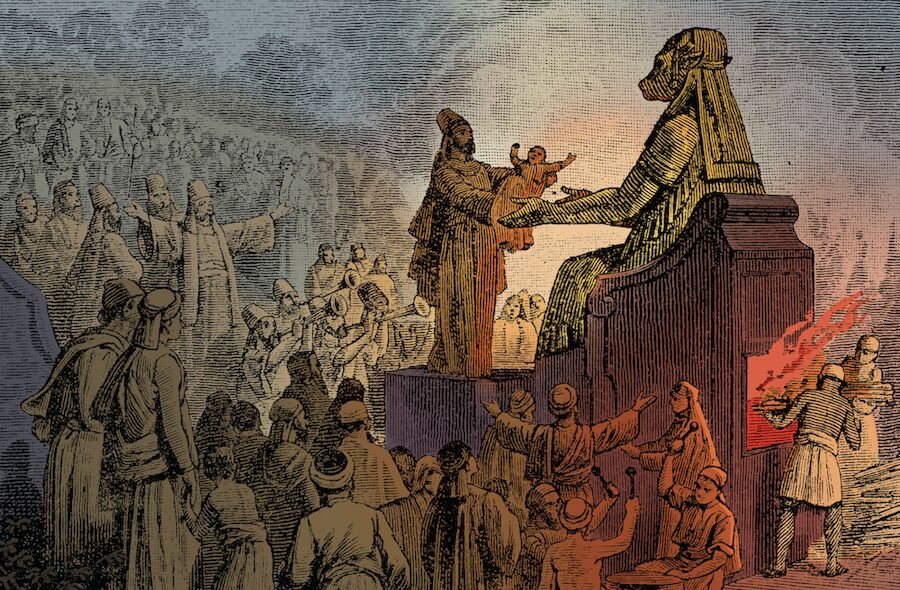 What does it say about a society that allows, even supports, the murder of its children? That society is headed to Hell, if it isn’t already there.
In biblical times, the Valley of Hinnom was a place where people practiced child sacrifice to the god Molech. The name of that place became Gehenna, which is now synonymous with Hell.
As strange as it may seem, we appear to accept child murder. The ways to prevent it are within our reach. However, we prefer to keep the right for people to wield deadly weapons unfettered rather than to protect the lives of our youth. Once again, a disturbed individual obtained guns, brought them to a church, and slaughtered children while they were praying. Two dead, 17 injured. It is almost incomprehensible, but true. It is another episode of the carnage of our kids by guns.
Furthermore, we are to blame. The blood of those innocent children is on our hands because we refuse to enforce oversight to keep guns out of the hands of people who do such heinous things—shame on us.
There is something profoundly wrong here. A society that accepts child murder as the price of freedom to bear arms has a name. Welcome to Hell.
Shabbat Shalom
This song caught my heart today. Thanks to the Maccabeats for Minyan Man.
With so much divisiveness, it’s good to remember Kol Arevim Zeh laZeh, All Israel is responsible for one another. Each of us is important. Each of us can make a difference. Together, let’s welcome Shabbat and welcome God’s peace.
Shabbat Shalom
#BringThemHomeNow
MAN DOES NOT LIVE BY BREAD ALONE- THE MESSAGE OF EIKEV
MAN DOES NOT LIVE BY BREAD ALONE- THE MESSAGE OF EIKEV
When life becomes easier and we start to relax, hard-won battles fade into distant memories. We then drift into a new reality, and instead of staying alert and valuing our principles, we relax, enjoying a good life and the rewards of our hard work, daring to believe we’ve earned it and that it will always be ours. The hunger that once motivated us diminishes and we face the consequences. It is human nature to become complacent, but we must not.
This is Moses’s cautionary message to the people in his final speech. He warns them that change is coming. The generation that met God in the wilderness is passing away, and a new generation will take their place and settle in the promised land. Without that personal experience, these new generations risk losing their close relationship with God.
Turning away from God is dangerous. Forgetting how you arrived here and showing gratitude through consistent reverence and practice will lead people to ruin. Just as the current inhabitants who are about to be displaced from the land, you, too, will eventually lose the blessings of this place and be forced to leave as well.
The wilderness has taught you to be strong.
There’s an old story that teaches us tough times build strong people, and strong people then create easy times. Those easy times lead to soft people, who in turn produce tough times again. It’s a cycle that can only be broken by staying committed to God, because God’s gift of the promised land won’t lead us to complacency. It remains a constant challenge.
We see this in our community today. The previous generations worked hard and built a better life for their children and our children. They will inherit wealth that makes life easier. However, they may not fully remember the sacrifices others made for them. We are currently experiencing one of the biggest transfers of wealth in history. Money and property are passed to this new generation to simplify life. But this is only material wealth. The true challenge is how to pass down the lasting core values that emphasize hard work, sharing our abundance, and working to improve the world by carrying forward the values of our tradition for everyone. We face this challenge today just as Moses did then.
I recently spoke with a woman who was worried that her death might come too soon. Although her body was ready, she felt her children were not; they were unprepared to manage without her. The question was more complicated than the answer. Moses, too, is struggling to give final words of advice, admonitions to remember God and follow His word. At the end, it is too late to change the course. We hope that the lives we live and the values we model become lessons learned and embraced.
A midrash about the patriarch Jacob depicts him surrounded by his sons as he nears death, reflecting on whether his children have learned the lessons and will uphold the values or if those values will die with him. The adult children respond, “Listen, Father, we hear you and it shall be,” saying, “Shema Yisrael, Adonai Eloheinu, Adonai Echad.” With his final breath, Jacob says, “Praised be Adonai forever.” Baruch Shem kavod malchuto l’olam va’ed.” (Gen Rab 95)
We would all sleep better knowing everything will work out. We do our best. For Moses, it was to be a prophet, a liberator, a teacher, a priest, a judge, and a man. For forty years in the desert and many years before the Exodus, he showed how to serve his people through his devotion to God. In our own ways, as parents, we also have those same responsibilities. As loving parents, we do our best to nurture and provide our children with what they need to find their way in the world. Then, it’s time for them to stand on their own. We work toward this moment diligently and can only hope it will be enough.

What’s in a name?
Genocide is a highly charged word.
In Shakespeare’s Romeo and Juliet, Juliet asks, ‘What’s in a name?’ Names are simply labels we use to identify things, but the true nature of those things exists regardless of what we call them. Genocide is a highly charged word. We get so caught up in the word and all of the intense emotional baggage it carries that we forget the underlying tragedy: it is an attempt to understand what is happening in Gaza.
One side calls it a genocide; the other disputes that term, accusing the accusers of deliberately misusing the word, targeting the victims of such an experience as if they were the perpetrators of that very same horror. We get caught up in definitions, a kind of territorialism, claiming ownership of that word, and in doing so, we completely miss the point.
The people suffering in the war in Gaza are truly experiencing pain. It’s not just about numbers—whether it’s one person or many—innocent victims of the Hamas-Israel conflict have died. They go hungry. They are homeless. They are victims. Although I do not trust the statistics from the Gaza Health Ministry, there’s no way to measure the full extent of the carnage accurately, and Hamas’s role in this is dehumanizing Palestinians, echoing what the Nazis did to Jews.
We must navigate this challenging space and find ways to offer humanity and hope that we were denied, and, sadly, to the Palestinians as well. From the ashes of Auschwitz, we proclaimed Never Again. Was this declaration meant only for us? Our Jewish duty to be a light to the nations requires that it not be. We must uphold our tradition’s promise by maintaining our humanity and embracing the virtues of Pirkei Avot (2:5); in a world that has no worthy men, strive to be a man.
Whatever you call it, the war and anguish must end.
We are in a Moral and Ethical crisis.
The events in Gaza and the West Bank demand us to speak out for those suffering from violence and hunger.
This isn’t about assigning blame or claiming whose cause is righteous. True righteousness calls on all people of faith to speak out against the horrors inflicted on victims. The duty to feed the hungry is a core part of our tradition.
The path that brought us to this moment is long and complicated. But that’s a story for another day. We Jews around the world are deeply distressed that Israel is involved in tactics we condemn, using food as a weapon. This must stop. The current system for distributing food is inadequate. Israel cannot control Hamas; Israel can control itself. Israel needs to do better.
Perpetuating the cycle of hatred through such harsh punitive measures poses an existential threat to Israel’s safety and security. Palestinian widows and orphans will view revenge as their goal, making them vulnerable to anyone offering retribution as part of a vision for them.
Being moral and ethical in a place where those things may not exist is one of the hardest things to do, but it is in these situations that the best values of our tradition must shine through the darkness. I urge Israelis to pressure their government to change its policy. I ask Donald Trump to urge all parties to provide an overwhelming infusion of humanitarian aid.
Finally, I urge all of us to financially support food initiatives like those offered by the New Israel Fund or World Central Kitchen. I am often asked what we can do, and this is something we can do. We cannot stand idly by while our neighbors blood is shed or starved.

Pincus-From Righteousness to Self-Righteousness: The Peril of Unchecked Zeal
How do you respond to the following: We will destroy Hamas even if we must sacrifice every remaining hostage and countless thousands of Palestinian women and children?
For some, this is a statement that requires no analysis. For some, this is a righteous stand; for others, it is self-righteousness.
There is a moment when a subtle but important shift can happen within us, a transition from genuine righteousness to the often-destructive path of self-righteousness. It is a journey from trying to do what is right according to a higher calling to becoming convinced that we are inherently right, unwilling to consider anything else. Often, this occurs without our awareness.
Pinchas in this week’s Torah Portion offers timely insight into today’s tense social environment. Pinchas was zealous for God. In a moment of crisis, he acted decisively with deep conviction. He kills Zimri, the blaspheming Israelite, and the Midianite princess/seductress/ and lover, catching and killing them in the act, so to speak. In response to these gruesome murders, the plague that was decimating the Israelites comes to a halt, and God recognizes Pinchas as righteous.
We have struggled with this text. Was Zimri righteous, or someone deranged or delusional? But the text is clear that he acted rightly. This extreme example prompts us to ask ourselves a similar question: How do we know if our actions are righteous, or if they are self-serving? How can we distinguish between selflessness and self-righteousness? Does the greater good drive our response, or ego and selfishness?
To answer this, I try to step back and ask myself, How am I reacting and why? What does this moment require from me?
It’s so easy to lash out, especially when we feel threatened. That primal “fight or flight” reflex can make us feel trapped, and the only option may seem to be to attack and fight our way out. But even in those moments of intense pressure, thoughtfulness and strategy are essential. What do I want to achieve right now? Am I the conciliator, seeking understanding and resolution, or the vanquisher, determined to win at all costs? Or is the right path somewhere in between?
Understanding my motivations makes all the difference. Whether it’s a heated issue like the Israel-Palestine conflict or something more personal like a disagreement with a family member, we need our inner compass to guide our outward actions and help us make decisions about the best way to proceed.
Finding our shared values often helps us find common ground. This is a powerful tool for navigating disagreements.
For example, we all agree that hunger is bad—everyone should have enough food to eat. There is the value we share. But we can differ on how to achieve this goal. Some will take the “give a man a fish” approach, others will opt for the “teach a man to fish” method. This is a question of process. We are arguing about the method to achieve the goal. We are not vilifying the person offering an opinion. We can be respectful even when we disagree with each other’s ideas. Otherwise we can lapse from righteousness to self-righteousness.
Zeal can be misleading and deceptive. Do zealots truly hear God’s word, or are they only hearing their own amplified voices inside their heads, mistaking them for divine commands? Pinchas is shown as hearing God’s command, but history also provides many examples of those who, in their zeal, caused great destruction—like the Sicarii, whose self-righteous fervor led to the destruction of the Second Temple, the tragedy of Masada, and the slaughter of Israelites. Their conviction was unwavering, but they profaned God’s name, and their actions resulted in ruin. Some of us might rationalize this behavior instead of taking the time to analyze the issues critically.
Patriotism and love for America can sometimes make it hard for many of us to recognize when harmful actions are justified in its name. Consider the dark chapters of our nation:
The attacks of 9/11 triggered a wave of revenge, transforming us both at home and abroad. Our history is replete with other examples, including Japanese internment camps, ethnic cleansing of Native Americans, turning away Jews fleeing the Nazis, and more.
And as Jews, we grapple with settler violence in the West Bank and the prosecution of the Gaza war. Perceived righteousness can blind us to the humanity and legitimate grievances of the other side.
Anger, fear, insult, anxiety, and even joy—our emotions are triggered in the moment. But our reactions don’t have to be reflexive. They can’t be.
This brings me back to the core question: What are my values, and how are they shaping my life right now? Reflecting on this calls for a mindful pause—a moment to breathe and assess my position before facing a challenge. It’s important even in everyday, mundane moments. That’s why I avoid writing emails directly in the app when the stakes are high. Instead, I open a word processor and draft my message. I review the draft to make sure it clearly communicates what I want to say. If it aligns with my values and is likely to produce the outcome I want, I then copy and paste.
Reflection is our safeguard. It creates space for righteousness to emerge, rather than fostering a rigid, unforgiving sense of self-righteousness. It encourages us to be passionate about what is truly good while remaining open to understanding, compassion, and the shared humanity that connects us all.
Let us all strive to stand up for what is right, to embrace the humanity of others, and to act with humility, guided by honest assessments of our hearts and motivations. Shabbat Shalom.
#BringThemHomeNow