Masei – What do we owe the person who broke something they never meant to break?

Masei spends its final chapters on legal architecture, tribal borders, and inheritance rules. But it also includes the law of the arei miklat, the cities of refuge, built for the person who kills b’shogeg by accident. The neighbor whose axe head flew off the handle. The driver who looked down for just one second.

The Hebrew is doing something specific. Miklat shares a root with klitah, meaning absorption. It’s the word Israel still uses to describe how it takes in immigrants. An ulpan klitah is an absorption center. A city of refuge isn’t a jail cell or a technicality that lets someone off the hook. It’s a place built to take a person in, fully, the way a body absorbs what it’s given.

But the text refuses to keep this simple. The one who fled must remain there, not for a fixed sentence, but until the death of the sitting High Priest, a mortality with no connection to what he did. Step outside the walls before that day, and the victim’s own kinsman, the go’el ha-dam, may kill him without guilt. There is no release date. No parole board, no moment when remorse itself triggers freedom. The clock belongs to no one in the story. Not the guilty. Not the grieving. Not even the community that built the walls.

I think about this law when I’m sitting with people who never swung an axe. The hardest conversations I have as a chaplain are with those left behind after someone they loved has taken their own life. The question always comes, in some form. Why couldn’t I have stopped them? What could I have done differently? The law in Masei is written for the hand that acted. But the ache it names reaches beyond the letter of the text. It reaches the parent who didn’t call back, the spouse who went to sleep instead of staying up, the friend who sensed something was wrong and said nothing. No court can rule on that kind of guilt, because there was no crime. It is its own kind of b’shogeg, harm without intent, and it deserves its own klitah, its own absorption. There is only the unbearable arithmetic of what might have been different, run again and again, with no verdict ever arriving.

We want closure on a schedule, closure being a word that means to shut something. We want five stages of grief with a finish line, a program that promises healing by a set week, and a story the culture is ready to call resolved. Masei suggests some ruptures don’t run on anyone’s calendar. What I have seen console the otherwise inconsolable is not an answer, because there isn’t one. It is something closer to what the city of refuge offered before anyone had ruled on guilt or innocence, before any judgment was handed down. A sacred space of empathy and love. Built to absorb a person exactly as they are, guilt and all, for exactly as long as it takes. No release date there either.

So the harder question isn’t who needs a city of refuge right now. It’s whether we can build one, not to explain away the guilt, but to hold it and stay standing at the gate for as long as someone needs us there.

Philadelphias lead role in helping people in the Death Space

Philly Magazine has an interesting article sharing how we are doing a better job discussing death.

I am honored to be included in the conversation through my work at the Death Cafe of Greater Philadelphia.

Thanks to Ben Seal for this important piece.

Check out the link below.

https://www.phillymag.com/news/2024/02/17/death-care-workers/?fbclid=IwAR3N4PLlrRNMYaEsut-71eTqtqTwQ72BlSA9cyaAoVmuhJWPtL7z2fl-HKk

Shabbat Shalom-A Shabbat of Ambivalence

A Shabbat of Ambivalence

As we enter Shabbat, some hostages have been returned.  Their ordeal is far from over, but they are home.  Now we hope these souls begin the process of healing.

Traditionally we offer the Birkhat HaGomel, but their struggle is far from over.  The emotional toll will continue long after physical pain has subsided.  They have been brought through a perilous journey, but the journey to wholeness and peace has just begun.

The sentiment of the Birkat Gomel is a prayer of gratitude, but it is also wishful thinking.  May those who have struggled find refuah shleimah.

We also turn our thoughts to those who remain captive, pawns to be played in a horrible chess game in which victims are often sacrificed by others.  May they be safe and treated with basic humanity.  We pray for their safe return as well.

Shabbat Shalom

Angels lift hearts, we can too


A friend of mine used to carry around a change purse in which he had a bunch of small angel pins made of Swarovski crystals.  Whenever he engaged someone new, he concluded by wishing them a blessed day and giving them a crystal angel.  The gift usually caught the recipient off guard but always deeply grateful for the gesture.  The crystal angel brought a smile to the lips of most, a tear to the eyes of some, but everyone would remember that uplifting encounter with their new friend Thom.

All of us are struggling with the emotional and spiritual effects of the pandemic.  Even people predisposed to being kind are finding their well of kindness in need of being replenished.  We all could use Thom to give us an angel to make our hearts smile.  We can do this for each other.

We don’t need to carry around an inventory of pins. Instead, we need to offer a smile and a kind word (or two).  Look at the person in front of you and see them- they are as exhausted as the rest of us.  So offer them what you need yourself, a smile and a kind word.  To the check-out person, smile and say “thank you” (yes- two words). To the person walking into the store, hold the door and say, “you’re welcome” (that will respond to them saying thank you).

It is a respite from the storm, an act of humanity when we desperately need it- and giving it is as comforting as receiving it, for your heart knows you just did a kind thing.

Our tradition tells of angels coming to bless us for Shabbat. So, as we move toward this Shabbat, may we all reach out with kindness to friends and strangers alike and make our world a little better, one smile at a time.

Do we Deserve our Kids?

Our tradition speaks at great lengths about filial obligations, the responsibilities of children to honor and revere their parents. Likewise, much is written about our obligations as parents to raise children properly, to teach them, and to prepare them for the world. But do we teach them Torah when we do not live it our selves? We do not teach them to build a better world but instead how to selfishly survive in it.

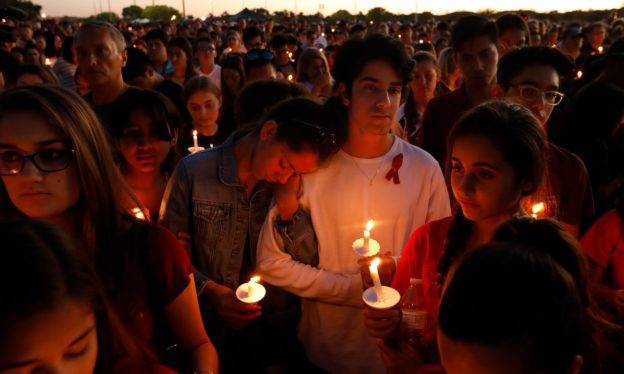
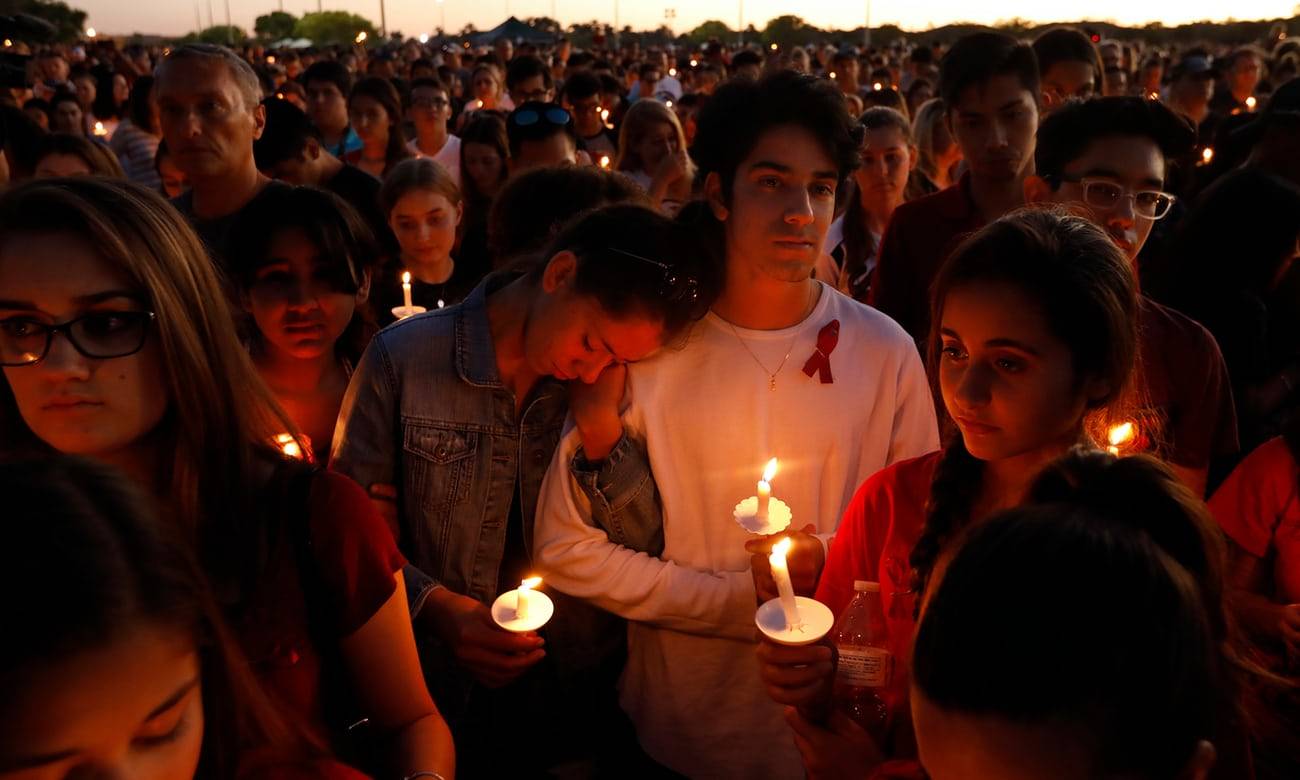
We offer them a world based on material gain, our nation withdrawing from its predominant place in the world, communal strife, a political system challenging the legitimacy of its fundamental institutions, and an economy that will burden them with almost intolerable crushing debt. We have not built a better world for them. And yet, these young people have galvanized in the wake of the Parkland horror. And that gives me hope. For even though we have not done right by them, they seek changes that will benefit us all.

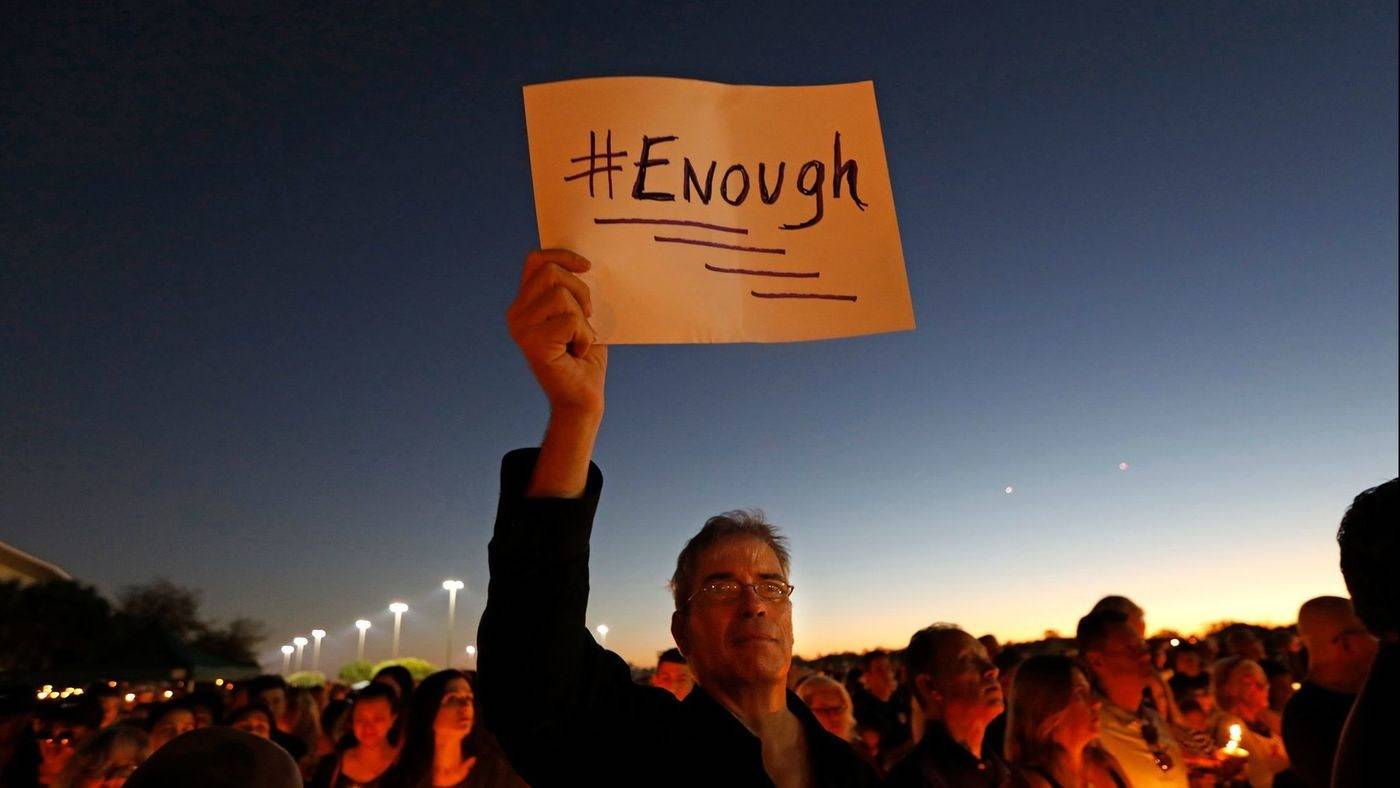
Do we deserve our kids? That remains an open question until we begin to act as though they truly are the most prized things in our lives. We can start by supporting them in their efforts to address gun violence, this grievous wrong in our society that has murdered so many of them. Support them as they raise their voices, join them as they march in March. Help make the world they inherit better than what we have now.


Have a good day! (and please come home alive)


How many parents send their children off to school with this blessing?

The level of violence in our society is incomprehensible. It happens on so many levels but the most blatant manifestation is the tens of thousands of people who are murdered with guns. Seventeen children and teachers are the most recent victims, murdered in their school.

There is no single solution to the problem, but that cannot keep us from working hard to reduce violence and death. Mental Health issues may be at the heart of much of this, but there is an entire category called crimes of passion wherein people resort to guns when the rage is uncontrolled. But the mass murders of innocents such as children and teachers in school can only happen in a society that is content with permitting it. We cannot be complicit any longer.

We are responsible. We do not invest in adequate security for our schools, we do not invest in mental health professionals to help troubled people, we do not invest in systems to keep lethal weapons restricted, we do not ban weapons of mass destruction such as assault rifles.

We can blame feckless and craven Congressmen and State House representatives for inaction, but the ultimate responsibility is ours. If we do not demand action and accountability, these elected representatives devolve into pawns and lackeys. They will neglect the duties of their offices and work only to retain their offices by kowtowing to those with a particular political agenda and money to promote it.

Today we are reeling yet again at the tragedy in a Florida High School. But when we are finished burying the dead, we must galvanize the people to demand thoughtful action to address our horrific problem. There are important organizations advocating ways to reduce gun violence. Join them in their life-saving work.