Oseh Shalom, May there be peace for all of us.
Thanks to Cantors Benji Schiller, Azi Schwartz, and Shira Lissek for this beautiful prayer.
Shabbat Shalom
#BringThemHomeNow
Oseh Shalom, May there be peace for all of us.
Thanks to Cantors Benji Schiller, Azi Schwartz, and Shira Lissek for this beautiful prayer.
Shabbat Shalom
#BringThemHomeNow
 The IRS allowing clergy to endorse political candidates from the pulpit is one of the stupidest ideas from a place known for some really dumb stuff. But you know what? It doesn’t matter. We will do what we have always done.
I do not publicly endorse or support a political candidate. Doing so undermines my role as a faith leader. I focus on the core values of my tradition and critique policies and ideas that oppose them. The clergy I respect and admire always maintain the dignity of their pulpits and do not turn them into crude political platforms for politicians. However, many clergy have used their pulpits to promote individuals. These two practices have existed long before this absurd ruling and will continue to do so.
The threat of losing tax-exempt status has been a strong argument discouraging some from endorsing candidates. For most of us, that wasn’t a concern. We knew it was wrong and didn’t need the threat. However, we have used the threat when others push hard for a particular person. Some have and will continue to believe that endorsing a candidate is the right choice. They use subtle hints or openly ignore the rule against endorsements. They are not me, nor most of my colleagues. We are empowered to stand by our values and advocate for our community, not for individuals who might share some values but probably not all.
I strongly believe in the principles of our tradition and speak out for them whenever I can. This is about ethics and morality. This is not politics. Politics do not belong in sacred spaces; sacred values do.
So, IRS, thanks for nothing.
 What does it take for fear to be overcome by courage? To dare, to risk, and to fight for what you believe in rather than cower?
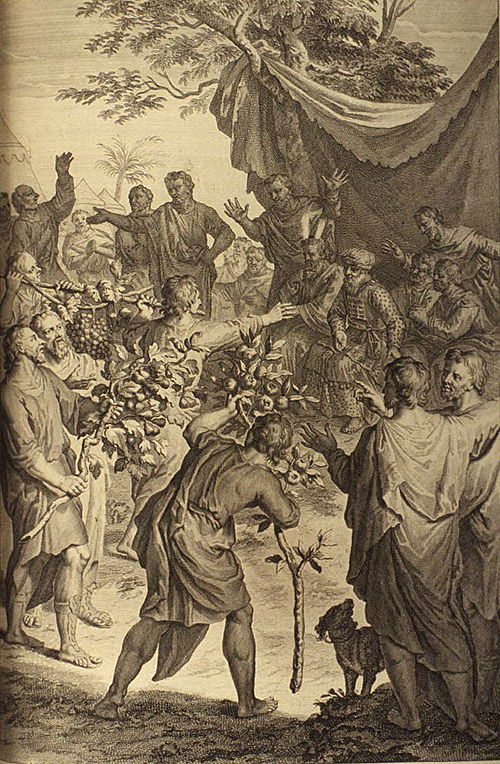
The recent Torah portion Shlach begs these questions. Shlach, translated as “Send,” narrates the story of the 12 spies. As you recall, the unit was dispatched on a reconnaissance mission to survey Canaan. They returned with tales of a bountiful land, but one inhabited by giants, making it seem impossible to conquer. Only Caleb and Joshua believed that the Israelites could be victorious, but they were overruled.
Fear gripped the spies; the Giants were too formidable, and their fear raised paralyzing questions. Perhaps they thought—we could live without realizing the promise of the land; maybe we could make do in Mitzrayim or confined spaces. The reticence of these people exploited the vulnerabilities of this nascent nation. They defeated themselves before they were ever tested. Their doubt in themselves, their destiny, their values, and indeed their God meant that this entire generation of recently freed people needed to be replaced by those whose spirit and strength were forged by the trials and tribulations of the harsh Midbar or desert. This spirit and strength are the answers to my initial question: what does it take to overcome fear with courage?
With this strength and spirit, you know in your heart that what you possess and believe is worth fighting for and to have enough faith and courage to take the next step even into the unknown. At the same time, you remain true to your values and morals despite the horrors of warfare, facing the battle with bravery yet not losing your soul in the fog of war.
Now is the time for us moderns to embrace these lessons. More than ever in our recent history, we need to lean into our values — the things we love deeply enough to champion and fight for.
For Israel, the boldness and cunning displayed—from exploding pagers and covert Mossad agents to an aggressive air strike aimed at preemptively striking Iran, a country whose nuclear ambitions threaten Israel—are significant. It is crucial to understand that waiting and hoping, along with economic sanctions, are not always the correct responses. However, it is also necessary to honestly recognize that the costs of this fight will be high, both in lives and resources. Staying morally superior during battles against a stubborn enemy has been especially difficult during the war in Gaza.
And just like there, we face challenges here as well. Domestic rabid Jew-hatred must unite us. We must stand up for our right to live freely, securely, and safely in the United States, a land of great abundance and blessings. We will not cower in silence or fear.
This is the time to stand up and defend our values because this is our home. To those who hate Jews or anyone labeled as “the other,” we fight for the fundamental rights that form the foundation of this great country, both for ourselves and everyone else, to protect the principles of equality, justice, and liberty. The hopes of our people and our traditions are at risk, but we cannot back down.
As Americans and Jews, much is at stake. Indeed, maybe everything is at stake. The fear of the unknown cannot silence us, nor can it allow us to disregard our sacred values and act with impunity against perceived threats. By standing together and believing in ourselves, each other, and the sacredness of our tradition’s values, we will be strong, and we will prevail—Chazak v’Umatz, strength, and courage.
Barukh atah adonai eloheinu melekh ha’olam asher kidshanu b’mitzvotav v’tzivanu la’asok betzorkhei tzibur.
Blessed is the Eternal One who commands us to work on behalf of the needs of our community.
Amen
Kalania- from a live event.
Some music to help us prepare for Shabbat.
I am praying for an end to hostilities and for the safety of all the people.
Shabbat Shalom
#BringThemHomeNow
 May the Almighty grant the leadership of all communities the wisdom to navigate the complex and challenging space they inhabit. Threats of annihilation and destruction must yield to peace for all who inhabit the region.
We pray for the safety of the people who have suffered at the hands of hatred and violence. And hope that a new day will dawn when all will live in peace.
Cain Yehi Ratzon.
 I am reeling from the attacks on my fellow Jews here in the United States. I struggle to understand the apparent fight against anti-Semitism by targeting institutions like Harvard, which seems to provoke a backlash. It appears that Jew-hatred has been normalized enough for these miscreants to heed the words that sanction violent acts. Recent horrific attacks on Jews leave us wondering if we are safe. What should we do?
LEAN IN
I take pride in my heritage, the values of my tradition, and the prophetic call to make the world a better place. I connect with people who share my beliefs, and I also reach out to those who do not. I stand up for what I believe and engage in conversation with others.
I will proudly defend my identity, including that of an American who upholds the aspirations of our founding documents and the struggle for equality, justice, and liberty.
Now is not the time to cower in fear but to realize that many others are like me, seeking a safe and secure world for our children, believing in something greater than myself, and understanding that the “other” is not a threat; they are just someone I have yet to know. It can be scary and difficult to do.
I attend my synagogue. If you haven’t done so recently, now is a great time to find community. And there are so many causes that demand our attention, for our charge is to make the world a better place. It is more important than ever to fulfill our mission. There is strength in numbers, and besides our Jewish community, we have many allies.
I am a Jew; I am an American. I fight for the causes I believe in because they are righteous and good. Join me and Lean In.
We mourn the tragic deaths of Sarah Milgrim and Yaron Lischinsky
murdered outside last night’s AJC event.
I had the honor of moderating a conversation for the New Israel Fund (NIF) at Beth Am Israel, located on the Main Line in suburban Philadelphia.
 Our speakers, Rabbi Noa Sattath and Libby Linkenski are dedicated to fostering a shared society that upholds our Jewish values. Our values endure, even in challenging times like these, when they are stressed and tested as rarely before in our history. Indeed, our values are more important than ever for maintaining perspective. Libby shared three points to remember as we navigate these difficult times:
Palestinians are not Hamas. Israelis are not Benjamin Netanyahu. Americans are not Donald Trump. We are more than the actions of our extremist leaders and are not directly complicit in their worst acts.
The conflict didn’t begin on October 7, and October 7 itself was indefensible. So is the ongoing assault on the people of Gaza. We can’t lose our moral clarity, regardless of politics.
Two peoples have always existed between the river and the sea, and both will continue to exist. Any vision that erases one side is a vision of unimaginable violence. The question is not whether we coexist but how. That’s where the conversation begins—and where it must end.
We must continue working to lay the foundation for a future where both people can live with dignity and security.
Matisyahu and Alex Clare team up to share the words of the Lubuvitcher Rebbe.
The words are simple, the thought profound:
Spread Out
Spread light
Spread Love
All Around the world.
Its never been more critical to Spread Light.
Shabbat Shalom
#BringThemHomeNow
Passover asks us hard questions about what it means to be free and what our obligation is to those who are not.
Passover celebrates the redemption of our people from bondage. It is at the center of what it means to be Jewish. But it is a paradox. What does it mean to be free, particularly when our brethren are held hostage under deplorable, cruel conditions when fighting for freedom against an enemy that comes at the cost of innocents caught up in the battles?
As we gather around the Seder table this year, we celebrate. However, our celebration requires us to commit to helping those who are still not free. Break the middle matzah and hide the Afikomen for dessert later. Share the other piece as a symbol of sharing even this meager bread with those who are hungry.
No one is truly free until all are free. Whether we quote Fannie Lou Hammer, Maya Angelou, or our sacred tradition, we still have work to do to help others find their way to freedom.
Chag Pesach Sameach
#BringThemHomeNow
