One Day
Something amazing happened in Haifa a couple of years ago. Three thousand people gathered to sing a song- Matisyahu’s song One Day. Words in Hebrew, Arabic, and English combined into a single voice of love and hope.
Enjoy, Shabbat Shalom!
One Day
Something amazing happened in Haifa a couple of years ago. Three thousand people gathered to sing a song- Matisyahu’s song One Day. Words in Hebrew, Arabic, and English combined into a single voice of love and hope.
Enjoy, Shabbat Shalom!
Rabbi Yosef Goldman brings the new music to the phrase Ein Od, No Other. It is part of the Aleinu prayer we share at the conclusion of our service praying for the time when we all recognize the supremacy of the Eternal.
Shabbat Shalom
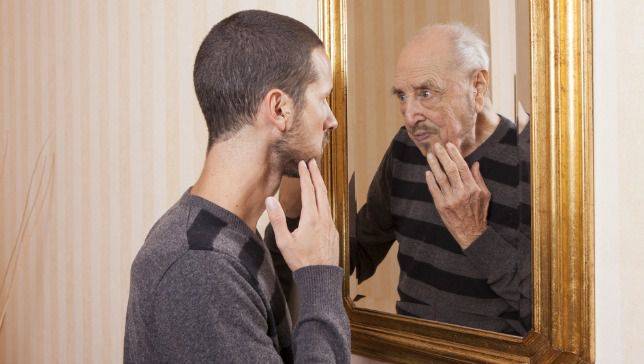 Like so many, I am frustrated. In large measure, I am frustrated with myself. It is me who needs the work. Privilege, whiteness, racist and similar words or phrases can be jingoistic, masquerading in a cloak of empathy. They really have no weight until I confront who I am with honesty and vulnerability. I have struggled with what I can only describe as our own hypocrisy; far too often we preach and we teach, but we do not fully live the Jewish values we espouse. How could this not be at the forefront of everything I do for as long as I have been doing it? What took me so long, why now? I think back at those interesting words at the beginning of Exodus: And God heard their cry and remembered the Covenant God made. What took God so long? There were 400 years of suffering and oppression. What took God so long?
It does not assuage my guilt to take solace in the human time it took God. Despite knowing I cannot change the past, I struggle with how I affect the future. This only adds to the frustration of knowing I have not done enough to bring us farther along. And do I really believe in what I proclaim?
Do I have the fortitude and courage to look deep within and grapple with who I am and what I must do to change? Only then will I be whole enough to join in the battle that our society and humanity as a whole must wage to create the world I profess to believe in. Will I cross over or find contentment on this side in my narrow but for the most part comfortable space.
We have had opportunities before. We have moved forward, slowly, haltingly, stumbling often one step forward and two steps back. In actuality, we have lived with the opportunities to make change continuously. What makes this moment different? Will I be like Nachshon, wading deliberately into the unknown Sea of Reeds or be one of those longing for the land of Goshen, that narrow harsh place, whose evils are known but tempered by our thoughts of powerlessness?
Prescriptions are being bandied about. Some might be curative and others little more than a bandage. Everywhere there are now lists of things proposing changes ostensibly serving to right society’s wrongs. How could these lists be created so quickly? Seeing these in the immediate aftermath of George Floyd’s murder makes me wonder if the answers been known all along. This would imply either the problem is not that complicated or we did not have the strength to enact these prescriptions. We need to ask ourselves which it is. Or is the problem so deep and thorny as to render it all but impossible to unravel? And we have left the status quo because we are overwhelmed at the enormity of the issue. At this moment in time are we willing to find out? Will this time different from all of the other times? Am I up to the challenge?
To everyone who is will be at the Seder table this evening, wishing you a Chag Sameach.
Next Year in Jerusalem, Next Year Face to Face (in person)
We still believe that there is a better place, a promised land, and the way there is through the wilderness. There is no way for us to get from here to there, except by joining hands, marching together. (Mishkan Tefillah, adapted)
If you can, be at the rally in New York this Sunday to express solidarity as a first step toward achieving the values that are at the center of Judaism and America. Together as the Jewish community of the United States with all others of goodwill, we will overcome forces of hatred and bigotry. There is much work to be done and miles to go before we sleep. Together we can get there.
Stopping by Woods on a Snowy Evening
By Robert Frost
Whose woods these are I think I know.
His house is in the village though;
He will not see me stopping here
To watch his woods fill up with snow.
My little horse must think it queer
To stop without a farmhouse near
Between the woods and frozen lake
The darkest evening of the year.
He gives his harness bells a shake
To ask if there is some mistake.
The only other sound’s the sweep
Of easy wind and downy flake.
The woods are lovely, dark and deep,
But I have promises to keep,
And miles to go before I sleep,
And miles to go before I sleep.
Shabbat Shalom
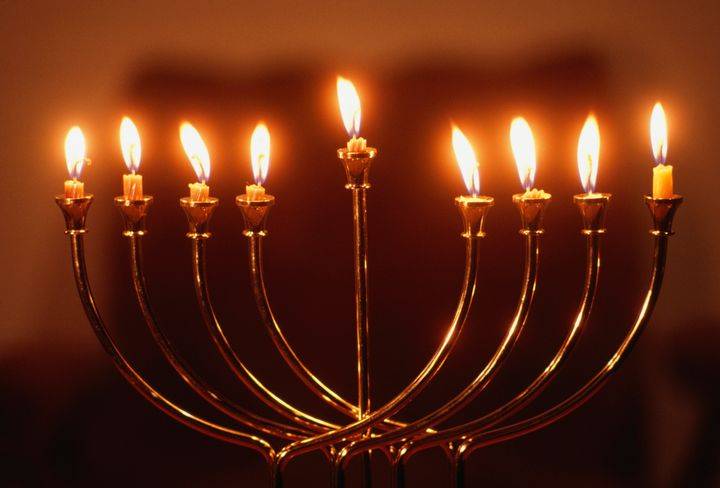 What are you dedicated to?
Hanukah is a special time.
For most of us, we only get part of the story behind Hanukah. It is a mix of celebrating a victory over oppression, particular identity over assimilation, an opportunity to celebrate the Sukkot holiday that had been earlier denied. And of course, let’s not forget Hanukah is the miracle of light when the purified oil miraculously lasted eight days until the new holy oil was available.
And with all of this part of the Hanukah story, we relegate it to “minor” status and often criticize those who make a big deal of the holiday as though it was something truly important- like Shavuot for example. I come down on the side that embracing Judaism is a good thing- whether it is done for a major or minor holiday seems less important. It is up to us to find meaning and to infuse our traditions and rituals with the things that help all of us resonate with them.
Mordecai Kaplan is quoted in Siddur Lev Shalem from his work, Meaning of God in Modern Jewish Religion, that the Jewish Religion imbued our rituals with such “universal, ethical, and spiritual significance that the issue involved was felt to be not only the saving of the Jewish people but the saving of all that made life worth living.” Kaplan was referencing the historical challenges of the various conquerors in our history. But the Al Hanissim prayer acknowledges a certain timelessness; The prayer ends “Bayamim hahem, uvazman hazeh,” “in those days and in THIS time.”
This year we are on the other side of the Winter Solstice. In other words, the darkest days are behind us and every day brings increasing light. We can only hope that this is true in all ways to interpret this. But it is up to us to determine what is important and worth fighting for. At the time of celebrating the re-dedication of the Holy Temple, to what is it that we are prepared to rededicate ourselves?
Chag Urim Sameach and Shabbat Shalom
 The tragic murder of 11 people one year ago in Pittsburgh is a harsh reminder that hatred is real and we are not always in control of events. Things often happen to us. As painful, hurtful, or even devastating as something can be, how we react is in our control. What is the life-lesson that we learn and how do we actively embrace that life lesson going forward?
Do we react cynically or with an open, albeit wounded, heart? Can we forgive? Will this event haunt us holding us back, or compel us to move onward? What is the vision of the future we see that is shaped by what happened, what is the world we want to see, and how will we get there?
I struggle with an anger and pain that could be overwhelming, especially as one of the Rabbis initially deploying to Pittsburgh with the Red Cross in the immediate aftermath of the shooting. Our Jewish tradition helps me re-center myself. Here I can embrace the timeless values that understand the human condition and provide a framework for a just society where we all might live in peace, based on the idea that we should treat our neighbors as ourselves. But it is a hard climb up to that mountaintop.
This is the challenge of Pittsburgh. Our hearts ache for those lost as a result of violent Anti-Semitism. We take solace in the love of our neighbors and find strength standing shoulder to shoulder with other people of goodwill to continue to strive for the kind of just society we want America to be.
Our tradition is one of deeds. Our response to this tragedy needs to be more than a feeling. There are many ways to respond through civic involvement and community activism. Judaism requires that we belong to a community committed to promoting our values be it a synagogue, philanthropy, or civil rights group. The important thing is that you are compelled to respond with actions to live the values of our tradition and to build a better world. What will you do?
Zichronam Livracha and Shabbat Shalom.
We have seen the enemy and he is us. So were the immortal words of the great American philosopher Pogo, the satirical cartoon creation of Walt Kelly. That droll quip speaks to a dark sinister reality about what is happening in the Jewish world, in direct contrast to the warning offered by Parshat Tzav.
God directs Moses to command the priests on what to do and how to do it as they fulfill their sacred responsibilities on behalf of the people Israel. It is clear that the sacred tasks require special ways of acting. There is too much at stake; for these are the priest making offerings to God on behalf of God’s people. The priest learn the strict code to which they must adhere. Deviating is not acceptable, and the consequences can be severe, as Nadav and Abihu will learn.
Later on, we learn that the nation itself is a nation of priests. That we as a nation are similarly charged with a series of behaviors that are required of us to fulfill our responsibilities. These laws are put forward in Torah and then developed by the rabbis and shared in the Oral Torah and the great works that expound upon these laws. Like our priestly class, the nation of Israel is bound to the laws of Torah on how to act in order to fulfil our sacred responsibilities of being a light to the nations.
That light has been dimming as a result of a move away from our role as faithful servants to something that embodies a hubris endangering and attacking our core values as a people. We have moved from the sacred work of Sanctifying God’s name to profaning God’s name, from Kiddush ha-Shem to Hillul ha-Shem.
At the most recent Rosh Chodesh at the Kotel we witnessed a brutal and tragic display of violence against the Women of the Wall. We do not agree on how we should engage in ritual. I respect other approaches to Judaism, even though I do not practice them. Likewise, there are many who would see my religious practice as unacceptable. However deep the disagreements may be, there is no justification for the violence perpetrated on the Women at the Kotel. I would argue that the shouting is an undermining of the special space that is the Kotel and place. But physical battery is blasphemy, plain and simple. It curses God’s name and everything that Judaism is supposed to represent. In the name of the sacred, everything sacred has been trashed, God’s great name was trampled in the mud. The violent encounter was in violation of all of Jewish Law and culture. This moment is a tipping point for us as a people. And this is not the only arena where our behavior needs to be critically examined. Tzav, commanded behaviors, require adherence to standards of decency and ethics. Are we acting as God has directed?
There is a rise in racism in Israel is an insidious cancer eating away at the very soul of the State. This racism dehumanizes the non-Jew, whether they be citizens of Israel or Palestinians of the West Bank and Gaza. The inability to see the other as one with fundament human and civil rights, entitled to dignity and respect, undermines the ideals of both the Jewish State and the Jewish religion.
The violent racist Kahanists, Otzmah Yehudit, have a new-found acceptance in Israeli politics. The inclusion of these group dedicated to an extreme racist view, enforced by thuggery, should be unthinkable, but instead of repudiating them and everything they stand for, they are legitimized and welcomed. There are appeals to the courts seeking redress, but ultimately the Israeli people must speak out unequivocally against this base and baseless hatred.
This issue also confronts American Jewry. As anti-Semitism is on the rise, American Jews must respond. The manner in which we move forward will determine if we are no better than those who hate us. Can we be strong and resolute without resorting to similar tactics as those whose ideas we find dangerous and contemptible? Can we find sufficient security in this extraordinary place and time in our history to battle anti-Semitism and not feel disenfranchised by those contemptible people on the margins of society who seek to do us harm?
The second temple was destroyed, our sages say, due to Sinat Chinam, the baseless internecine warfare that existed within the Jewish people. Instead of a tolerant society with many different interpretations of Judaism, the People of Israel became a fractious group of competing sects intent on imposing their particular view on everyone, ultimately sacrificing everything. Can we reclaim the ideals of Klal Yisrael, or is history repeating itself?
Our leaders from across the breadth of our tradition including Rabbi Nachman the Hasidic master, Rav Kook the founder of religious Zionism, and Rabbi Abraham Heschel an American Prophetic voice, to name only three, all warned against hatred against others, no matter how deeply offensive we might find certain practices. They encouraged us to embrace the best of our tradition so that we may bring forward our values in the world. Tzav as part of the book of Leviticus, as part of Torah, lays out the rules for how to act as a people in sacred service to God. These rules are based on core values that are central to every expression of Judaism, religious, ethnic, and cultural. When we violate the values that are at our core, we betray the sacred aspirations of our tradition. Tzav reminds us of our duties and sacred obligations and admonishes us not to stray. Tzav demands more of us, we need to take heed and act better.
With the marking of Sheloshim for the victims in Pittsburgh and the passage of time, an important question is now being raised, where do we go from here? Or more simply put, What Now?
In the aftermath of tragedy, it is important to rebuild and move forward. In response to a natural disaster, the need to rebuild is clear. Houses, infrastructure, all of the things physicallydamaged or destroyed need to be put back into place, often rebuilt from scratch. But with a disaster of this nature, the rebuilding is not so clearly defined. What is the enduring message we want our rebuilding to carry?
How do we honor the legacy of those taken from us, the outpouring of support from the greater community, the lastingJewish values that have kept our people and our tradition and will continue to do so? Other difficult but important questions to consider include these: Anti-violence training prompted someone to ask how can she run to safety, when saving herself means she leaves behind the more vulnerable? Another question, how do we practice hospitality and welcome people into our Jewish homes (synagogues), when the front door is locked or attended by an armed guard? How can we feel safe when anti-Semitic incidents are not only on the rise, but finding new levels of public acceptance?
There is an urge to rebuild the physical structures quickly, to return to normal and stand up to the hatred with defiance. But there was an important lesson learned from rebuilding lower Manhattan post 9/11. The deliberate but protracted process achieved amazing results. What was no longer is and recreating something from before does not acknowledge the event that has irrevocably changed us. The memorials honor the event and the human tragedy as well as the spirit of courage, hope and love. So too, the Shanksville memorial that I visited on my return from Pittsburgh is a moving and thoughtful tribute to the brave men and women on that fateful flight, United #93. It is prudent to resist the temptation to act too quickly, opting instead for aslower and deliberative process. The result will hopefully become an enduring symbol of strength, courage, hope and love, the best aspirations of our tradition.
The process of recovery will take time. It is a natural desire to try to shorten, if not deny, the grieving process. But our tradition clearly understands the importance of this special time. We grieve and then slowly begin the process of reintegrating ourselves into life with the experience and pain of loss a new part of us. Only then might we gain a new perspective. And from this perspective, we can create something honoring those we have lost and promoting our values for the sake of the generations to come.
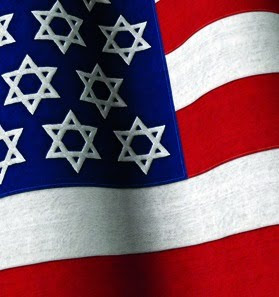
There is much we can learn from the tragedy of Pittsburgh. Important among them is that we have realized our parent ’s dream; we are truly a part of America. This awful incident marks a new understanding of our community’s place within the larger American society. Yes, we have made it here. But what that means is now different.
I am suggesting a new definition of “making it here” which is not about assimilation but rather acculturation, maintaining a blended Jewish and American identity, an American subgroup securely joining not only in the fight for our American ideals but also in the proximate threat of Anti-Semitism. This ability to fully and unapologetically embrace our dual identities, engage in championing and defending the ideals and values for us and for all, while confident and secure of our rightful place as citizens; this is what it means to “make it in America.”
Many of our forebears were content with the economic opportunity America offered, as well as the refuge from violence and persecution that were part the life of their homelands. They sought survival, not equality, imagining they might assimilate and become Americans. Although great strides were made, lingering fear and insecurity kept the American Jewish voice from being bolder in demanding action to save the Jews of Europe. The “go along to get along” mentality is part of our past. We are secure enough in our place as Americans to fight for ourselves and for others. Yet darkness lingers and Anti-Semitism persists.
We have long embraced the notion that none are free until all are free and we fight on behalf of others yet to enjoy the full blessings of our country. But now, with White Nationalism and Anti-Semitism, on the rise we have a renewed personal stake in the fight. This struggle against hate and violence is harsher and more hardscrabble than our previous contests for justice and equality, such as those against quotas or deed restrictions. The “no coloreds, Jews, or dogs “ signs from what we thought was a vanquished past reappears in our consciousness. The privileged position many thought we enjoyed needs to be reconsidered and recast.
For most of our history, we Jews have taken care of ourselves. Our morning prayer, Eilu D’varim, include the obligations we set out for ourselves as responsible members of the community: visiting the sick, burying the dead, comforting the mourner among them. We have developed our own institutions devoted to assisting in those practices. HIAS, Jewish Hospitals, and Jewish Universities were created to respond to the needs of our people. Our modern Federation, JCC, and JFCS can trace their roots to this historical understanding that we have been segregated from the broader society; that we had to rely on ourselves to provide for us, as the larger society in which we lived would not. From this self-reliance, we have then reached out to assist others.
The understanding of our mission of helping those in need, the social justice mission at the heart of Tikkun Olam and Tzedakah, emanates from the values of compassion and outreach to the unheard and unseen. Because of our history, Jews have been reluctant to accept help from outsiders, even as we support others. We have been quick to join the fight for Civil Rights but slow to bring outsiders into our places of need. Perhaps, due to our history, such help is suspect, perceived in our collective psyche as a sign of weakness or vulnerability. Pittsburgh has changed that.
When we examine our history, we wonder whether our golden age in America was fleeting or is it enduring. I believe it is the latter, but it is none-the-less threatened by malevolent forces. A recent poll[1] indicated that almost 6% of the non-Hispanic American population, or about 11million, subscribes to the views of the Alt-Right. This means two very important things: First, 94% don’t accept these hate-filled views AND second, that a real Anti-Semitic threat exists. Both of these are part of our reality and we must be alert to the implications of both.
The overwhelming nature of the horror perpetrated upon the Jews in Tree of Life Synagogue has knocked us down with a blunt force that was overwhelming. Every resource we have is insufficient to provide a full measure of comfort. We are indeed vulnerable at this moment. And at this moment, something miraculous happened. The community of Pittsburgh rose up and is trying its best to hold us. Pittsburgh’s various communities, Moslem, Christian, and practically everyone else have come to our aid saying to our Jewish community, “you are one of us and we are appalled. An attack on you is an attack on Pittsburgh, and this will not stand.”
We have in our history experienced extraordinary acts of kindness from outsiders, such as the King of Denmark and the Righteous Gentiles of the Holocaust. And here in 2018 America, the Jewish community needed help and the broader community responded. We are not alone, we are America, supporting and now being supported by our brothers and sisters. It is an extraordinary light shining on a very dark experience. Thank you for your love and support. The refugees who are our forebears have seen their dream of America come true. We are inextricably part of the fabric of America, in both its glory and in its struggle. In the names of those Jewish martyrs so tragically lost, let us join with all others of good will continuing the hard and fraught process to realize the aspirations of the American dream.
[1] University of Alabama, George Hawley, published by UVA’s Institute of Family Studies indicates 5.64% of the 198mm non-Hispanic Whites in the United States have beliefs consistent with the Alt-Right’s worldview.