Tag: Yamim Noraim

  • Parshat Ha’azinu-Just a Thing Before I Go

    Moses knows this is his last day, and he does not ask for one hour alone.

    Ha’azinu opens with him addressing not his family, not his closest disciples, but the heavens and the earth themselves: “Give ear, O heavens, and I will speak; and let the earth hear the words of my mouth” (Deuteronomy 32:1). The parsha takes its name from that first word, ha’azinu, “give ear.” After forty years leading a people out of slavery and through the wilderness, and on the day he will die without ever entering the land he spent his life walking toward, Moses does not turn inward. He turns outward and asks the whole of creation to listen.

    That question continues to dog me.  What is left to do, on your very last day, except finish the work?

    There is no time for anything else. No mountain to climb for a private reckoning, no quiet reflection meant only for himself. Moses uses what remains of his life exactly as he used all of it, in service to the people he is about to leave behind. The tradition knew this. Rabbi Eliezer taught, “Repent one day before your death” (Pirkei Avot 2:15). His students asked the obvious question: who knows the day of their death? He answered that this was exactly the point. Since we don’t know, we should live each day as though it might be that one (Babylonian Talmud, Shabbat 153a). Moses is living this teaching on the one day he knows for certain is his last.

    Most of us don’t have that certainty. I do not know whether this is merciful or cruel, but it is human life.

    I often use a passage when I officiate a funeral. Death will come, and we cannot enter into judgment with it. Our question, why, will go unanswered. We rob death of its ultimate victory by living our lives so that when death comes, it takes us from a world where one corner is a little better because we were there. These thoughts do not give us an answer, but they refuse to let the unanswered why be the last word. And for the bereaved, they offer comfort for a loved one who is now but a precious memory.

    That, I think, is what Moses is doing on this last day. He has his own unanswered why. After everything, he will not cross into the land, and Ha’azinu does not resolve that grievance for him. He is resigned to his fate and doesn’t spend his final hours arguing the verdict. He spends them making sure the corner of the world he’s standing in, the people in front of him, are a little better for having had him.

    Rosh Hashanah asks us to imagine our names being written, and Yom Kippur asks us to imagine them sealed, v’chotveinu b’sefer hachayim, inscribing us in the book of life. We ask for more time in the very season that reminds us we won’t have unlimited time. We know we’re mortal. We ask anyway. I don’t think that’s a contradiction so much as an act of honesty. Wanting more life and knowing its limits turn out to be the same posture, not two different ones.

    Could I live even one day, let alone a whole year, with Moses’ clarity? Probably not, but I would like to try.

    The hope of these Ten Days isn’t that we become Moses. On his last day, we’re handed a smaller, answerable question in place of the one none of us can answer. Not why. Just this: whose corner of the world got a little better because we were standing in it this year. Who we sheltered. Who we listened for. Who heard us say, this year, give ear.

    G’mar chatima tova. May we be sealed for a good year, and may we spend it the way Moses spent his last one.


    I acknowledge AI (Claude, Gemini, and Grammarly), in developing this essay.
  • Yizkor 8785

    October 7 marks the solemn first anniversary.

    These are the individuals we have lost.  If you are blessed not to need to attend Yizkor services for lost loved ones this year, show up to share a moment of remembrance for these souls.

    https://www.timesofisrael.com/those-we-have-lost/


  • Welcome to the Third Act

    Welcome to the Third Act

    Turning 64, I embraced the idea that I have begun the third act of the play that is my life.  At 32 years per act, that gets me to 96 years old before the final curtain.   Allowing for an epilogue and perhaps an encore, I get a bit more, but likely I will take my final bow sometime before that mystical 120 years that we wish for one another.

    So, Rosh Hashanah is an even more “ crucial new beginning”, as I ponder the question, “If granted the gift of life, what will I do with it to make it count?” For third acts are about resolution and bringing things together.

    The High Holidays are a time for reflection. In my work, a reimagination of the Ethical Will, I share that reflection is an important tool.  Reflection is about checking in to see if we are on the right path, and making the necessary adjustments.

    These adjustments can be one of two types:  Adjustments can be made to get back on the path from which we have strayed, or adjustments can be more radical, a realization that we need to walk a new path on the way to something different than we originally intended.

    This introspection is a core message of the High Holidays.

    When I look back in about 32 years from now, I hope to see a life well lived- not in its glory or material accomplishments, but in its meaning and human connection.  It is in the choices I make today and the things I do now, that will determine whether I reach the goal of a life well-lived.

    I hope that each of us uses this time of the High Holidays to find our path for the coming year, and then walking it.  Wishing everyone G’mar Chatima Tova, to be sealed in the Book of Life for a happy healthy New Year.


  • G’Mar Tov- How are your High Holidays Going?

    It is different to be sure, but our High Holidays experiences can be moving and meaningful


  • This High Holidays, What do you need?

    Everything is turned upside down due to the pandemic.  Our High Holidays are no different.

    What do you need to make this a meaningful experience for you?

    L’Shana Tova uMetuka


  • Living a Meaningful Life, we begin Elul with Parsha Re’eh

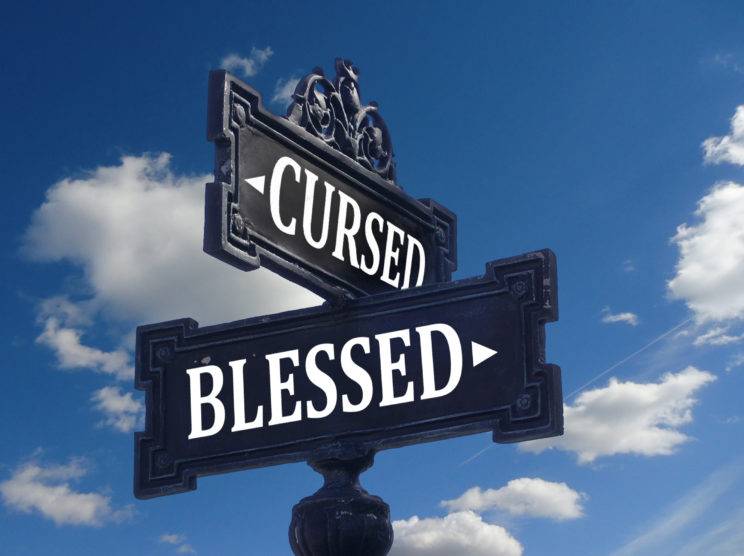
    In the Torah, Moses sets out a choice for us this past week.  Blessings and curses.  It is a deceptively easy binary choice.  Given good stuff or bad stuff as alternatives, it seems like a no-brainer.  I opt for the good stuff!

    But it’s really not so simple.  For what does that mean for us to choose the Blessings,  especially to us in the modern world?  That is the fundamental question to consider in the month of Elul, leading up to the Yamim Noraim, these special High Holidays.  Perhaps we, like our ancestors, are metaphorically also on the verge of entering into our own Promised Land. It is more complicated than: Choose Blessings and you go in; Choose Curses and you stay out.  Because it is about more than entering The Land; it is about living fully while there, possessing it and becoming one with it.

    During Elul, as we prepare for Rosh Hashanah and Yom Kippur, we ponder the choices we make in our lives.  As we reflect on the year past, we see successes and failures. And as we look ahead, we use this understanding to chart our course.   Are we on the path we want to be on, the one we should be on, the one we need to be on?  And presuming we have been blown off course by the winds and currents of life, how do we right our ship and get back on our path?

    Elul is our time to consider these questions.  Before we can ask for forgiveness we need to know where we went astray and maybe understand why.  Before we can ask to be written in the book of life, we need to know what it means to choose a life of blessings so that this coming year brings us meaning and connection.  Then we are able to approach the Divine to make things right and set a course forward for a year where we deliberately choose blessings, knowing what they are and how we might pursue them.

    L’Shanah Tova!