History should be Embraced

Trying to rewrite history cannot deny its truth.

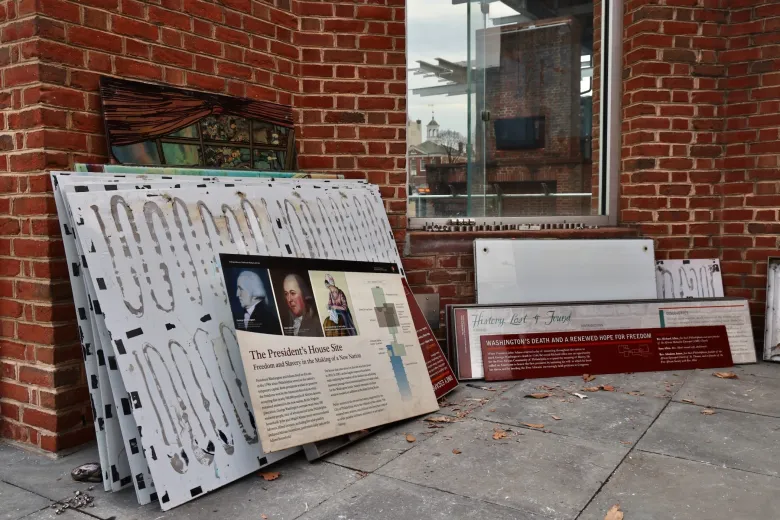
Slavery is a moral stain on the United States. No matter how much bleach we use, we cannot scrub it out, nor can we pretend the stain doesn’t exist. Removing historically accurate plaques that teach the fullness of our history at the President’s House exhibit on Constitution Mall, the paradox of Freedom and Slavery, does not make the events they depict any less true. The attempt to deny our past keeps us from learning and growing from it. Our challenge is to rise above it, not to define ourselves by it and remain mired in it.

The fear of some who see this as an attack on our country and turn a blind eye is baseless. I am ashamed of slavery and the hatred it embodies, while remaining proud of the aspirations our vision embodies. We have a long journey ahead of us to right the wrongs and heal the lingering pain and injustice. But we are better off when all are better off. When every person is treated with justice, dignity, and respect. These are the principles of this nation, principles we must remain dedicated to championing.

When we hide from things that make us uncomfortable, we miss the chance to engage with and learn from them.  We are better than slavery.  It is our history.  But it does not have to be our legacy.  We are better than that.


Shabbat Shalom

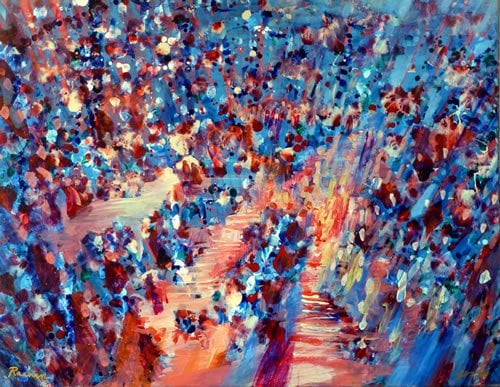
The Shvesters share their rendition of a poignant Yiddish song Vi Iz Dus Gesele, Where is the little street? A song of longing, nostalgia, and lost love.

It is a way to help us perhaps enter this Shabbat.  Given the current turmoil, we seek a better time.  May we work to see that time come soon.

Wishing you Shabbat Shalom.

Do You Care?

We are horrified that Temple Beth Israel in Jackson, MS, was firebombed. It is a violent act of hatred targeting Jews. As antisemitism continues, we find ourselves vulnerable and seeking support.

The community of Jackson, MS, has rallied around its Jewish community in wonderful ways. Many of us, however, feel abandoned by others across the country who have not expressed support for their local Jewish communities amid escalating threats. This is counterproductive, creating divisions and exacerbating tensions where they should not be.

Sadly, there is too much violence and hatred. It is impossible to respond to every incident. The Jewish communities could not meet that standard either. We would spend substantial time issuing statements of outrage and comfort instead of devoting ourselves to the important work of uniting against these blights and working toward changes in our society to create a safer space for all.

Too many understand the pain, often through lived experience. We need solidarity and action, not just words.


Shemot in our Times

Anthropologist Margaret Mead shared, “Never doubt that a small group of thoughtful, committed citizens can change the world; indeed, it’s the only thing that ever has”.

Shifrah, Puah, Miriam, and Yocheved embody the courage to defy brutality and embrace life.  It is our turn.

To those who value our democratic principles, most notably the rule of law, we applaud the courage to fight in the courts and to march in the streets. It is everyone’s responsibility to join and champion the aspirational values at the core of our country.


Does the kippah on my head place a target on my back?

With the increasing violence in public spaces, maybe the answer is yes. What should I do about it? I could cower; many people have said they remove their Jewish symbols, like a Chai or Magen David, because they fear being targeted.

I have been wearing a kippah for many years, and since the war started, I wear a kippah with the Israeli flag and the words “Am Yisrael Chai” stenciled inside. I am proud to show who I am and what I stand for. But does it come with any risks?

My kippah has actually been an invitation for people from all walks of life to approach me. At a Costco, on a turnpike rest stop, or while walking on the street, people offer words of encouragement and support. Most people are decent folks. Most are not looking to harm others; they are living their lives and caring for their loved ones, just as I strive to do.

We must not allow acts of violence from uncontrolled radicals to control us. Those responsible for protecting us face a significant challenge, and a system based on freedom rather than repression often leaves them a step behind in safeguarding our rights and safety. They require additional support to perform this vital work. We can help.

We need to get out, gather, socialize, and connect with others. We don’t have to agree, but we must show we care. We need each other. The hateful rhetoric shouldn’t be fought with more hate, but by reaching out, creating, and living in the society we believe in.

My kippah is a symbol and a call to the people I meet that our humanity continues to thrive. That is the kind of target I strive to be.


What’s in a name?

Genocide is a highly charged word.

In Shakespeare’s Romeo and Juliet, Juliet asks, ‘What’s in a name?’ Names are simply labels we use to identify things, but the true nature of those things exists regardless of what we call them. Genocide is a highly charged word. We get so caught up in the word and all of the intense emotional baggage it carries that we forget the underlying tragedy: it is an attempt to understand what is happening in Gaza.

One side calls it a genocide; the other disputes that term, accusing the accusers of deliberately misusing the word, targeting the victims of such an experience as if they were the perpetrators of that very same horror. We get caught up in definitions, a kind of territorialism, claiming ownership of that word, and in doing so, we completely miss the point.

The people suffering in the war in Gaza are truly experiencing pain. It’s not just about numbers—whether it’s one person or many—innocent victims of the Hamas-Israel conflict have died. They go hungry. They are homeless. They are victims. Although I do not trust the statistics from the Gaza Health Ministry, there’s no way to measure the full extent of the carnage accurately, and Hamas’s role in this is dehumanizing Palestinians, echoing what the Nazis did to Jews.

We must navigate this challenging space and find ways to offer humanity and hope that we were denied, and, sadly, to the Palestinians as well. From the ashes of Auschwitz, we proclaimed Never Again. Was this declaration meant only for us? Our Jewish duty to be a light to the nations requires that it not be. We must uphold our tradition’s promise by maintaining our humanity and embracing the virtues of Pirkei Avot (2:5); in a world that has no worthy men, strive to be a man.

Whatever you call it, the war and anguish must end.


What does it take for fear to be overcome by courage?

What does it take for fear to be overcome by courage? To dare, to risk, and to fight for what you believe in rather than cower?

The recent Torah portion Shlach begs these questions. Shlach, translated as “Send,” narrates the story of the 12 spies. As you recall, the unit was dispatched on a reconnaissance mission to survey Canaan. They returned with tales of a bountiful land, but one inhabited by giants, making it seem impossible to conquer. Only Caleb and Joshua believed that the Israelites could be victorious, but they were overruled.

Fear gripped the spies; the Giants were too formidable, and their fear raised paralyzing questions. Perhaps they thought—we could live without realizing the promise of the land; maybe we could make do in Mitzrayim or confined spaces. The reticence of these people exploited the vulnerabilities of this nascent nation. They defeated themselves before they were ever tested. Their doubt in themselves, their destiny, their values, and indeed their God meant that this entire generation of recently freed people needed to be replaced by those whose spirit and strength were forged by the trials and tribulations of the harsh Midbar or desert. This spirit and strength are the answers to my initial question: what does it take to overcome fear with courage?

With this strength and spirit, you know in your heart that what you possess and believe is worth fighting for and to have enough faith and courage to take the next step even into the unknown. At the same time, you remain true to your values and morals despite the horrors of warfare, facing the battle with bravery yet not losing your soul in the fog of war.

Now is the time for us moderns to embrace these lessons. More than ever in our recent history, we need to lean into our values — the things we love deeply enough to champion and fight for.

For Israel, the boldness and cunning displayed—from exploding pagers and covert Mossad agents to an aggressive air strike aimed at preemptively striking Iran, a country whose nuclear ambitions threaten Israel—are significant. It is crucial to understand that waiting and hoping, along with economic sanctions, are not always the correct responses. However, it is also necessary to honestly recognize that the costs of this fight will be high, both in lives and resources. Staying morally superior during battles against a stubborn enemy has been especially difficult during the war in Gaza.

And just like there, we face challenges here as well. Domestic rabid Jew-hatred must unite us. We must stand up for our right to live freely, securely, and safely in the United States, a land of great abundance and blessings. We will not cower in silence or fear.

This is the time to stand up and defend our values because this is our home. To those who hate Jews or anyone labeled as “the other,” we fight for the fundamental rights that form the foundation of this great country, both for ourselves and everyone else, to protect the principles of equality, justice, and liberty. The hopes of our people and our traditions are at risk, but we cannot back down.

As Americans and Jews, much is at stake. Indeed, maybe everything is at stake. The fear of the unknown cannot silence us, nor can it allow us to disregard our sacred values and act with impunity against perceived threats. By standing together and believing in ourselves, each other, and the sacredness of our tradition’s values, we will be strong, and we will prevail—Chazak v’Umatz, strength, and courage.

Barukh atah adonai eloheinu melekh ha’olam asher kidshanu b’mitzvotav v’tzivanu la’asok betzorkhei tzibur.

Blessed is the Eternal One who commands us to work on behalf of the needs of our community.

Amen


United

Rabbi Adrienne and I first met at Temple Micah years ago when we shared the High Holidays there in Lawrenceville, NJ. It was wonderful to see her again at the United for Security Emergency Leadership Mission in Washington, D.C., last week. Our smiles show the joy of reconnecting, but they also mask the urgent issues facing the American Jewish community. This is a time for us to come together, setting aside denominational differences, and recognizing that we are all part of the larger community of Am Yisrael.  This national fly-in was to advocate on the Hill for increased funding for security and a commitment to

With Congressman Brendan Boyle

fighting Antisemitism.

We hope our advocacy efforts helped Congress and the Senate understand the unacceptable risks to our community and encouraged them to take action to protect us from those who mean us harm.