Tag: Kippah

  • The Kippah on My Head Is Not a Target on My Back

    Should I take off my kippah?

    I first asked myself that question years ago, before a trip to Hungary. Viktor Orbán was reaching for power by invoking an old script, the anti-Semitic tropes his country knows too well, and I did not want to become a small, portable target for whatever that script might awaken in a stranger. I was not traveling alone. My wife would be beside me, and the fear was not only for me. If my kippah made me a target, it made her one too.

    I brought the question to my friend and teacher, Rabbi Brad, a man with a cooler, wiser head than mine. He didn’t answer it. He asked me to ask a different question. For many people I would meet, he said, I might be the first Jew they had ever stood beside in the flesh. Perhaps, he suggested, the kippah wasn’t a liability to manage. Perhaps I was being handed an assignment, an unlikely diplomat to a community that might be more curious than cruel.

    I took his advice, and it opened doors I could not have imagined from the outside. Jews who had spent decades in hiding found me because I was visibly, unmistakably one of them, and that visibility told them it was safe to speak. I heard survival stories that had never been spoken aloud before that day. None of it would have reached me if I had made myself smaller, safer, and harder to see.

    This is not just a piece of personal history. It’s an argument for a claim I still believe: the kippah was never a challenge thrown at the world. It was a door held open.

    I did not expect to be asking the same question again, this time about New York City, in 2026. Yet here I am.

    Here are the people I encounter on an ordinary day here. The cab driver who gets me to the airport. The man behind the bodega counter who knows my order before I say it. The woman at the pushcart serving food from a country I couldn’t find on a map, standing beside another cart from a country nowhere near it. The subway platform at rush hour, where I can stand for four stops and watch a whole world get on and off around me, no two people from the same place, all of them going somewhere.

    New York was never the melting pot we were taught to sing about, where everyone’s edges dissolved into sameness. It is a stew, every ingredient still itself, still recognizable, simmering together anyway. It is a city built, whatever its failures, on the idea that a person gets to wear who they are without flinching, on that platform, behind that counter, and everywhere between.

    I won’t pretend the danger people are naming is imaginary. There is an angry rabble here too, and a hateful mob, and, worse, the lone wolf who needs no crowd at all to do harm. And I won’t pretend that taking off the kippah wouldn’t make me a slightly harder target to find. It would. Hiding works, a little, the way hiding always works. But safety was never the only question worth asking, and it cannot be the only one we let ourselves ask. Playing it smart is real; each of us has to make our own honest reckoning about when a threat is truly a threat, and I won’t tell another Jew what their reckoning should be.

    However, a life organized entirely around that reckoning isn’t a life. It’s a retreat dressed up as caution. We need a north star that isn’t fear. Something better. Something that still believes the man at the bodega counter, the driver, the woman at the pushcart, might be capable of curiosity instead of contempt—because most days, they are.

    I learned this from my rabbi and friend, standing at a doorway to Hungary, years before I understood what he had truly given me: the kippah on my head was never a target on my back. It was always, and continues to be, an invitation. I won’t let anyone—not history, not a headline, not a lone wolf’s shadow—convince me to fold it up and put it away.
  • Does the kippah on my head place a target on my back?

    With the increasing violence in public spaces, maybe the answer is yes. What should I do about it? I could cower; many people have said they remove their Jewish symbols, like a Chai or Magen David, because they fear being targeted.

    I have been wearing a kippah for many years, and since the war started, I wear a kippah with the Israeli flag and the words “Am Yisrael Chai” stenciled inside. I am proud to show who I am and what I stand for. But does it come with any risks?

    My kippah has actually been an invitation for people from all walks of life to approach me. At a Costco, on a turnpike rest stop, or while walking on the street, people offer words of encouragement and support. Most people are decent folks. Most are not looking to harm others; they are living their lives and caring for their loved ones, just as I strive to do.

    We must not allow acts of violence from uncontrolled radicals to control us. Those responsible for protecting us face a significant challenge, and a system based on freedom rather than repression often leaves them a step behind in safeguarding our rights and safety. They require additional support to perform this vital work. We can help.

    We need to get out, gather, socialize, and connect with others. We don’t have to agree, but we must show we care. We need each other. The hateful rhetoric shouldn’t be fought with more hate, but by reaching out, creating, and living in the society we believe in.

    My kippah is a symbol and a call to the people I meet that our humanity continues to thrive. That is the kind of target I strive to be.


  • Israel Kippah- Standing together


    It is a difficult time in Eretz Yisrael.  Our Israeli brothers and sisters need to know we stand together, with them and with each other.  With every $36 donation, we will send you this beautiful Israel Flag Kippah.   $36 is twice $18 (and 18 means “life” in Hebrew).  All net proceeds go to World Central Kitchen and the Magen David Adom.

    The inside of the Kippah are the words:

    I Stand With Israel

    עם ישראל חי

    Proudly identify who you are and support the important humanitarian work so desperately needed.

    Thank you


  • Conspicuous in Zurich

    Feeling Conspicuous

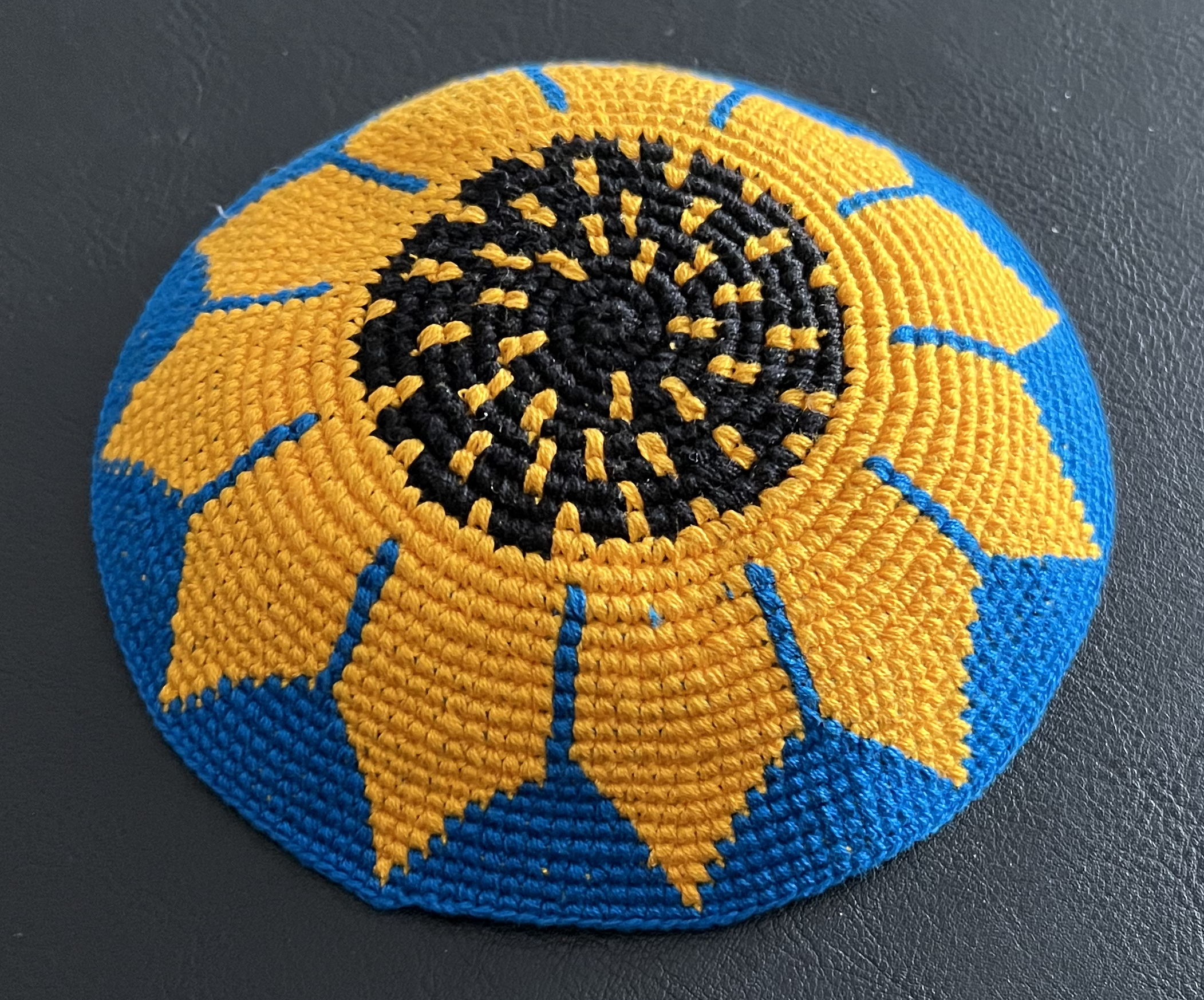
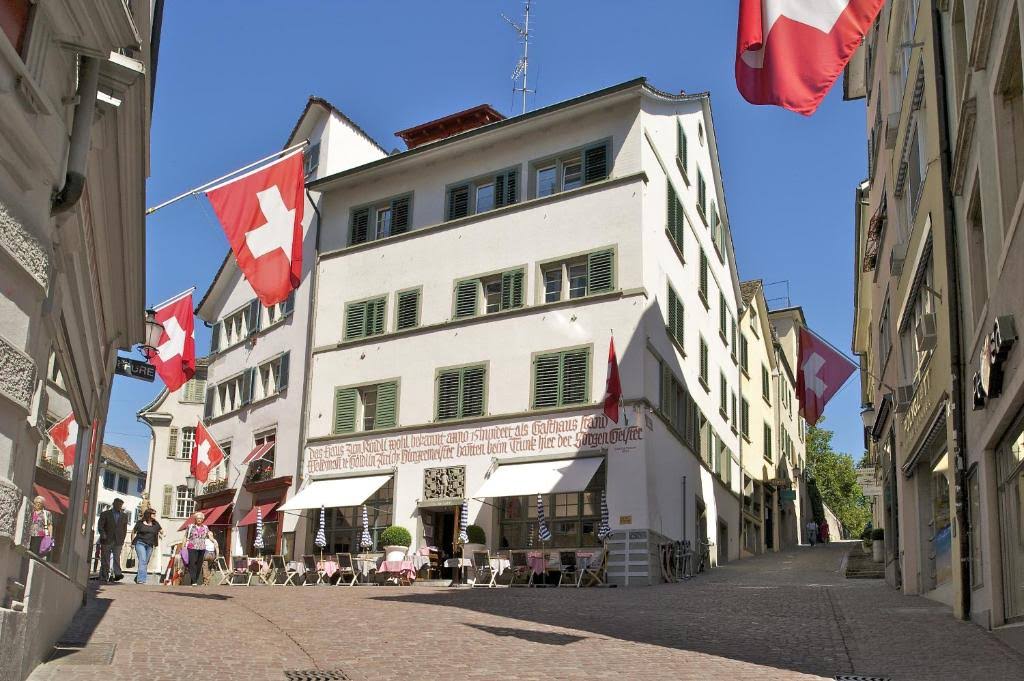
    Wandering the streets of old Zurich, I felt conspicuous.  As usual, I wore my Ukrainian Sunflower Kippah, which usually draws attention. But somehow, this time felt different.  The medieval alleys and streets were charming; gassen and the strassen wound around, up and down hilly terrain.  The cobblestones beneath our feet, the old-style buildings, and the lake uniquely charm Zurich.  And I was generally comfortable in my surroundings.  But I wondered if people were looking at the Kippah or the Jew.

    Switzerland was neutral during the war, of course.  They tend to be neutral on most things except for commerce, where they have a very pro-business attitude.  Zurich was not a city that experienced Nazi occupation or Jewish deportations.  But the streets seemed strangely empty of Jews.

    In a meeting with the liberal Rabbi of Zurich, he shared that it is a small Jewish community that gets along well.  The more orthodox denominations do not mix with the more liberal ones, and several synagogues exist.  Knowing this did not assuage my feelings as we wandered around a portion of the city where I was the identifiable Jew.  The rabbi wore the only other kippah I saw.

    I have walked the streets of many cities in many countries, clearly identifying myself by my kippah, so I am unsure why this experience seemed heightened.  Perhaps the challenges in Israel, wherein orthodox political parties have pushed to define who is a Jew, have created a particular kind of angst.

    In the United States, my kippah is a conversation starter.  People often comment on my kippah, on the streets, or even at the orchestra.  I use this kippah hoping to discuss supporting Ukraine war victims.   I only received furtive glances here, except for the man at passport control.  As I was leaving, he cheerfully commented on the kippah’s unique nature, giving me the opportunity to talk about Ukraine.

    There is a saying that just because I am paranoid doesn’t make me wrong.  But for now, I will chalk it up to my paranoia and continue to publicly and proudly identify who I am.

  • As the candles glow, Remember Them

    Now is the time to rededicate ourselves to the cause of humanity by helping Ukrainians during this harsh winter.  The Russians are brutal, targeting civilians to bring Ukraine to it’s knees.

    Please help by donating what you can to the relief efforts.

    Donate here and receive a Kippah to proudly display, like the Menorah in the window, that you #StandWithUkraine.  www.RabbiDavidLevin.com/Kippah.

    Chag Urim Sameach!

  • Don’t Buy this Kippah

    Don’t buy this kippah

    In fact, it is not for sale. We are not selling the Sunflower Ukrainian Kippah. Instead, we ask for your contributions to support the overwhelming needs of the Ukrainian and Polish people dealing with the horrible war that rages in Ukraine.


    The JCC of Krakow is on the front lines of helping people through this tragedy.

    With your donation, we are sending you this kippah as a way of saying thank you for your help and as a way for you to stand publicly, proudly,  and Jewishly in support of this humanitarian cause.

    Please join us.

    #standwithUkraine

    Kippah