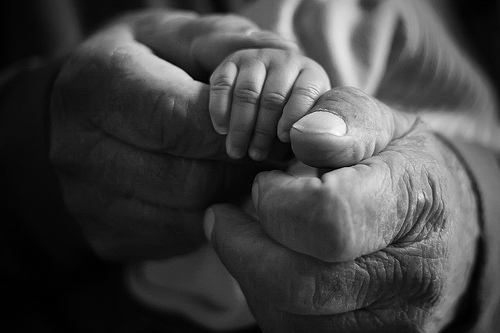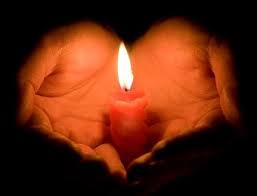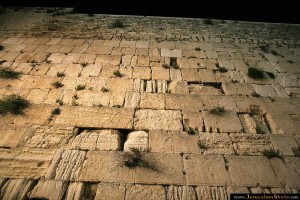
In this prayer that follows the Shema in our evening service we acknowledge we are vulnerable and seek the loving embrace of the Divine to shelter us and care for us as we sleep. May we all find loving arms to hold us as we hold others. Shabbat Shalom.
Our prayers are with the victims of the horrible terrorist attacks across Paris. Now is the time to grieve. The natural reaction is to strike back and avenge the carnage. But before we do, let’s pause and consider our actions, making them deliberate and thoughtful, to do more than lash out and punish. Who is the enemy and how do we best work to defeat them in the long-term war of ideologies in which we are engaged?
It is enticing to react and retaliate, but violence untargeted or mistargeted will serve to create more victims and foment more hatred. The threats are real, but we need to know who the adversary is and the most effective ways to combat the enemy. Precipitous action will do far more harm than good.
Sadly, there are those who are struggle to support the French, seeing this tragedy as an opportunity to say “turnabout is fair play” due to perceived and real anti-Semitism in France. We are better than that. The Jewish values of Chesed and Rachamim compel us to reach out and provide comfort and support. Our compassion helps us to rise above all kinds of hatred and Judaism becomes a beacon of light to the Nations.
As a co-editor of the Philadelphia Jewish Voice, I reviewed this wonderful and fascinating story that we posted today to commemorate Veteran’s Day. It is a moving story about a certain Jewish chaplain who transcended boundaries to honor the memory of all the fallen.
When is it okay to participate in holidays traditionally reserved for others?
Most of us are preparing for Thanksgiving. We have embraced Thanksgiving as the quintessential American holiday, and as such, we will be planning travel to visit other relatives, prepare a bountiful table and of course watch the Macy’s parade in the morning and football thereafter. American Jews embrace Thanksgiving, just like all other Americans, but we struggle with other American holidays. Although almost all of us celebrate Thanksgiving, many of us still wrestle with Halloween and most of us would not consider celebrating Christmas.
These three holidays are iconic parts of living in America. And all three share religious backstories. Christmas as the celebration of the birth of Christ is certainly the most obvious. Halloween is grounded in pagan rituals and Thanksgiving is essentially a Christian Sukkot, rooted in a Christian religious tradition of gratitude for God’s bounty. What makes the secularization of this holiday such that we are able to embrace it and celebrate, stripping it of its original grounding and retelling the story in a way that it can become ours, and why are we unable to do likewise with the others?
Many of us kept our children from Trick-or-Treating worried that dressing up in a costume and participating was an affirmation of a pagan ritual of witches and warlocks. However, Halloween has been stripped of its religious meaning. I read recently how one rabbi used a creative Jewish lens through which the celebration included sharing excess candy collected by her children with the less fortunate. One of my fonder memories is taking my son by the hand, dressed in a costume that mom created, while I was dressed up as a giant hamburger. The only bad part of Halloween was the stomach-ache and crash after my sugar high from over indulgence.
Christmas is a more complicated situation. But in this age of acculturation, interfaith couples and of course commercialization, there are places where we can enjoy the holiday. I say that very cautiously and carefully because I do not want to be disrespectful of those that hold this as a sacred holiday. However, the Coca-Cola inspired Santa Claus and Rudolf the Red Nosed Reindeer both pale in comparison when I faithfully listen as Bing Crosby sings White Christmas in the movie of the same name (Bing also sang it in Holiday Inn). Irving Berlin’s classic homage yearns for us to be able to embrace this American holiday as our own. As many of you know, coming from an interfaith background, I am familiar with the beauty of a family gathering, honoring my grandmother, and sharing gifts on a day devoted to love and togetherness. We as modern American Jews need to figure it out. And in our own unique way, we have already begun.
National Menorah Lighting on the Mall
We have substantially ramped up the Chanukah holiday celebration. This is however a contrived response to a Christmas in which we long to participate. Without reservation I fully support the increase in joy we bring to our “minor” religious holiday including the latkes, Chanukah cards, 8 days of presents, parties and so on. We go a step further in our “Chinese food and a movie” ritual on December 25. The question is whether we maintain a fictional “Chinese wall” separating holidays, holding steadfast to our modern re-interpretation of Chanukah, or can we consider an American Secular Christmas? I submit that celebrating one holiday does not preclude the other, nor does such a celebration threaten our core beliefs. Instead, acknowledging Christmas in a modern American Jewish context can bring us in closer alignment with the Jewish dream of acceptance in America and more importantly, serve as a significant learning opportunity to share with our children what these holidays might mean metaphorically and Jewishly.
Evoking the beauty of the Shabbat bride entering the room, my mind recalls those wondrous moments watching brides come down the aisle to the chuppah. Please take a few moments to enjoy this beautiful rendition of Lecha Dodi. Wishing everyone a Shabbat Shalom.
Two iconic songs reverberate in my mind. The first is the American classic, “This Land is your land, This Land is my Land.” It is a dream of a shared society here in America. The second song is the deeply moving “Theme from Exodus”, with its seminal line “This Land is mine, God gave this Land to me.” This soaring tribute to the Jewish Homeland is the dream of a people rooted in an ancient connection to the Land. The two songs are not as dissimilar as they appeared initially to me because of what is missing.
Woody Guthrie’s Ballad in its beautiful message of inclusion does not include the Native Americans of the land. The message of Exodus is similar in its treatment of the long-time native inhabitants of Israel. The Palestinian narrative likewise does not have a place for the Jewish State. Each song of hope is exclusive to its own kind.
Sharing is often profoundly difficult, particularly when it is with people unlike us, whether culturally, ethnically or by some other difference. It is even more problematic if the claim of one is at the expense of the other, as some zero-sum game. The Israeli and Palestinian people both struggle with it and suffer from it. “This land is MY land” seems to be the respective song of each. For many Palestinians, Israel’s existence notwithstanding, the long view holds that eventually Israel will go away and the rightful owners will again return. And Israel defines itself as the Jewish state, born from a combination of hard work to build, war to defend, investment, political will and a historic claim. The Israeli’s ongoing and expanding presence in the West Bank however severely complicates the landscape.
If Israelis and Palestinians will not amend their respective stories both sides will continue to fight, one to preserve what is there, one to restore something there. These limited narratives foment strife and hatred and inflict great human suffering in a world growing ever smaller and more dangerous. As long as each side clings fast to a story that rejects the claims of the other, the status quo will continue. Statesmen and visionary leaders on both sides must work to move past narratives that are mutually exclusive and find space to coexist with the other. Then these leaders must persuade the people of this reimagined future. Both sides must embrace a peaceful coexistence to finally stop the otherwise never-ending cycle of death and destruction. For neither side is ready or willing to go away.
Can Zionism embrace the Palestinian narrative respectfully? Would the Palestinian narrative accept Israel’s legitimacy? Ironically, because both Israelis and Palestinians are so fully committed, each requires the other in order to survive, let alone thrive, for neither will ever give up. Furthermore, in this difficult and ever more radicalized region external forces challenge both. A new way forward based on coöperation and mutual respect is desperately needed for both Peoples. Let us pray that someday all might sing together.
So much of the angst between Israeli and Palestinian sides has been centered around finger pointing. We find it easier to tell the other side what it must do before peace can come. We put the onus on them, we remain ready to go, with no hard decisions to make. So Netanyahu digs his heels in. And Abbas likewise takes an intractable stand.
Those of us who advocate for a two state solution speak of our ability to control only what happens on our side. We talk about the things that we can do to create space for peace or even unilateral moves to achieve peace. We continually call upon the Israeli government to take proactive steps regarding restarting peace talks and settlements. But realistically that is not enough.
The truth remains that peace can only come when both sides are prepared to make the difficult and courageous choices which include concessions neither want to make. But they both are compelled to make these compromises in order to create the greater good of peace for all. Leadership must be prepared to truly be visionaries and take bold steps.
So Mr. Abbas, your people, the world and your potential ally Israel are watching current events and your responses very closely. We hear your silence when youngsters brutally attack with knives and deliberately place themselves in harms way in a futile and desperate attempt to incite and murder. We hear your voice fanning the flames of hate with falsehoods playing on the emotions of the Moslem faithful regarding the Temple Mount/al-Haram al-Sarif/Har Habayit and the purposeful false report of the death of a 13-year-old. Through these things, you clearly tell us where you stand as the leader of the Palestinians and on the opportunity for peace. You appear to have turned your back on your people. You are willing to make them a nation of perpetual martyrs, permanently disenfranchised with no hope of a homeland, only the fantasy of victorious war over Israel.
It is time to make Israel your ally. She is both legitimate and permanent. So the choice is yours. A never-ending battle using your people as pawns or the creation of a viable peace between two nations living cooperatively. Ultimately perhaps your goal might be to someday stand like Ronald Reagan and declare it is the time for the Security wall to come down. And in an era of peace, your Israeli counterpart will be all too likely to comply.