On March 2, Steven Colbert and the cast of Fiddler on the Roof got together for some fun on the set of The Late Show. It’s a fun way to welcome Shabbat.
Shabbat Shalom
On March 2, Steven Colbert and the cast of Fiddler on the Roof got together for some fun on the set of The Late Show. It’s a fun way to welcome Shabbat.
Shabbat Shalom
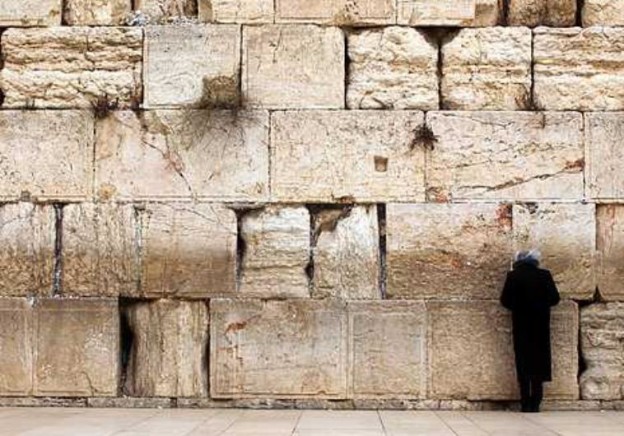
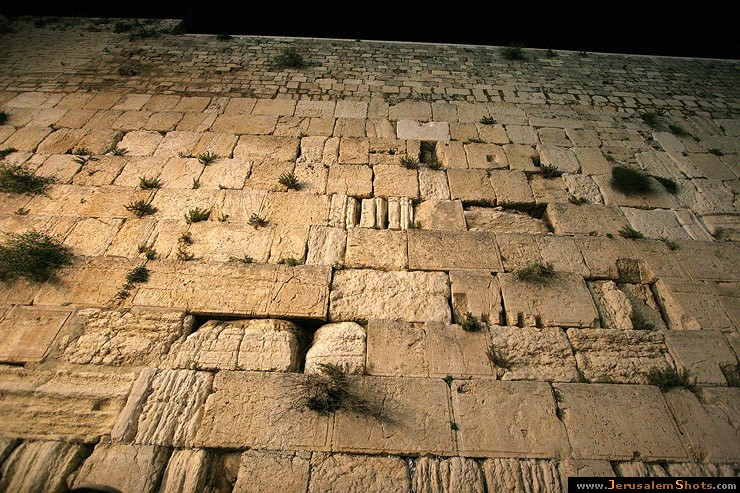 The Kotel is a special place. As a remnant of the Temple, we have gravitated to it to feel a special closeness to our history, to a Divine place, the home for the Almighty that we built. We feel a deep emotional and often mystical connection that draws us into the space. Otherwise it is nothing more than a large brick wall.
I recall arriving in Jerusalem for my first year of rabbinical school in Israel. I got off the plane, hopped into the sherut to Jerusalem dropped off the bags and then headed to the Wall. It was late. I had traveled for what seemed like days and although exhausted, I was compelled to go to the Wall. The emotions welled up from deep inside. I stood in the plaza gazing upon this place. With the kind of intense reverence and awe that happens rarely, I slowly approached the Wall. It was powerful. The thing that happened to me was an extraordinary moment, an encounter between my history, my people, my God and me. But the Kotel is not the sole place of my Judaism. The Makom or place of my Judaism extends beyond time and space and includes the idea of a Jewish people. This vision of Judaism however is compromised by the very compromise announced to create separate spaces for different kinds of Jews to pray.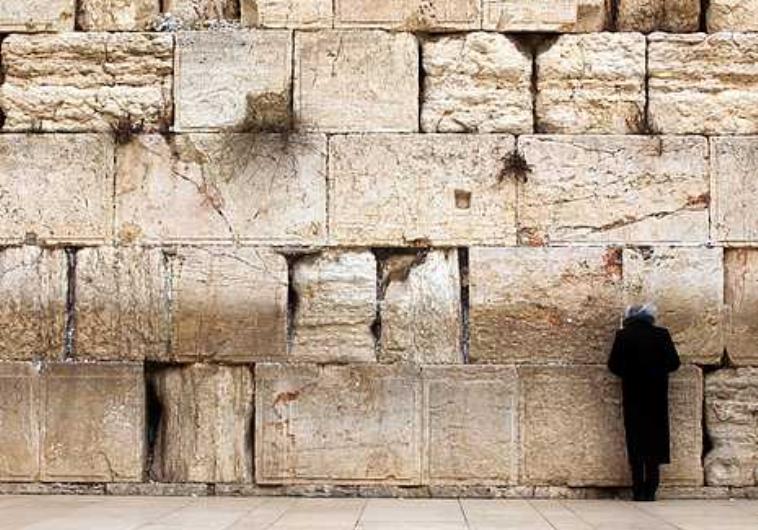
The arrangement for the space at the Wall has in many ways undermined what the space itself means for Judaism. Each denomination of Judaism now has a place it can call its own. The Wall of the Temple has been segregated, sliced and diced so each sect has an area where it can feel comfortable. The gain of a place for egalitarian Jews at the wall however is also the loss of the symbol of the Wall for us all as a place of unity; for these partitions are along the fault lines of Ashkenazic observances segregating us from each other instead creating a place accessible to everyone. The remnant of where God dwelled amidst the Jewish people has become a place of division and discord within God’s people.
We have all seen the photographs of the wall at the turn of the century. Men and women were 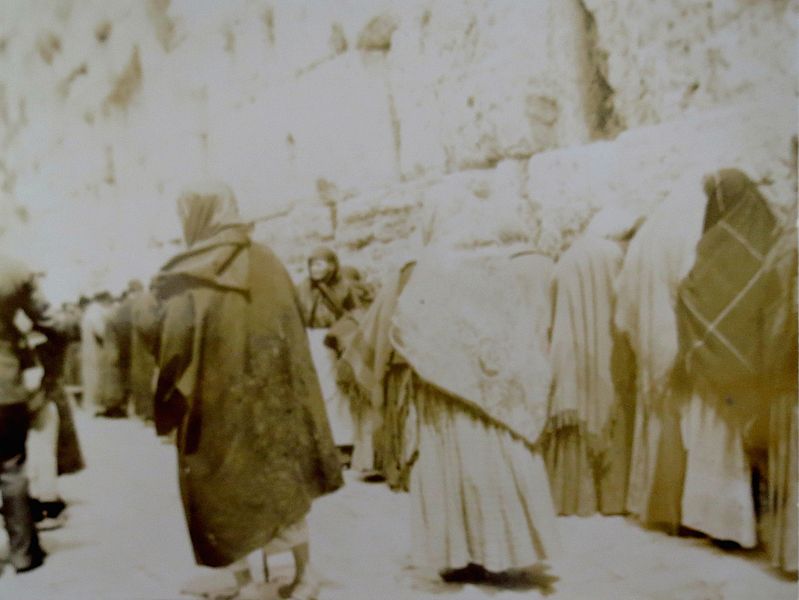 there together. The Wall was a private space to connect individually in a public place. How you practiced or the community with which you identified did not matter. In the early post-1967 days that sense of Klal Yisrael permitted a similar experience. It was fleeting, and sadly, it has devolved into staking territory in a turf war. Although liberal Judaism may have won something important in getting a place at the wall to pray, we must regretfully acknowledge that in this agreement something else important continues to elude us, namely the unity of the Jewish people.
Perhaps we should re-focus the issue as one regarding the kind of ceremony and ritual that are generally permitted in this public private space. The kinds of rituals that permit us to be together could be more important in the grand scheme of things than the particular observances that create schisms among us. In my experience I was solitary but in communion with Am Yisrael. Under our current circumstances an experience at the Wall might require we visit both areas, one to be among those who share our beliefs and practice and the other to be with another part of our people, to taste their experience and ponder the ideas of the Judaism values that guides us all and strive to create a Judaism that connects us all.
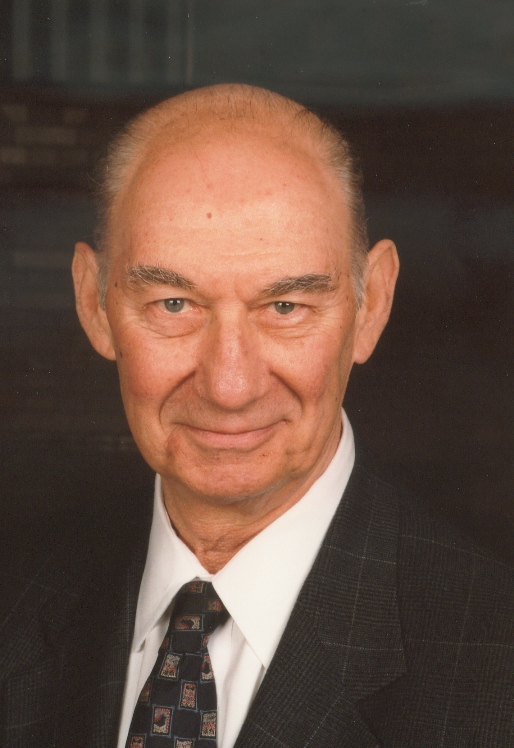 Like so many other of his students, I mourn the loss of our teacher Rabbi Dr. Eugene Borowitz. An extraordinary thinker, he pressed all of us to critically examine modern Judaism. His moving eulogy by Rabbi Rachel Sabath Beit-Halachmi, Ph.D., http://huc.edu/news/2016/01/25/eulogy-rabbi-professor-eugene-b-borowitz-delivered-rabbi-rachel-sabath-beit-halachmi is an eloquent tribute.
We all have stories about our interactions with Dr. Borowitz and his influence upon us. I am no exception. One of the great gifts he has left me was the moment when he stood up among us a few short years ago and reversed his position on gays in the rabbinate. He had long-held fast to his considered and principled position, but after continued reflection, that day he rose from his chair and said simply, “I was wrong.”
The ability of a man of such stature to publicly recant his position was a testament to him and an extraordinary lesson for us. I was deeply moved by his change of heart. I also learned profound lessons that day on humility and our ability to continue to grow and push boundaries and not rest on laurels or reputation.
We will all miss Dr. Borowitz greatly.
Zichrono Livrachah, May his memory be for a blessing.
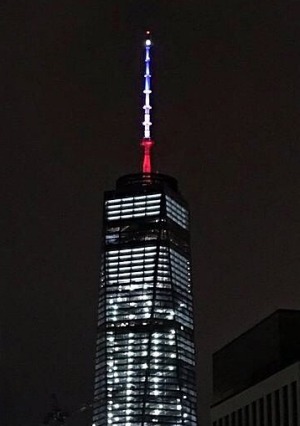 Our prayers are with the victims of the horrible terrorist attacks across Paris. Now is the time to grieve. The natural reaction is to strike back and avenge the carnage. But before we do, let’s pause and consider our actions, making them deliberate and thoughtful, to do more than lash out and punish. Who is the enemy and how do we best work to defeat them in the long-term war of ideologies in which we are engaged?
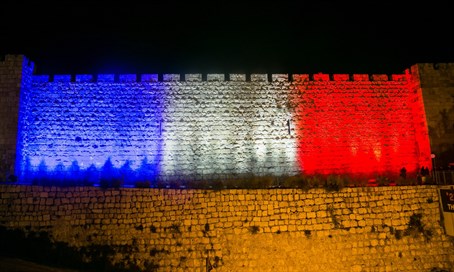
It is enticing to react and retaliate, but violence untargeted or mistargeted will serve to create more victims and foment more hatred. The threats are real, but we need to know who the adversary is and the most effective ways to combat the enemy. Precipitous action will do far more harm than good.
Sadly, there are those who are struggle to support the French, seeing this tragedy as an opportunity to say “turnabout is fair play” due to perceived and real anti-Semitism in France. We are better than that. The Jewish values of Chesed and Rachamim compel us to reach out and provide comfort and support. Our compassion helps us to rise above all kinds of hatred and Judaism becomes a beacon of light to the Nations.
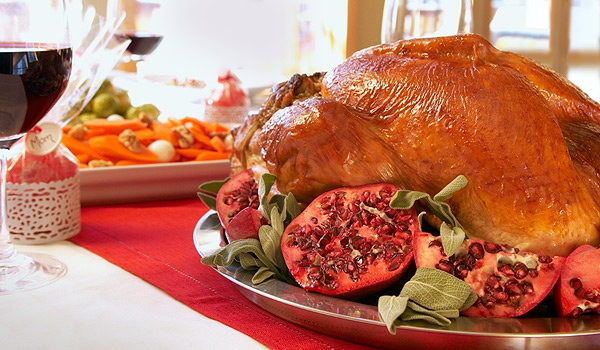 When is it okay to participate in holidays traditionally reserved for others?
Most of us are preparing for Thanksgiving. We have embraced Thanksgiving as the quintessential American holiday, and as such, we will be planning travel to visit other relatives, prepare a bountiful table and of course watch the Macy’s parade in the morning and football thereafter. American Jews embrace Thanksgiving, just like all other Americans, but we struggle with other American holidays. Although almost all of us celebrate Thanksgiving, many of us still wrestle with Halloween and most of us would not consider celebrating Christmas.
These three holidays are iconic parts of living in America. And all three share religious backstories. Christmas as the celebration of the birth of Christ is certainly the most obvious. Halloween is grounded in pagan rituals and Thanksgiving is essentially a Christian Sukkot, rooted in a Christian religious tradition of gratitude for God’s bounty. What makes the secularization of this holiday such that we are able to embrace it and celebrate, stripping it of its original grounding and retelling the story in a way that it can become ours, and why are we unable to do likewise with the others?
Many of us kept our children from Trick-or-Treating worried that dressing up in a costume and participating was an affirmation of a pagan ritual of witches and warlocks. However, Halloween has been stripped of its religious meaning. I read recently how one rabbi used a creative Jewish lens through which the celebration included sharing excess candy collected by her children with the less fortunate. One of my fonder memories is taking my son by the hand, dressed in a costume that mom created, while I was dressed up as a giant hamburger. The only bad part of Halloween was the stomach-ache and crash after my sugar high from over indulgence.
Christmas is a more complicated situation. But in this age of acculturation, interfaith couples and of course commercialization, there are places where we can enjoy the holiday. I say that very cautiously and carefully because I do not want to be disrespectful of those that hold this as a sacred holiday. However, the Coca-Cola inspired Santa Claus and Rudolf the Red Nosed Reindeer both pale in comparison when I faithfully listen as Bing Crosby sings White Christmas in the movie of the same name (Bing also sang it in Holiday Inn). Irving Berlin’s classic homage yearns for us to be able to embrace this American holiday as our own. As many of you know, coming from an interfaith background, I am familiar with the beauty of a family gathering, honoring my grandmother, and sharing gifts on a day devoted to love and togetherness. We as modern American Jews need to figure it out. And in our own unique way, we have already begun.
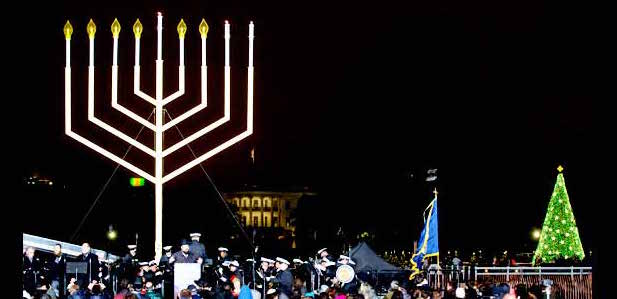
We have substantially ramped up the Chanukah holiday celebration. This is however a contrived response to a Christmas in which we long to participate. Without reservation I fully support the increase in joy we bring to our “minor” religious holiday including the latkes, Chanukah cards, 8 days of presents, parties and so on. We go a step further in our “Chinese food and a movie” ritual on December 25. The question is whether we maintain a fictional “Chinese wall” separating holidays, holding steadfast to our modern re-interpretation of Chanukah, or can we consider an American Secular Christmas? I submit that celebrating one holiday does not preclude the other, nor does such a celebration threaten our core beliefs. Instead, acknowledging Christmas in a modern American Jewish context can bring us in closer alignment with the Jewish dream of acceptance in America and more importantly, serve as a significant learning opportunity to share with our children what these holidays might mean metaphorically and Jewishly.
Happy Holidays and Chag Sameach!
A beautiful rendition of Lecha Dodi to the tune of Leonard Cohen’s Halleluyah sung by the incomparable Maccabeats.
Shabbat Shalom
The situation in Israel seems to be deteriorating. Violence continues to escalate with the knife as a weapon of choice and fear is spreading as attacks come from seemingly out of nowhere. The natural and proper inclination is for law enforcement to become even more vigilant in order to prevent attacks and not only respond. But the police however must be judicious in how they protect the citizens of Israel.
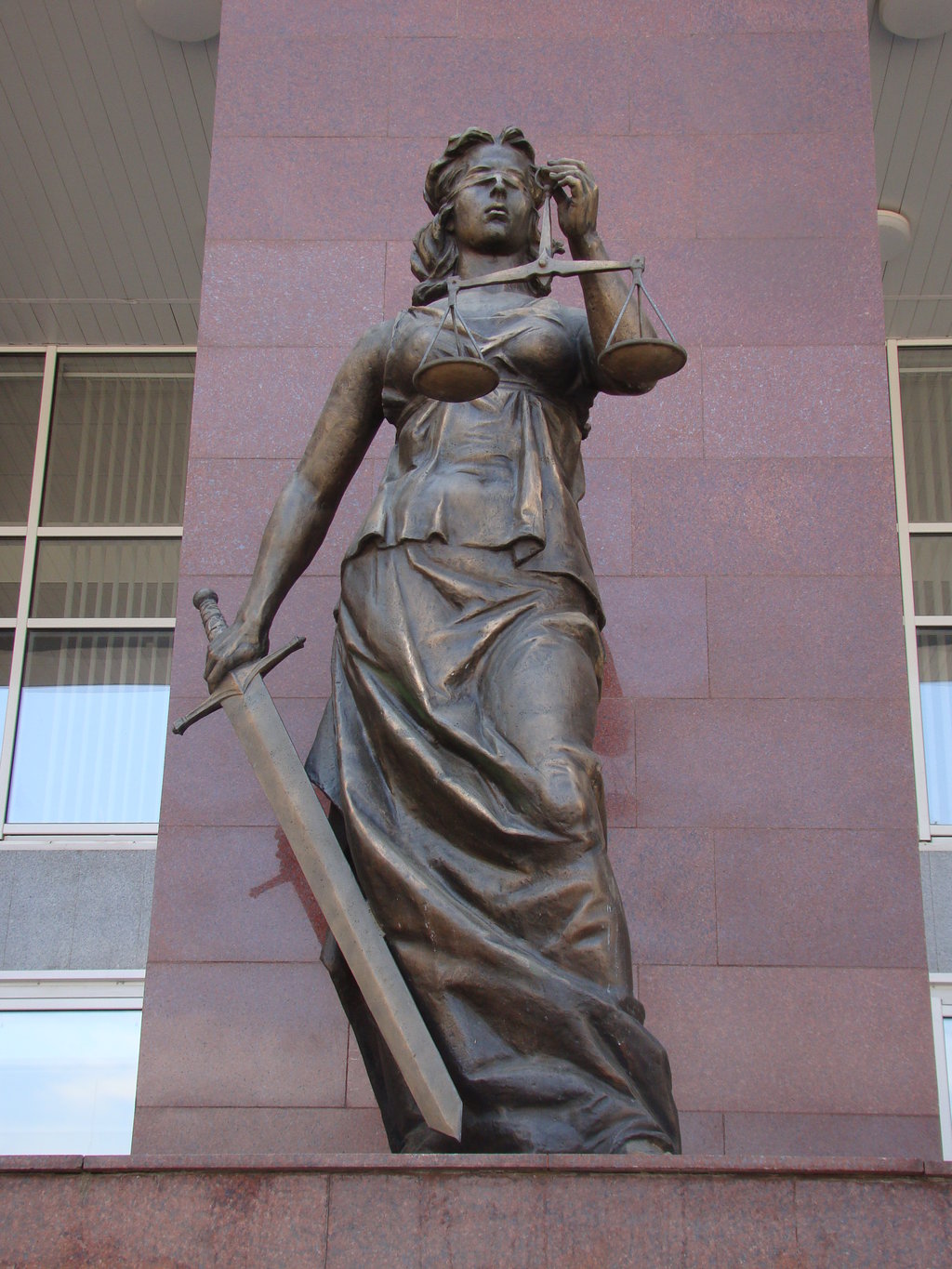
Israel is a nation of laws. She prides herself on having a legal system similar to the American ideal founded on the principle of Equal Protection under the law. Now this system is being severely tested and Israel’s heart and soul are at risk. If Israel permits the profiling of people and the preemptive assault on individuals outside the prescribed due process of the legal system, then she loses and the terrorists win. Israel cannot be democratic if she limits the application of law to select privileged classes, such as Jews, while others, such as Arabs, fall outside that sphere. A crack down on terrorism cannot come at the price of the foundational principles of Israel. A restoration of calm is necessary. The violence and barbaric nature of these attacks on civilians (police included) are certainly not random acts. Israel must carefully consider how to properly respond.
Is this a mass response to “occupation” or are these individual actors perpetrating crimes as copycats? It certainly seems to not be the latter. Even if not expressly ordered by a central control, the attacks are coordinated. The first order is to restore calm. The second order is to cool the boiling over of the cauldron. Repression of an entire group, such as the Arabs of East Jerusalem, and sealing off of that portion of the city, will provide a temporary subduing of these attacks. A closer and deeper look at the grievances that encourage this violence as a legitimate response is required. Then deliberate steps must be taken to create a society that is fair and just.
I do not condone or legitimize the violence. Those that have perpetrated these attacks should be duly punished for breaking the laws of the State and of civilized society. Now it is up to the State and civilized society to solve the problems that have contributed to fomenting such deep discontent with a system of justice that speaks to everyone.
Ushpizin and the Pope
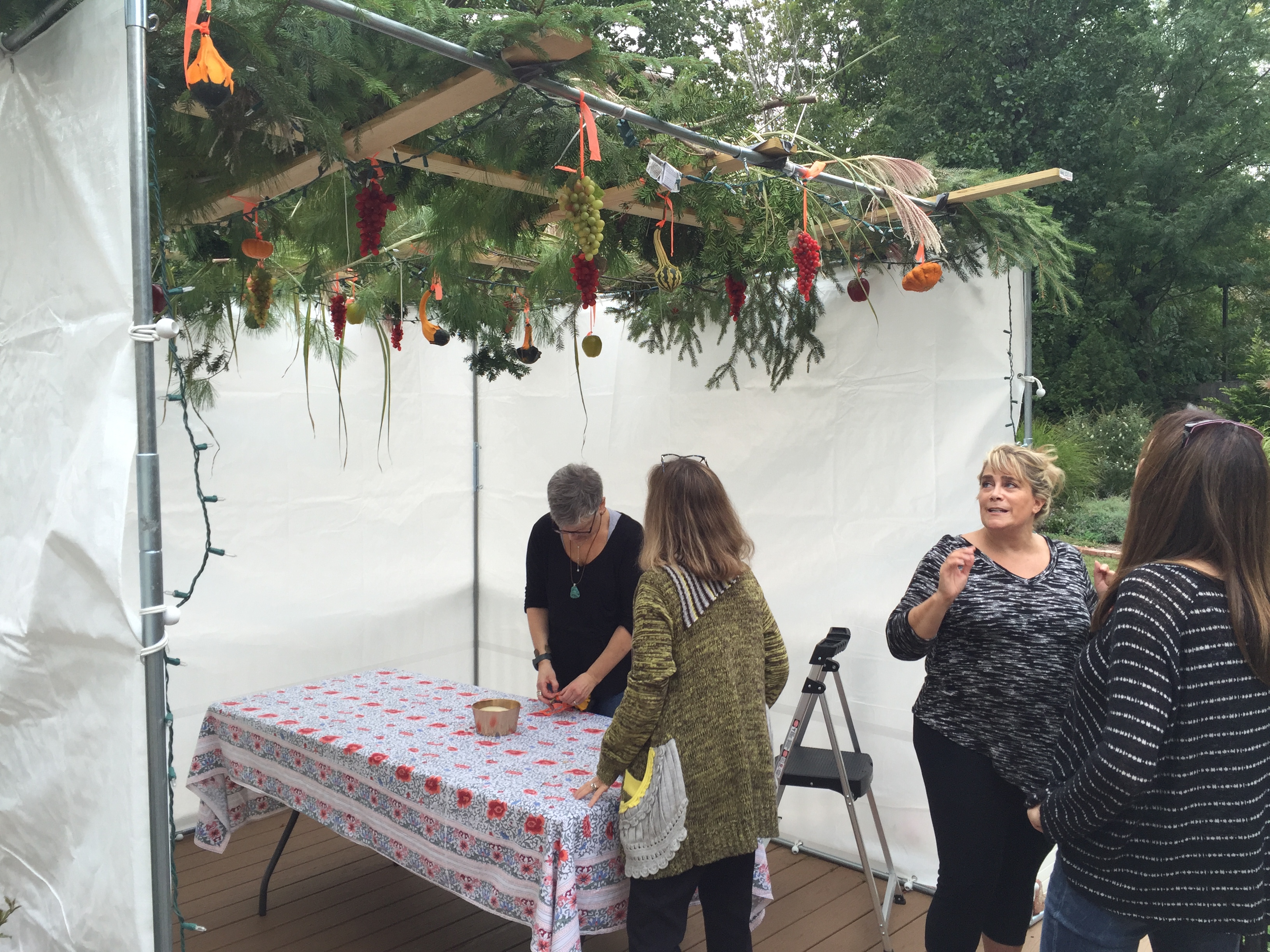
The Jewish mystic tradition, through the Zohar, speaks of the Ushpizin, the greats of Jewish history as welcome guests to our Sukkah.
Abraham, Isaac, Jacob, Joseph, Moses, Aaron and David, along with Sarah, Rachel, Rebecca, Leah, Miriam, Abigail and Esther are our honored visitors. They bring with them the ideals and values central to Judaism and are sacred honored guests at our table, if only metaphorically.
Here in Philadelphia we had the opportunity to add another name to the honored guests. This one is Pope Francis. His Holiness speaks of values that we hold sacred. He speaks truth to power, even when that truth is uncomfortable. He illumines a path of joy and happiness, purpose and service, a meaningful life that extends beyond ourselves, in service to others. He is the Pope of the Catholics, but he is also a Pope for the World. Pope Francis has stretched out his arms to embrace Jews as brothers and sisters. He does this through his long-standing friendship and collaboration with Rabbi Skorka of Argentina. He also reaches out to the Jewish people through his support of Israel and his blessing of “Sinagoga and Ecclesia, In our Time,” a magnificent statue dedicated to the profound understanding of brotherhood between our two religious traditions commemorated on the fiftieth anniversary of Nostra Aetate.
We are blessed to have Pope Francis in our midst. May his vision and teachings empower all of us to work to build a better world together.
“Ani L’Dodi v’Dodi Li.” These poetic words from the Song of Solomon are spoken as words of commitment under the marriage canopy. “I am My Beloved’s and My Beloved is mine” is the symbolic joining and full commitment of one to another. We aspire to this in our deepest relationships. But as a people we have sadly failed to live up to this hope. Every Jew is integral to Israel and Israel is integral to every Jew. We are bound inextricably together emotionally and spiritually, a modern homeland and the diaspora, two parts of one whole. Together greater than the individual parts could achieve.
We do however permit the separation and distance, a cleaving when we hear when some claim to be against Israel but fine with Jews; that it is possible to be anti-Zionist while not being Anti-Semitic. For Jews such parsing of words is false. It speaks to a reading of history that is biased and ultimately these two hatreds conflate.
I was struck when Iranian President Rouhani offered New Year Greetings to Jews of the world while almost within the same breath recommitted his country to the extermination of Israel. “May our shared Abrahamic roots deepen respect and bring peace and mutual understanding.” This seems to be a disingenuous goodwill offering since his worldview requires the eradication of Israel, where approximately 6million of my fellow Jews reside and would be murdered for to achieve his political goal.
Jews find themselves attempting to parse words and find something good in Rouhani’s outreach. This “olive branch” however is a straw man. It is an insidious attempt to separate Israel from its own people through the delegitimizing efforts by Israel’s enemies. Even when we disagree with policies or politics within Israel, we cannot divorce ourselves from her, or permit others to divide us. Israel is a fundamental part of us. Who we are is in some measure defined by our relationship to Israel. Commitment to Israel’s growth and evolution as well as our commitment to the State’s survival is at the heart of what it means to be in relationship with another. An attack on our spouse with the caveat that you however are all right would be deeply offensive. And we would defend the one we love. How can we not rise to the defense of our brethren as well?
I am in deep relationship. I have a vested interest in Israel’s success both as a nation and as an aspiration. When Israel falters, I have the responsibility to be constructively critical because of my relationship. Helping Israel to be better makes me better as well. We all are improved off as a result of such efforts. And when people stop calling for the destruction of a part of who I am, I will gratefully acknowledge offerings of good tidings for the coming year.
Heroes, it is said, act without thinking of the fear before them. Fear can paralyze, placing us in what we classically describe as Mitzrayim, the narrow places. Although most of us are not heroes, most of us are people who respond with empathy and compassion to those in need.
When we rise above our fears we can achieve great things. When we act out of fear, we are reflexive and often myopic and ultimately selfish in our self-protectiveness.
The unfolding tragedies in the Middle East, the hopes of an Arab Spring becoming, to extend the metaphor, the harshest of Winters, have left hundreds of thousands dead and millions displaced. What was once considered home is now an impossible place of hopelessness and despair.
As Americans, as Jews and as human beings we are compelled to answer the immediate desperate cry for help. World governments, first and foremost the United States, must tackle the underlying causes of this devastation work to resolve these problems. But you and I can make a difference to the people in immediate risk for their lives. We can support humanitarian efforts to provide sanctuary, medicine and food and further we can actively support efforts to resettle refugees.
Refugees are carefully screened before granted permission to come to the United States. HIAS is in the forefront of coordinating with government agencies after these people are vetted. Our fear cannot let us turn a blind eye and keep us from engaging in the compassionate work our tradition commands.
L’Shana Tova