History should be Embraced

Trying to rewrite history cannot deny its truth.

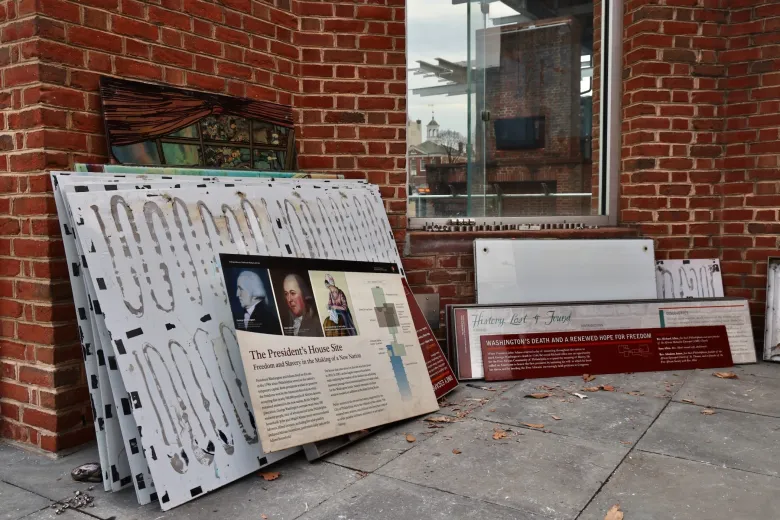
Slavery is a moral stain on the United States. No matter how much bleach we use, we cannot scrub it out, nor can we pretend the stain doesn’t exist. Removing historically accurate plaques that teach the fullness of our history at the President’s House exhibit on Constitution Mall, the paradox of Freedom and Slavery, does not make the events they depict any less true. The attempt to deny our past keeps us from learning and growing from it. Our challenge is to rise above it, not to define ourselves by it and remain mired in it.

The fear of some who see this as an attack on our country and turn a blind eye is baseless. I am ashamed of slavery and the hatred it embodies, while remaining proud of the aspirations our vision embodies. We have a long journey ahead of us to right the wrongs and heal the lingering pain and injustice. But we are better off when all are better off. When every person is treated with justice, dignity, and respect. These are the principles of this nation, principles we must remain dedicated to championing.

When we hide from things that make us uncomfortable, we miss the chance to engage with and learn from them.  We are better than slavery.  It is our history.  But it does not have to be our legacy.  We are better than that.


What does it take for fear to be overcome by courage?

What does it take for fear to be overcome by courage? To dare, to risk, and to fight for what you believe in rather than cower?

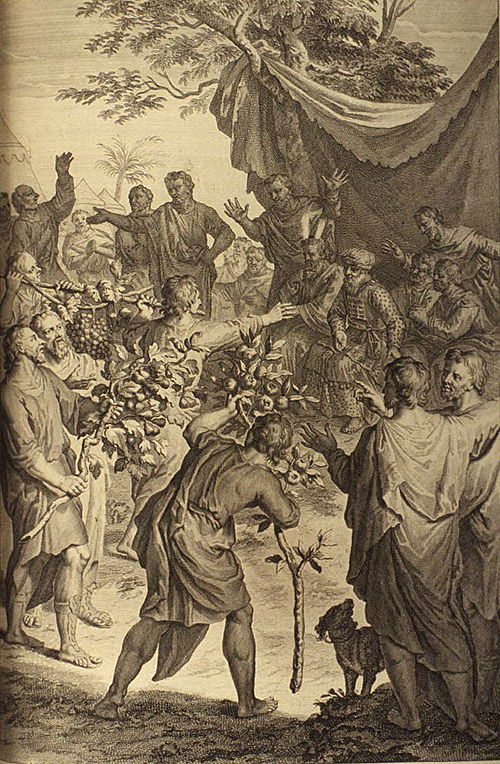
The recent Torah portion Shlach begs these questions. Shlach, translated as “Send,” narrates the story of the 12 spies. As you recall, the unit was dispatched on a reconnaissance mission to survey Canaan. They returned with tales of a bountiful land, but one inhabited by giants, making it seem impossible to conquer. Only Caleb and Joshua believed that the Israelites could be victorious, but they were overruled.

Fear gripped the spies; the Giants were too formidable, and their fear raised paralyzing questions. Perhaps they thought—we could live without realizing the promise of the land; maybe we could make do in Mitzrayim or confined spaces. The reticence of these people exploited the vulnerabilities of this nascent nation. They defeated themselves before they were ever tested. Their doubt in themselves, their destiny, their values, and indeed their God meant that this entire generation of recently freed people needed to be replaced by those whose spirit and strength were forged by the trials and tribulations of the harsh Midbar or desert. This spirit and strength are the answers to my initial question: what does it take to overcome fear with courage?

With this strength and spirit, you know in your heart that what you possess and believe is worth fighting for and to have enough faith and courage to take the next step even into the unknown. At the same time, you remain true to your values and morals despite the horrors of warfare, facing the battle with bravery yet not losing your soul in the fog of war.

Now is the time for us moderns to embrace these lessons. More than ever in our recent history, we need to lean into our values — the things we love deeply enough to champion and fight for.

For Israel, the boldness and cunning displayed—from exploding pagers and covert Mossad agents to an aggressive air strike aimed at preemptively striking Iran, a country whose nuclear ambitions threaten Israel—are significant. It is crucial to understand that waiting and hoping, along with economic sanctions, are not always the correct responses. However, it is also necessary to honestly recognize that the costs of this fight will be high, both in lives and resources. Staying morally superior during battles against a stubborn enemy has been especially difficult during the war in Gaza.

And just like there, we face challenges here as well. Domestic rabid Jew-hatred must unite us. We must stand up for our right to live freely, securely, and safely in the United States, a land of great abundance and blessings. We will not cower in silence or fear.

This is the time to stand up and defend our values because this is our home. To those who hate Jews or anyone labeled as “the other,” we fight for the fundamental rights that form the foundation of this great country, both for ourselves and everyone else, to protect the principles of equality, justice, and liberty. The hopes of our people and our traditions are at risk, but we cannot back down.

As Americans and Jews, much is at stake. Indeed, maybe everything is at stake. The fear of the unknown cannot silence us, nor can it allow us to disregard our sacred values and act with impunity against perceived threats. By standing together and believing in ourselves, each other, and the sacredness of our tradition’s values, we will be strong, and we will prevail—Chazak v’Umatz, strength, and courage.

Barukh atah adonai eloheinu melekh ha’olam asher kidshanu b’mitzvotav v’tzivanu la’asok betzorkhei tzibur.

Blessed is the Eternal One who commands us to work on behalf of the needs of our community.

Amen


Miranda wasn’t a hero What his case represented was heroic

Have you informed him of his Miranda Rights?

It’s deeply embedded in our understanding of the system.

“You have the right to remain silent; anything you say can and will be used against you…” Many of us can even repeat the words quoted at every arrest and in every cop show we watch on TV.

Miranda was somewhat of a lowlife.  He confessed to rape, but that conviction was overturned because the Supreme Court determined his confession was improper.  Miranda was tried without his confession and subsequently convicted.

Protection from self-incrimination is regarded as a fundamental right under our principle of innocent until proven guilty. This right is enshrined in the 5th Amendment, which explicitly safeguards individuals against self-incrimination.  Additional protections also exist, including the right to counsel and due process as established in the 6th and 14th Amendments, respectively. It is the responsibility of the government to prove guilt, not the obligation of the defendant to prove innocence. This distinction makes our system unique and enviable.

We are willing to let a guilty person go free rather than wrongfully convict an innocent individual. This means that sometimes bad guys “get away with it” because we want to protect the innocent. The system is flawed and abused. However, this sets us apart from many other legal systems and is the envy of the free world, limiting the government’s power from steamrolling over whoever it decides to target.  These rights were denied to Abrego Garcia when he was abruptly taken to a maximum-security prison in El Salvador.

It is not that Abrego Garcia is a good guy or a bad guy. He has never had access to the protections our system offers. Bring him back into the legal system for proper adjudication. Present the evidence, make the arguments, and let the chips fall where they may. We cannot risk the implications of denying Abrego Garcia his rights; we could only ask, Who’s Next?

Canary in the Coal Mine

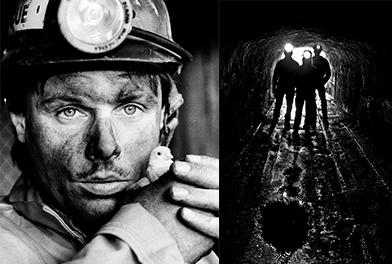
Jews are using the phrase “we are the canary in the coal mine” as a warning that anti-Semitism signals growing hatred of all groups in our nation. This idea is profoundly flawed, ironically counterproductive, and requires immediate redress.

The phrase is a desperate appeal to others that they must fight anti-Semitism as it inevitably will lead to hatred against them—that tactic won’t work. People will stand against anti-Semitism because it is wrong. And if they can rationalize anti-Semitism, they won’t care about Jews, canaries, or anyone else. Besides, there is another group that already experiences an institutional brand of hatred: black people and others of color.

People of color have been experiencing hatred and systemic racism for as long as any of us have come to these shores. When we think of Jews as the ones on the front line, we negate the experience of the black community. That is egotistical and shameful and ironically belies the idea embodied in the Canary Phrase. We should be aware of this hatred and align with those others who experience it.

I am not a canary, and I am not in a coal mine. Despite the alarming sharp increase in public displays of anti-Semitism, we live well, thoroughly enjoying so many blessings of this place. We have the power and the means to defend ourselves. And we are. Others do not, and we must help them.

Let us stand against hatred in all its forms besides every one of goodwill.   We denounce hatred of any group and work together to fight it on the streets, in the courts, and our hearts. So our country may live up to its aspirations.

We are not birds; we are American Jews standing tall for the values we believe in, and together, we will prevail.

Some are guilty all are responsible

Tyre Nichols is buried today. So many of us grieve and shake our heads in disbelief, wondering how this could happen.

Several people are identified as directly responsible for the brutality leading to Tyre Nichols’s death, including police and EMTs.  Ironically, those charged with protecting us are accused of the murder of someone when they betrayed their sacred oaths. But we cannot stop here, assuaging our sense of moral outrage by prosecuting bad actors. Something more insidious is going on, and we must do much more.

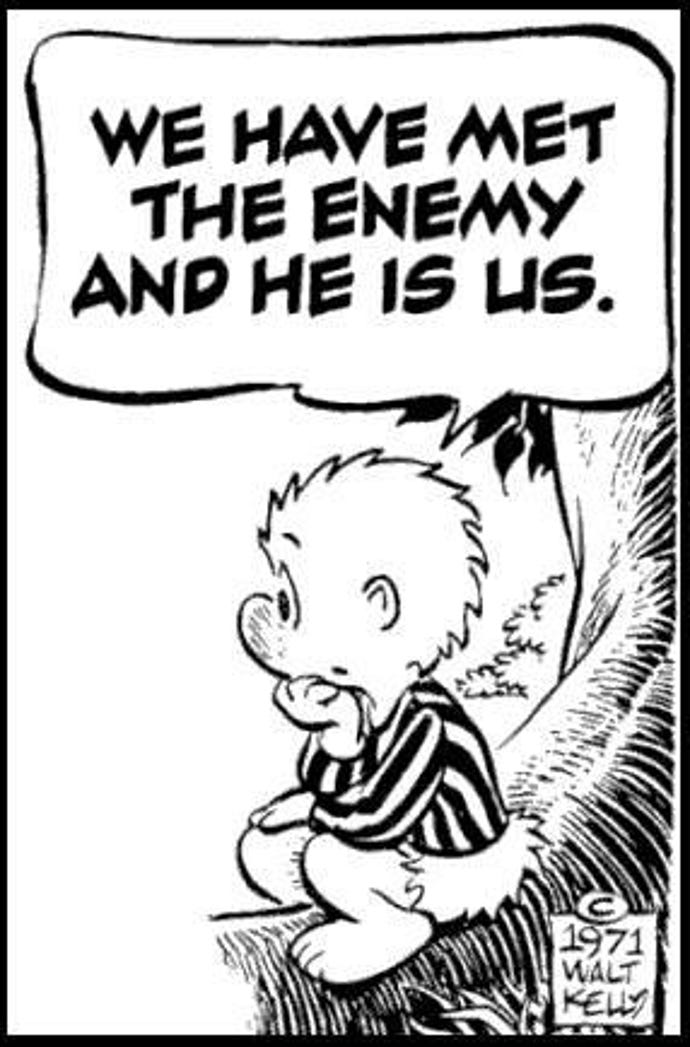
Some of us remember the political cartoon Pogo by Walt Kelly. One iconic image is Pogo contemplating the situation saying, we have met the enemy, and he is us. Set initially as an environmental statement in 1971, this understanding of the situation applies to us today.

We may not be directly guilty of the barbarism that took Mr. Nichols’s life, but we have allowed it to exist. We have turned a blind eye to a systemic problem, and Mr. Nichols and many others have paid the price.

Law enforcement ostensibly is tasked with protecting the people from those criminals who prey upon us. It is a tough job and often a thankless one. It is hard and often very unpleasant, so many of us prefer to turn away and let them do what they need to do. But we cannot turn a blind eye any longer.

In a free society, some are guilty all are responsible. These words were written in 1972 by Abraham Joshua Heschel. And they remain true today. We are responsible. Only when we engage in the difficult conversations and hard choices involving what policing looks like and what are the responsibilities of those tasked with protecting all of us; do we give them the resources they require, including the best personnel, the best training, and the tools, a social security apparatus that supports those whose needs are best met by other professionals and the active, meaningful oversight by responsible civilians and the courts will we achieve the justice we seek, the justice denied Mr. Nichols.

As we lay Tyre Nichols to rest, let us finally commit ourselves to fix a broken system so that America can be America for all Americans.

We’ve made it here after all

There is much we can learn from the tragedy of Pittsburgh. Important among them is that we have realized our parent ’s dream; we are truly a part of America.  This awful incident marks a new understanding of our community’s place within the larger American society.  Yes, we have made it here. But what that means is now different.

I am suggesting a new definition of “making it here” which is not about assimilation but rather acculturation, maintaining a blended Jewish and American identity, an American subgroup securely joining not only in the fight for our American ideals but also in the proximate threat of Anti-Semitism. This ability to fully and unapologetically embrace our dual identities, engage in championing and defending the ideals and values for us and for all, while confident and secure of our rightful place as citizens; this is what it means to “make it in America.”

Many of our forebears were content with the economic opportunity America offered, as well as the refuge from violence and persecution that were part the life of their homelands. They sought survival, not equality, imagining they might assimilate and become Americans.  Although great strides were made, lingering fear and insecurity kept the American Jewish voice from being bolder in demanding action to save the Jews of Europe.  The “go along to get along” mentality is part of our past.  We are secure enough in our place as Americans to fight for ourselves and for others. Yet darkness lingers and Anti-Semitism persists.

We have long embraced the notion that none are free until all are free and we fight on behalf of others yet to enjoy the full blessings of our country.  But now, with White Nationalism and Anti-Semitism, on the rise we have a renewed personal stake in the fight.  This struggle against hate and violence is harsher and more hardscrabble than our previous contests for justice and equality, such as those against quotas or deed restrictions.  The “no coloreds, Jews, or dogs “ signs from what we thought was a vanquished past reappears in our consciousness.  The privileged position many thought we enjoyed needs to be reconsidered and recast.

For most of our history, we Jews have taken care of ourselves.   Our morning prayer, Eilu D’varim, include the obligations we set out for ourselves as responsible members of the community:  visiting the sick, burying the dead, comforting the mourner among them.  We have developed our own institutions devoted to assisting in those practices.  HIAS, Jewish Hospitals, and Jewish Universities were created to respond to the needs of our people.  Our modern Federation, JCC, and JFCS can trace their roots to this historical understanding that we have been segregated from the broader society; that we had to rely on ourselves to provide for us, as the larger society in which we lived would not.  From this self-reliance, we have then reached out to assist others.

The understanding of our mission of helping those in need, the social justice mission at the heart of Tikkun Olam and Tzedakah, emanates from the values of compassion and outreach to the unheard and unseen.  Because of our history, Jews have been reluctant to accept help from outsiders, even as we support others. We have been quick to join the fight for Civil Rights but slow to bring outsiders into our places of need.    Perhaps, due to our history, such help is suspect, perceived in our collective psyche as a sign of weakness or vulnerability.  Pittsburgh has changed that.

When we examine our history, we wonder whether our golden age in America was fleeting or is it enduring.  I believe it is the latter, but it is none-the-less threatened by malevolent forces.  A recent poll[1] indicated that almost 6% of the non-Hispanic American population, or about 11million, subscribes to the views of the Alt-Right.  This means two very important things:  First, 94% don’t accept these hate-filled views AND second, that a real Anti-Semitic threat exists.  Both of these are part of our reality and we must be alert to the implications of both.

The overwhelming nature of the horror perpetrated upon the Jews in Tree of Life Synagogue has knocked us down with a blunt force that was overwhelming.  Every resource we have is insufficient to provide a full measure of comfort.  We are indeed vulnerable at this moment.  And at this moment, something miraculous happened.  The community of Pittsburgh rose up and is trying its best to hold us.  Pittsburgh’s various communities, Moslem, Christian, and practically everyone else have come to our aid saying to our Jewish community, “you are one of us and we are appalled.  An attack on you is an attack on Pittsburgh, and this will not stand.”

We have in our history experienced extraordinary acts of kindness from outsiders, such as the King of Denmark and the Righteous Gentiles of the Holocaust.   And here in 2018 America, the Jewish community needed help and the broader community responded.  We are not alone, we are America, supporting and now being supported by our brothers and sisters.  It is an extraordinary light shining on a very dark experience. Thank you for your love and support.   The refugees who are our forebears have seen their dream of America come true. We are inextricably part of the fabric of America, in both its glory and in its struggle.   In the names of those Jewish martyrs so tragically lost, let us join with all others of good will continuing the hard and fraught process to realize the aspirations of the American dream.

[1] University of Alabama, George Hawley, published by UVA’s Institute of Family Studies indicates 5.64% of the 198mm non-Hispanic Whites in the United States have beliefs consistent with the Alt-Right’s worldview.
Sadly, It is all about the Money

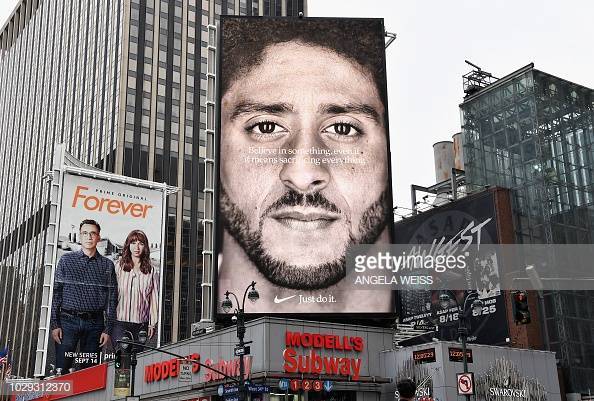
ANGELA WEISS/AFP/Getty Images

The current uproar over the new Nike ad featuring Colin Kaepernick has served to wonderfully pit right against left in another puerile chapter of the culture wars.  Instead of seriously grappling with issues in our country we’d prefer to scream at each other about whether one side or the other is sufficiently patriotic.  The sad truth is that the ad is really about selling sneakers and generating buzz.

The group that is feeling offended by this ad is not the Nike target demographic.  The people that align with Kaepernick are the demo that Nike wants to sell their product to.  The ad is provocative on many levels.  That is precisely what is intended.  The advertisers did their job and now everyone is talking about it.  The increased sales bear this out.

Colin Kaepernick is portrayed as a champion.  Whether Kaepernick is a villain, hero, or even heroic victim is beside the point.  That is unfortunate.  But there is another agenda.

The NFL is concerned about generating revenue and retaining fans.   Kaepernick found a means to make a living as a spokesperson.  The President is using the opportunity to rally his base.  If any were interested in addressing the issue, this is an extraordinary opportunity to join in the fight for the virtues that those who kneel and those who stand both embraces; namely a country dedicated to life, liberty, and the pursuit of happiness.  A nation of laws that stands for equality and justice.  The vast sums of money generated by the corporations (NFL and Nike) could underwrite a campaign to get healing conversations started, patriotic conversations that address the issues of inequality that continue to keep us from fully realizing the American Dream and perhaps even help create positive change.  And the President could use the power of his office and his strength as a marketer to be the convener to make it all happen.  But unfortunately, we prefer to revel in the buzz.

Buzz on!

What Race are You?

What Race do you identify with?

Marathon

((Rimshot))

Actually, that isn’t the opening joke in my lounge act, but part of an important recent conversation.

I was asked this question in the Red Cross Blood Drive pre-screening. The inquirer, an African-American, was completing the questionnaire and asked me to identify myself by race. There was a time when I would have responded Caucasian/White. But I uncomfortably paused and then quipped Marathon. We laughed and then we skipped the question. But, I actually do not know how to answer that question anymore.

I am not ashamed of what is now called my “white privilege.” As a Jew in America, the ability to call myself Caucasian/White is on some level a sign that we made it and have gained popular acceptance. But perhaps this acceptance remains elusive. This simple gathering of data for statistical tracking purposes has become a marker of something more complicated and fraught.

The dream of some, where we entered the melting pot of America and assimilated into a homogenous culture was a vision of many immigrants. This vision propelled many to immigrate to the land where Emma Lazarus and the Statue of Liberty beckoned. America was something new, different and better accepting all of us, and creating unbridled opportunity and equality.   That, however, was the myth for most. The reality was quite different for people outside the mainstream culture who were marginalized, persecuted and oppressed. Our national aspiration to realize our myth has been a slow and often painful evolution.

I am a Jew. I am a proud American. But I do not fit into the “white box.” Or maybe I am not comfortable residing there. I have become more sensitive to the racial issues in our country. Perhaps it is because the privileged position I have enjoyed has come under fire, not from the political left, but from the ugly anti-Semitic elements that have become emboldened and found their public voice in this new chapter of the American experience. My schools, my community centers, and my people have been the subject of a new round of persecution. Our cemeteries are desecrated; our houses of worship and community are vandalized. It is a wake-up call that the civil rights we fight for in this country are truly our own.

I am compelled to stand up for the things I believe in, the values that truly make America great, and a devotion to equality under the law and of opportunity for all. We have made great strides, but we have so much further to go. It is a marathon. Run with me.


There’s got to be a morning after

I was thrilled to see the level of engagement around the country this past Saturday. The civil rights that so many have fought so hard to achieve are precious and will neither be surrendered or taken away. But preserving, protecting, and expanding our civil rights requires vigilance and hard work that started the day after the protest marches and needs to continue as a daily commitment against those who would threaten these precious rights.

Our Rights should be self-evident but we cannot treat them like an entitlement. For many, our Rights were achieved only after hard work and even bloodshed, and they remain vulnerable. Marching is the beginning of organizing and speaking out is the beginning of developing a political voice. Although the administration is in place for the next four years, the Congress is up in two. The politicians must know that we will support only those who safeguard and champion the rights we hold so dear.

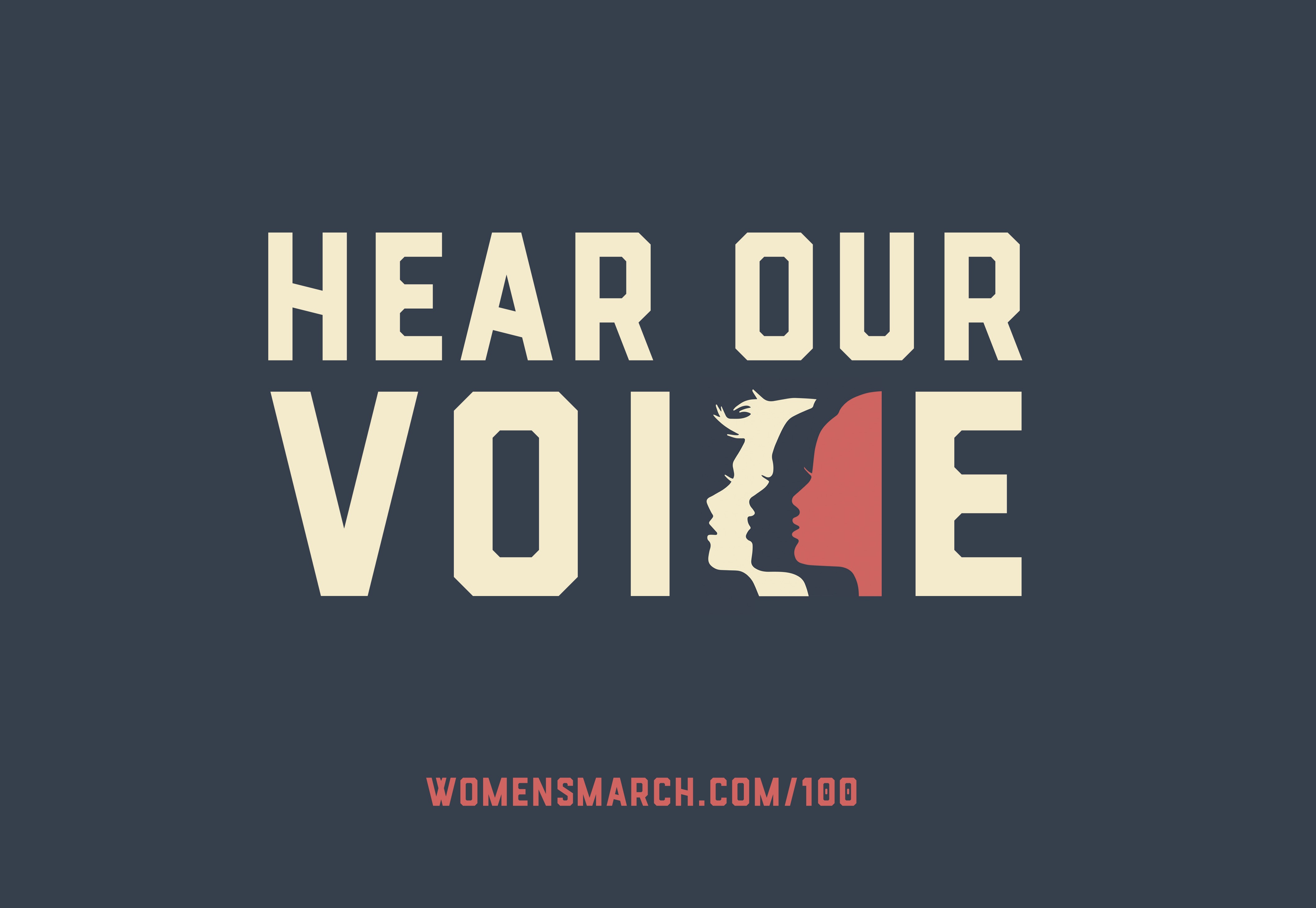
The morning after is when the hard work begins. So after the Women’s March, we must take the next steps. Find your place to make your actions count. 10 Actions in 100 Days is a place to join those already organized to continue the work. Together we can make a difference, preserving and protecting the Rights we hold dear.

www.womensmarch.com/100


An Open Letter to Jared Kushner

An Open Letter to Jared Kushner

Mr. Jared Kushner

Publisher

The Observer

1 Whitehall St.

New York, NY 10004

November 11, 2016

Dear Mr. Kushner:

Congratulations to you on the victory of your father-in-law becoming the President-Elect. The election was fair and the people have spoken. However, this election has left a deeply divided country, many of us fearful because of things Mr. Trump has said and the groups that allied with him. We must see the repudiation of racism and bigotry, and Donald Trump must extend the hand of peace and wholeness.

You have claimed that Donald Trump is not an Anti-Semite. However, his words of divisiveness preyed on the fearful and the hate mongers. Groups including the Alt-Right, White Supremacists, and the Ku Klux Klan have rallied to your father-in-law finding permission to boldly and blatantly express their despicable views. This cannot be abided.

You uniquely have the president-elect’s ear as a confidante and advisor. You must use your position to speak on behalf of those genuinely fearful of persecution and loss of civil rights under the protection of a Trump Administration. The values you hold as an American and a Jew are antithetical to hatred and bigotry. Your full-throated voice must be raised to help heal and bring our country together, re-assuring all our citizens they are safe, their civil rights intact and sure, that all of us enjoy the full protection of law and dignity.

Sincerely,

Rabbi David Levin