What am I entitled to?

What can I or any member of society reasonably expect? What is it that each of us deserves, and who provides it? This is a question to ask of our society and the communities in which we live. I think it’s fair to say that most of us want to be valued, seen, heard, and shown a modicum of respect and dignity. Our Jewish tradition offers us “rules of the road” to guide proper behavior, including how we treat others and how others treat us. Our government has also set certain expectations. According to our founding documents, we are entitled to life, liberty, and the pursuit of happiness. Of course, understanding what these mean and how to provide them to each citizen is a very complex task. Sometimes we handle it well, but often we fall short as a country. This creates the core tension and highlights the need for ongoing conversation to truly understand what these rights mean.

The lack of conversation and understanding that there are multiple ways to achieve solutions creates problems in our society. Both the left and the right become more entrenched in political arguments instead of engaging in meaningful discussions about what these issues truly mean. For example, regardless of politics, most people of goodwill would agree that allowing children to go hungry should not happen in this country. But how do we feed the hungry children?

This is a process argument, not about the underlying value, and here is where our faith tradition becomes a vital guide.

One of our core wisdom texts, known as the Talmud, provides a roadmap for understanding. A fundamental value is introduced, followed by a series of discussions, debates, and disagreements. “Makhloket L’Shem Shamayim,” an argument for the sake of heaven, seeks to understand how the underlying value manifests itself in various circumstances. The arguments, including both the majority and minority views, are presented in this book. The reason is that even the winning argument may not always be correct. In the future, the dissenting opinion that was once preserved may be proven right if cultural or societal norms change.

In the debate about feeding hungry children, parents are primarily responsible, but if they are unable to do so, the community should step in and provide food. But how does the community feed the hungry child? That raises an important question about the process. There is also legitimate disagreement about how to deliver food to hungry children. It can be through a government program. It can be achieved by providing money so that others can obtain food, or by helping parents improve their living standards, enabling them to afford to feed their children. And to make things even more complex, what does alleviating hunger actually mean?

Are we required to feed children according to a specific nutritional standard? How much influence should outside forces have over family decisions? What happens when parents are incompetent, and what occurs when nutritional standards are set or changed—something we’ve seen happen many times in the past? All of this assumes that well-meaning people are committed to preventing children from going hungry.

Some people only care about themselves, ignoring everyone else. Others realize that society should be judged on whether all who are hungry are fed. Still, others believe it is simply the morally right and ethical thing to do.

Questions like these are fundamental, which is why today’s tribal politics are counterproductive. These politics don’t help us address our societal obligations or what I am entitled to; instead, they emphasize power and control and vilify the opposing side. We must ask the right questions, engage in meaningful conversations, reach a conclusion, and then act on that decision. This presents both a significant challenge and a valuable opportunity for building a thriving, vibrant, and just society. Let’s start discussing what truly matters.


Children slaughtered again

What does it say about a society that allows, even supports, the murder of its children? That society is headed to Hell, if it isn’t already there.

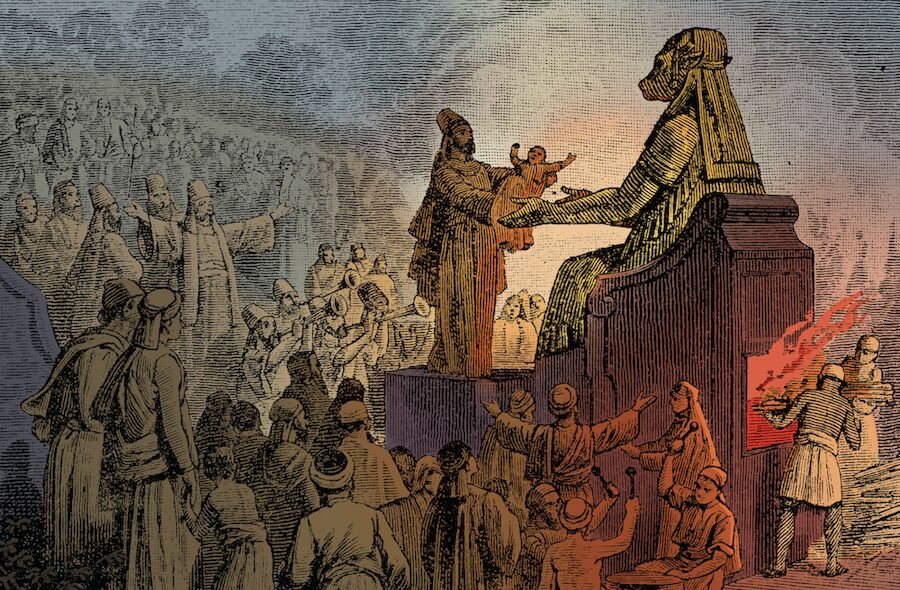
In biblical times, the Valley of Hinnom was a place where people practiced child sacrifice to the god Molech. The name of that place became Gehenna, which is now synonymous with Hell.

As strange as it may seem, we appear to accept child murder. The ways to prevent it are within our reach. However, we prefer to keep the right for people to wield deadly weapons unfettered rather than to protect the lives of our youth. Once again, a disturbed individual obtained guns, brought them to a church, and slaughtered children while they were praying. Two dead, 17 injured. It is almost incomprehensible, but true. It is another episode of the carnage of our kids by guns.

Furthermore, we are to blame.  The blood of those innocent children is on our hands because we refuse to enforce oversight to keep guns out of the hands of people who do such heinous things—shame on us.

There is something profoundly wrong here. A society that accepts child murder as the price of freedom to bear arms has a name. Welcome to Hell.

The IRS ruling is clearly a bad idea and is meaningless

The IRS allowing clergy to endorse political candidates from the pulpit is one of the stupidest ideas from a place known for some really dumb stuff. But you know what? It doesn’t matter. We will do what we have always done.

I do not publicly endorse or support a political candidate. Doing so undermines my role as a faith leader. I focus on the core values of my tradition and critique policies and ideas that oppose them. The clergy I respect and admire always maintain the dignity of their pulpits and do not turn them into crude political platforms for politicians. However, many clergy have used their pulpits to promote individuals. These two practices have existed long before this absurd ruling and will continue to do so.

The threat of losing tax-exempt status has been a strong argument discouraging some from endorsing candidates. For most of us, that wasn’t a concern. We knew it was wrong and didn’t need the threat. However, we have used the threat when others push hard for a particular person. Some have and will continue to believe that endorsing a candidate is the right choice. They use subtle hints or openly ignore the rule against endorsements. They are not me, nor most of my colleagues. We are empowered to stand by our values and advocate for our community, not for individuals who might share some values but probably not all.

I strongly believe in the principles of our tradition and speak out for them whenever I can. This is about ethics and morality. This is not politics. Politics do not belong in sacred spaces; sacred values do.

So, IRS, thanks for nothing.


What does it take for fear to be overcome by courage?

What does it take for fear to be overcome by courage? To dare, to risk, and to fight for what you believe in rather than cower?

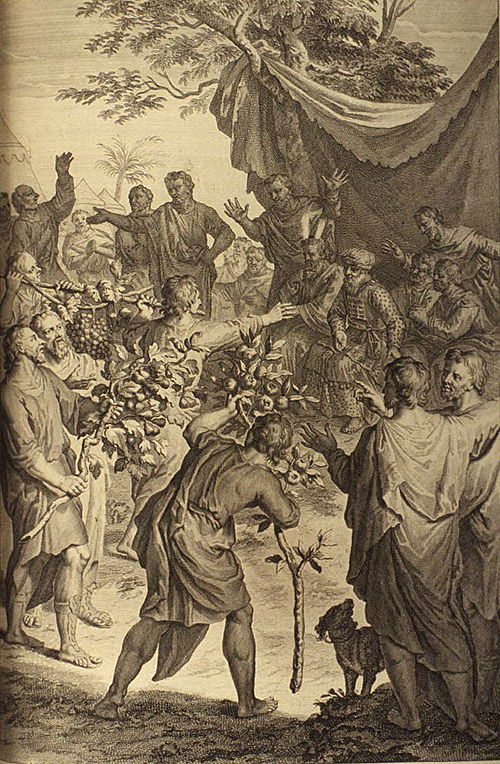
The recent Torah portion Shlach begs these questions. Shlach, translated as “Send,” narrates the story of the 12 spies. As you recall, the unit was dispatched on a reconnaissance mission to survey Canaan. They returned with tales of a bountiful land, but one inhabited by giants, making it seem impossible to conquer. Only Caleb and Joshua believed that the Israelites could be victorious, but they were overruled.

Fear gripped the spies; the Giants were too formidable, and their fear raised paralyzing questions. Perhaps they thought—we could live without realizing the promise of the land; maybe we could make do in Mitzrayim or confined spaces. The reticence of these people exploited the vulnerabilities of this nascent nation. They defeated themselves before they were ever tested. Their doubt in themselves, their destiny, their values, and indeed their God meant that this entire generation of recently freed people needed to be replaced by those whose spirit and strength were forged by the trials and tribulations of the harsh Midbar or desert. This spirit and strength are the answers to my initial question: what does it take to overcome fear with courage?

With this strength and spirit, you know in your heart that what you possess and believe is worth fighting for and to have enough faith and courage to take the next step even into the unknown. At the same time, you remain true to your values and morals despite the horrors of warfare, facing the battle with bravery yet not losing your soul in the fog of war.

Now is the time for us moderns to embrace these lessons. More than ever in our recent history, we need to lean into our values — the things we love deeply enough to champion and fight for.

For Israel, the boldness and cunning displayed—from exploding pagers and covert Mossad agents to an aggressive air strike aimed at preemptively striking Iran, a country whose nuclear ambitions threaten Israel—are significant. It is crucial to understand that waiting and hoping, along with economic sanctions, are not always the correct responses. However, it is also necessary to honestly recognize that the costs of this fight will be high, both in lives and resources. Staying morally superior during battles against a stubborn enemy has been especially difficult during the war in Gaza.

And just like there, we face challenges here as well. Domestic rabid Jew-hatred must unite us. We must stand up for our right to live freely, securely, and safely in the United States, a land of great abundance and blessings. We will not cower in silence or fear.

This is the time to stand up and defend our values because this is our home. To those who hate Jews or anyone labeled as “the other,” we fight for the fundamental rights that form the foundation of this great country, both for ourselves and everyone else, to protect the principles of equality, justice, and liberty. The hopes of our people and our traditions are at risk, but we cannot back down.

As Americans and Jews, much is at stake. Indeed, maybe everything is at stake. The fear of the unknown cannot silence us, nor can it allow us to disregard our sacred values and act with impunity against perceived threats. By standing together and believing in ourselves, each other, and the sacredness of our tradition’s values, we will be strong, and we will prevail—Chazak v’Umatz, strength, and courage.

Barukh atah adonai eloheinu melekh ha’olam asher kidshanu b’mitzvotav v’tzivanu la’asok betzorkhei tzibur.

Blessed is the Eternal One who commands us to work on behalf of the needs of our community.

Amen
 

And Our Flag Was Still There…

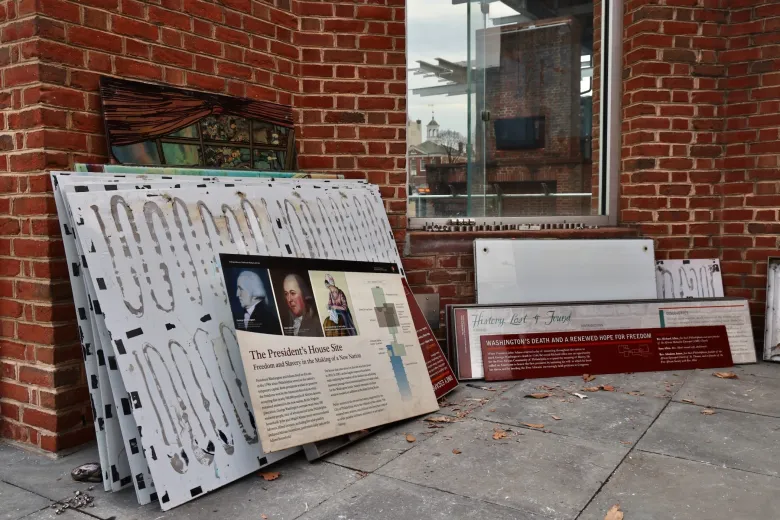
This weekend marked two important, deeply related yet profoundly different events: a Military Parade at the Washington Mall and a No Kings protest across the country.

Democracy endures. Many were deeply moved to celebrate the 250th anniversary of the Army. Most Americans are genuinely proud of our country and the Army, which has fought to keep us free since before the nation was established. They are patriots who eagerly watched the troops march and the extraordinary weaponry that has upheld our status as the leader of the world.

The No Kings marches were equally patriotic. Our right to assemble and peacefully protest against our government was clearly demonstrated in over 2,000 locations across the United States. Thousands opposing the current administration gathered to express their grievances.

This should be encouraging for all of us. Both things can be true at the same time. We celebrate and protest, and both are deeply patriotic expressions of commitment and love for this nation. Many are concerned that our rights to free speech are under attack. This past weekend shows us that we still have our voices. Dissent may be under assault, but it will not be taken away.

The challenge is to find ways to advance an agenda and, importantly, recognize that even when we disagree profoundly on so many issues, there must be a way to communicate with one another. We need to identify civil means of expressing our grievances and refrain from resorting to violence. The tragedy in Minnesota seems to be the act of a lone wolf. However, that is not reassuring. There appears to be an ever-increasing number of lone wolves willing to take matters into their own hands through violence.  We must reject that.

We are a nation of laws. We do not murder those we oppose politically. We fight our battles in the streets through peaceful protest, in the courts, and at the ballot box.

This past weekend demonstrates that our fundamental principles as a free people under the rule of law endure. As in the Star-Spangled Banner from the War of 1812, our flag remains. We must not fail her.

A Prayer for Peace for Shabbat

May the Almighty grant the leadership of all communities the wisdom to navigate the complex and challenging space they inhabit. Threats of annihilation and destruction must yield to peace for all who inhabit the region.

We pray for the safety of the people who have suffered at the hands of hatred and violence. And hope that a new day will dawn when all will live in peace.

Cain Yehi Ratzon.

Lean In

I am reeling from the attacks on my fellow Jews here in the United States. I struggle to understand the apparent fight against anti-Semitism by targeting institutions like Harvard, which seems to provoke a backlash. It appears that Jew-hatred has been normalized enough for these miscreants to heed the words that sanction violent acts. Recent horrific attacks on Jews leave us wondering if we are safe. What should we do?

LEAN IN

I take pride in my heritage, the values of my tradition, and the prophetic call to make the world a better place. I connect with people who share my beliefs, and I also reach out to those who do not. I stand up for what I believe and engage in conversation with others.

I will proudly defend my identity, including that of an American who upholds the aspirations of our founding documents and the struggle for equality, justice, and liberty.

Now is not the time to cower in fear but to realize that many others are like me, seeking a safe and secure world for our children, believing in something greater than myself, and understanding that the “other” is not a threat; they are just someone I have yet to know. It can be scary and difficult to do.

I attend my synagogue.  If you haven’t done so recently, now is a great time to find community.  And there are so many causes that demand our attention, for our charge is to make the world a better place.  It is more important than ever to fulfill our mission.  There is strength in numbers, and besides our Jewish community, we have many allies.

I am a Jew; I am an American.  I fight for the causes I believe in because they are righteous and good.  Join me and Lean In.