Tag: tikkun olam

  • What Happens to the Stragglers? Parsha Ki Tetzei

    Why does a portion overflowing with civil law stop, in the middle of everything else, to tell you how to build your roof?

    When you build a new house, Torah says, put a ma’akeh, a guardrail, on the roof, so no one falls. It sits in Ki Teitzei almost an afterthought among dozens of other laws: return the lost ox, pay the worker before sundown, leave the gleanings for the poor. But ma’akeh is the right word for the whole portion. Every law here is a guardrail, a protection for those who could fall or be pushed.

    We build guardrails because we don’t fully trust each other, and a society honest about that protects people exactly where power tends to slip: the wife accused without evidence, the son a father wants to disown, the worker whose wages could vanish if no one were watching. Ki Teitzei is guardrail after guardrail, each one placed where someone could fall.

    Madison wrote the same instinct into the Constitution: if men were angels, no government would be necessary, and since they are not, government must be given enough power to govern and then be obliged to control itself. Checks and balances in our government are guardrails by another name, built because we know what power does when no one is watching or nothing is stopping it.

    What they were built to keep out has a name: Amalek. Torah tells us exactly what he did. He attacked from the rear, cutting down the stragglers, the elderly, and the exhausted, too weak to keep pace after Egypt. The Hebrew for it is zanav, to tail. And Torah adds one line about why: he did not fear God. Fearing God, in this text, means knowing something stands above you, that your own strength is never the final word. Amalek feared nothing greater than himself, and a man who fears nothing greater than himself decides soon enough that the weak exist for his convenience.

    Hubert Humphrey put it plainly, dedicating a federal building: the moral test of government is how it treats those at the dawn of life, the children; those at the twilight of life, the aged; and those in the shadows of life, the sick, the needy, and the handicapped. Society is judged by how it treats its most vulnerable. Those are exactly Amalek’s targets.

    I recognize that fault line right now, and it does not belong to another country. Those same guardrails, due process, the courts, a Congress willing to check power rather than defer to it, get treated as obstacles rather than as boundaries. Immigration raids treat frightened, exhausted people the way Amalek treated the stragglers, as targets of opportunity rather than as human beings owed protection. Settlers in the West Bank, claiming to act in the name of my own tradition, terrorize Palestinian families with brutality that has everything to do with Amalek’s logic and nothing to do with Torah. When the government looks away from these or blesses them outright, I no longer consider them legitimate by the standards of our tradition.

    Ki Teitzei commands us to erase Amalek’s memory precisely because that instinct never fully leaves: the appetite for treating a guardrail as an inconvenience rather than a covenant. What do we do when the stragglers being picked off are visible right now, on the news, at the border, in cities, villages, and olive groves? It is one of Moshe’s final charges to his people before he dies: make sure we are never mistaken for Amalek, or for the government, or for the neighbor who lets him operate unchecked.

    I have no program to offer, no plan for how a rabbi in Philadelphia moves the world’s cruelty. But I know what my tradition asks of me before I know what to do about it: let the stragglers, wherever they are this week, be people I am responsible for, not a category I have learned to tolerate.

    What would it cost you to do the same?
  • Lean In

    I am reeling from the attacks on my fellow Jews here in the United States. I struggle to understand the apparent fight against anti-Semitism by targeting institutions like Harvard, which seems to provoke a backlash. It appears that Jew-hatred has been normalized enough for these miscreants to heed the words that sanction violent acts. Recent horrific attacks on Jews leave us wondering if we are safe. What should we do?

    LEAN IN

    I take pride in my heritage, the values of my tradition, and the prophetic call to make the world a better place. I connect with people who share my beliefs, and I also reach out to those who do not. I stand up for what I believe and engage in conversation with others.

    I will proudly defend my identity, including that of an American who upholds the aspirations of our founding documents and the struggle for equality, justice, and liberty.

    Now is not the time to cower in fear but to realize that many others are like me, seeking a safe and secure world for our children, believing in something greater than myself, and understanding that the “other” is not a threat; they are just someone I have yet to know. It can be scary and difficult to do.

    I attend my synagogue.  If you haven’t done so recently, now is a great time to find community.  And there are so many causes that demand our attention, for our charge is to make the world a better place.  It is more important than ever to fulfill our mission.  There is strength in numbers, and besides our Jewish community, we have many allies.

    I am a Jew; I am an American.  I fight for the causes I believe in because they are righteous and good.  Join me and Lean In.

  • Give Me Your Tired, Your Poor

    Give Me Your Tired, Your Poor

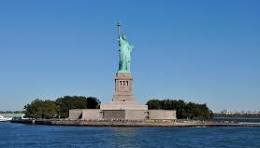
    Emma Lazarus’ famous words, inscribed at the base of the Statue of Liberty, beckon the forgotten and desperate to look towards America. Our economy is based on everyone’s contribution.

    Elon Musk recognizes the need for highly skilled workers, the ‘Gifted-Minds,’ to advance productivity in our economy. He advocates for the immigration of such workers, including expanding H1B visas. However, the United States also requires physically capable workers, the “Abled-Bodies.” As much as we need engineers and scientists, we need skilled and unskilled labor for the fields, factories, and construction. Without these workers, the supply of goods and products will decrease, pushing higher prices. Even in Musk’s vision of a new technological age, we need both kinds of workers.

    The unskilled view us as a land of opportunity. A functioning immigration system managing the process benefits our economy and promotes their well-being. The current system exploits workers in the worst of ways while giving us cheap food.  A comprehensive system, regulations, and unionization are ways to ensure they are not exploited in the dark meaning of the word.

    Arguably, the shift toward a fair living wage benefits all of us. The increased costs of a legitimate worker are offset by the reduced support people need from public assistance and the reduced burdens of immigration and the legal system, which creates taxpayers. However, a comprehensive immigration policy that promotes lawful access to our country’s opportunities is not enough; we need to go further.

    The undocumented immigrants are fleeing their desperate homelands in search of economic opportunities. This is a familiar narrative. The same prospects drove many of our families to take the enormous risks of coming here. It is in our national interest to foster stable societies in these otherwise despairing and hopeless regions. By doing so, we can reduce the need to flee and alleviate the pressures on our borders.

    We can and must do better than a broken system that functions as a battleground for political parties. We can strengthen our borders, build better relationships with our neighbors, and, just as importantly, create a more dynamic economy right here at home. The promise of Emma Lazarus’s words continues to inspire a new vision for America and hope for the future.


  • What do you see?

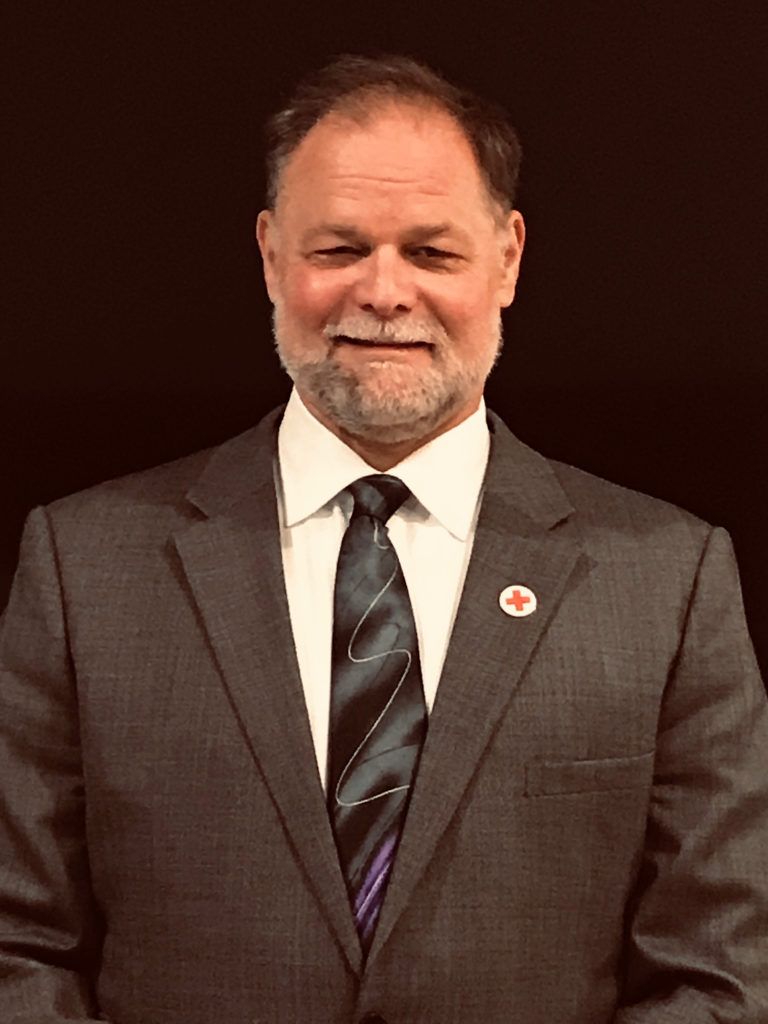
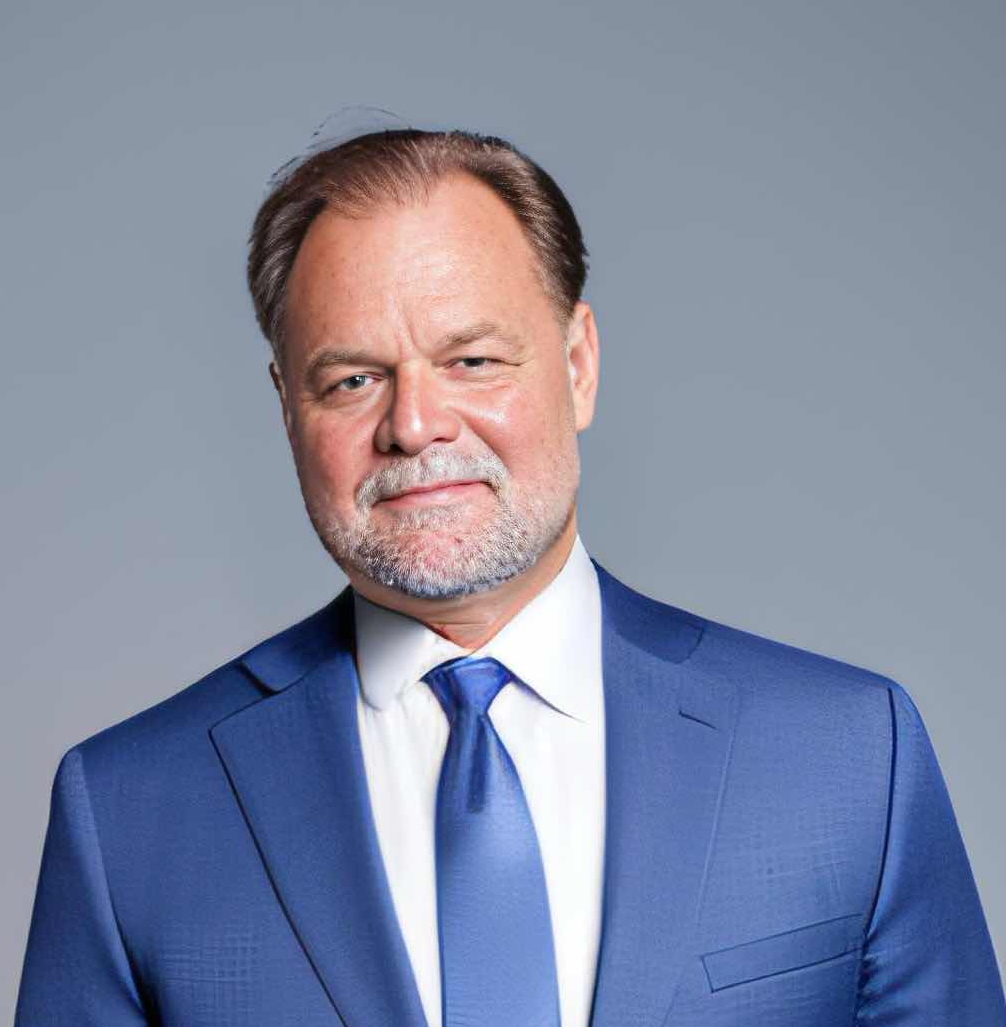
    It is me sporting an American Red Cross lapel pin saying, I am a proud volunteer with a great organization and I am asking you to join me.   The American Red Cross is a wonderful humanitarian organization devoted to helping people in need during times of crisis. 

    I am part of the Disaster Spiritual Care team. I was deployed to help the people of Pittsburgh in the wake of the shooting.  Every time there is a need, from house fire to conflagration, from minor flooding to hurricanes, from natural to man-made disasters, the American Red Cross is there.  And we need more help.

    As a volunteer, you will be trained to share in the amazing work we do.  It is an incredible way to give back to your home community, in my case the Jewish community, or wherever the need might take you.  It is a wonderful and rewarding experience.  Please join me. Go online at your local American Red Cross chapter to begin the process.  JOIN US!

  • Giving Tuesday- The day-after Challenge

    Giving Tuesday- The day-after Challenge

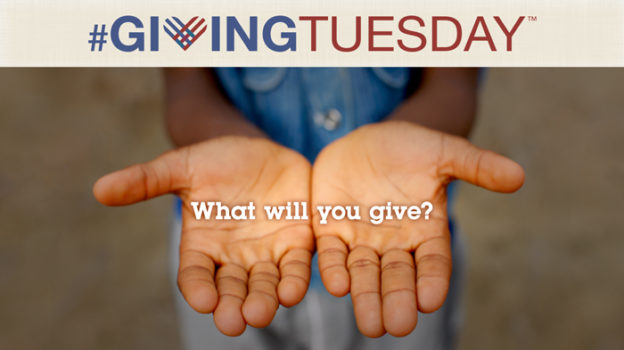
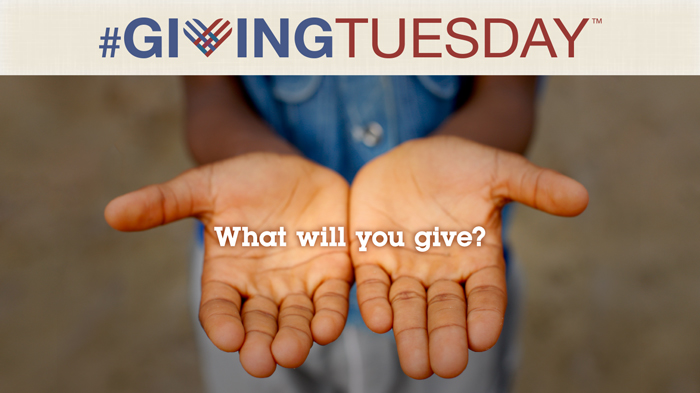
    givetuesday_700xOn Giving Tuesday, almost everyone in the philanthropic world asked for your financial support. Giving money is extremely important, but enduring change requires great effort we cannot relegate only to others. Permanent change requires each of us to roll up our sleeves and get involved.

    I remember when I decided to get back into shape; buying the treadmill was not enough, working out on the treadmill created the change I sought. Learning the piano required time at the keyboard learning and practicing, not merely buying the instrument. Dieting required a fundamental change in how I approach food, not simply a weeklong restriction on the intake. Philanthropy is likewise.

    To create real change in the world, we need to give money to the causes we believe in but also help to implement the changes we hope to see. For too long we have sloughed off the real work of change to the professionals. By providing the financial support we thought we had fulfilled our responsibility. However, there is more to do. Success comes when change becomes the new normal. This is an organic process, from the bottom up. Change is rarely sustainable when it is imposed from the outside. The new normal only happens when we all embrace it as our own.

    So I hope you gave generously on Giving Tuesday because your financial support makes the work possible. Now commit to giving of yourself as well to that cause you believe in so the work becomes a reality. We are the change we want to see. It cannot happen without each of us.