There is something we can do; Contribute to the organizations on the ground aiding the victims of war. Choose from among many humanitarian groups trying to ease the suffering. Consider a donation to Doctors without Borders; HIAS, JDC, World Central Kitchen. Everything helps, no amount is too small. Thank you.
When we went to grandma and grandpa’s house to visit, some things stood out. Among them was a giant breakfront that contained the unique items they had collected over the years. I remember the porcelain figurines on display, delicate and colorful, gracing the shelves just behind the beautiful curved glass. But there was something even more extraordinary; it was a secret that only my grandpa knew. He would call us over and open the top right drawer and withdraw a box of campfire marshmallows. The box had eight marshmallows, so my brother Jeff and I always enjoyed the special treat and even got seconds.
As I got older, I got a bit bolder, and the allure of those marshmallows was too great. So, I decided to sneak over to that drawer and get a marshmallow for myself. I waited for the appropriate time and stealthily made my move to the treasure chest. I opened the drawer, but the marshmallows were not there. I was crestfallen. I was sure grandpa put the box back in the drawer. But like magic, they disappeared. What was amazing to me was that the same thing happened the next time. Grandpa produced the box of marshmallows and put the remaining ones away, but they disappeared when I went back to look. It was truly magic.
I never did ask my grandfather about the magic disappearing marshmallow trick. But now that I am about as old as he was when he performed that trick, I think I figured out how he did it. I hope that someday I will be given the gift of performing that same magic trick for my grandchild. For, the breakfront now sits in my study. I have replaced the porcelains with special books and mementos, including a picture of my grandparents on their 50th wedding anniversary. It is magical.
To see or experience something new, or to Rest and relax (and of course some of us combine these). Both are ways to recharge to have a reset, time away from the normal and challenging tasks of work to engage in shavat v’yinafash, resting and refreshing both the body and the soul.
This week׳s Torah Portion Parsha Behar-Bechukotai talks about a reset- The Shmita -a reset of the land. Every seven years we are supposed to stop tilling the soil to let the fields recharge and all people regardless of stature; resident, worker, and slave alike, even the animals, get to partake equally in what is there.
We let things lie dormant so they can be rejuvenated.
The land is recharged and also not uncoincidentally those who do the hard physical labor of farming are given a respite as well. We do this for seven cycles of seven years and then in the 50th year is the Jubilee. “And you shall sanctify the fiftieth year, and proclaim freedom for slaves throughout the land for all who live on it. It shall be a Jubilee for you, and you shall return each man to his property, and you shall return each man to his family.”(Lev 25:10)
What might we learn from such a giant reset?
Our tradition recognizes that there are imbalances in the system- imbalances inherent in all systems. Some people are more successful in acquiring things, in working skillfully or even artfully, some possess better business acumen, some are particularly adept in choosing the right parents perhaps. And then, there are those not so skilled. The Talmud extensively discusses the issue that “Batar Anya Azla Aniyuta,” or “poverty follows the poor” or that Poverty actually increases from being impoverished.
All societies naturally tend towards these proclivities, and it is up to us, those who can make a difference, to make a change. To reset society to align with our values and principles. Another example of such a reset is commemorated at this time in our calendar.
As we mark the 34th day of our trek to Sinai the story of Shimon Bar Yochai is also worth noting. A disciple of Rabbi Akiva, he and his son, Eleazar, fled to escape the Romans, living in a cave for 12 years. He emerged but instead of re-joining his community, he was disgusted by a perceived lack of piety by the people. Shimon’s eyes burned everything they saw to a cinder, field and man, alike. God’s messenger, The Bat Kol, sent him back to the cave for another year and he emerged an enlightened man dedicated to righteous living and scholarship, redeeming Tiberias and possibly laying the groundwork for writing the seminal book of Jewish Mysticism, the Zohar.
This is the charge of this week’s Parsha- for each of us individually to rededicate ourselves to serving the needs of our people compassionately and deliberately, fully committed to the sacred cause of living Jewishly if we are willing to take up the challenge.
When this health emergency is past, will you emerge hardened from the cave? Or will you emerge from this quarantine open and deeper in touch with the values that are there to guide you? Or, will you figuratively burn what you see to the ground by turning a blind eye towards the deep injustices and needs that exist, or instead, will you choose to engage in pursuing righteousness and Jewish values, treating the people with Tzedek and compassion?
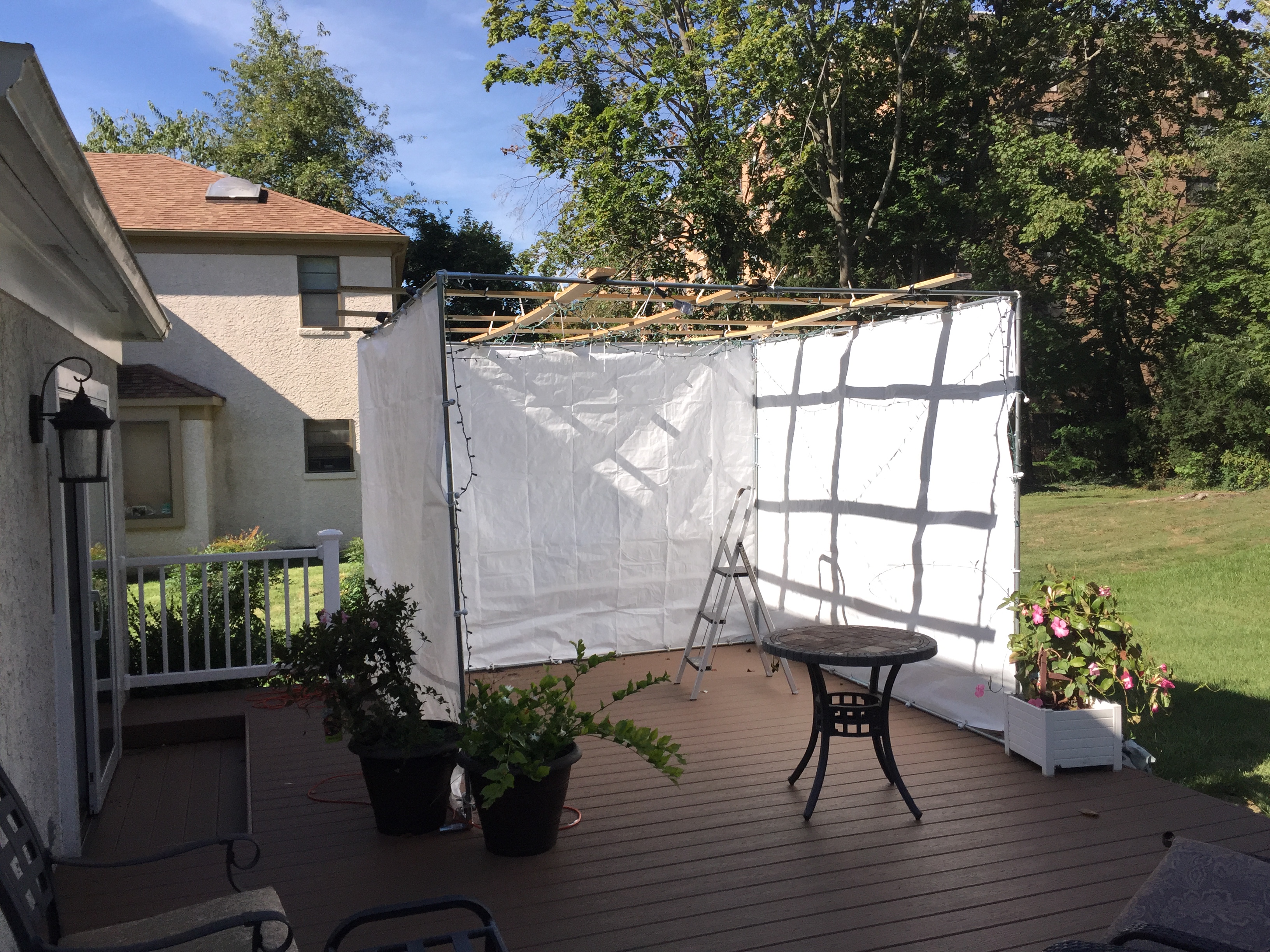
Our Sukkah is underway. This Sunday, erev Sukkot, we will celebrate. In honor of the Pope’s arrival to Philadelphia we will have a combined Sukkah Decorating and barbecue, that we have affectionately dubbed the Pope-e-que.
The Pope’s presence is bringing havoc to the area with the faithful throngs coming to see and hear him while the roads are shut down for security purposes. Rather than be cynical, I am thrilled by his message of hope, love, joy and action to make a better world. He is a disruptor in the best of ways.
Although your schedule is full Your Holiness, you are most welcome to Lashev baSukkah, grace us with your presence and enjoy some of the best kosher beef ribs around!
The Seder Table at my grandparent’s houses was one of those interesting affairs. The table started in the dining room, made its way past the wall into the living room and hung a right turn into the foyer. This was unlike my great-aunt on my father’s side, where the table started in the living room, ran through the dining room and into the kitchen, where the kids sat. Now I realize why the two families never got along; I always thought it was because one was Galitziana and the other Litvak…
At Nanny and Grandpop’s house, my mom’s parents, the table seemed to groan under the weight of the Seder Plates and bowls of salt water and bottles of wine and the platters upon platters of food. The table was laden with a stuffed breast of veal and brisket, homemade gefilte fish and chicken soup with dill and soft matzoh balls that my father mocked because they were not hard enough. My mom made them like rocks, which according to my father who actually loved them, could be used by the Israeli army as provisions to be eaten or if necessary as a weapon to be thrown. I recall my hand being slapped by my grandfather as I tried to take the Afikomen a bit too early in the affair. I eventually would get it, but only after an appropriate amount of time and tries had elapsed according to his calculations. I recall the mixing of English and Hebrew, the raucous noise of talking, singing, laughing and of course arguing, and sharing the story from the Hagaddah. The three major denominations of Judaism were all represented and all joined together to celebrate this mix of religion and family at the festive table.
I can trace my life through my movement along that table. I moved from the kids table, where I once chanted the “four questions,” to the main table where I chant the Kiddush, and ultimately now to sit at the head of the table to help lead the Seder. And there I sat this year, with my wife’s family.
They have their own interesting rituals and traditions, as does each family. But one is particularly worth noting. At the conclusion of the Seder, my mother-in-law plugs in the cassette player with a very special recording. They recorded her mother on one of her last Seders at the table, telling stories sharing recollections of times past and a poem. My mother-in-law sits transfixed, the voice carries her someplace else as she listens to her mother re-tell the telling of the Exodus. She drinks in her mother’s words and for those brief moments, Rose Mandel comes alive for her. That is truly the high point of the Seder. And why we need to commemorate those we loved this Yizkor.
For Yizkor is our time to remember. It is our time to reflect back on those we loved. This is our time to recognize how much they continue to mean to us. Often they fade into the background. We are so caught up in the day-to-day things that fill our time. Kids, food, shopping, the house, the spouse and our own selves, just to name the short list. But now is our time to remember them. Those we loved, those who we have lost, often too soon. Oh to have a few more moments of them. For when we remember them, we remember the blessings they brought to our lives. The richness that is ours because of them, the history that is uniquely our individual own because of the way they shaped and influenced our lives. We remember to offer gratitude for their being in our lives. We remember their best as a means to help propel us to be our best. And therefore we remember them as we strive to create the memories for those who come after us as the legacy we leave to them in an unbroken chain of loving and caring.