Shalom Rav – a prayer for peace, is part of closing of the Amidah. Cantor Azi Schwartz shares this beautiful version as we welcome Shabbat.
Shabbat Shalom
#BringThemHomeNow
Shalom Rav – a prayer for peace, is part of closing of the Amidah. Cantor Azi Schwartz shares this beautiful version as we welcome Shabbat.
Shabbat Shalom
#BringThemHomeNow
What are we really trying to say?
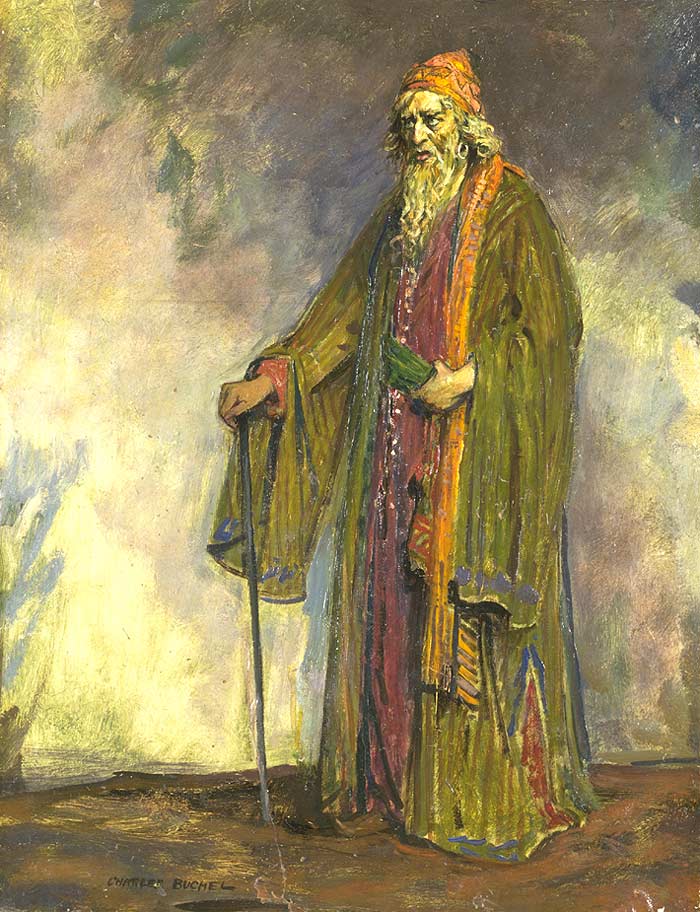 Shylock is an antisemitic character, a villainous figure in William Shakespeare’s play The Merchant of Venice. He has come to represent a usurious moneylender, and for a gangster, he’s the guy who ruthlessly takes that pound of flesh through loan repayment terms. And for someone familiar with the play, it’s an intentional insult and antisemitic. But then comes Donald Trump.
Trump is not known for his soaring oratory. Arguably, this is intentional, as he presents himself as a man of the people. He uses straightforward language that everyone can understand. To his audience, Shylock means a usurious moneylender.
Does Trump understand the back story? Probably. But he rarely seeks nuance. He simplifies complex issues and makes statements in ways that his supporters can understand. He also uses the righteous anger of certain groups as a political weapon. The “hair on fire” moments he creates distract from other topics. It’s 24/7 constant outrage, nonstop. And it’s exhausting. That’s also a tool he uses.
How we handle this depends on the outcome we’re aiming for. As an exceptional teacher of mine once said, “If you are a hammer, everything looks like a nail.”
If you want to clarify the situation, you could quietly approach Donald Trump and respectfully point out the offense caused by sharing the history of the word. If your goal is to criticize his insensitivity and provoke the anger of those offended by such remarks, both Jewish and non-Jewish alike, you would create the controversy currently underway in certain circles. It all depends on what you aim to accomplish.
Likely, he knew. However, it could have been a slip of the tongue. He is known for using a stream-of-consciousness style in his remarks. He has advisors who would have counseled him afterward. But even if it was a slip, Trump does not apologize; he moves forward. To quote the play, “I am not bound to please thee with my answers.” Calling Trump out in public to disparage him accomplishes little for anyone, except Donald Trump.
Words have power. That is a core belief of my tradition. But in a world where things are happening at a fever pitch both here and abroad, focusing on this word has taken precious attention away from discussing all those critical issues.
We need to be more careful in our word choice and what we want our words to accomplish.
 As we celebrate today, may we recommit ourselves to our founding principles shared in our Declaration of Independence, namely Life, Liberty, and the Pursuit of Happiness. Let us work towards everyone being so blessed.
 What does it take for fear to be overcome by courage? To dare, to risk, and to fight for what you believe in rather than cower?
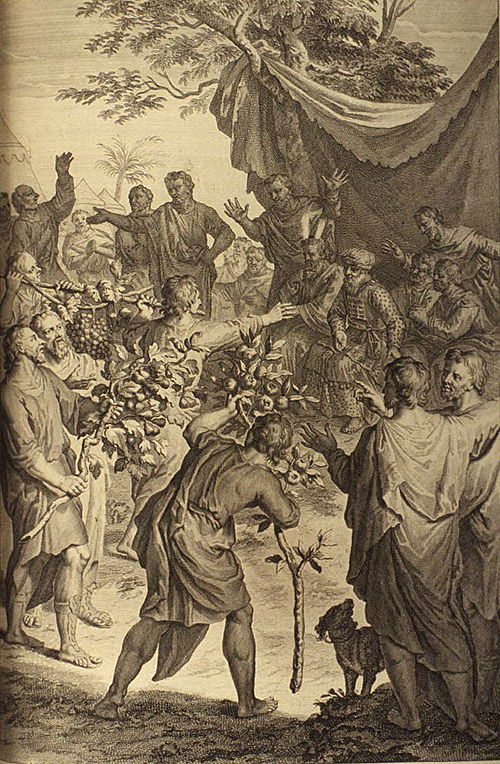
The recent Torah portion Shlach begs these questions. Shlach, translated as “Send,” narrates the story of the 12 spies. As you recall, the unit was dispatched on a reconnaissance mission to survey Canaan. They returned with tales of a bountiful land, but one inhabited by giants, making it seem impossible to conquer. Only Caleb and Joshua believed that the Israelites could be victorious, but they were overruled.
Fear gripped the spies; the Giants were too formidable, and their fear raised paralyzing questions. Perhaps they thought—we could live without realizing the promise of the land; maybe we could make do in Mitzrayim or confined spaces. The reticence of these people exploited the vulnerabilities of this nascent nation. They defeated themselves before they were ever tested. Their doubt in themselves, their destiny, their values, and indeed their God meant that this entire generation of recently freed people needed to be replaced by those whose spirit and strength were forged by the trials and tribulations of the harsh Midbar or desert. This spirit and strength are the answers to my initial question: what does it take to overcome fear with courage?
With this strength and spirit, you know in your heart that what you possess and believe is worth fighting for and to have enough faith and courage to take the next step even into the unknown. At the same time, you remain true to your values and morals despite the horrors of warfare, facing the battle with bravery yet not losing your soul in the fog of war.
Now is the time for us moderns to embrace these lessons. More than ever in our recent history, we need to lean into our values — the things we love deeply enough to champion and fight for.
For Israel, the boldness and cunning displayed—from exploding pagers and covert Mossad agents to an aggressive air strike aimed at preemptively striking Iran, a country whose nuclear ambitions threaten Israel—are significant. It is crucial to understand that waiting and hoping, along with economic sanctions, are not always the correct responses. However, it is also necessary to honestly recognize that the costs of this fight will be high, both in lives and resources. Staying morally superior during battles against a stubborn enemy has been especially difficult during the war in Gaza.
And just like there, we face challenges here as well. Domestic rabid Jew-hatred must unite us. We must stand up for our right to live freely, securely, and safely in the United States, a land of great abundance and blessings. We will not cower in silence or fear.
This is the time to stand up and defend our values because this is our home. To those who hate Jews or anyone labeled as “the other,” we fight for the fundamental rights that form the foundation of this great country, both for ourselves and everyone else, to protect the principles of equality, justice, and liberty. The hopes of our people and our traditions are at risk, but we cannot back down.
As Americans and Jews, much is at stake. Indeed, maybe everything is at stake. The fear of the unknown cannot silence us, nor can it allow us to disregard our sacred values and act with impunity against perceived threats. By standing together and believing in ourselves, each other, and the sacredness of our tradition’s values, we will be strong, and we will prevail—Chazak v’Umatz, strength, and courage.
Barukh atah adonai eloheinu melekh ha’olam asher kidshanu b’mitzvotav v’tzivanu la’asok betzorkhei tzibur.
Blessed is the Eternal One who commands us to work on behalf of the needs of our community.
Amen
 I am reeling from the attacks on my fellow Jews here in the United States. I struggle to understand the apparent fight against anti-Semitism by targeting institutions like Harvard, which seems to provoke a backlash. It appears that Jew-hatred has been normalized enough for these miscreants to heed the words that sanction violent acts. Recent horrific attacks on Jews leave us wondering if we are safe. What should we do?
LEAN IN
I take pride in my heritage, the values of my tradition, and the prophetic call to make the world a better place. I connect with people who share my beliefs, and I also reach out to those who do not. I stand up for what I believe and engage in conversation with others.
I will proudly defend my identity, including that of an American who upholds the aspirations of our founding documents and the struggle for equality, justice, and liberty.
Now is not the time to cower in fear but to realize that many others are like me, seeking a safe and secure world for our children, believing in something greater than myself, and understanding that the “other” is not a threat; they are just someone I have yet to know. It can be scary and difficult to do.
I attend my synagogue. If you haven’t done so recently, now is a great time to find community. And there are so many causes that demand our attention, for our charge is to make the world a better place. It is more important than ever to fulfill our mission. There is strength in numbers, and besides our Jewish community, we have many allies.
I am a Jew; I am an American. I fight for the causes I believe in because they are righteous and good. Join me and Lean In.
I had the honor of moderating a conversation for the New Israel Fund (NIF) at Beth Am Israel, located on the Main Line in suburban Philadelphia.
 Our speakers, Rabbi Noa Sattath and Libby Linkenski are dedicated to fostering a shared society that upholds our Jewish values. Our values endure, even in challenging times like these, when they are stressed and tested as rarely before in our history. Indeed, our values are more important than ever for maintaining perspective. Libby shared three points to remember as we navigate these difficult times:
Palestinians are not Hamas. Israelis are not Benjamin Netanyahu. Americans are not Donald Trump. We are more than the actions of our extremist leaders and are not directly complicit in their worst acts.
The conflict didn’t begin on October 7, and October 7 itself was indefensible. So is the ongoing assault on the people of Gaza. We can’t lose our moral clarity, regardless of politics.
Two peoples have always existed between the river and the sea, and both will continue to exist. Any vision that erases one side is a vision of unimaginable violence. The question is not whether we coexist but how. That’s where the conversation begins—and where it must end.
We must continue working to lay the foundation for a future where both people can live with dignity and security.
Have you informed him of his Miranda Rights?
It’s deeply embedded in our understanding of the system.
“You have the right to remain silent; anything you say can and will be used against you…” Many of us can even repeat the words quoted at every arrest and in every cop show we watch on TV.
Miranda was somewhat of a lowlife. He confessed to rape, but that conviction was overturned because the Supreme Court determined his confession was improper. Miranda was tried without his confession and subsequently convicted.
Protection from self-incrimination is regarded as a fundamental right under our principle of innocent until proven guilty. This right is enshrined in the 5th Amendment, which explicitly safeguards individuals against self-incrimination. Additional protections also exist, including the right to counsel and due process as established in the 6th and 14th Amendments, respectively. It is the responsibility of the government to prove guilt, not the obligation of the defendant to prove innocence. This distinction makes our system unique and enviable.
We are willing to let a guilty person go free rather than wrongfully convict an innocent individual. This means that sometimes bad guys “get away with it” because we want to protect the innocent. The system is flawed and abused. However, this sets us apart from many other legal systems and is the envy of the free world, limiting the government’s power from steamrolling over whoever it decides to target. These rights were denied to Abrego Garcia when he was abruptly taken to a maximum-security prison in El Salvador.
It is not that Abrego Garcia is a good guy or a bad guy. He has never had access to the protections our system offers. Bring him back into the legal system for proper adjudication. Present the evidence, make the arguments, and let the chips fall where they may. We cannot risk the implications of denying Abrego Garcia his rights; we could only ask, Who’s Next?
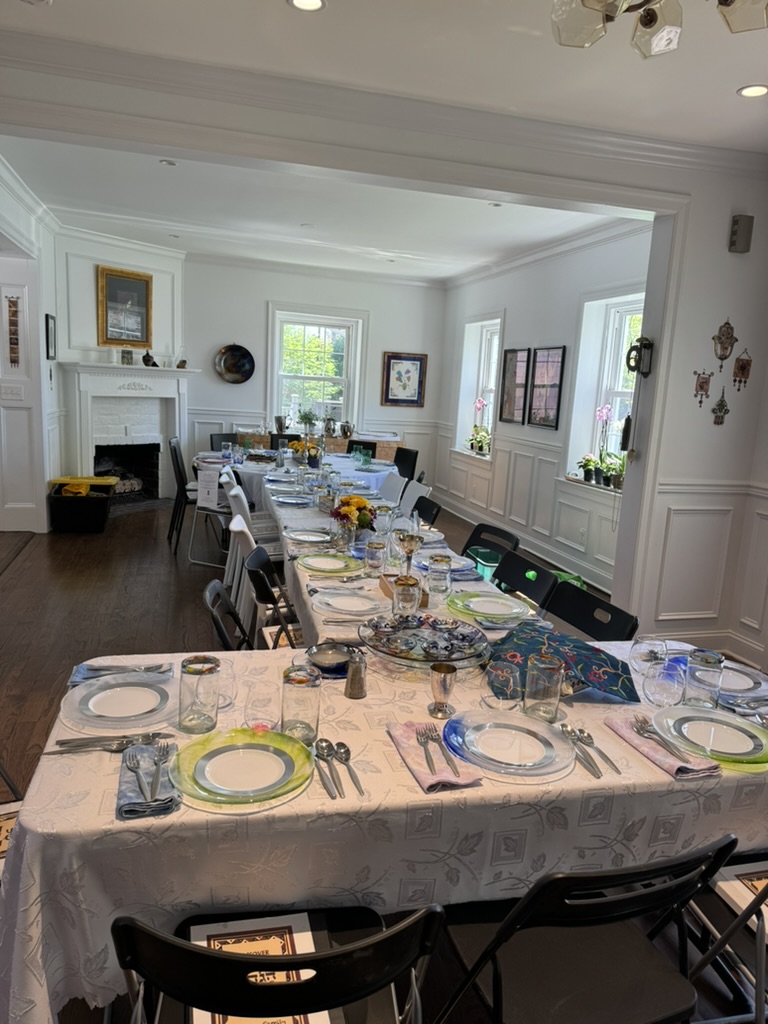 As we gather around the Seder table, we find ourselves in a moment that feels uniquely challenging. While previous generations have confronted serious issues, the current landscape is unlike anything we’ve encountered in recent memory. The ongoing war is relentless, with no end in sight and no plan for what follows. Hostages remain trapped, seemingly without hope for redemption. Furthermore, we are witnessing a rise in anti-Israel sentiment, along with a resurgence of Antisemitism not just abroad but right here in the United States. Fear and anxiety permeate our lives, and rather than coming together to confront these threats, we often find ourselves at odds with each other. This moment in time is fraught with tension.
However, we have the power to respond constructively, with unity and compassion.
By gathering at the Seder table, we embody the spirit of inclusion with our declaration: “Whoever is hungry, come and eat!” This Passover, our hunger for spiritual and emotional support is palpable. Let us set aside our differences to share and celebrate the profound story of our people’s redemption, recognizing that each of us connects to this narrative in our own distinctive way. Our tradition highlights four individuals asking different questions—a reflection of our diverse perspectives. We ought to welcome one another, fostering an environment of understanding even amidst spirited discussions. The Shalom Bayit, the peace of the Seder table, and our unity must prevail. Now, more than ever, we need each other. This Passover, let us cherish our time with family and community, share the powerful story of redemption and freedom, and be grateful that we have one another in these trying times.
Wishing you a Zissen Pesach!
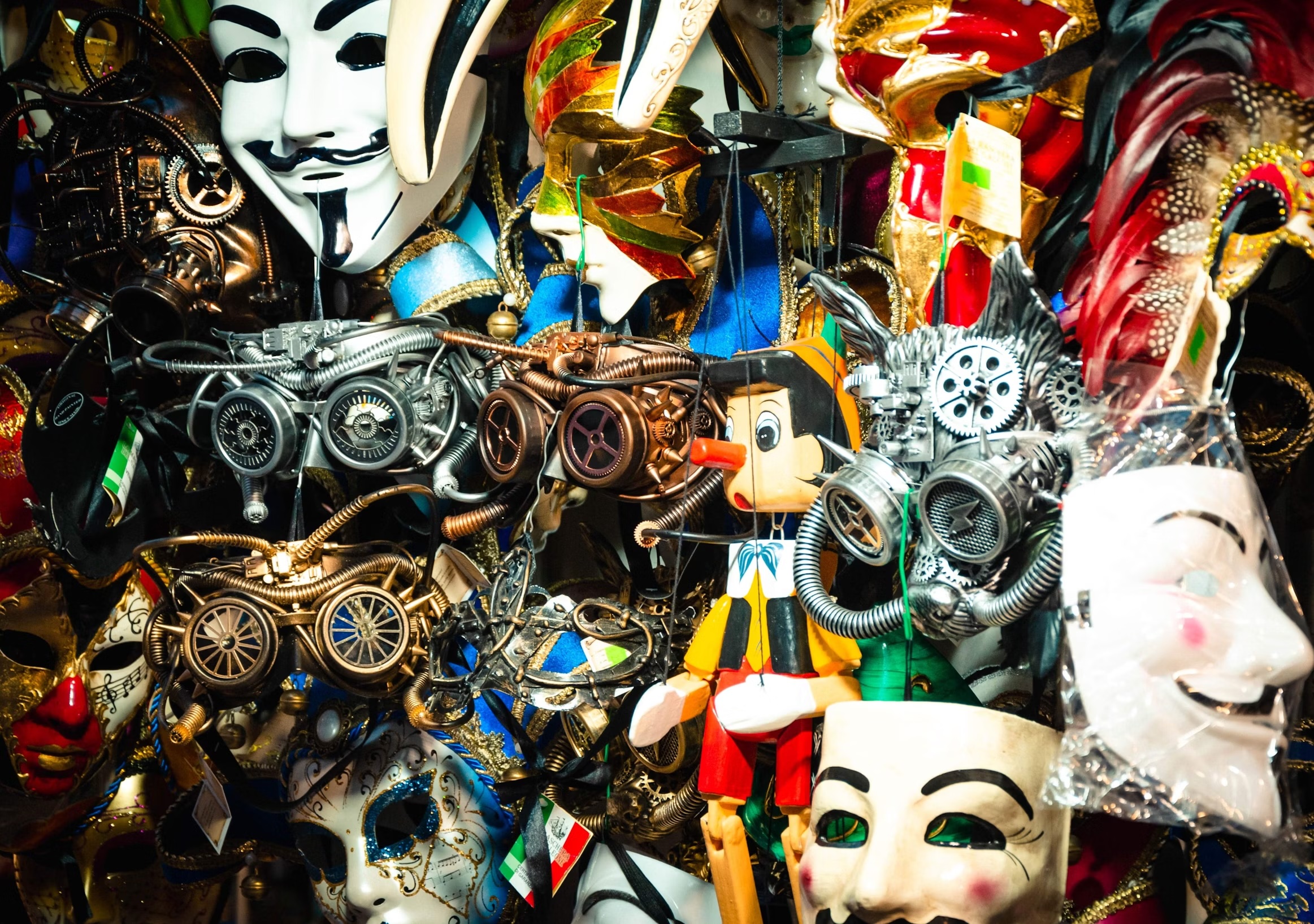
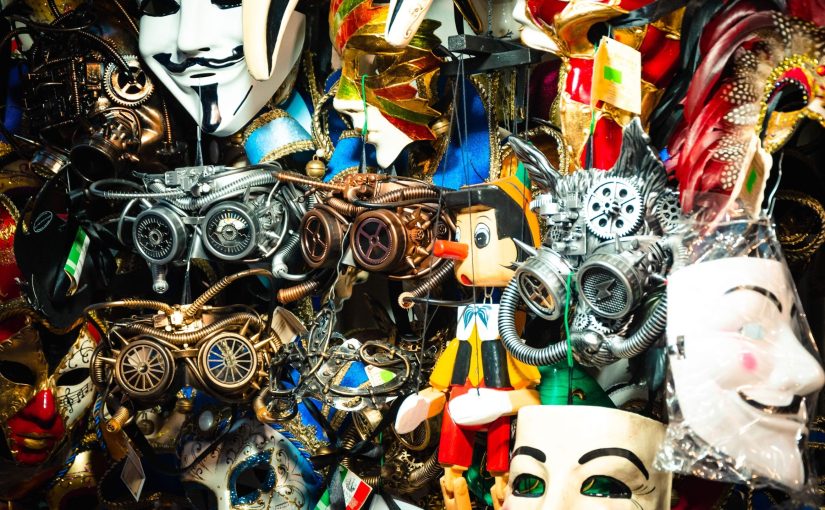
As we approach Purim, I began thinking about our holiday and our celebration, which includes costumes.
I’ve always thought that Reform Jews needed better uniforms.
In our desire to embrace modernity, we’ve adopted the clothing commonly worn by others, rendering us indistinguishable as we blend into the broader culture.
Our more traditional brethren have uniforms—items that set them apart and make them easily recognizable: payot, kippot, shtreimel, sheitels, long black coats, and other garments depending on the particular denomination. Many of us will dress in costumes to celebrate Purim, but we wear masks as part of a wardrobe that reflects aspects of who we are all the time.
The truth is, we all wear uniforms. It is easy to identify a firefighter, a police officer, or a member of the military; their uniforms indicate that they are part of an elite group with a specific purpose. Those of us who are slaves to fashion publicly claim we are au courant, while those of us who deliberately choose to rebel against such norms wear uniforms that proclaim we are iconoclasts. These public displays of identity convey that we are part of a group motivated by pride, belonging, or sometimes even fear. Are these masks, reflections, or projections?
Does our outward appearance reflect who we are inside, who we aspire to be, or how we want the world to perceive us? When these aspects do not align, it’s essential to pause and reflect on why. Why do we present ourselves in ways that do not match our true selves? Sometimes this discrepancy is aspirational, while at other times it may stem from feelings of inadequacy or a fear of revealing our authentic selves to the world.
I hope my mask is revealing. It shares my identity and signals that I am approachable, an authority, and a source of comfort in whatever way my intended audience needs to see me, while remaining authentic to my true self on Purim and every day. May we all find the space to be the best version of ourselves. May we be unafraid to be who we are and grateful for that, even if we aspire to more.
A colleague shared ideas in a forum, ending with the words “unrepentantly Zionist and Politically Incorrect.”
He proudly resisted, and while I value his essential work and support as a rabbi, I wonder if he, like many of us, is “throwing the baby out with the bathwater.” Now is the time for nuance, to stand up for our core values, and to eliminate much of the noise that makes those values challenging to embrace. Backlash often lacks focus; now, focus on our values is needed more than ever.
I am a Zionist. But my Zionism is a belief in identity and rights to a safe and secure place to call one’s own. It is precisely my Zionism that compels me to understand this same need for the Palestinian people. Both are true; I must accept the other to validate the one. Before railing against this, let me reiterate that this modern Zionism is premised on both people having the right to safety and security. That requires people to be committed to peaceful coexistence, which requires serious and difficult compromises from each side.
Another colleague, friend, and teacher commented on the so-called Black Lives Matter movement. He is appalled by their alliance with radical pro-Palestinian groups that are also anti-Israel. I agree that they have betrayed their righteous cause of equality under the law. This is another instance where a core idea is co-opted, diluted, and ultimately betrayed by those with different political agendas. However, we cannot allow these individuals to deter us from our core belief in equality for everyone and our commitment to working with others to realize the promise of our nation’s founding principles.
Navigating through the fog is a significant challenge, but it is what we are trained to do. Our tradition of Makhloket l’Shem Shamayim, argument for the sake of Heaven, revolves around how our values are understood when tested under various circumstances. This is precisely the challenge we face today. Whether we agree with our government’s current policies and procedures is an essential but separate conversation; how these impact our cherished beliefs should be our focus. Our fundamental values of caring, including feeding the hungry, clothing the naked, housing the homeless, and caring for the widow and orphan, are constantly threatened, now evermore so. Therefore, the need to champion our beliefs has never been more crucial.