Shemot in our Times

Anthropologist Margaret Mead shared, “Never doubt that a small group of thoughtful, committed citizens can change the world; indeed, it’s the only thing that ever has”.

Shifrah, Puah, Miriam, and Yocheved embody the courage to defy brutality and embrace life.  It is our turn.

To those who value our democratic principles, most notably the rule of law, we applaud the courage to fight in the courts and to march in the streets. It is everyone’s responsibility to join and champion the aspirational values at the core of our country.


Does the kippah on my head place a target on my back?

With the increasing violence in public spaces, maybe the answer is yes. What should I do about it? I could cower; many people have said they remove their Jewish symbols, like a Chai or Magen David, because they fear being targeted.

I have been wearing a kippah for many years, and since the war started, I wear a kippah with the Israeli flag and the words “Am Yisrael Chai” stenciled inside. I am proud to show who I am and what I stand for. But does it come with any risks?

My kippah has actually been an invitation for people from all walks of life to approach me. At a Costco, on a turnpike rest stop, or while walking on the street, people offer words of encouragement and support. Most people are decent folks. Most are not looking to harm others; they are living their lives and caring for their loved ones, just as I strive to do.

We must not allow acts of violence from uncontrolled radicals to control us. Those responsible for protecting us face a significant challenge, and a system based on freedom rather than repression often leaves them a step behind in safeguarding our rights and safety. They require additional support to perform this vital work. We can help.

We need to get out, gather, socialize, and connect with others. We don’t have to agree, but we must show we care. We need each other. The hateful rhetoric shouldn’t be fought with more hate, but by reaching out, creating, and living in the society we believe in.

My kippah is a symbol and a call to the people I meet that our humanity continues to thrive. That is the kind of target I strive to be.


What’s in a name?

Genocide is a highly charged word.

In Shakespeare’s Romeo and Juliet, Juliet asks, ‘What’s in a name?’ Names are simply labels we use to identify things, but the true nature of those things exists regardless of what we call them. Genocide is a highly charged word. We get so caught up in the word and all of the intense emotional baggage it carries that we forget the underlying tragedy: it is an attempt to understand what is happening in Gaza.

One side calls it a genocide; the other disputes that term, accusing the accusers of deliberately misusing the word, targeting the victims of such an experience as if they were the perpetrators of that very same horror. We get caught up in definitions, a kind of territorialism, claiming ownership of that word, and in doing so, we completely miss the point.

The people suffering in the war in Gaza are truly experiencing pain. It’s not just about numbers—whether it’s one person or many—innocent victims of the Hamas-Israel conflict have died. They go hungry. They are homeless. They are victims. Although I do not trust the statistics from the Gaza Health Ministry, there’s no way to measure the full extent of the carnage accurately, and Hamas’s role in this is dehumanizing Palestinians, echoing what the Nazis did to Jews.

We must navigate this challenging space and find ways to offer humanity and hope that we were denied, and, sadly, to the Palestinians as well. From the ashes of Auschwitz, we proclaimed Never Again. Was this declaration meant only for us? Our Jewish duty to be a light to the nations requires that it not be. We must uphold our tradition’s promise by maintaining our humanity and embracing the virtues of Pirkei Avot (2:5); in a world that has no worthy men, strive to be a man.

Whatever you call it, the war and anguish must end.


What does it take for fear to be overcome by courage?

What does it take for fear to be overcome by courage? To dare, to risk, and to fight for what you believe in rather than cower?

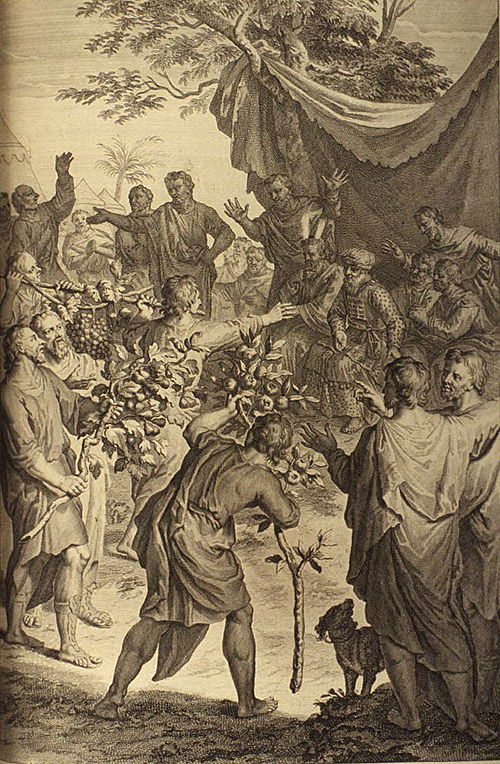
The recent Torah portion Shlach begs these questions. Shlach, translated as “Send,” narrates the story of the 12 spies. As you recall, the unit was dispatched on a reconnaissance mission to survey Canaan. They returned with tales of a bountiful land, but one inhabited by giants, making it seem impossible to conquer. Only Caleb and Joshua believed that the Israelites could be victorious, but they were overruled.

Fear gripped the spies; the Giants were too formidable, and their fear raised paralyzing questions. Perhaps they thought—we could live without realizing the promise of the land; maybe we could make do in Mitzrayim or confined spaces. The reticence of these people exploited the vulnerabilities of this nascent nation. They defeated themselves before they were ever tested. Their doubt in themselves, their destiny, their values, and indeed their God meant that this entire generation of recently freed people needed to be replaced by those whose spirit and strength were forged by the trials and tribulations of the harsh Midbar or desert. This spirit and strength are the answers to my initial question: what does it take to overcome fear with courage?

With this strength and spirit, you know in your heart that what you possess and believe is worth fighting for and to have enough faith and courage to take the next step even into the unknown. At the same time, you remain true to your values and morals despite the horrors of warfare, facing the battle with bravery yet not losing your soul in the fog of war.

Now is the time for us moderns to embrace these lessons. More than ever in our recent history, we need to lean into our values — the things we love deeply enough to champion and fight for.

For Israel, the boldness and cunning displayed—from exploding pagers and covert Mossad agents to an aggressive air strike aimed at preemptively striking Iran, a country whose nuclear ambitions threaten Israel—are significant. It is crucial to understand that waiting and hoping, along with economic sanctions, are not always the correct responses. However, it is also necessary to honestly recognize that the costs of this fight will be high, both in lives and resources. Staying morally superior during battles against a stubborn enemy has been especially difficult during the war in Gaza.

And just like there, we face challenges here as well. Domestic rabid Jew-hatred must unite us. We must stand up for our right to live freely, securely, and safely in the United States, a land of great abundance and blessings. We will not cower in silence or fear.

This is the time to stand up and defend our values because this is our home. To those who hate Jews or anyone labeled as “the other,” we fight for the fundamental rights that form the foundation of this great country, both for ourselves and everyone else, to protect the principles of equality, justice, and liberty. The hopes of our people and our traditions are at risk, but we cannot back down.

As Americans and Jews, much is at stake. Indeed, maybe everything is at stake. The fear of the unknown cannot silence us, nor can it allow us to disregard our sacred values and act with impunity against perceived threats. By standing together and believing in ourselves, each other, and the sacredness of our tradition’s values, we will be strong, and we will prevail—Chazak v’Umatz, strength, and courage.

Barukh atah adonai eloheinu melekh ha’olam asher kidshanu b’mitzvotav v’tzivanu la’asok betzorkhei tzibur.

Blessed is the Eternal One who commands us to work on behalf of the needs of our community.

Amen
 

United

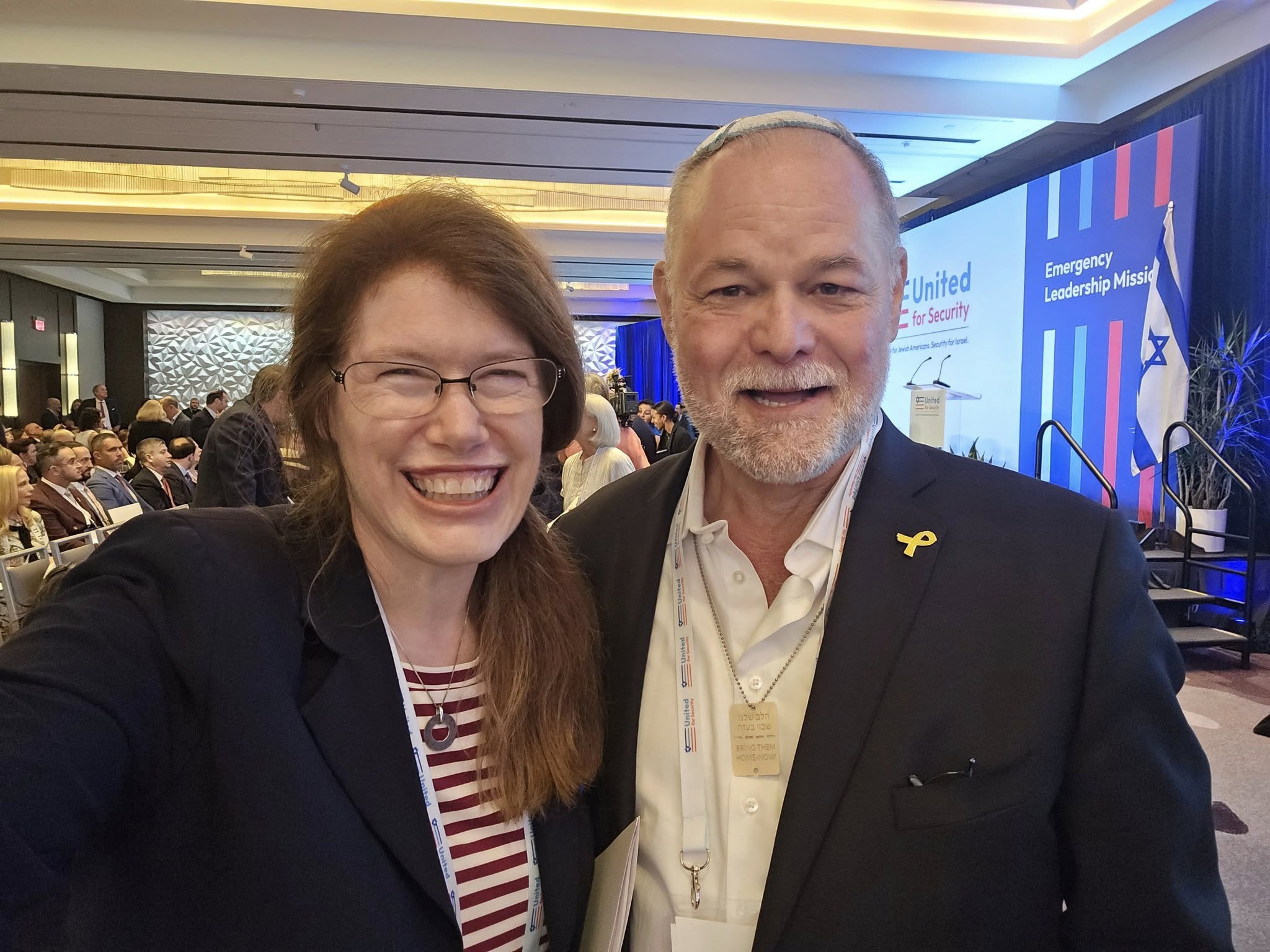
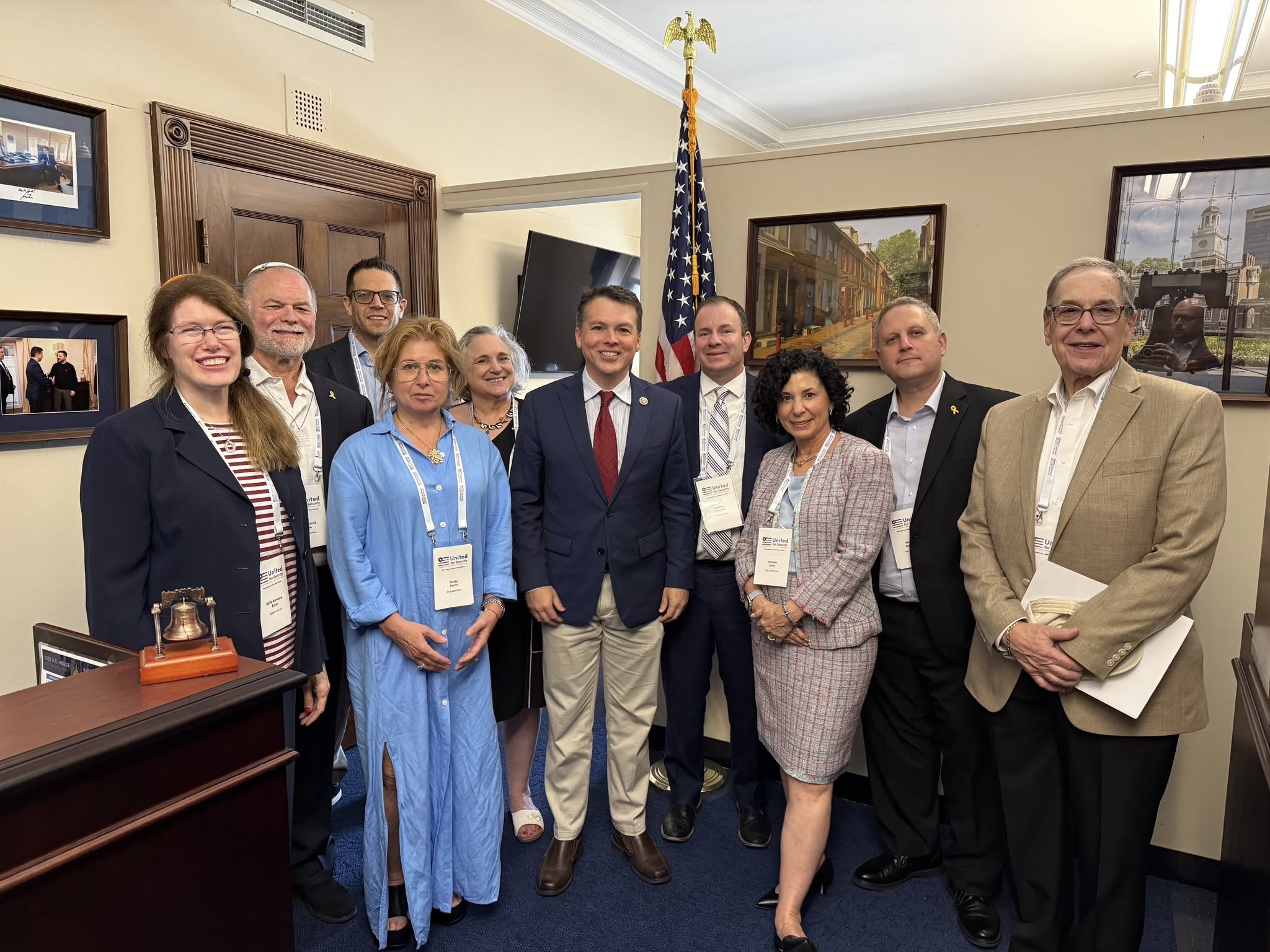
Rabbi Adrienne and I first met at Temple Micah years ago when we shared the High Holidays there in Lawrenceville, NJ. It was wonderful to see her again at the United for Security Emergency Leadership Mission in Washington, D.C., last week. Our smiles show the joy of reconnecting, but they also mask the urgent issues facing the American Jewish community. This is a time for us to come together, setting aside denominational differences, and recognizing that we are all part of the larger community of Am Yisrael.  This national fly-in was to advocate on the Hill for increased funding for security and a commitment to

With Congressman Brendan Boyle

fighting Antisemitism.

We hope our advocacy efforts helped Congress and the Senate understand the unacceptable risks to our community and encouraged them to take action to protect us from those who mean us harm.


Lean In

I am reeling from the attacks on my fellow Jews here in the United States. I struggle to understand the apparent fight against anti-Semitism by targeting institutions like Harvard, which seems to provoke a backlash. It appears that Jew-hatred has been normalized enough for these miscreants to heed the words that sanction violent acts. Recent horrific attacks on Jews leave us wondering if we are safe. What should we do?

LEAN IN

I take pride in my heritage, the values of my tradition, and the prophetic call to make the world a better place. I connect with people who share my beliefs, and I also reach out to those who do not. I stand up for what I believe and engage in conversation with others.

I will proudly defend my identity, including that of an American who upholds the aspirations of our founding documents and the struggle for equality, justice, and liberty.

Now is not the time to cower in fear but to realize that many others are like me, seeking a safe and secure world for our children, believing in something greater than myself, and understanding that the “other” is not a threat; they are just someone I have yet to know. It can be scary and difficult to do.

I attend my synagogue.  If you haven’t done so recently, now is a great time to find community.  And there are so many causes that demand our attention, for our charge is to make the world a better place.  It is more important than ever to fulfill our mission.  There is strength in numbers, and besides our Jewish community, we have many allies.

I am a Jew; I am an American.  I fight for the causes I believe in because they are righteous and good.  Join me and Lean In.

Miranda wasn’t a hero What his case represented was heroic

Have you informed him of his Miranda Rights?

It’s deeply embedded in our understanding of the system.

“You have the right to remain silent; anything you say can and will be used against you…” Many of us can even repeat the words quoted at every arrest and in every cop show we watch on TV.

Miranda was somewhat of a lowlife.  He confessed to rape, but that conviction was overturned because the Supreme Court determined his confession was improper.  Miranda was tried without his confession and subsequently convicted.

Protection from self-incrimination is regarded as a fundamental right under our principle of innocent until proven guilty. This right is enshrined in the 5th Amendment, which explicitly safeguards individuals against self-incrimination.  Additional protections also exist, including the right to counsel and due process as established in the 6th and 14th Amendments, respectively. It is the responsibility of the government to prove guilt, not the obligation of the defendant to prove innocence. This distinction makes our system unique and enviable.

We are willing to let a guilty person go free rather than wrongfully convict an innocent individual. This means that sometimes bad guys “get away with it” because we want to protect the innocent. The system is flawed and abused. However, this sets us apart from many other legal systems and is the envy of the free world, limiting the government’s power from steamrolling over whoever it decides to target.  These rights were denied to Abrego Garcia when he was abruptly taken to a maximum-security prison in El Salvador.

It is not that Abrego Garcia is a good guy or a bad guy. He has never had access to the protections our system offers. Bring him back into the legal system for proper adjudication. Present the evidence, make the arguments, and let the chips fall where they may. We cannot risk the implications of denying Abrego Garcia his rights; we could only ask, Who’s Next?

Parshah Terumah- A deeper timely meaning

Yoram RanaanThe key to a deeper message in Terumah, or Offering, is the phrase:

“They shall make for me a sanctuary that I shall dwell among them.”

The people bring contributions, or offerings, of precious items, Gold, Silver, copper, spices and gems, wool, animal skins, olive wood- precious materials- they bring so much that Moses needs to ask them to stop bringing any more.  And then, they proceed to build an elaborate Mishkan, a Home for God to dwell amongst the people.  This comes after two previous Parshiot discussions on the Ten Commandments and the Mishpatim, the details of the laws, and notably the application of Law without bias, that create a civil society as the people coalesce into a nation.

This has modern implications—not that any of you need to bring some olive wood to work or offer your wedding bands for ornamentation.

It IS about embracing the idea that this was to be a nation of Laws sanctified by God’s presence. People actively accepted this covenantal relationship with God and the law’s central importance so they could live together.  The idea that the Mishkan could be readily moved from one location to another– that there was portability means that the law went wherever the people were.  And it was the same law whether they lived in the desert of the Midbar or the Promised Land.

We are currently struggling with the notion that we are a nation of laws.  For some, the law is just only when it rules favorably for them and unjust when it does not or even limits what they want to do.  Trust in the system has been the bedrock of the national and local judiciary. The dedication to the ideal of serving justice, although not always lived up to it, was still the notion that kept our faith in the judicial institutions.   This is evidenced by the enforcement of rulings of law by another branch of government operating in support of this institution.  The erosion of trust, the questioning of authority, and the attack on judges and institutions all seriously undermine the capacity of the courts to hold civil society together.  The other branches of government have been held in check in a system expressly set up to keep guardrails in place when other branches of government step too far outside their lanes.

The system is flawed and has much room for improvement. Equitable application of the law for all is not a practical reality. An overwhelmed court system struggles to seek and deliver justice. Although “efficient,” Plea deals often deny justice for the poor, and outcomes are too frequently based on the accused’s ability to hire the best legal representation. The jury system is under pressure since serving is often seen as a burden rather than a responsibility and privilege of citizenship.

As Lady Justice depicts, the court should be a special and sacred place where justice is dispensed based on the merits. However, the system seems to be abused by the wealthy and against the poor. A lack of civics education contributes to a population that is unappreciative of its importance in maintaining civil society.

We need capable courts that enjoy the full support of the people. Although our system is resilient, it can only tolerate so much stress. As the new nation birthed at Sinai, our nation and government require its people from which to derive its legitimacy and also shine as a beacon to the world.  Our challenge is to imbue society with the embrace of the courts as a foundation for our way of life.  We must ensure jurists are seen as above reproach and incorruptible and that the dispensing of justice and the enforcement of the court’s rulings is done so that a nation of laws believes in this sacred covenant, maintaining a vibrant, healthy society.