
 The harsh reality of gun violence is that we are okay with it. In the aftermath of a shooting, we feel something for a while, but three weeks later, the immediacy of a particular event has passed and we go about our daily routine. Our culture seems to say that it is acceptable to kill people. Ironically, we can use the death penalty to punish people who commit these crimes, but we are unwilling to take preemptive action. In other words, it is okay if we are unwilling to take back our power to change this and let the status quo and carnage remain in place.
We protest such a view responding that we support government action such as enhanced background checks, assault weapon bans, magazine limits, robust mental health services, training, and other measures. All of these are both legitimate and important, but we are still part of the problem if we do not demand these changes from our politicians! If stores like Walmart can hear us and limit ammunition sales and eliminating automatic weapons from the shelves, then why are the politicians deaf to us? Perhaps it is because we tacitly permit them to be so.
Our politicians are unwilling to engage in the debate on the issues, both root causes and how to effectively counteract them. The red flag laws and the Toomey-Manchin Bill have died ignominious deaths due to feckless politicians. The power is ours and we can demand action using this issue as a litmus test. But that is not enough. Keeping ourselves safer also requires that we act now until such time as we get that comprehensive and thoughtful action from our government officials. There are things we can do immediately that can substantially reduce gun violence right now.
The sad facts are that most gun deaths are caused by suicide, inner-city warfare, and crimes of passion and accidents. Curtailing these require enforcement of laws and providing the resources to make that possible. We need to demand our politicians are responsive but also more closely watch the debate and how our tax dollars are spent. We need to thoughtfully spend more to do the things we want to be done.
Public shootings would be substantially reduced by creating substantive security measures in public places. Detectors and security guards at the entry points of schools, malls, hotels, and all other places where people congregate. Israel had great success controlling terror through employing such measures. The only thing keeping us from similar success is an unwillingness to pay for it as well as the perceived discomfort these checkpoints might create. And we also need to remember that despite every effort, some incidents cannot be prevented. But we must try in order to protect our people.
It is up to us. We have the power to change this if we have the courage to do the things that need to be done. The polls say we are a substantial majority. Let’s use the power we the people have.
I am America- from one of our great artists, Craig Taubman.
Our country is based on a dream, our job is to make that dream a reality for all.
E Pluribus Unum and Shabbat Shalom.
As we conclude another tumultuous and frankly difficult week, Nava Tehila helps us welcome the Angels of Shabbat
Shabbat Shalom
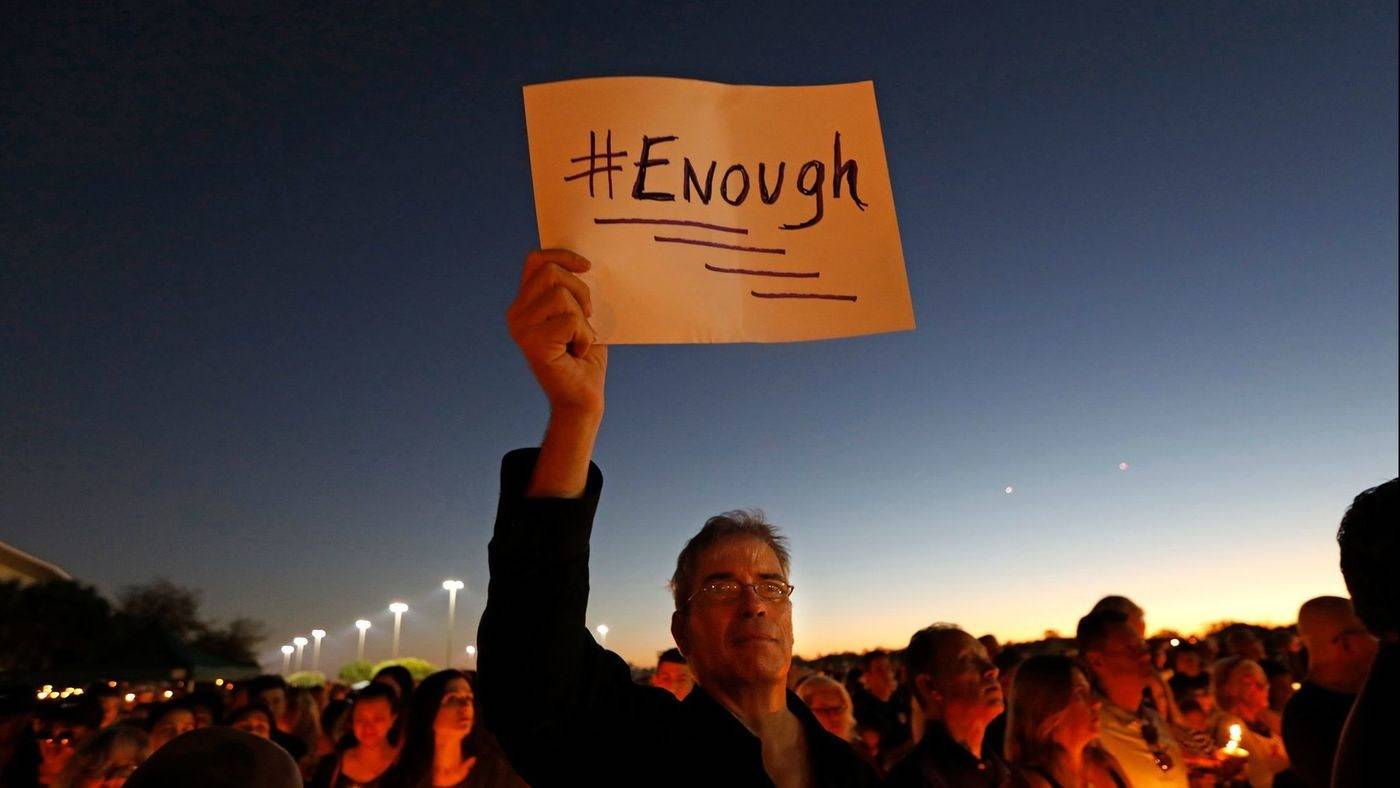 Dayton and El Paso are still so fresh that we have not even been able to bury our dead. We are reeling. And we struggle with what to do now.
We are now engaged in a fight over whether guns kill people or people do. It is an unproductive food-fight. Red Flag legislation is beginning to be floated, but the Toomey-Manchin bill on background checks is off the table for now. If the Senate is unable to muster the courage to confront this seemingly simple issue, but surprisingly risky statesmanship, there are important things they can do. First and foremost is to write legislation regarding domestic terrorism that gives the Department of Justice and law enforcement the ability and requisite funding to infiltrate the groups and preempt the violence that is plaguing us, while maintaining bedrock civil liberties of free speech and due process.
This important next step, however, does nothing to address the other issues of gun violence. Suicide, crimes of passion, gang violence remain real threats that take thousands of lives in our country every year. These do not get the attention that mass casualty events command, but they are no less horrific. Essentially, guns used by people kill people. The proliferation of guns and the willingness of people to use them are both responsible for the carnage that is part of American culture.
Reducing the bloodshed is where we should be focused. The Second Amendment is not under assault, we are. Let us try to start the dialogues that can make a difference while respecting the concerns and rights of citizens. The most fundamental right being the right to life.
Nava Tehila’s shares this lovely song taken from Psalm 95, one of the psalms used to welcome Shabbat.
אשר לא הים, והוא אשהו
Asher Lo Hayam, v’hu y’sahu
The Sea is the Almighty’s, The Divine One made it.
Shabbat Shalom
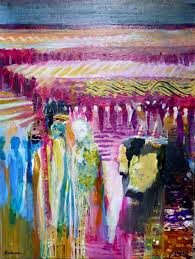
As I engaged with Parshat Korach this time around, I found myself asking an interesting question: If I were there, which side would I have been on?
With the benefits of Torah and hindsight, it is clear that Moses’ was the winning side of the argument. Moses did more than actually prevail, God had Korach and his followers swallowed by the earth. But up until the final moment, Korach was making a persuasive argument about the appropriate leaders of B’nai Israel. Would I have been swayed?
Korach makes a compelling case. He charges that Moses and Aaron have usurped power that rightfully does not belong to them. Now that the Hebrews are free, they should have right leaders, the Levites for the priestly matters and the descendants of Reuven as the true political leaders of the people. We believe that Korach had ulterior motives and saw the opportunity for personal power, but he made a cogent argument, on the surface at least, and many people were likely swayed. As uncomfortable as it might appear, initially there were likely good people on both sides. But just because an argument sounds good on the surface, does not mean it is acceptable without first digging deeper.
The return of leadership to Reuven is in keeping with the concept of primogeniture. And the return of the Levites is consistent with their status as the priestly class. But even before God stepped in placing Moses and Aaron as the leaders, we have seen primogeniture is not automatic and leadership is based on character and deeds before anointing takes place. Before anyone could ultimately align with Korach, a deeper understanding of Korach’s motives and the relationship to the Divine had to be probed. It was not enough that Korach was persuasive. It was not enough that Korach’s agenda aligned with our own. We are also obligated to think in terms larger than our own self-interest. In other words, we are responsible for determining what is right for ourselves and for the greater good and taking a stand toward making that possible.
The people were fearful. Moses ascended the mountain and the anxiety of a slave people feeling abandoned when he did not return was overwhelming. The mob mentality took over and Korach exploited that. Unfortunately, the people went astray. But that could not absolve them of the responsibility to return to rationality and make thoughtful correct choices. I too might have been swept up in the initial emotions in the moment, but then it would be incumbent on me to soberly reflect on whether I was indeed pursuing the right course. This is the burden of freedom.
But there is more to this story, and it gets even more interesting. There is actually a third side to the situation. What about the people who did not take sides? Usually, in arguments, there are the traditional two camps, but there is also a third group. This group remains uncommitted to either side, preferring instead to wait on the sidelines to see who actually wins. And then they throw in with the winning side, never losing and also never risking. These people are more insidious than the losing or wrong side Doing nothing is feckless at best, or likely even more conniving than Korach himself. Nechama Leibowitz’s commentary on Korach references our Sages condemning this kind of opportunistic behavior (Korach 3, Studies in BaMidbar).
Driven not by a belief in something but instead a desire to be on the winning side, to survive and thrive without ever risking anything. These people are more than rootless, they are not to be counted upon for loyalty or sacrifice for a greater good. These opportunists undermine any cause that requires a measure of devotion, as they are devoted only to themselves. They would be the voices that would undermine the report of the spies, they might be among the spies themselves, not appreciating the opportunity offered by Joshua and Caleb, only seeing the personal risk involved. In many ways, this group is the more dangerous one. Focused only on themselves, they fight for nothing. Sometimes it is apathy, sometimes it is selfishness, but it always keeps us from moving forward towards what could be, mired instead in the safety of being nameless in the crowd. Hoping to land on their feet, they are little more than mercenaries, fair weather friends who ultimately cannot be trusted to do anything other than enjoy the fruits of someone else’s labors.
At the end of the day, there was only one side-to align with Moses in service to the Divine. Today these issues confront us in sometimes subtle but often blatant ways. Determining who we are as a people and nation require taking an active and bold stand, championing our values, speaking truth to power and speaking truth to those desirous of power.
Which side are you on?
Rabbi David Levin is a second career rabbi. Trained at Hebrew Union College-Jewish Institute of Religion, Rabbi Levin’s rabbinate focuses on outreach to seekers of meaning, bringing Jewish Wisdom to their life journey. Rabbi Levin’s work is trans-denominational, embracing and drawing knowledge from all aspects of Judaism. He is a member of the CCAR (Reform Rabbinical Association), OHALA (Renewal Rabbinical Association), NAJC (Neshama, Association of Jewish Chaplains), a Fellow of Rabbis Without Borders, serves on the regional board of NIF (New Israel Fund), and is a volunteer on the Disaster Spiritual Care Team of the American Red Cross.
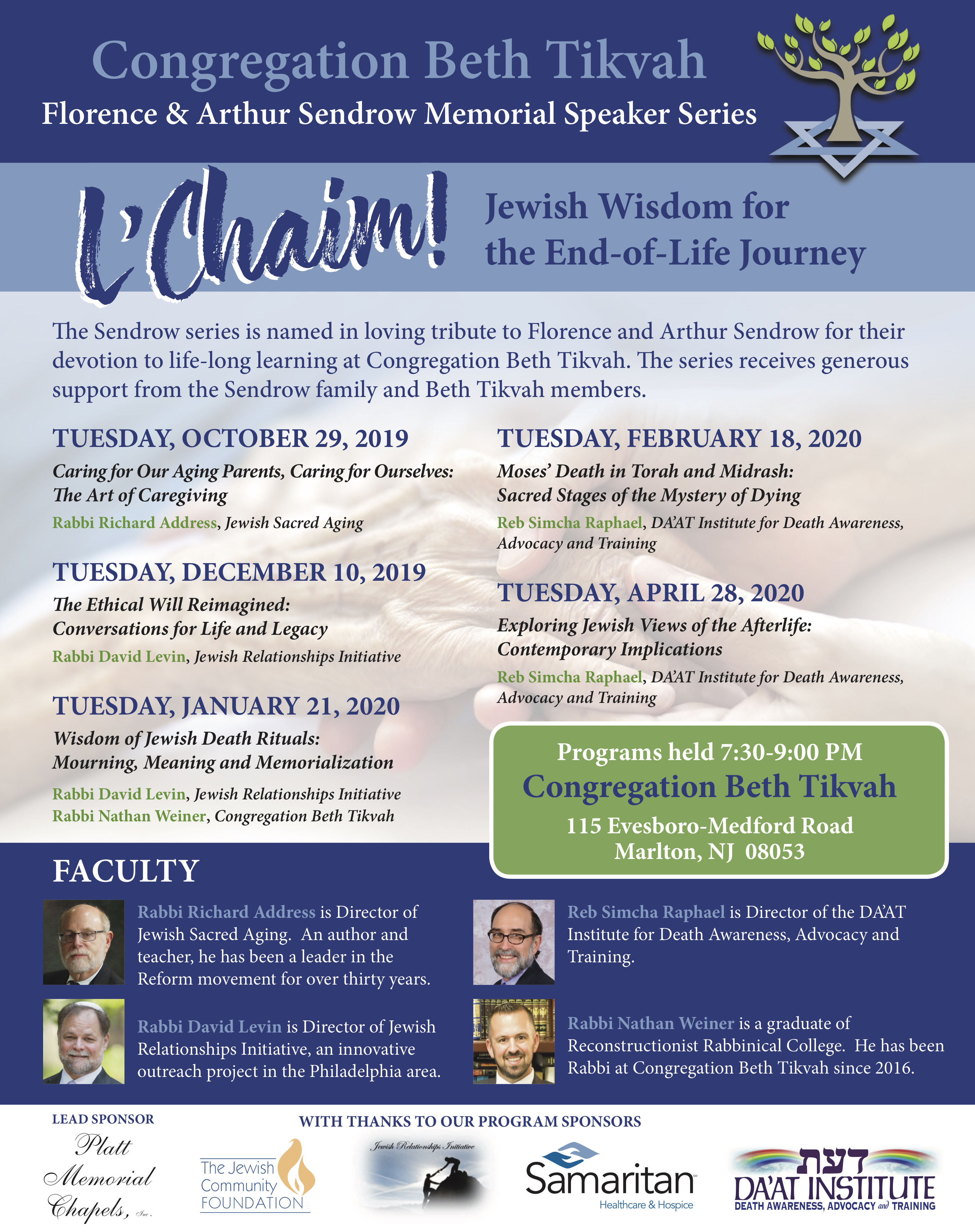
Rabbi Levin currently teaches subjects including Ethical Wills Re-imagined, Mussar at the Jack M. Barrack Hebrew Academy, Introduction to Judaism for the URJ, “Kavod v’Nichum, Understanding Jewish end-of-life rituals”, and the acclaimed series “L’Chaim, Jewish Wisdom for the End of Life Journey” with two esteemed rabbinic colleagues. Rabbi Levin officiates in complex lifecycle events including non-traditional burial and works with interfaith couples. Rabbi David leads interfaith trips to Israel through the CLAL Stand and See project. Rabbi Levin is the organizer of Death Café of Greater Philadelphia
Rabbi Levin is a teacher and speaker appearing nationally and is available to be with your congregation.
A friend and rabbi introduced me to this question at the Friday night Shabbat dinner table. She asked everyone there to share the highlight of their week, that thing, person, or event for which they were most grateful.
We have since embraced this beautiful tradition at our Shabbat Table. It gives us a chance to welcome Shabbat with gratitude and a fuller heart at the end of what is often a very tumultuous week.
Each day the news seems overwhelmed with negative stories about how we are in decline as a culture, a nation, a world. War, famine, climate change; we are, to quote Barry McGuire, on the eve of destruction. But the world is filled with beautiful things. Good people acting with love and selfless generosity. The beauty and majesty of our planet. And many other things that often get overlooked by the current crisis or calamity. We need to find space to appreciate the good so we can help it to spread.
As we enter Shabbat, take a moment to embrace that special thing that happened this week worthy of gratitude. Welcome Shabbat with something special.
What are you grateful for?
Shabbat Shalom
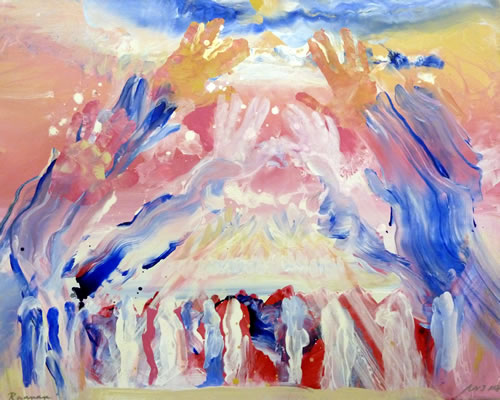
The Priestly Blessing is a message of hope in a troubled world. We have long wondered about the Priestly Blessing being placed in Parshat Naso. Many have posited it was out of place, belonging instead in Leviticus (9:22) when Aaron is told to bless the people. But I believe it is placed here purposefully as a message of assurance, to make sure we understand how important we are to each other and to the Almighty.
Naso contains a census of the Tribe of Gershon, the extraordinary stories of the Sotah, a test for the unfaithful wife, and the issues surrounding the intense vows of becoming a Nazirite. And only then do we read the Priestly Blessing; The three-line expansive blessing upon each of us that God protects us, is kind to us, and grants peace to us. It is actually the perfect response to the perplexing and difficult issues that preceded.
We are told we count. That was central in the previous Parsha, BeMidbar, and reiterated as the census to count the Gershonites. But then we are confronted with the Sotah and the Nazirite, as if to ask are there times when we do not count. We all struggle with life. We seek God’s blessings, we seek meaning, we seek good things, namely peace and a good life. But we find ourselves going off the rails. When this happens are we cut off from God’s blessing?
The Sotah is about accusations of infidelity. But in the absence of anything but circumstantial evidence, the magical test is administered by the Priest. The gravitas of this must be overwhelming. But even if a woman survived the test, would her husband fully welcome her home, without harboring some suspicions. Would trust ever be restored fully? Would others in the community maintain lingering doubts, rumors, and stories placing an indelible stain on the woman’s reputation?
Someone taking the vow of a Nazirite may do it for lofty purpose, but based on our understanding of the things that motivate such action, we see the wisdom of Gersonides’ analysis that, A person takes such a vow to silence the unhealthy turmoil inside a person arising from a physical desire that might lead one to sin. Does the person who needed to take the Nazirite vow feel rejuvenated or reborn when the vow is complete? Does the thing that required such focus continue to linger in their souls? Such impulses can extend beyond lust to other impulses that can plague us emotionally or spiritually.
The Priestly Blessing is deliberately and thoughtfully placed here to say we struggle and we continue to struggle. It comes at us from all angles. It is part of being human in a world that is often fraught and difficult. Each of us has a struggle, a demon, a bad action, a feeling of inadequacy. It is part of who we are as human beings.
The Priestly Blessing is a wish for wholeness, a wish for Peace in an unpeaceful world. The Priestly Blessing is a wish for Peace; it is our yearning that these struggles do not mire us in a life that feels dark or hopeless. It is the profound hope that God is there to love and protect us even when we feel we have strayed so far away that we are beyond the reach of even the Almighty’s loving protective wings of peace.
Hope remains. God is there. We are not alone.
May the Almighty Bless you and Protect you.
May the Almighty deal kindly and graciously with you.
May the Almighty bestow Divine favor upon you, granting you wholeness and peace.
Shabbat Shalom.
Rabbi David Levin is a second career rabbi. Trained at Hebrew Union College-Jewish Institute of Religion, Rabbi Levin’s rabbinate focuses on outreach to seekers of meaning, bringing Jewish Wisdom to their life journey. Rabbi Levin’s work is trans-denominational, embracing and drawing knowledge from all aspects of Judaism. He is a member of the CCAR (Reform Rabbinical Association), OHALA (Renewal Rabbinical Association), NAJC (Neshama, Association of Jewish Chaplains), a Fellow of Rabbis Without Borders, serves on the regional board of NIF (New Israel Fund), and is a volunteer on the Disaster Spiritual Care Team of the American Red Cross.
Rabbi Levin currently teaches The Ethical Will Re-Imagined, as well as Mussar at the Jack M. Barrack Hebrew Academy, Introduction to Judaism for the URJ, “Kavod v’Nichum, Understanding Jewish end-of-life rituals”, and the acclaimed series “L’Chaim, Jewish Wisdom for the End of Life Journey” with two esteemed rabbinic colleagues. Rabbi Levin officiates in complex lifecycle events including non-traditional burial and work with interfaith couples. Rabbi David leads interfaith trips to Israel through the CLAL Stand and See project. Rabbi Levin is the organizer of Death Café of Greater Philadelphia