Wishing Everyone a Happy Thanksgiving
May this day be one of celebration and gratitude for the many blessings we enjoy;
To friends and family, and to the opportunity to share our blessings with others.
There is much we can learn from the tragedy of Pittsburgh. Important among them is that we have realized our parent ’s dream; we are truly a part of America. This awful incident marks a new understanding of our community’s place within the larger American society. Yes, we have made it here. But what that means is now different.
I am suggesting a new definition of “making it here” which is not about assimilation but rather acculturation, maintaining a blended Jewish and American identity, an American subgroup securely joining not only in the fight for our American ideals but also in the proximate threat of Anti-Semitism. This ability to fully and unapologetically embrace our dual identities, engage in championing and defending the ideals and values for us and for all, while confident and secure of our rightful place as citizens; this is what it means to “make it in America.”
Many of our forebears were content with the economic opportunity America offered, as well as the refuge from violence and persecution that were part the life of their homelands. They sought survival, not equality, imagining they might assimilate and become Americans. Although great strides were made, lingering fear and insecurity kept the American Jewish voice from being bolder in demanding action to save the Jews of Europe. The “go along to get along” mentality is part of our past. We are secure enough in our place as Americans to fight for ourselves and for others. Yet darkness lingers and Anti-Semitism persists.
We have long embraced the notion that none are free until all are free and we fight on behalf of others yet to enjoy the full blessings of our country. But now, with White Nationalism and Anti-Semitism, on the rise we have a renewed personal stake in the fight. This struggle against hate and violence is harsher and more hardscrabble than our previous contests for justice and equality, such as those against quotas or deed restrictions. The “no coloreds, Jews, or dogs “ signs from what we thought was a vanquished past reappears in our consciousness. The privileged position many thought we enjoyed needs to be reconsidered and recast.
For most of our history, we Jews have taken care of ourselves. Our morning prayer, Eilu D’varim, include the obligations we set out for ourselves as responsible members of the community: visiting the sick, burying the dead, comforting the mourner among them. We have developed our own institutions devoted to assisting in those practices. HIAS, Jewish Hospitals, and Jewish Universities were created to respond to the needs of our people. Our modern Federation, JCC, and JFCS can trace their roots to this historical understanding that we have been segregated from the broader society; that we had to rely on ourselves to provide for us, as the larger society in which we lived would not. From this self-reliance, we have then reached out to assist others.
The understanding of our mission of helping those in need, the social justice mission at the heart of Tikkun Olam and Tzedakah, emanates from the values of compassion and outreach to the unheard and unseen. Because of our history, Jews have been reluctant to accept help from outsiders, even as we support others. We have been quick to join the fight for Civil Rights but slow to bring outsiders into our places of need. Perhaps, due to our history, such help is suspect, perceived in our collective psyche as a sign of weakness or vulnerability. Pittsburgh has changed that.
When we examine our history, we wonder whether our golden age in America was fleeting or is it enduring. I believe it is the latter, but it is none-the-less threatened by malevolent forces. A recent poll[1] indicated that almost 6% of the non-Hispanic American population, or about 11million, subscribes to the views of the Alt-Right. This means two very important things: First, 94% don’t accept these hate-filled views AND second, that a real Anti-Semitic threat exists. Both of these are part of our reality and we must be alert to the implications of both.
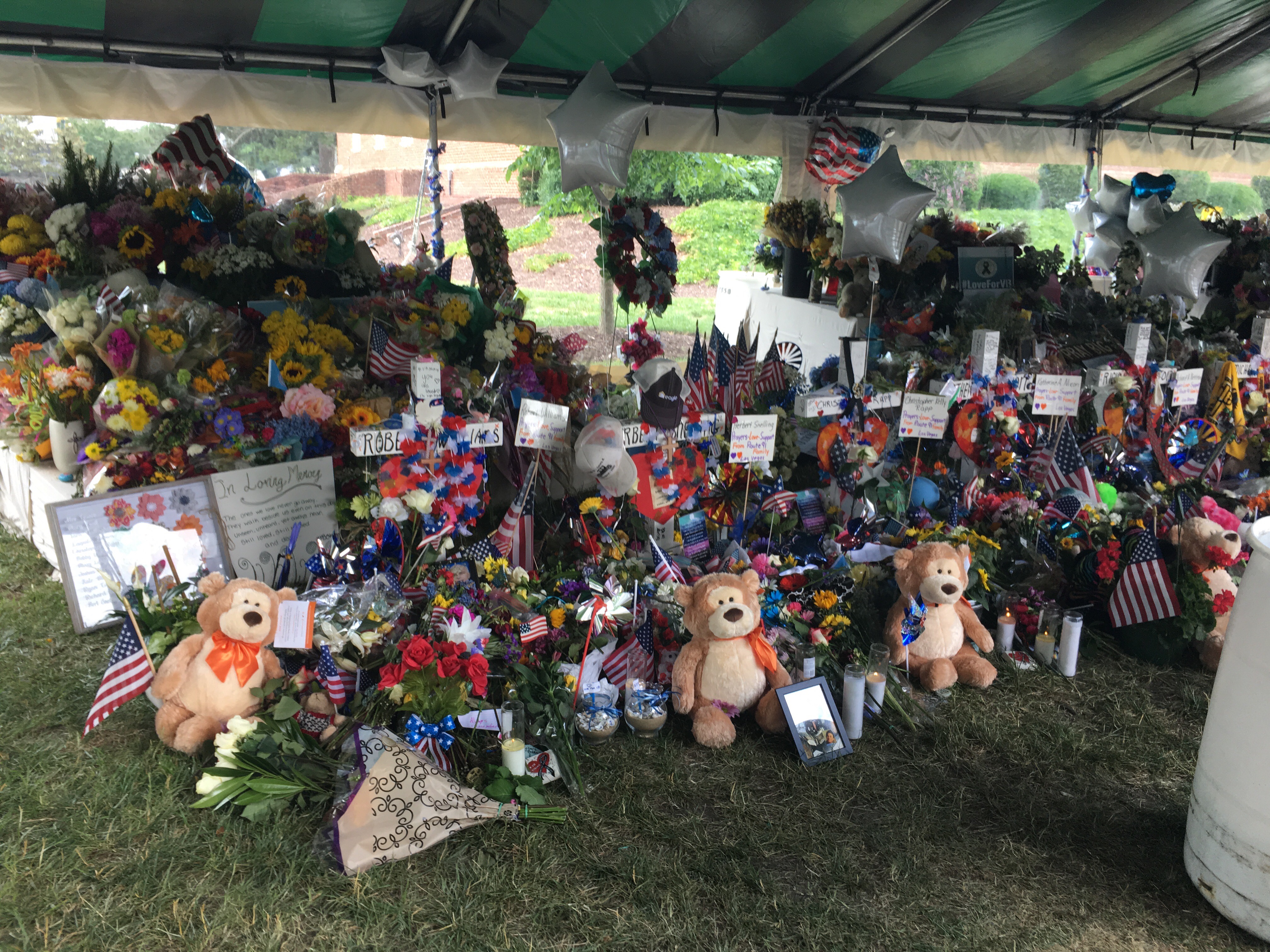
The overwhelming nature of the horror perpetrated upon the Jews in Tree of Life Synagogue has knocked us down with a blunt force that was overwhelming. Every resource we have is insufficient to provide a full measure of comfort. We are indeed vulnerable at this moment. And at this moment, something miraculous happened. The community of Pittsburgh rose up and is trying its best to hold us. Pittsburgh’s various communities, Moslem, Christian, and practically everyone else have come to our aid saying to our Jewish community, “you are one of us and we are appalled. An attack on you is an attack on Pittsburgh, and this will not stand.”
We have in our history experienced extraordinary acts of kindness from outsiders, such as the King of Denmark and the Righteous Gentiles of the Holocaust. And here in 2018 America, the Jewish community needed help and the broader community responded. We are not alone, we are America, supporting and now being supported by our brothers and sisters. It is an extraordinary light shining on a very dark experience. Thank you for your love and support. The refugees who are our forebears have seen their dream of America come true. We are inextricably part of the fabric of America, in both its glory and in its struggle. In the names of those Jewish martyrs so tragically lost, let us join with all others of good will continuing the hard and fraught process to realize the aspirations of the American dream.
[1] University of Alabama, George Hawley, published by UVA’s Institute of Family Studies indicates 5.64% of the 198mm non-Hispanic Whites in the United States have beliefs consistent with the Alt-Right’s worldview.
The incomparable Hazzan Azi Schwartz of Park Avenue Synagogue shares Adon Olam as you’ve not heard. He sang this at the conclusion of a Bat Mitzvah, but it is a wonderful welcome to Shabbat this week.
Shabbat Shalom
Wishing Peace this Shabbat.
Shabbat Shalom
I have just returned from a deployment to Pittsburgh with the American Red Cross.
For any of my colleagues who have experienced grief, the trauma experienced by the Pittsburgh Jewish community is similar, but orders of magnitude larger. Despite all of the wonderful Jewish institutions that make up the community, Federation, JFCS, the JCC, and all the synagogues, the event was bigger and more catastrophic than anyone could have imagined would happen in 2018. The American Red Cross (ARC) stepped in to help as it does in all disasters and I was called upon to join in the effort.
I joined the Disaster Spiritual Care Team of ARC as a volunteer watching their work in the aftermath of Hurricane Harvey. As a rabbi, I believe this is important and sacred work, and I needed to be part of the team that did that. So, when the call came to assist my own people in the wake of this unspeakable horror, I knew I had to go.
For the Pittsburgh massacre, Rabbis were selected because of the Red Cross’ desire to work with the Jewish community; we know the “language” and are the people to help in creating a liaison, bridging more effectively to the community to share the wealth of services offered with those in need. We focused on communications with institutions and then reaching out to individuals as was possible. It is impossible for two rabbis to care for a community of almost 50,000, so we worked to create connections. It was also clear that we needed to support the rabbis and others who were desperately trying to serve their people while struggling themselves to find strength and succor. Much of the healing work that needs to be done won’t be accurately assessed for some time. As others have noted, this past week we have been sprinting at the beginning of a marathon. And furthermore, the nightmare and the work of healing goes far beyond the Jewish community, all of Pittsburgh suffered this trauma
I was there to help bury people, say Kaddish, attend services and vigils and do what I could, as meager as that sometimes seemed. I held people and I cried (a lot), but mostly I was just present- an empathetic embrace to those in awful anguish and pain to let them know they were not alone in their time of extraordinary grief.
There are multiple levels to this event, like ripples from a stone hitting the water. The families, the congregations, the Jewish Community, the people of Pittsburgh, Jews across the country and the people of America, each has been touched by these murders in Pittsburgh. Each community needs to understand how it has been impacted and how we relate to the others who have also been impacted. It is complicated and it will take time.
The Jewish Community came together. The denominational differences that often separate us were set aside. Funeral services were packed to overflowing as were Friday and Saturday services. And so importantly, we were not alone.
I was heartened to see the greater Pittsburgh community response to this tragedy. The outpouring of love, the sharing of the horror, clearly said to me that the Jews of Pittsburgh are part of the community of Pittsburgh and the community is appalled by this horrible thing perpetrated on a part of it. This sense of unity is an extraordinary and wonderful counter-response to the feelings of isolation or the existential threats that members of the Jewish community may be feeling.
Many others from other faith traditions joined us. For example, I spent time with a family of the Bruderhof tradition (an Anabaptist denomination) who I met at a funeral service held in the Reform Temple Rodeph Shalom and again at the Shabbat morning services held at the Conservative Synagogue Beth Shalom. They were there to be with us. I found some comfort in expressing my deep appreciation for their presence and helping them to understand our siddur, the readings from Torah and Haftarah, and some of the common themes of our faith traditions.
The Moslem community raised hundreds of thousands of dollars for the Victim’s fund. They also offered to create a physical wall of people to surround synagogues in a show of solidarity and protection. All faith traditions joined with us in solidarity as this was an assault against all of us. Our common humanity brought us all together. It was an inspiring message of hope and love.
Rabbi Jeffrey Myers has been remarkably eloquent speaking to the community with important messages as a witness to the horror and as one who has been harshly criticized by some for his welcoming of the President to Tree of Life Synagogue. Rabbi Myers taught in his D’var Torah this past Saturday that if he was to truly practice the values we preach, he was obligated to respectfully welcome the President of the United States into his Jewish home. This also gave Rabbi Myers the opportunity to directly state to the President the need for him to stop the hate speech.
In the midst of it all, the Kiddush after Shabbat services was used to share Sheva Brachot, the recitation of blessings to a wedding couple. For one of the extraordinary Pittsburg rabbis and his wife were just married. We sang the blessings and then everyone burst out in Od Yeshama and we started to dance. Watching my two new friends lead the community in joy and celebration of the hope represented by their marriage brought all of us to our feet. Her unbridled exuberance made all of the pain disappear for a short while. I cried as I clapped and sang as hard as I could.
People are quick to explain why this happened offering ideas that are more pronouncements rather than thoughtful quiet dispassionate analysis. I suggest that it is premature to try to address the question why. It is deeply layered and complex and we are still in the midst of the acute trauma making such conversation and inquiry too highly charged and all but impossible. Instead, as a thoughtful colleague in Pittsburgh suggested, we might instead look towards the question how. How do we move forward in the aftermath is a question that will yield more pragmatic answers that will help those struggling to get through. We will do better to engage in those conversations for now.
The people of Pittsburgh are strong and resilient. But they are hurting badly and deeply. In the name of Klal Yisrael and as fellow Americans, we have an obligation to be there for Pittsburgh’s Jews as the immediacy of the trauma and shock wears off and the struggle to heal begins. We are forever changed by this. May we learn constructive lessons so that those lost as true martyrs in the Jewish tradition will not have died in vain. May their memories be for a blessing.
Usually, I share a single song performed by a wonderful artist to help bring in Shabbat.
But this Shabbat, Shabbat Bereishit, I am sharing the Kabbalat Shabbat service at the amazing B’nai Jeshurun, from June 1, 2018. Listen as long as you like, the music is enchanting and moving. If you’re ever in New York, stop in for an amazing experience with the folks at BJ.
Shabbat Shalom
Can you ask a Supreme Court judge to recuse him/herself from a case before the Court?
In this hyper-partisan age, the question seems particularly relevant. During the Senate Judiciary Committee Hearings, Judge Kavanaugh defended himself with a zeal that arguably betrayed a mistrust and contempt of people including the Clintons and Democrats, in general, that would seem to bias any considerations of law that would involve them.
Arguably, Associate Justice Ginsberg might find herself in such a position as well given the intemperate comments she publicly made regarding Donald Trump. Although she has apologized for these admittedly inappropriate remarks, she may have disqualified herself from any issues relating to Donald Trump that may come before the court.
The Supreme Court is a sacrosanct institution. Sadly, the other two branches of government, the Executive and Legislative, are mired in political calculations. The Court has been ostensibly above that. It is political on some levels; the justices are nominated and confirmed by the President and Senate respectively, concepts of judicial activism and interpretation of the Constitution have worked within and often reflected the cultural milieu of the country. Nominees to the Court are often subjected to litmus tests either during the nominating process or confirmation process, and both President and Senate hear the voices of potential voters as they make their inquiries and decisions.
As politics has become blatantly a part of the Judicial and Constitution review, one wonders what happens to the legitimacy of a Court with members biased not by an interpretation of the Constitution or moral conviction but biased by the harsh tribal political climate in which we currently live. This question sadly needs to be asked and actually undermines the legitimacy of the Court. The implications of what happens to our Democracy when this sacred institution falls is a frightening existential threat, not only to the Court but the very Republic it was conceived to serve.

The current uproar over the new Nike ad featuring Colin Kaepernick has served to wonderfully pit right against left in another puerile chapter of the culture wars. Instead of seriously grappling with issues in our country we’d prefer to scream at each other about whether one side or the other is sufficiently patriotic. The sad truth is that the ad is really about selling sneakers and generating buzz.
The group that is feeling offended by this ad is not the Nike target demographic. The people that align with Kaepernick are the demo that Nike wants to sell their product to. The ad is provocative on many levels. That is precisely what is intended. The advertisers did their job and now everyone is talking about it. The increased sales bear this out.
Colin Kaepernick is portrayed as a champion. Whether Kaepernick is a villain, hero, or even heroic victim is beside the point. That is unfortunate. But there is another agenda.
The NFL is concerned about generating revenue and retaining fans. Kaepernick found a means to make a living as a spokesperson. The President is using the opportunity to rally his base. If any were interested in addressing the issue, this is an extraordinary opportunity to join in the fight for the virtues that those who kneel and those who stand both embraces; namely a country dedicated to life, liberty, and the pursuit of happiness. A nation of laws that stands for equality and justice. The vast sums of money generated by the corporations (NFL and Nike) could underwrite a campaign to get healing conversations started, patriotic conversations that address the issues of inequality that continue to keep us from fully realizing the American Dream and perhaps even help create positive change. And the President could use the power of his office and his strength as a marketer to be the convener to make it all happen. But unfortunately, we prefer to revel in the buzz.
Buzz on!
As we welcome the first Shabbat after Yom Kippur, I wanted to share this wonderful rendition of Ana B’Choakh by Joey Weisenberg and the Hadar Ensemble.
This prayer is offered during Kabbalat Shabbat. A favorite of the mystics, it’s power is said to lie beyond the words themselves and in the structure of the prayer where, as an acrostic, the 42 letter name of God is spelled out.
Wishing everyone a year of health and blessings
Shabbat Shalom