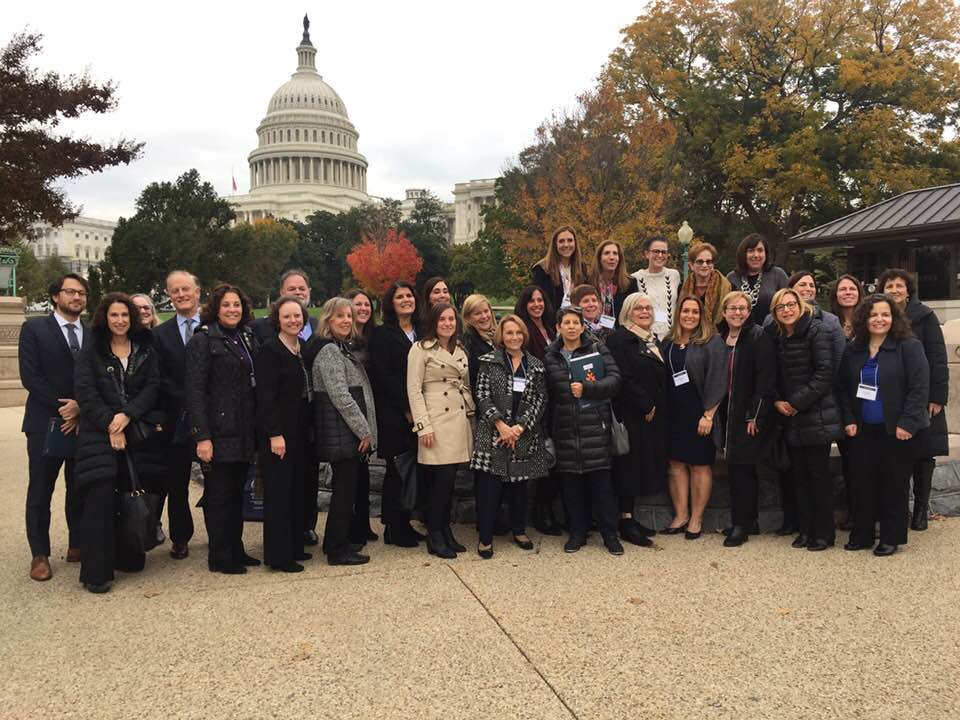
Another tumultuous week comes to a close. Welcome Shabbat with a prayer for peace with the incomparable Rabbi Angela Buchdahl and Cantor Azi Schwartz.
Shabbat Shalom
Another tumultuous week comes to a close. Welcome Shabbat with a prayer for peace with the incomparable Rabbi Angela Buchdahl and Cantor Azi Schwartz.
Shabbat Shalom
Nachamu, Nachamu Ami- Take Comfort, my People. These are the words of Isaiah (40:1) after the destruction of the Temple and the words of the Haftarah this week.
Shabbat Nachamu is the Shabbat that follows Tisha b’Av.
Enjoy the music of the Maccabeats as they set these beautiful words to music.
Shabbat Shalom.
Eig8th Day came out with this lovely tune about Shabbat, It’s Shabbos Now. Catchy and upbeat, a lovely melody to bring us to the end of another tumultuous week.
Shabbat Shalom!
I am excited to announce the launch of Conversations for Life and Legacy™.
Conversations for Life and Legacy™ is a whole new approach to sharing our wisdom, making meaning in our lives, and connecting beyond ourselves drawing upon the insights of Jewish tradition and text.
Conversations for Life and Legacy™ goes far beyond an Ethical Will to share our sacred stories in unique new ways. Among the particular innovations are using a rabbi trained in chaplaincy to guide the interview and capturing it all on video.
Please look at our new website: www.ConversationsForLifeAndLegacy.com to explore this new approach; see what it can mean to you and how it can be brought to your community.
Today we also launch a Facebook page: ConversationsForLifeAndLegacy and we will be on Twitter as well @rabbidavidlevincll.
It’s time to have the Conversations of your Life!
Conversations for Life and Legacy™
www.ConversationsForLifeAndLegacy.com
A song of peace and love- One Day
It starts slow and then the beat picks up as we make our way towards Shabbat.
Shabbat Shalom!
Today is a celebration. Barbecues, Beaches (even in NJ) and Booms (I mean fireworks, but I was going for alliteration). Enjoy this day. It is more than a tribute to our independence, it is a proclamation of values that have made this country the envy of people throughout the world.
So as you consume the food and participate in the festivities of the day, remember that we are a nation founded upon extraordinary principles. We have so much more work to do both here and in the world to extend those principles to everyone yearning to breathe free. So today let us rededicate ourselves to the amazing idea this nation represents.
Happy Fourth of July!
How do you serve two masters?
We are called upon to do this regularly including in the current discussion about the marriage of a Jew to a non-Jew. As Rabbis, we serve Jews and we serve Judaism. These often do not align. How these two competing missions live in tension and how we resolve the issues is something our wisdom tradition teaches us.
We serve Jews. As I have been taught, my service to them requires me to go where they are to help them along their paths, using the wisdom of our tradition to connect and shine light upon the journey. I am also in service to Judaism, charged with Shamor v’Zachor in all of its complexity. These often align with each other, but often they do not. We live in a complicated world where we usually do not choose between good and evil (that’s an easy one of course) but we choose between competing good things. Which one takes primacy? Must they be mutually exclusive, or can they co-exist? Our great tradition including Talmud urges us to grapple with these questions.
We all know minority opinions are kept because they add value, depth, and nuance to the conversation. We have seen Hillel and Shammai duel. Even though Hillel usually prevails, Shammai remains as insight into important issues that cannot be overlooked. It is incorrect to dismiss Shammai as wrong.
We all recall the story of Teaching Torah on one foot. Two radically different approaches are offered, both containing deep wisdom. Ultimately we are left with, “What is hateful to you do not do to another, the rest is all commentary. Now go study,” but not before we understand the gravitas and respect that one must have to approach the process.
The conversation about officiating weddings between Jews and Non-Jews should be viewed through this lens. Is our primary allegiance to preserving and protecting Judaism, or to reaching out to Jews wherever they may be? What precisely does each of these things look like? Where we ultimately define ourselves and cast our allegiance will determine what each of us can do and what is beyond our ability. I have no doubt about the seriousness that each of us approaches this task. And I am not criticizing the considered decision of anyone. However, there are real ramifications to our decisions. How we are perceived in our respective communities and how will our decisions affect the couple requesting our services as officiant are two profoundly important questions we must ask ourselves as we consider the issue.
There is a substantial segment of Jews who seek to marry someone who is not Jewish. How we approach them may forever affect them and their relationship to Judaism. When someone approaches us, what will we do? If we cannot officiate based on a principled position, do we dismiss them, or find a colleague who can be present in this important and critical time? Will you be Hillel or Shammai?
Psalm 92 helps us to welcome Shabbat. Enjoy this rendition of Tzaddik Katamar by this Hungarian Klezmer group.
Shabbat Shalom
I just received my new passport. The old one was expiring and I dutifully followed the instructions, got a new picture, completed the DS-82 form, mailed it and in the mail was the new passport. But I miss the old one.
I got the old one as I prepared to enter a new phase of my life, leaving a 30-year career in business to become a rabbi. Looking back, it has been a fascinating decade chronicled by this small blue book. Stamps representing my trips to and from Israel as a rabbinical student, my trips through the Former Soviet Union celebrating Pesach in Moscow and cities in Siberia, my honeymoon in Italy with Naomi as a newlywed, the trips to Israel as a rabbi, and a wedding in the Dominican Republic, were all documented by this small blue book with worn edges. Each page is a reminder of a very special experience.
I remember the process of obtaining it, completing other forms and taking other pictures that showed a younger version of me with more hair on top of my head and less gray on the face. The book was empty and new. It was literally and figuratively my passport to my future. Each of those stamps represented an amazing journey. Each was memorialized in that precious little book that I scrupulously guarded but whose inside page I copied just in case my best-laid plans to protect it was subverted.
Extraordinary memories of extraordinary experiences are evidenced in my old passport. It serves as a reminder that we continue to grow and each passing day is another page in our life journey. I reflect back on them and see something I learned and perhaps can share with others. My life is enriched and so too is my capacity to teach.
So now I have the new passport. The picture inside is of an older, current version of me. The pages are clean and new. I can only wonder about the adventures and how those pages might be filled over the next decade. The fresh pages beckon with anticipation and promise. I can only hope that when it is time to replace this contemporary passport, it too will worn and maybe tattered, filled with visas and stamps of exciting travels evoking meaningful memories declaring that my continuing life journey remains a rich experience of growth and sharing.