Tag: teshuva

  • Rashi and Discernment

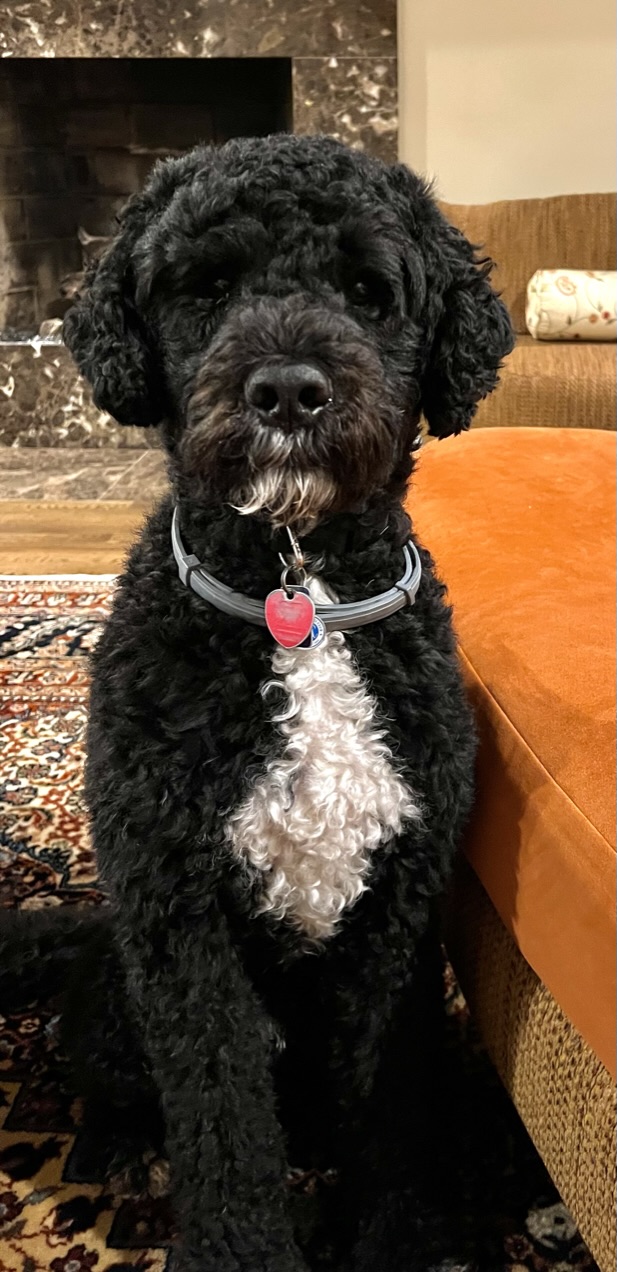
    I have a wonderful dog. His name is Rashi (if you know, you know), and he holds his post on the sofa in my study, keeping watch over the road and the property below. He announces the mail carrier. He announces every delivery truck, the refuse trucks, every dog on the sidewalk, and every neighbor who dares to walk past on our sidewalk or the one across the street. Heaven help the car that turns into our driveway without a written invitation he has personally endorsed, which is to say almost never. It would be admirable, this loyalty, if it did not arrive with a force capable of waking the dead. I sit at my desk, holding a fragile thought together, when Rashi decides the moment has come to alert the household to a squirrel. I have started to suspect he is in league with my cardiologist, testing whether my heart can survive the shock. So far, so good.

    This morning I looked at Rashi, whom I am fairly convinced understands English when it suits him, and asked whether he might practice a little discernment. It is not, in this house, an unreasonable request. My wife and I have spent years studying Mussar, and discernment is a word Rashi has heard often enough to have an opinion on.

    He did not have opinions. He barked at a falling leaf.

    Here is what I did not say to him, because a dog cannot be expected to absorb a full teaching between barks. Discernment is not a demand for silence. It does not ask Rashi, or any of us, to stop noticing the world. The instinct that makes him bark at the mail carrier is the same instinct that makes him a genuinely good dog: alert, loyal, unwilling to let anything on this property pass unremarked. Mussar has a name for the discipline I was actually asking of him. Zehirut, watchfulness, is the first rung Rabbi Moshe Chaim Luzzatto builds in Mesillat Yesharim, and its claim is modest. Before you act, look. Examine your ways, whether they are good or not, rather than moving through the day on reflex. The word shares a root with azhara, meaning warning, which tells you something about its purpose. Watchfulness does not exist to shut the alarm off. It exists to ask, in the half-second before the alarm sounds, whether this is actually the moment for it.

    That half-second is the whole of it. Discernment lives in the gap between the thing arriving and the response leaving your mouth. It asks you to be present enough in that gap to notice what you are about to do, what it will cost the person standing in front of you, and what it will cost you, too, if you are willing to admit it. There is an old line, usually credited to the Stoic Zeno of Citium and just as often misattributed to Epictetus, about why we have two ears and one mouth: so that we might listen twice as much as we speak. I have always found it easier to quote than to practice. It does not tell you to say nothing. It tells you where the ratio ought to sit.

    If you imagine Rashi without the bark at all, you have not pictured a wiser dog; you have pictured a stuffed one, and I would miss the real animal, alarms and all. What I actually want from him, and from myself, is smaller than silence. It is the pause. The moment when you are self-aware enough to feel the bark forming and to ask whether this squirrel, this comment, or this reply typed in anger needs to leave you right now. Some of them do. Most of them, in my experience, do not.

    We are in Elul, walking toward the Yamim Noraim, and the season brings a familiar instruction: look back at where you fell short. I want to offer a different use for looking back. Not an accounting of what you got wrong so much as a record of what you learned and where you might pause next time, so that the person you are becoming in 5787 carries slightly better judgment than the one writing this sentence. That is the real work of Teshuvah. Not punishing the self you were, but training the self you are still becoming.

    I have not figured out how to ask this of myself in all the moments it actually matters, at my desk, mid-sentence, mid-argument, mid-life. I suspect I am not alone in that. Rashi, for what it is worth, slept through the entire writing of this essay. No comment on the squirrels.

    Wishing you all a year sweetened by a few more pauses than the one behind us.

    L’Shanah Tovah u’Metukah
  • L’Shana Tova

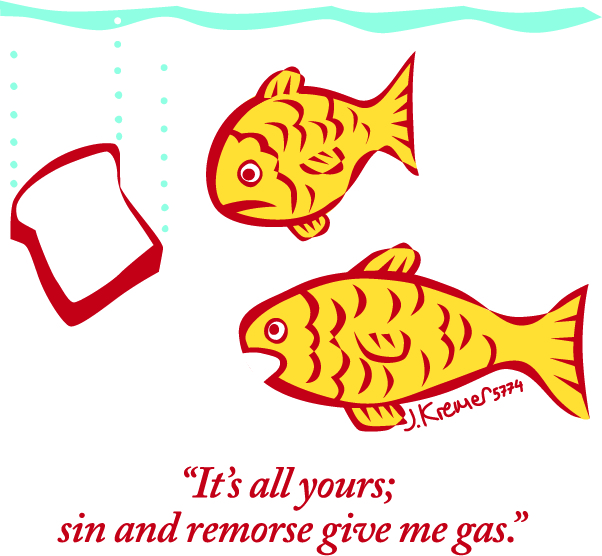
    A timeless bit of Jewish humor from Rabbi Jonathan Kremer

    L’Shana Tova u’Metuka!

    #BringThemHomeNow

  • Shabbat Shalom

    As we progress through the month of Elul towards the High Holidays, take a moment to listen to this wonderful duet.  Naftali Kalfa and Gad Elbaz sing of return to the Almighty in Teshuva. A beautiful song to start Shabbat.

    Shabbat Shalom!

  • The Godliness of Forgiveness- It’s all about me


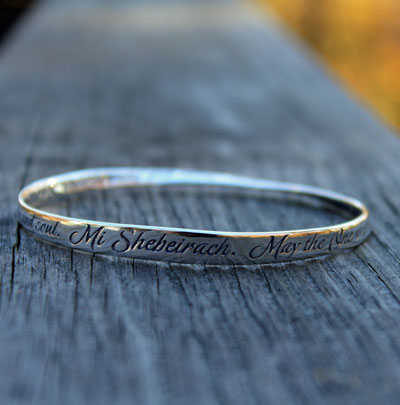
    mobiusbraceletHow do I forgive? I am supposed to use the month of Elul to prepare for Rosh Hashanah. It is a time of introspection, to reflect on how I can improve in the year to come by looking at where I went astray in the year past. I need to seek forgiveness from God as I bare my soul. But our tradition teaches I cannot ask God for forgiveness until I have sincerely attempted to reconcile with my fellows. It all starts and ends with me.

     Who among us does not deserve an apology from someone who has treated us improperly? But am I ready to welcome that apology if it comes? And if it does not come, am I prepared to reach out and help those who do not know how to ask for forgiveness and how would I do that? It is very hard to rise above my pain and hurt to embrace the humanity in the other.

     And what about those whom I have wronged? Can I find it in myself to be contrite and ask forgiveness from them? Pride and principle often get in the way, blocking what could otherwise be a caring relationship. Even when I sincerely believe I am right, standing on principle creates an impasse. Then I must consider whether it is more important to be right or to be the one who can reach out and embrace someone I care about.

     Finally and very importantly is forgiving myself. I look inside and see my shortcomings, the places where I did not do as I hoped I would, the places where I am shackled by guilt, immobilized by my personal sense of shame or deficiencies. I am the victim of the harshest critic of all, me. What can I do to finally say I am sorry; I forgive me so I can finally begin to heal from my wounds and move forward, not place a bandage over them. Keeping them locked inside only chains me to a past filled with hurt.

     Sins and transgressions are big and small. Whichever they are, my inability to move beyond them and sit in judgment places barriers between us. They estrange me from those I love locking me into a narrow place. If I can move beyond the pain and hurt, however, forgiveness can be a transformative experience. It is quite difficult but when I truly forgive, a great weight is lifted from me. Barriers that once separated fall and I can reunite with those who had become distant whether it is another I love or the child within. If I can temper “din” (judgment) with “rachamim” (mercy), then I am acting in a more Godly, selfless way. And perhaps it is through these acts of human forgiveness I might attain forgiveness from the Eternal One.

     Perhaps the first step on this path is through our traditional MiShebeyrach prayer for healing. May the one who blessed our fathers and our mothers bless those in need of healing with a refuah shlemah, a restoration of completeness. I will speak the words for them and for me too.

     May this be a year of health, wholeness, and healing for us all~

    L’Shana Tova!

  • Elul and Mercury in Retrograde- what happens when Astrology and Judaism collide?

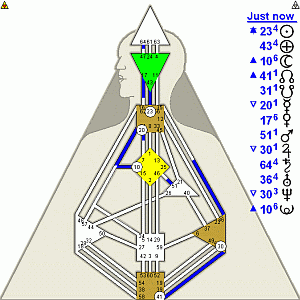
    MercuryRetrogradeMercury is in retrograde. From August 30 through September 22, Mercury is moving backward in the sky from our perspective. This is the third of four such occurrences this year according to the Old Farmer’s Almanac. Astrologers say this event is supposed to mark a time for reflection rather than new action. This is not a time for decision-making. Instead, we are to assess priorities and plan to move forward by reviewing projects and determining where to appropriately focus energy.

     Elul is the month preceding Rosh Hashanah. It is our Jewish time for deep reflection and repentance as we prepare for the High Holidays. For many of us, this is our period of Teshuva, the “return to God” that requires seeking and granting forgiveness as we strive to understand where we went astray and how we can get back on the path of living a meaningful righteous life.

     I’m not suggesting that there is some equivalence between Astrology and Judaism or that the early astrologers were Jews. But I believe that making time to take stock of whom we are is of utmost importance to finding fulfillment. The unexamined life is not worth living, so teaches Socrates in Plato’s Apology. So many of us are consumed by the day-to-day issues of living, sometimes, it is all but impossible to step back and assess where we are and where we are going.

     In life we often awake to find we have been blown off course. Anyone who has ever piloted a plane or a boat knows navigation is an ongoing process of course corrections, so too life. Currents and tides constantly push us off course and our aim has to compensate if we are ever to arrive at our destination. For some of us, we don’t even take the time to determine what our destination might be. For all of us Elul is an appointed time to engage in the process.

     As we approach these High Holidays may you find forgiveness for those who have offended you, be forgiven by those whom you have offended and find your true path of meaning, relationships, and fulfillment.

     L’Shana tova

  • More on Elul

    Welcome to Elul- continued

    For those using Elul as a time for reflection and preparation leading to the High Holidays, let me suggest Jewels of Elul.

    Craig Taubman, an extraordinary artist and musician started JewelsofElul.com. This website shares a daily thought written by another leader/thinker from our community. These are aptly named as the daily thought is usually a gem. Something to think about, ruminate on and uplift your day.

    www.JewelsofElul.com it is a few minutes well spent.

    And if you like the poetry of the Psalms, take a look at:

    Psalms 7,8,9