After a tumultuous week in American politics, Shabbat is about to descend. As we bring this week to a close, I embrace the blessings that we invoke during the week and on Shabbat.
As part of our daily prayers, we ask God’s blessing for just, merciful and competent judges. On Shabbat, we ask God’s blessing for our community and for our country. Our government institutions are always being tried, but now appear to be particularly tested. We believe in the institutions of our government and the checks and balances put in place by the Founders. We hope that even under duress, these cornerstones of our nation will endure and prevail against all assaults no matter how severe.
May our leaders rise to the occasion placing country over party and justice over power. May we have the courage and strength to demand the best from each of them.
As an American, the words of our National Anthem stir within me with a deep resonance. Ultimately I believe that our nation is strong and its government ultimately dedicated to the people it is intended to serve.
As a Jew, as we continue our march toward Sinai and the receipt of the Law. May we rededicate ourselves to preserving protecting and defending the world’s great manifestation of our Jewish ideals in this great country of ours.
I need to talk about the current ad Heineken has produced and also the talk about the talk surrounding the current ad.
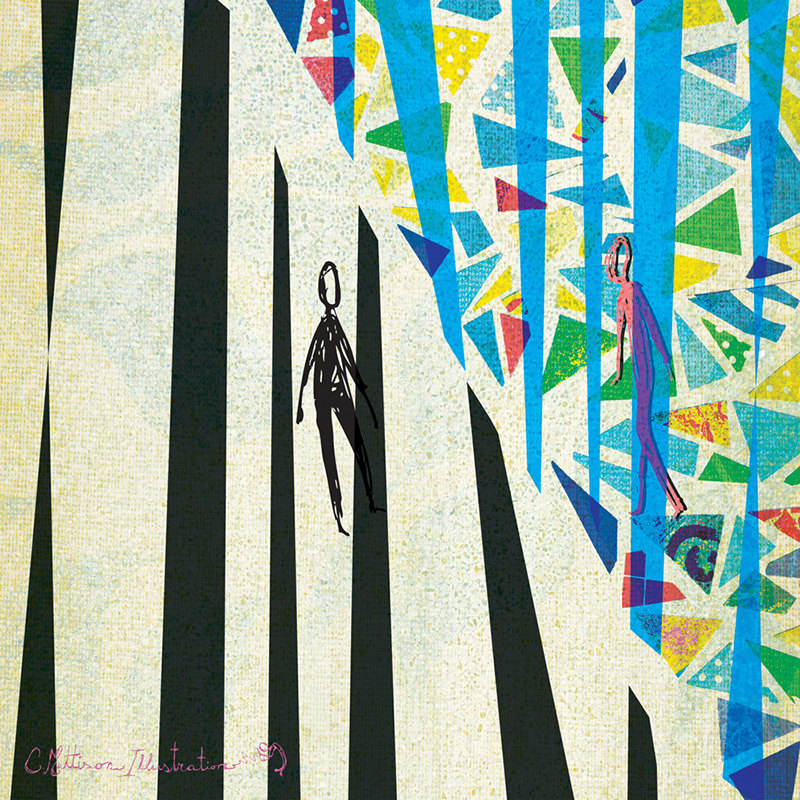
For starters, we all need to acknowledge the ad is designed to promote Heineken beer. With this disclaimer, we can proceed. Bottom line, I found the ad had a positive message (beyond Heineken is a good beer to drink with someone). I believe the message was that people operate according to preconceptions whether or not they are fully informed or people hold opinions that keep them from hearing another viewpoint, but it does not have to be so.
The ad was a message about building bridges across those divides, seeing that the other is not merely stupid or a threat, or perhaps something even worse. We can find ways to connect ways to create relationships where they did not exist before; we can find that despite the things that differentiate, our common humanity can be something that brings us together.
The ad is precisely that, a four-minute frame into which the message of building bridges and the selling a product are interwoven. It is neither Shakespeare nor the Bible; although interesting, it is not the best of plots, or cinematic artistry, or even acting. But it is an important message none-the-less, one deserving of notice and embrace, not ridicule or cynicism.
I am struck that because I hold this opinion, some call me out as stupid for liking the ad and even stupider for not knowing how stupid I really am. People are reacting in a way that feels extremely condescending, or just smug, contemptuous of anyone who does not have the incisive clarity that this dangerous insidious ad requires.
The ad can be scrutinized and might actually be a starting point for some of the serious conversations we need to have, including what the ad omitted, the subtle prejudices it contained, what are the important issues dividing us, etc. But a conversation is hard to have when only one viewpoint is acceptable. It seems like some of the people so vocal in criticizing the ad would have been good “before” characters for the ad. Consider that as a working premise, we share our common humanity. Then over a drink, let’s sit together to talk and listen.
This beautiful rendition of Hashkivenu by Craig Taubman is a soulful way to create space for Shabbat. It is part of the evening service asking for the Divine’s protection, holding us in the loving sheltering wings of Her peace.
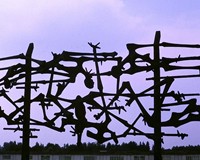
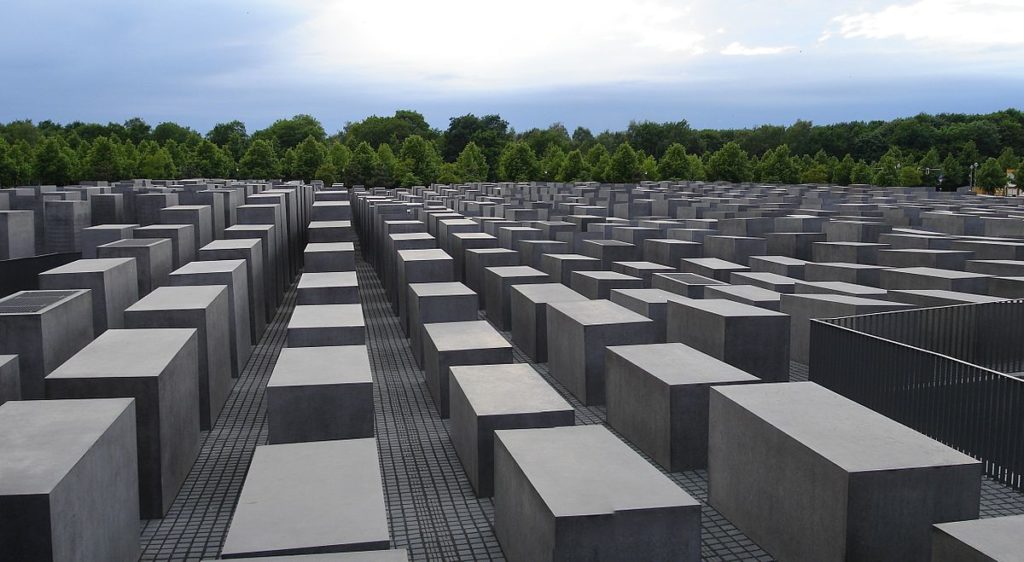
Monday evening, local synagogues gathered to jointly commemorate Yom HaShoah. There was power in our being together. This moving event included an insightful author, powerful readings, and a beautiful choir performing stirring and poignant music. I could not help but notice three things that were missing. There weren’t any young people; although there were four congregations gathered, the sanctuary was barely full; and the program was very particular, focused on the Holocaust as a Jewish event without broader implications.
Were it not for the choir, there was barely a handful of young people (under 55, let alone kids) in the audience. The meaning of this seminal event of the Jewish people cannot be lost when first generation witnesses and their children die. How do we keep the message of remembrance alive and relevant?
With four congregations gathered, the sanctuary should have been filled to overflowing. The choir took a substantial portion of the sanctuary space. Judging by attendance, the Holocaust is becoming a distant detached part of our past. The March of the Living has become increasingly popular, but this is a minuscule percentage of the Jewish people actively remembering every year. We are challenged to find ways to connect to the world that is disconnecting from the memory of the Shoah. Why is it so easy to forget and what does that say about us as a community of caring people?
The Holocaust is an event unique to the Jewish people. But genocide is not. The particular experience of the Jews needs to become a universal cry to humankind for humanity. This explains perhaps why survivors speak to all children everywhere sharing their stories, not just with Jewish children at Jewish schools. Part of the Shoah’s power is that it happened in a time and place where it seemed unimaginable to many, and it was permitted because of silence and complicity in the atrocity. It happened to the Armenians, it happened to others, and it is happening now even as I write these words.
Do we have the moral courage to speak out and act, or will we find a rationalization to ignore the carnage that does not directly affect us? It is the great question for the civilized world and the great teaching moment of the Shoah. Will we learn and effect change from our experience?
Our world seems to be in a particularly harsh place. On all fronts we seem to be ailing. People seem unable to talk with one another; our government and institutions are unresponsive to our needs; countries withdrawing from one another, many spiraling into brutal regimes. Anger, fear, and frustration divide us rather than hope guiding and uniting us. This is the backdrop to the double portion of Tazria/Metsora (Leviticus 12; 1-13:59, Leviticus 14:1-15:33), which interestingly addresses these very issues.
These Parshiot contain peculiar rituals that are actually timely messages. The ailments that afflict us are more than skin deep according to the Torah, indicating perhaps some spiritual or emotional sickness perhaps that causes the infirmed to be separated from the community. Because these ailments can infect bodies, clothes and even buildings we recognize that there is something more here than meets they eye. It runs deeper and we are compelled to question what might the Torah be cautioning us about. Torah’s message rarely stops at the edge of The Land so we can engage what these portions say about us. But first, let us examine the Parsha a bit closer.
Tazria continues the conversation about ritual impurity from the previous chapter, Shemini. The Parsha moves into the conversation surrounding Tzaraat, an affliction affecting people. It is often referred to as leprosy because it manifests itself as scaly white patches, but more interesting is the decision to bring in the Priest.
The Priest, instead of a doctor, views the afflicted person to decide if indeed this is Tzaraat. The priest instead of the doctor raises our collective eyebrows. We are not the first to grapple with the texts here. Two of our classic commentators, Rashi and Abarbanel, wonder about this too. Rashi hones in on the phrase that notes the Priest is called when the white patch seems to go deeper than the skin of the afflicted person’s body. Arbarbanel focuses in on the idea that the priest is called instead of a medical Specialist to provide treatment for the individual.
We know that medical treatment options were available. Egyptians, Greeks, and Romans practiced sophisticated medicine. In Exodus and 2Kings Abarbanel notes the use of medical treatments. Our texts speak of something besides some physical problem.
Our tradition has seen afflictions as a punishment for sin against God. Nachmanides says the Divine Spirit keeps bodies, clothes, and homes in good appearance. But when one of them sins, ugliness appears on his flesh, clothes or his house. Later, the text tells us that if the affliction reappears, the clothing is burned and houses were taken down. Sforno, another commentator, suggests that perhaps the seven-day process of isolation of the afflicted is meant to rouse the sick person to repentance. We might build upon the ideas of our teachers to suggest our goal is to remedy and repair, performing Tikkun upon “people,” “clothes,” and “houses” instead of tearing them down.
Afflicted people are those who are motivated solely by their own selfish considerations. The “clothes” represent the identities or communities with which we recognize our place in the society, the roles and responsibilities of our jobs that serve others or only ourselves. The “houses” are the institutions established to promote the common good, but have become corrupt perhaps undermining their missions, supporting very wrong they were intended to redress.
Judaism teaches us to care for the needy and weak. Clothing the naked, feeding the hungry, and caring for the widow and orphan is our charge. Our American tradition should measure our success by how well we care for the weakest among us. Freedom, liberty, and justice are our core values. They have made us a light to the nations. Our text gives us the opportunity to review what we do and consider course corrections to keep our sacred mission working. But the work begins with us.
Buber reflects that a person cannot find redemption until he/she recognizes the flaws in their own souls. A people likewise cannot be redeemed until it recognizes its flaw and attempts to efface them. Redemption comes only to the extent to which we can truly see ourselves. Redemption is not an act of grace; rather it comes when we make the world worthy of it. Only through our faith and deeds can we make so.
We are charged with a holy mission to be agents in the process of Tikkun and creation. We each are part of bigger things that begin with our own selves: family, country, and the world. How do we assume our responsibility in the work? It starts by living up to the standards to which we aspire, acting with kindness and respect for each other, and finding common ground to promote the common good; we must ensure our institutions embody our values, and actively support organizations that promote those values, here and in the world. Tazria/Metsora challenges us to act as though we are each a priest and to act embracing that each of us is B’tzelem Elohim, bringing the holy where it may not exist and effecting the changes we aspire to see in our lives.
Nava Tehila performs a soulful rendition of Yedid Nefesh, the beautiful poem we use to welcome Kabbalat Shabbat. Written by Eleazar Azkiri in the 16th century, Yedid Nafesh is considered to be a love song to God based on an acrostic for God’s name, each stanza begins with one of the four letters of the Divine Name. (the youtube link will take you to other Nava Tehila songs after Yedid Nefesh- enjoy them all)
Although this piece was produced last year, it is worth sharing with you now as we welcome Shabbat HaGadol, the Shabbat immediately preceding Pesach. This is the Key Tov Orchestra featuring Elliot Dvorin at their schmaltzy best. It’s a little Vegas combined with tunes from our wonderful holiday. It seems somehow fitting that this East meets West happens in Daley Plaza in downtown Chicago. Enjoy!
Wishing everyone Shabbat Shalom and a zissen Pesach!
This is our response to each of the many miracles we enumerate at the Seder table. Thank you God for doing each of these great things; if you stopped at any point along the way that should have been enough to satisfy us.
But our response is incomplete.
We celebrate God’s presence in the miracle of the Exodus. However, we cannot forget our role. It is as if God continue to tighten the string, pulling back on the bow further and further until the people are ready to spring forward into action. God is preparing us, inciting us, readying us to take on the challenge that lies ahead. It is as if God is saying, “get ready,” I am handing this off to you as you engage as my partner in the active unfolding of history to create the world that should be.
This message has never been more important.
As we go to our Seder tables next week, we will recite God’s miracles and recount the tale of our liberation from the life of slavery to the hope of freedom. But freedom requires work to overcome the forces that would return us to the days of old, the days of slavery. We must use this modern-day Seder as our rallying point to commit ourselves to pursuing the freedoms that started with a miracle, back in Egypt or here in Philadelphia. The values that we hold dear of life, liberty, and justice are under threat by hostile forces. The miracle of our freedom is done, the time for our action to fight for what our freedom means is at hand.
So at this Seder, when you say Dayenu, mean it; be grateful for the miracles and express your gratitude by becoming a partner in the ongoing work of bringing our values forward so all may be so blessed.