If you could choose your last words or final deeds, what would they be?
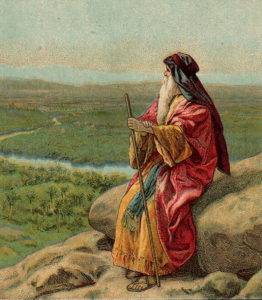
In Nitzavim, the portion we are about to read, Moses uses his final moments to share his parting thoughts with us– the final words that will linger in the hearts and minds of those there after he is gone.
Choose life. It is here. It is now. But the truth of it is, we really do not know for how long. As we read in the Unataneh Tokef prayer, death comes in many forms, and we have been rather creative in coming up with a list. We can only hope and pray for life and health. But deep down, we all know that inevitable end of our physical life lurks waiting.
I have had occasion to be with a family who knew death was coming. The mother had some months to prepare; her cancer would not be stopped. I was with a family where the death of the father was completely unexpected. A massive coronary took him in the middle of is regular bike ride with his wife.
Perhaps you might think that the first instance is easier. You know it is coming, you can say goodbye, settle your affairs; prepare those you will leave behind. Whereas when someone is taken in a moment, there is and no time at all. It is abrupt and harsh.
The truth is that no matter how you might try to prepare, it is merely an intellectual exercise. Emotionally the pain of loss is just as jarring and real in the moment it comes. So if we do not know the how or the when of it, you might be wondering if what I am talking about isn’t itself just an intellectual exercise. How is it possible to plan when we don’t know how to measure what is left in days or in years?
We have the opportunity to impart our final words through both words and deeds every single day. Truth be told, we do not share our final message in the final moments of our lives. That is not the time. It is hard to think clearly, if you wrote it down, you likely you left it in your desk in another room, or your glasses are upstairs, so you cannot read your notes anyway!
There is a Midrash about Jacob on his deathbed, surrounded by his children, wondering if he left them with the truly important lessons. They responded with “Shema Israel, Adonai Eloheynu, Adonai echad” Hear oh Israel the Lord our God the Lord is one. Given that Jacob’s name was changed to Israel, an alternative translation might be:
“Dad, you taught us your lesson well and we heard you.”
I met an extraordinary man during an overnight rotation working as a hospital chaplain. I went to Jim’s room intending to console a grieving family. But consolation was not going to happen. Jim was an organ donor and the Gift of Life team was preparing to bring life to several people who would benefit from Jim’s heart, lungs, liver and even his corneas. The people at Jim’s bedside were celebrating the man who continued to live and embody the ideals that made him beloved even after he was gone.
Similarly, the funeral for our friend on his bike was a celebration of his life. Each eulogy lovingly shared the joy of being counted as a friend. And the woman, who had the time to prepare; that was my mom. And I try to live by her values that still live inside me.
Moses is about to tell us, “Lo BaShamiyim hi!” It is not in the heavens, or someplace else out of reach, like your desk drawer. We revere Moses not for his parting words alone, but for the gifts he gave us throughout his life. And likewise for us, it is in the things we say and do everyday that makes the difference and endures as our legacy.
Moses words still ring true; Not only is it completely within our grasp, it starts the moment we decide it to be so. Let that time be now. Take the hand of the person sitting next to you, whether it is someone you know or a complete stranger. Take their hand for just a moment, look at them and smile, and together let us listen to the words of Nitzavim.
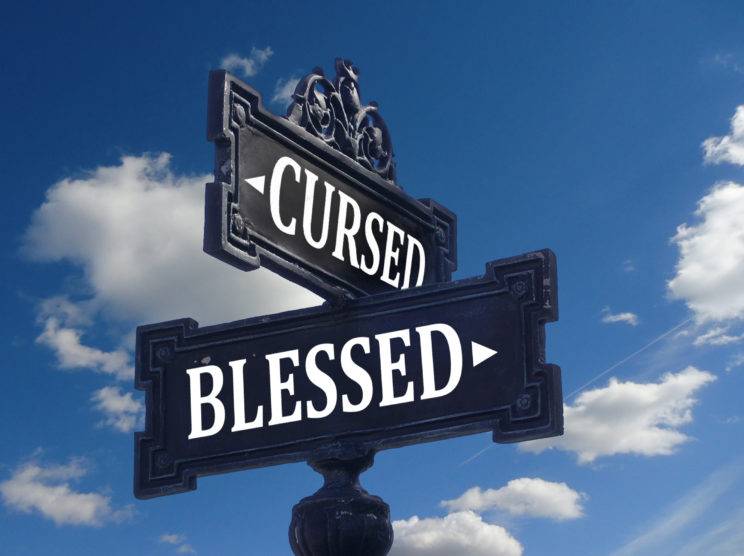 In the Torah, Moses sets out a choice for us this past week. Blessings and curses. It is a deceptively easy binary choice. Given good stuff or bad stuff as alternatives, it seems like a no-brainer. I opt for the good stuff!