
Two of my favorites, Hazzan Harold and Caroline bring Lecha Dodi to life as we welcome Shabbat.
Shabbat Shalom
#BringThemHomeNow
Two of my favorites, Hazzan Harold and Caroline bring Lecha Dodi to life as we welcome Shabbat.
Shabbat Shalom
#BringThemHomeNow
I had the honor of moderating a conversation for the New Israel Fund (NIF) at Beth Am Israel, located on the Main Line in suburban Philadelphia.
 Our speakers, Rabbi Noa Sattath and Libby Linkenski are dedicated to fostering a shared society that upholds our Jewish values. Our values endure, even in challenging times like these, when they are stressed and tested as rarely before in our history. Indeed, our values are more important than ever for maintaining perspective. Libby shared three points to remember as we navigate these difficult times:
Palestinians are not Hamas. Israelis are not Benjamin Netanyahu. Americans are not Donald Trump. We are more than the actions of our extremist leaders and are not directly complicit in their worst acts.
The conflict didn’t begin on October 7, and October 7 itself was indefensible. So is the ongoing assault on the people of Gaza. We can’t lose our moral clarity, regardless of politics.
Two peoples have always existed between the river and the sea, and both will continue to exist. Any vision that erases one side is a vision of unimaginable violence. The question is not whether we coexist but how. That’s where the conversation begins—and where it must end.
We must continue working to lay the foundation for a future where both people can live with dignity and security.
The Shvesters bring their talents to ‘Eli, Eli’ Hannah Szenes’ poem written in 1942.
As we, too, struggle with the pain of war, we reach out in prayer, hoping for peace and an end to the suffering. May it come soon.
Shabbat Shalom
#BringThemHomeNow
Matisyahu and Alex Clare team up to share the words of the Lubuvitcher Rebbe.
The words are simple, the thought profound:
Spread Out
Spread light
Spread Love
All Around the world.
Its never been more critical to Spread Light.
Shabbat Shalom
#BringThemHomeNow
Passover asks us hard questions about what it means to be free and what our obligation is to those who are not.
Passover celebrates the redemption of our people from bondage. It is at the center of what it means to be Jewish. But it is a paradox. What does it mean to be free, particularly when our brethren are held hostage under deplorable, cruel conditions when fighting for freedom against an enemy that comes at the cost of innocents caught up in the battles?
As we gather around the Seder table this year, we celebrate. However, our celebration requires us to commit to helping those who are still not free. Break the middle matzah and hide the Afikomen for dessert later. Share the other piece as a symbol of sharing even this meager bread with those who are hungry.
No one is truly free until all are free. Whether we quote Fannie Lou Hammer, Maya Angelou, or our sacred tradition, we still have work to do to help others find their way to freedom.
Chag Pesach Sameach
#BringThemHomeNow
Shabbat is approaching and Pesach follows immediately thereafter. I am taking a moment from the preparations to share the beautiful rendition of Stand By Me. It is a fitting prayer seeking Divine connection. Enjoy Music Travel Love as they share their beautiful rendition.
Shabbat Shalom
#BringThemHome
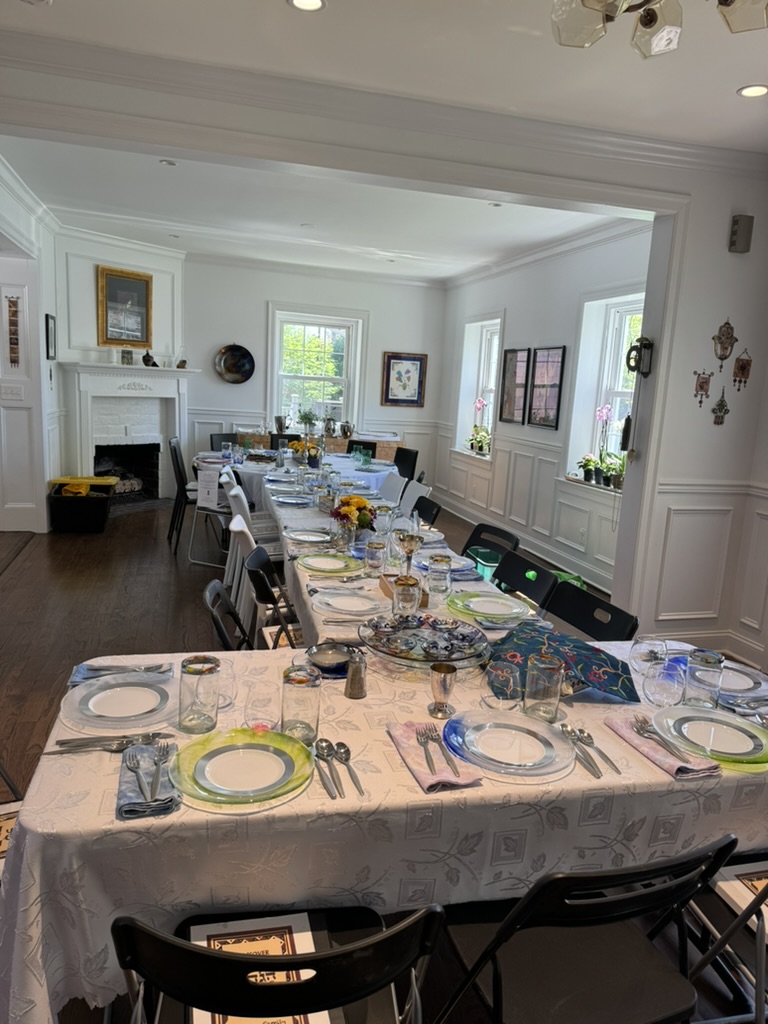 As we gather around the Seder table, we find ourselves in a moment that feels uniquely challenging. While previous generations have confronted serious issues, the current landscape is unlike anything we’ve encountered in recent memory. The ongoing war is relentless, with no end in sight and no plan for what follows. Hostages remain trapped, seemingly without hope for redemption. Furthermore, we are witnessing a rise in anti-Israel sentiment, along with a resurgence of Antisemitism not just abroad but right here in the United States. Fear and anxiety permeate our lives, and rather than coming together to confront these threats, we often find ourselves at odds with each other. This moment in time is fraught with tension.
However, we have the power to respond constructively, with unity and compassion.
By gathering at the Seder table, we embody the spirit of inclusion with our declaration: “Whoever is hungry, come and eat!” This Passover, our hunger for spiritual and emotional support is palpable. Let us set aside our differences to share and celebrate the profound story of our people’s redemption, recognizing that each of us connects to this narrative in our own distinctive way. Our tradition highlights four individuals asking different questions—a reflection of our diverse perspectives. We ought to welcome one another, fostering an environment of understanding even amidst spirited discussions. The Shalom Bayit, the peace of the Seder table, and our unity must prevail. Now, more than ever, we need each other. This Passover, let us cherish our time with family and community, share the powerful story of redemption and freedom, and be grateful that we have one another in these trying times.
Wishing you a Zissen Pesach!
As we prepare for Shabbat, I share Naomi Shemer’s Al Kol Eileh, All these things, performed by Central Synagogue. a song praying for God’s protection and peace.
Shabbat Shalom,
#BringThemHomeNow
Al Kol Eleh-Naomi Shemer’s song to her widowed sister- a song of hope as we continue to pray for the return of the hostages and for peace.
Shabbat Shalom
“Please do not uproot the planted, Do not forget the hope Bring me back and I shall return to the good land” It is spring outside, Passover is approaching, but our lips still struggle to say “Happy Holidays”. We were looking for words of encouragement and comfort, and we found them in the song “Al Kol Eleh”, Over All These, the words of encouragement that Naomi Shemer wrote to her widowed sister. We were joined by the musicians of the IDF Orchestra, conducted by Major Rom Shamir. We hope the line “Bring me back and I shall return” is heard and that our hostages return soon.
Reform Rabbis and Cantors are signing this statement of Jewish Beliefs. I am proud to be among them.
In this time of swirling events and governmental chaos, it is important to remind ourselves of our core beliefs as American Jews. These are some of the values we hold dear and which guide our lives and our actions.