Even in our deepest grief, we pray for peace. The Jerusalem Youth Chorus sings of the shared pain.
Shabbat Shalom
Even in our deepest grief, we pray for peace. The Jerusalem Youth Chorus sings of the shared pain.
Shabbat Shalom
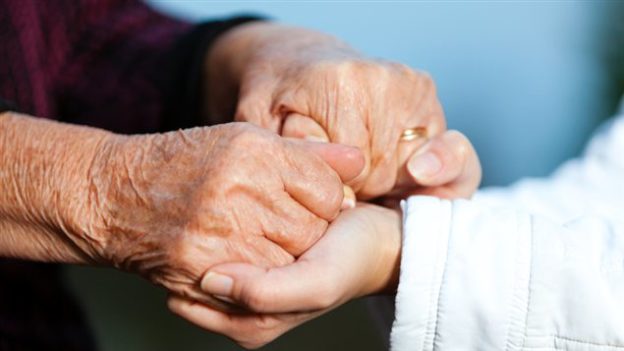
How do you tell Dad that Mom has died? This challenging question confronted old friends this past week.
Compassion is such a difficult practice. It is often so difficult to know what is the right thing to do for another person.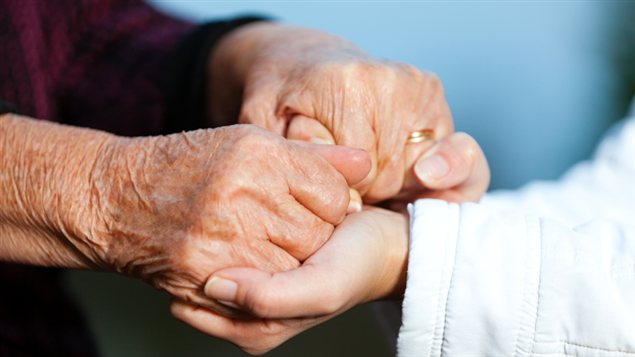
A friend’s mother recently passed away after a protracted decline. Sadly her dad is suffering from dementia. My friend and her siblings struggled with whether they should tell him that his wife, their mom, has just passed away. Would he find the loss overwhelming? Would he even comprehend the sad news they would share? He has a right to know and grieve the loss of his wife. But if the news was too much for him to handle, should they wait until there was a better time to inform him?
Further complicating things, he was physically unable to attend the funeral.
Both options, to tell him or not, are based on compassion for dad. But which one is right for him? She reached out to me for counsel.
My first suggestion was to consult dad’s doctor, someone who knows him and is skilled in these medical issues. The doctor can help ascertain how aware is dad of his surroundings. The children, all adults, can also shed some light on dad’s cognitive abilities, but they are emotionally very close to the situation and may not clearly assess how well dad will process the news. It is likely that despite all attempts to know, it is all but impossible to appreciate how much dad truly understands.
We cannot know how people will react to this kind of news even without the complications of these circumstances. Maybe dad will have only a moment of clarity or possibly the news will stay with him. He may work through his grief or become overwhelmed by it. I have learned along my journey that we actually only have moments together. Sometimes these moments last and create enduring memories. Sometimes they fade away. The best we can do is to be fully present in each moment together and hope that it endures. The struggle that this family confronts is a struggle we all face, for each of us will experience loss and then try to reconcile with it in the aftermath. We can try to anticipate how people will respond, but we need to be careful in presuming too much, acting for them instead of allowing them the dignity of exercising his or her own agency.
The Talmud teaches that we treat parents with honor and respect. Might the ways we do that include withholding speech or information that would be hurtful? If dad still has some comprehension, won’t he feel the sadness in those surrounding him and wonder why his wife no longer visits? Further, how will he react if he learns of his wife’s passing long after the fact without the chance to mourn her loss? Arguably we honor our parents when we include them in even the most difficult things, rather than attempting to protect them. Each of us will be called upon to grapple with a similar situation. We must take the utmost care to ensure that our motives are true and that we act in the best interests of our parents and not fulfilling our own needs disguised as compassion. My friend’s struggle was because she loved her father and wanted what was best for him.
Zichronah Livrachah may my friends’ mother be a blessing for the family. May her father be given the opportunity to know that too.
One of the most difficult things we experience is the loss of a loved one. Death takes them away from us. We struggle with our new reality, whether the loss was sudden or even if it was expected, the moment of truth is not as expected.
Death is a complicated emotional process in which we experience loss, then grief and then we try to move forward. Jewish tradition gives us some wonderful coping mechanisms that acknowledge and honor the departed, our relationship to that person and a means of working through the loss.
When we attempt to circumvent or short-circuit the process we lose out. In our fast paced world, we want to “get it over with,” and move on. I frequently hear the need to return to work, which is more a desperate attempt to escape the discomfort of the current situation and not deal with it. Some of us suppress or even ignore our feelings attempting to deny the pain, leaving things unresolved. Our feelings will however come back to haunt us. A perfunctory approach does not serve us well. Our hearts just do not work that way. Judaism has a better way to deal.
Shiva, the traditional Jewish mourning period, is seven days (the word Shiva is Hebrew for seven). It is tempting to shorten this period to a three-day Shiva, or even a one-day observance. I did once hear of a family that decided they would sit Shiva Saturday night at the Italian restaurant/diner. These recastings of Shiva are reflections of everything but the acknowledgement of a profound loss and the grieving process that accompanies such a loss. Sadly, the people who survive are the ones who suffer as a result.
Our Jewish tradition wisely helps guide the survivors through the process. You quite literally sit with your grief, fully acknowledging this place and the loss. Your family, friends and the community gathers to support you in your time of aloneness to share that indeed you are not alone. You experience what we all will experience and we are both connected and strengthened by this knowledge. By being together we say you will get through this with our support and love. The community continues to show its support and love through the institution of the synagogue as a place where you can find not only solace but a caring community that can help you reintegrate as the immediacy of the pain begins to find a place in your heart rather than on your sleeve.
There is joy in life and pain in its loss. How we navigate these is what family, friends and community is all about. The traditional Hebrew phrase we share with someone who experiences a loss might be translated as: “May you find comfort in this place among family and friends.” This is among the values that makes embracing Judaism something sacred and profound.