

Saying goodbye to a dear old friend

April 15 will be the final day in the life of Temple Beth El in Spring Valley. That was my home growing up. She has merged with another and is now part of the new Reform Temple of Rockland County. Her time has passed, but it is so difficult to say goodbye to a place that is so much a part of me. I learned so much there, developed friendships that still endure, knowledge of my heritage that connects me, a lens through which to look at life and understand it, giving me the foundation upon which to build a meaningful life. It was in this place that I learned about things greater than myself, what it meant to be Jewish, what it meant to be a mensch. My rabbi, Rabbi Frishman z”l, and my cantor, Cantor Weinflash z”l, were towering figures then and still serve as guides along my path. Saying goodbye to this special place is very hard.

The building was much more than a structure; in many ways it was as much home to me as the place I went to lay my head at night. Temple was a place of extraordinary and wonderful experiences. I learned in the classrooms and to teach there as well, to sing in the choir box, to pray in the pews, to engage in the community, to champion important values and causes, to learn about culture and art, to develop a love of Israel and the Jewish people, to ponder great questions and explore the answers, to find meaning under the watchful care of those who loved and nurtured me.

At Temple I became Bar Mitzvah and was married. At Temple I said goodbye to my parents. Our family names adorn the honor wall and Yahrzeit plaques, my dad’s name on the panel of presidents, pictures of me and my brother and sister standing on the bima as part of our confirmation classes, art contributed by my parents, and on and on and on. Words alone are inadequate to express the depth of my emotional attachment this place represents. Almost every corner of the building has a memory of my time there growing up. I am truly blessed to have been there and been a part of it.

On April 15, we will gather one last time in the Sanctuary of Temple to welcome Shabbat and celebrate a place so many of us called home. Temple Beth El lives on in the people who received the gifts from being involved there. Times change and once useful buildings can outlive their purpose, but the relationships and the beauty created in this special place will endure. This is the blessing of Temple bestowed upon us.

Tazria-A metaphor for helping through bereavement

Bereavement

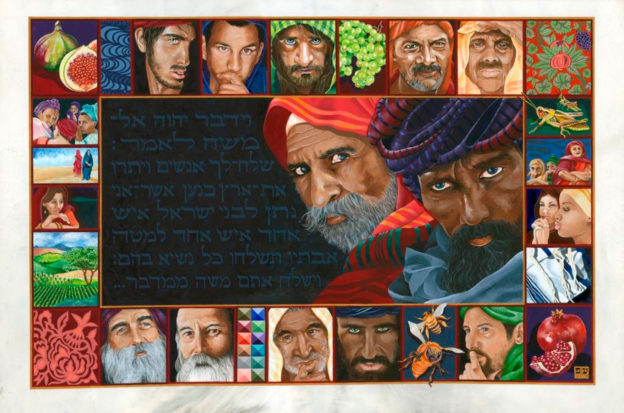
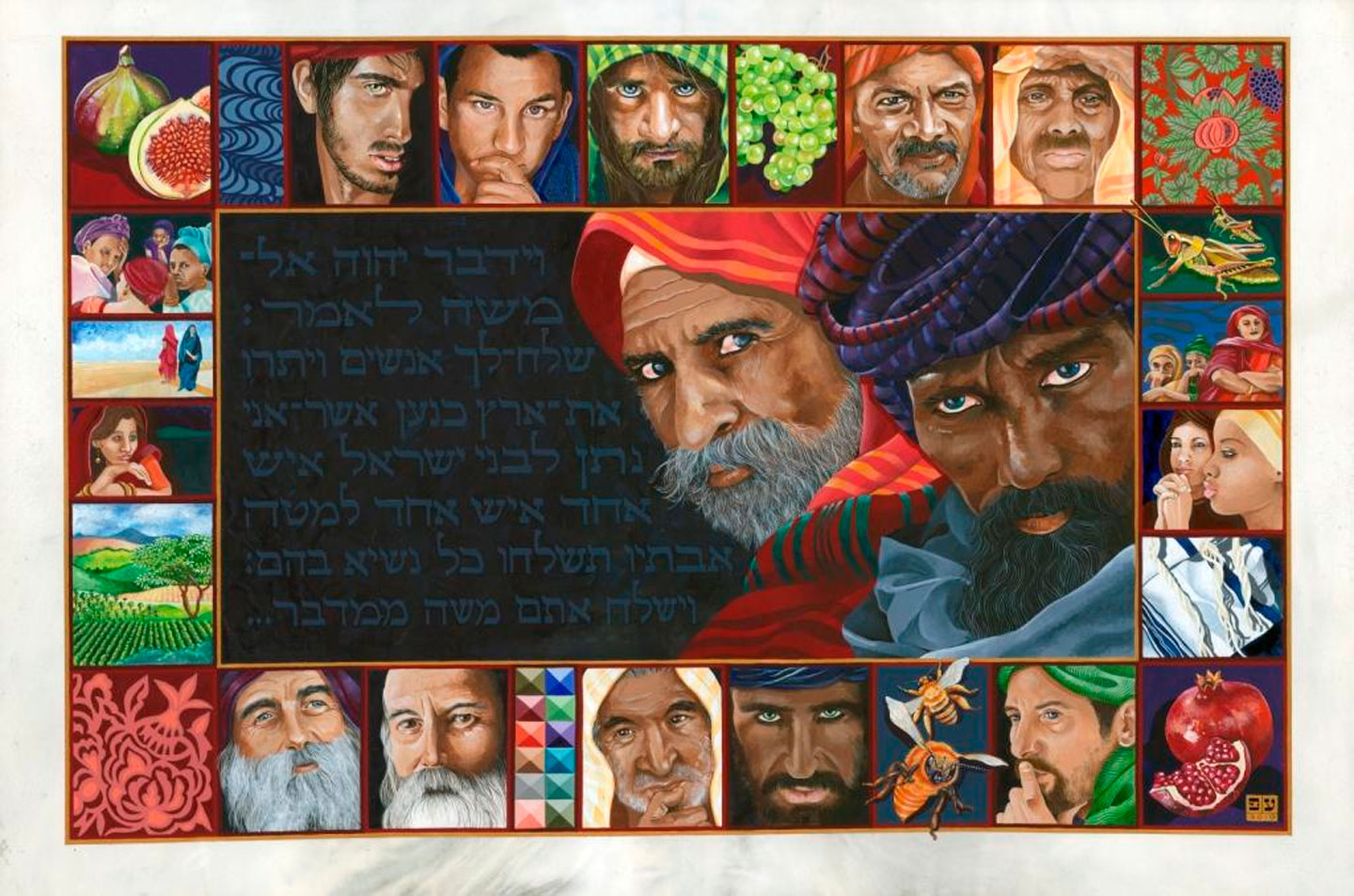
Something bad happens a strange infirmity of the body called Tzaraat appears. Some say it is leprosy, others claim it to be the heartbreak of psoriasis. But it appears on clothing too. Either way, the priest confirms the affliction and the family is moved out of community. The priest tends to the affected individuals watching to confirm that the disease has passed so they can rejoin the population. Something else might be going on here however.

 I was planning a Shiva Minyan teaching the other day and I saw the words of this parshah speaking to us about the grief-stricken family.

 Something calamitous happens when a loved one dies. The loss shakes the family to their core and, as our tradition suggests in our rituals surrounding death, the shock and grief is overwhelming and incapacitating. The seven days of Shiva are marked by an abnegation of needs; the mourners sit on low stools, do not attend to basic items such as grooming, clothes are rent.

 We in the community are tasked to keep a caring eye on the mourner. We check in with them regularly. We bring the Kehillah, or sacred community, to the mourner so they may engage in prayer even though they are unable to come to the synagogue. We bring them food to eat because they are unable to care for themselves. We offer love and support and succor. We watch over them until it is time for them to start the process of re-joining the community. We welcome them with caring embrace when they come back to the synagogue to say Kaddish. Like the priest helping the ailing, we are responsibility to the mourners through the period of Shiva through the time they can return. Shiva is like the exile of old from the community. It is imposed for reasons over which the person has no control but is rendered impure, or in this interpretation separated because of the trauma of loss.

 Tazria shows us that although an ordeal separates the mourner from the community, the community has a responsibility to reach out and continue to support the grief-stricken, acknowledging the difficult place to which they are banished by loss, but caring for them providing protection and then a pathway back to home and life.

Shabbat Shalom

A difficult week is drawing to a close.  Shabbat is almost upon us.  May this be a time to find peace within as well as peace in a troubled world, and may this music offer a bridge.

The final stanza from Adon Olam, performed by Craig Taubman is offered this Shabbat.   Wishing everyone Shabbat Shalom.


Olam Chesed Yibaneh- Thoughts on the Tragedy in Brussels

The terror and tragedy of events in Brussels today requires that we pause and reflect on the horror and pray for those who were injured or killed. I have had Rabbi Menachem Creditor’s rendition of Psalm 89 playing over and over in my head in an attempt to reassure myself that we will get through this too.

 Rabbi Creditor adapted a phrase from Psalm 89, Olam Chesed Yibaneh, in response to the birth of his daughter in the immediate aftermath of 9/11. He translates the line as: “You will build this world with love.”

 We are charged, or maybe implored, to engage in the creating of a place where we care for each other, embracing each other instead of permitting hate or fear to separate each other.

 Cain Yehi Ratzon, May this be God’s


Come Together- The AIPAC Dilemma

ComeTogether_Desktop

Trump has spouted words that are divisive, angry, bigoted and hateful. These things are anathemas to Jewish sensibilities. Many Jews and Jewish organizations, the CCAR and the URJ among them, have denounced such hate speech. But we are about to hear the speaker in an appearance before AIPAC. This dilemma is of AIPAC’s own creation.

 AIPAC has created a large and powerful voting group of Jews coalescing around promoting its view of American support of Israel. Obeisance to AIPAC’s understanding of the American-Israeli alliance is the litmus test that will judge the suitability of the presidential candidates. So expect nothing more.

 The candidates should not rise or fall based on a single speech. But given the stakes, I expect all candidates to speak in support of a strong secure Israel. I do not expect thoughtful analysis of the Middle East or a path towards peace, just words espousing that peace is good, Israel must remain strong and we are Israel’s friend. I do not recall a candidate speaking otherwise to any Jewish groups or lobby. To expect more than these platitudes, however, would be to set unrealistic expectations. Even if both candidates did have detailed plans, given the deep fissures in the American Jewish community and our own inability to engage ourselves in meaningful dialogue, anyone with political savvy will play to the crowd rather that risk alienating a voting bloc.

 I will not judge a candidate’s suitability for President based on this opportunity to curry favor with AIPAC, nor should anyone attending the AIPAC conference. Mrs. Clinton was one of the earliest national leaders to speak to the idea of a two-state solution, which was most unorthodox at the time and did not sit well with many. Mr. Trump has not-too-deftly tried to balance his need to be an impartial mediator with pro-Jewish, pro-Israel sentiments. We must look to a record of thoughts and deeds to establish the bona fides of the candidates. We need to have someone who understands the complexities of the situation.

 The AIPAC convention is not the place where this will happen. So this phase of the conference is merely a beauty pageant. AIPAC can bask in its own glory, pleased in knowing it had the political clout to force the equivalent of a bathing suit competition. But we will learn precious little more than that.   This is a moment to reassess our true motivations for having such appearances and why we attend such staged events.

 Many friends and colleagues are heading to the convention to learn and show support for AIPAC and its work supporting Israel. I commend my colleagues and friends who are grappling with the appropriate response to Mr. Trump. I suggest that whatever course of action you decide, it is unfortunate that the AIPAC convention has become so focused on something so meaningless.

The Candidates at AIPAC

Candidates at AIPAC

AIPACI am troubled by the pending appearances of the presidential candidates at the AIPAC conference. It is important to hear from them. However, the value is in the substance of the presentation, not the celebrity surrounding it. We do not need a beauty pageant. I am concerned about the substance.

Candidates appear in venues like AIPAC order to get votes, hoping to share a message that appeals to the group. Unfortunately, in these constricted spaces it is unlikely that they will deliver a complete message and will instead present little more than some populist pandering to the voting block represented by AIPAC. I expect that each candidate will offer some rhetoric about his/her commitment to a strong and secure Israel. But we need more than words. Each candidate needs to elaborate a thoughtful policy of both a strategic and tactical process to strengthen the relationship between Israel and the United States and secure stability in the region. A single speech at the AIPAC conference cannot do this. Platitudes and promises whether eloquent or crass are worthless.

We in the rabbinic community are struggling with Donald Trump’s appearance in particular at the AIPAC conference. The Union for Reform Judaism (URJ) and Central Conference of American Rabbis (CCAR) have taken a stand to express deep discontent with the hatred, bigotry and bullying that seems to characterize much of Trump’s message. The URJ and the CCAR are stating core Jewish principles. But this statement raises important overall questions about appearances at the AIPAC conference by the candidates.

The last time Mr. Trump publicly referenced Jews, we saw anti-Semitic canards played out on the public stage in the form of jokes. Jews in the room laughed nervously and uncomfortably at the joke, but it was not funny. Such words combined with other inflammatory divisive speech leads me to reluctantly conclude that this forum is not the appropriate place for Trump or his rhetoric. But such a position stands in direct opposition to my belief in free speech and the open exchange of ideas.

It is unrealistic to call upon AIPAC to rescind the invitations to the candidates. AIPAC needs to remain nonpartisan and promote its pro-Israel agenda. Conference attendees should be respectful of all speakers. No one, however, should be swayed by a single speech. It is critically important we look to the individual’s corpus of speeches and the existing records of each candidate to truly determine where they stand on Israel as part of a cohesive vision of American leadership and on the fundamental principles that we hold sacrosanct. Then we all must vote.