We are in a Moral and Ethical crisis.

The events in Gaza and the West Bank demand us to speak out for those suffering from violence and hunger.

This isn’t about assigning blame or claiming whose cause is righteous. True righteousness calls on all people of faith to speak out against the horrors inflicted on victims. The duty to feed the hungry is a core part of our tradition.

The path that brought us to this moment is long and complicated. But that’s a story for another day. We Jews around the world are deeply distressed that Israel is involved in tactics we condemn, using food as a weapon. This must stop. The current system for distributing food is inadequate. Israel cannot control Hamas; Israel can control itself. Israel needs to do better.

Perpetuating the cycle of hatred through such harsh punitive measures poses an existential threat to Israel’s safety and security. Palestinian widows and orphans will view revenge as their goal, making them vulnerable to anyone offering retribution as part of a vision for them.

Being moral and ethical in a place where those things may not exist is one of the hardest things to do, but it is in these situations that the best values of our tradition must shine through the darkness. I urge Israelis to pressure their government to change its policy. I ask Donald Trump to urge all parties to provide an overwhelming infusion of humanitarian aid.

Finally, I urge all of us to financially support food initiatives like those offered by the New Israel Fund or World Central Kitchen. I am often asked what we can do, and this is something we can do. We cannot stand idly by while our neighbors blood is shed or starved.

This Land is Our Land

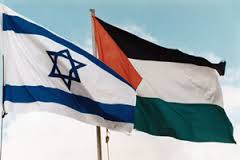
Flags

Two iconic songs reverberate in my mind. The first is the American classic, “This Land is your land, This Land is my Land.” It is a dream of a shared society here in America. The second song is the deeply moving “Theme from Exodus”, with its seminal line “This Land is mine, God gave this Land to me.” This soaring tribute to the Jewish Homeland is the dream of a people rooted in an ancient connection to the Land. The two songs are not as dissimilar as they appeared initially to me because of what is missing.

 Woody Guthrie’s Ballad in its beautiful message of inclusion does not include the Native Americans of the land. The message of Exodus is similar in its treatment of the long-time native inhabitants of Israel. The Palestinian narrative likewise does not have a place for the Jewish State. Each song of hope is exclusive to its own kind.

 Sharing is often profoundly difficult, particularly when it is with people unlike us, whether culturally, ethnically or by some other difference. It is even more problematic if the claim of one is at the expense of the other, as some zero-sum game. The Israeli and Palestinian people both struggle with it and suffer from it. “This land is MY land” seems to be the respective song of each. For many Palestinians, Israel’s existence notwithstanding, the long view holds that eventually Israel will go away and the rightful owners will again return. And Israel defines itself as the Jewish state, born from a combination of hard work to build, war to defend, investment, political will and a historic claim. The Israeli’s ongoing and expanding presence in the West Bank however severely complicates the landscape.

 If Israelis and Palestinians will not amend their respective stories both sides will continue to fight, one to preserve what is there, one to restore something there. These limited narratives foment strife and hatred and inflict great human suffering in a world growing ever smaller and more dangerous. As long as each side clings fast to a story that rejects the claims of the other, the status quo will continue. Statesmen and visionary leaders on both sides must work to move past narratives that are mutually exclusive and find space to coexist with the other. Then these leaders must persuade the people of this reimagined future. Both sides must embrace a peaceful coexistence to finally stop the otherwise never-ending cycle of death and destruction. For neither side is ready or willing to go away.

 Can Zionism embrace the Palestinian narrative respectfully? Would the Palestinian narrative accept Israel’s legitimacy? Ironically, because both Israelis and Palestinians are so fully committed, each requires the other in order to survive, let alone thrive, for neither will ever give up. Furthermore, in this difficult and ever more radicalized region external forces challenge both. A new way forward based on coöperation and mutual respect is desperately needed for both Peoples. Let us pray that someday all might sing together.