Tag: relationships

  • A Passport- a gateway and a journey

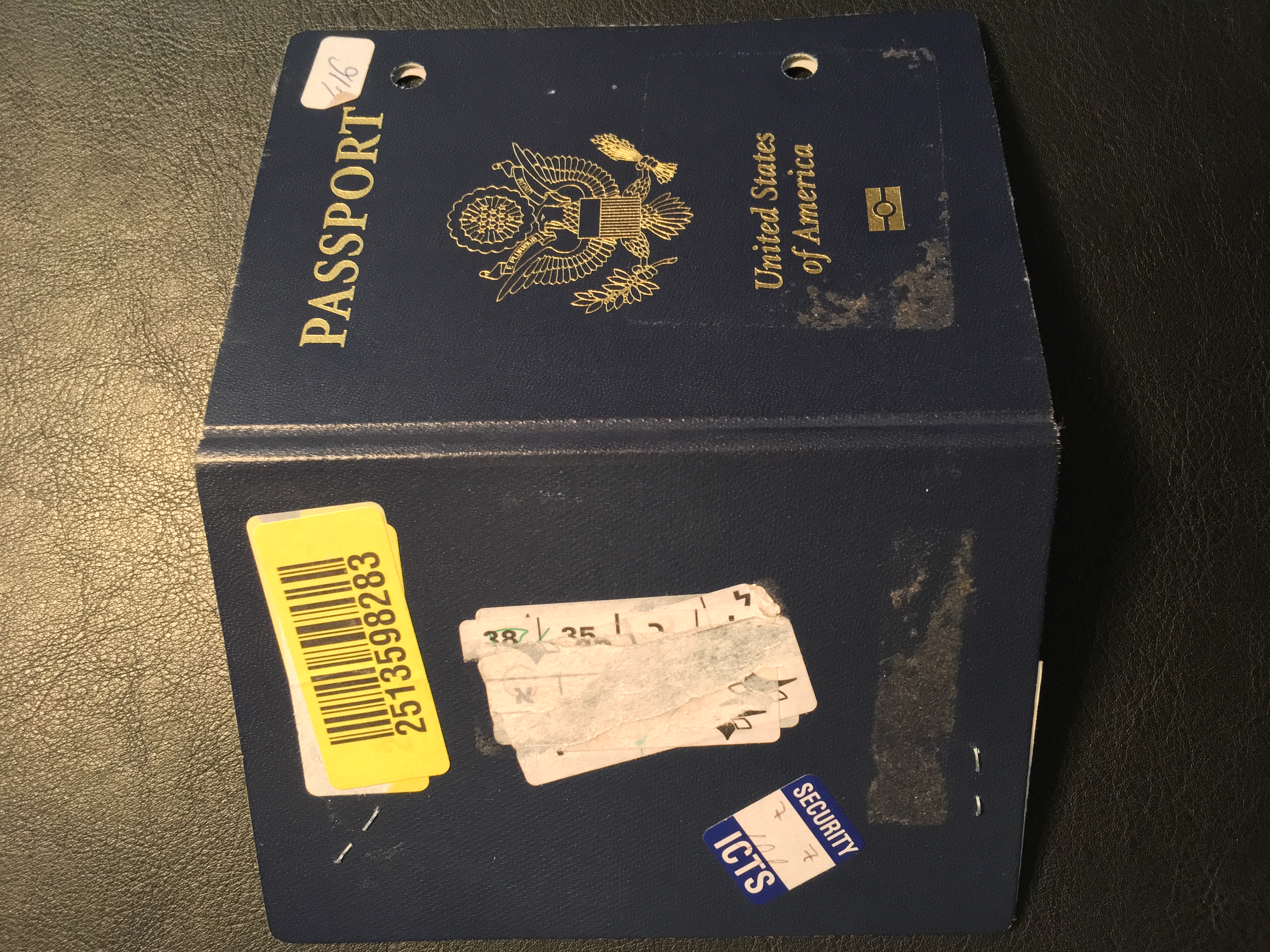
    I just received my new passport. The old one was expiring and I dutifully followed the instructions, got a new picture, completed the DS-82 form, mailed it and in the mail was the new passport. But I miss the old one.

    I got the old one as I prepared to enter a new phase of my life, leaving a 30-year career in business to become a rabbi. Looking back, it has been a fascinating decade chronicled by this small blue book. Stamps representing my trips to and from Israel as a rabbinical student, my trips through the Former Soviet Union celebrating Pesach in Moscow and cities in Siberia, my honeymoon in Italy with Naomi as a newlywed, the trips to Israel as a rabbi, and a wedding in the Dominican Republic, were all documented by this small blue book with worn edges. Each page is a reminder of a very special experience.

    I remember the process of obtaining it, completing other forms and taking other pictures that showed a younger version of me with more hair on top of my head and less gray on the face. The book was empty and new. It was literally and figuratively my passport to my future. Each of those stamps represented an amazing journey. Each was memorialized in that precious little book that I scrupulously guarded but whose inside page I copied just in case my best-laid plans to protect it was subverted.

    Extraordinary memories of extraordinary experiences are evidenced in my old passport. It serves as a reminder that we continue to grow and each passing day is another page in our life journey. I reflect back on them and see something I learned and perhaps can share with others. My life is enriched and so too is my capacity to teach.

    So now I have the new passport. The picture inside is of an older, current version of me. The pages are clean and new. I can only wonder about the adventures and how those pages might be filled over the next decade. The fresh pages beckon with anticipation and promise. I can only hope that when it is time to replace this contemporary passport, it too will worn and maybe tattered, filled with visas and stamps of exciting travels evoking meaningful memories declaring that my continuing life journey remains a rich experience of growth and sharing.

  • How Do We Receive Torah

    At Shavuot, how we receive the gift of Torah is one of the great questions posed.  I found a path towards understanding in a passage of the Talmud.

    One is really two and two is really four. This is not a set of alternative facts but an insight from the Talmud (BT Shabbat 2a) about the nature of things. Shavuot is the time of the giving of Torah. But in any transaction there are two components, giving and receiving; one is really two. But it doesn’t stop there.

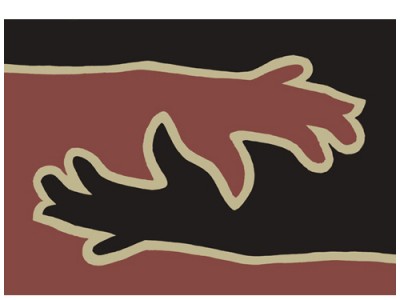
    Both giving and receiving are either active or passive. In giving, we can thrust it towards another actively or we can be passive and open our hands for the other to take it. Similarly, in receiving, we can actively take the gift with eagerness and enthusiasm, or we can open our hands to passively receive the gift that is to be bestowed upon us. Two is really four.

    So at this time of matan haTorah, the giving of the Torah, how do we receive it? Our tradition focuses that this is a gift from God to us and it is about the giving. The Eternal gave it once but we are always receiving Torah. And although we think of ourselves as all being at Sinai in this incredible moment, each generation comes to Torah to take it as their own. It is entirely up to us to accept it passively or embrace it actively.

    How will we come to Torah?

    Will you grab the Torah with gusto or just accept it. Is it truly a gift a living thing that brings meaning to us, something extraordinary to be treasured, loved, and lived; or is it some musty manuscript kept safely away in an Ark in a place we rarely visit if ever? The choice is ours, collectively and individually.

    Perhaps it is this distinction in the way we receive this gift that helped God understand that the generation that received Torah was not the generation ready to enter the Promised Land. For the way we receive a gift can affect how the giver gives the next gift, which builds on the first. If we receive it enthusiastically and with gratitude, the gift giver might be more excited to bestow the next gift. And if we receive it passively perhaps the giver might consider whether, in fact, the recipient was ready for it or for the next gift.

    This brings to mind the phrase mitzvah goreret mitzvah (Pirkei Avot 4:2) a good deed encourages more good deeds. So at this special time and place, are we able to exclaim a special Shehecheyanu, enthusiastically offering gratitude to God for this amazing gift of Torah, and use it to live our lives fully and with meaning, and preparing ourselves for God’s next gift?


  • Time to sit down for a beer

    I need to talk about the current ad Heineken has produced and also the talk about the talk surrounding the current ad.

    For starters, we all need to acknowledge the ad is designed to promote Heineken beer. With this disclaimer, we can proceed. Bottom line, I found the ad had a positive message (beyond Heineken is a good beer to drink with someone). I believe the message was that people operate according to preconceptions whether or not they are fully informed or people hold opinions that keep them from hearing another viewpoint, but it does not have to be so.

    The ad was a message about building bridges across those divides, seeing that the other is not merely stupid or a threat, or perhaps something even worse. We can find ways to connect ways to create relationships where they did not exist before; we can find that despite the things that differentiate, our common humanity can be something that brings us together.

    The ad is precisely that, a four-minute frame into which the message of building bridges and the selling a product are interwoven. It is neither Shakespeare nor the Bible; although interesting, it is not the best of plots, or cinematic artistry, or even acting. But it is an important message none-the-less, one deserving of notice and embrace, not ridicule or cynicism.

    I am struck that because I hold this opinion, some call me out as stupid for liking the ad and even stupider for not knowing how stupid I really am. People are reacting in a way that feels extremely condescending, or just smug,  contemptuous of anyone who does not have the incisive clarity that this dangerous insidious ad requires.

    The ad can be scrutinized and might actually be a starting point for some of the serious conversations we need to have, including what the ad omitted, the subtle prejudices it contained, what are the important issues dividing us, etc. But a conversation is hard to have when only one viewpoint is acceptable. It seems like some of the people so vocal in criticizing the ad would have been good “before” characters for the ad. Consider that as a working premise, we share our common humanity. Then over a drink, let’s sit together to talk and listen.

  • This week’s Torah speaks to our world today

    Tazria by Christina Mattison Ebert

    Our world seems to be in a particularly harsh place. On all fronts we seem to be ailing. People seem unable to talk with one another; our government and institutions are unresponsive to our needs; countries withdrawing from one another, many spiraling into brutal regimes. Anger, fear, and frustration divide us rather than hope guiding and uniting us. This is the backdrop to the double portion of Tazria/Metsora (Leviticus 12; 1-13:59, Leviticus 14:1-15:33), which interestingly addresses these very issues.


    These Parshiot contain peculiar rituals that are actually timely messages. The ailments that afflict us are more than skin deep according to the Torah, indicating perhaps some spiritual or emotional sickness perhaps that causes the infirmed to be separated from the community. Because these ailments can infect bodies, clothes and even buildings we recognize that there is something more here than meets they eye. It runs deeper and we are compelled to question what might the Torah be cautioning us about. Torah’s message rarely stops at the edge of The Land so we can engage what these portions say about us. But first, let us examine the Parsha a bit closer.

    Tazria continues the conversation about ritual impurity from the previous chapter, Shemini. The Parsha moves into the conversation surrounding Tzaraat, an affliction affecting people. It is often referred to as leprosy because it manifests itself as scaly white patches, but more interesting is the decision to bring in the Priest.

    The Priest, instead of a doctor, views the afflicted person to decide if indeed this is Tzaraat. The priest instead of the doctor raises our collective eyebrows. We are not the first to grapple with the texts here. Two of our classic commentators, Rashi and Abarbanel, wonder about this too. Rashi hones in on the phrase that notes the Priest is called when the white patch seems to go deeper than the skin of the afflicted person’s body. Arbarbanel focuses in on the idea that the priest is called instead of a medical Specialist to provide treatment for the individual.

    We know that medical treatment options were available. Egyptians, Greeks, and Romans practiced sophisticated medicine. In Exodus and 2Kings Abarbanel notes the use of medical treatments. Our texts speak of something besides some physical problem.

    Our tradition has seen afflictions as a punishment for sin against God. Nachmanides says the Divine Spirit keeps bodies, clothes, and homes in good appearance. But when one of them sins, ugliness appears on his flesh, clothes or his house. Later, the text tells us that if the affliction reappears, the clothing is burned and houses were taken down. Sforno, another commentator, suggests that perhaps the seven-day process of isolation of the afflicted is meant to rouse the sick person to repentance. We might build upon the ideas of our teachers to suggest our goal is to remedy and repair, performing Tikkun upon “people,” “clothes,” and “houses” instead of tearing them down.

    Afflicted people are those who are motivated solely by their own selfish considerations. The “clothes” represent the identities or communities with which we recognize our place in the society, the roles and responsibilities of our jobs that serve others or only ourselves.   The “houses” are the institutions established to promote the common good, but have become corrupt perhaps undermining their missions, supporting very wrong they were intended to redress.

    Judaism teaches us to care for the needy and weak. Clothing the naked, feeding the hungry, and caring for the widow and orphan is our charge. Our American tradition should measure our success by how well we care for the weakest among us. Freedom, liberty, and justice are our core values. They have made us a light to the nations. Our text gives us the opportunity to review what we do and consider course corrections to keep our sacred mission working. But the work begins with us.

    Buber reflects that a person cannot find redemption until he/she recognizes the flaws in their own souls. A people likewise cannot be redeemed until it recognizes its flaw and attempts to efface them. Redemption comes only to the extent to which we can truly see ourselves. Redemption is not an act of grace; rather it comes when we make the world worthy of it. Only through our faith and deeds can we make so.

    We are charged with a holy mission to be agents in the process of Tikkun and creation. We each are part of bigger things that begin with our own selves: family, country, and the world. How do we assume our responsibility in the work? It starts by living up to the standards to which we aspire, acting with kindness and respect for each other, and finding common ground to promote the common good; we must ensure our institutions embody our values, and actively support organizations that promote those values, here and in the world. Tazria/Metsora challenges us to act as though we are each a priest and to act embracing that each of us is B’tzelem Elohim, bringing the holy where it may not exist and effecting the changes we aspire to see in our lives.


  • Hate has No Home Here in Philadelphia or anywhere in the USA


    An Anti-Semitic desecration of a cemetery has come to Philadelphia. As most already know, the Mt Carmel Cemetery was vandalized and between 75-100 headstones were toppled. This is an empty act of cowardice, hatred, and stupidity. But more important than the base acts of these thugs is the outpouring of love and support in our community. People joined at Mt. Carmel Cemetery to witness the vandalism and begin the process of restoration. A vigil was held last night in Narberth to express solidarity.

    Hate has no home here.

    Please donate what you can to aid in the restoration by clicking on this link to the Jewish Federation of Greater Philadelphia: https://www.jewishphilly.org/donate-now-mt-carmel-cemetery#.

    Also, the Daarus Salaam Mosque in Tampa was burned this past Friday. Please make a donation to help the Islamic Society of New Tampa community rebuild as well by going to: https://www.launchgood.com/project/stand_with_new_tampa_muslims_against_hate#/

    Together we stand, a bit shaken but unbowed, committed to the values of love and unity that make our country great. No acts of domestic terrorism or hatred will dampen our commitment to each other and the country we love.


  • How do you Reconcile after Estrangement?


    Vayigash continues unfolding the stories from last week’s parashah Mikeitz between Joseph and his brothers. Joseph, Judah, Reuven are all revealing their struggles. How each remembers what transpired years before tells us much about the individuals and how they will approach meeting each other again: Joseph, It is all meant to be; Judah, I feel guilt and remorse but I have grown from the pain; Reuven, I was right, if only you listened, we would not be here now. Their stories contain rationalizations, denials, anger and other emotional responses to bad experiences that drive people apart.

    These memories also demonstrate that whatever the facts, each of us processes and remembers differently. For movie buffs like me, this is summed up for me in the Maurice Chevalier song from the movie Gigi, I Remember it Well:

    We met at nine, we met at eight,  I was on time, no, you were late
    Ah, yes, I remember it well.
    We dined with friends, we dined alone,  
    A tenor sang, a baritone
    Ah, yes, I remember it well…”

    Each of us remembers in our own way. We process and create a memory that becomes the story. Sometimes it aligns with the facts more closely than at other times. I have often recounted events very differently than how my wife remembered it. We all have seen other couples, as in Gigi, do likewise, disagreeing on many points as to things actually occurred. It is hard enough with partners committed to each other. But when there is estrangement, such as with Joseph and his brothers, reconnecting with someone when there are opposing narratives becomes even harder.

    These stories often contain a hero and a villain mixed with the things that created the initial rift, ultimately forming the chasm between them and us.  As we move toward reconnecting, we start with a premise that reconnecting is a good thing, serving a greater purpose than whatever caused the rift. So whether we are reconnecting with a long-lost brother, estranged child, forsaken lover, we need to find forgiveness, for either them or ourselves, and acceptance of them and their different story.

    We delve into the details later on perhaps, learning the other’s narrative that described the event and the motivations that were present in the moment. We create a rapprochement that can lead to a new phase of an actively engaged relationship with our long-lost other, picking up where we left off so long ago, informed by the past, but now older and wiser.

    This, however, may never come to be. Vayigash is filled with many seemingly serendipitous moments that all had to happen in order for Jacob’s family reunite, move beyond the wounds each person carried, and then heal. But even with serendipity, coincidence, or the hand of God guiding the process, it is ultimately up to each of us to reach out to the other with forgiveness in order to move forward together.

  • A Young Man teaches something important on the Basketball Court

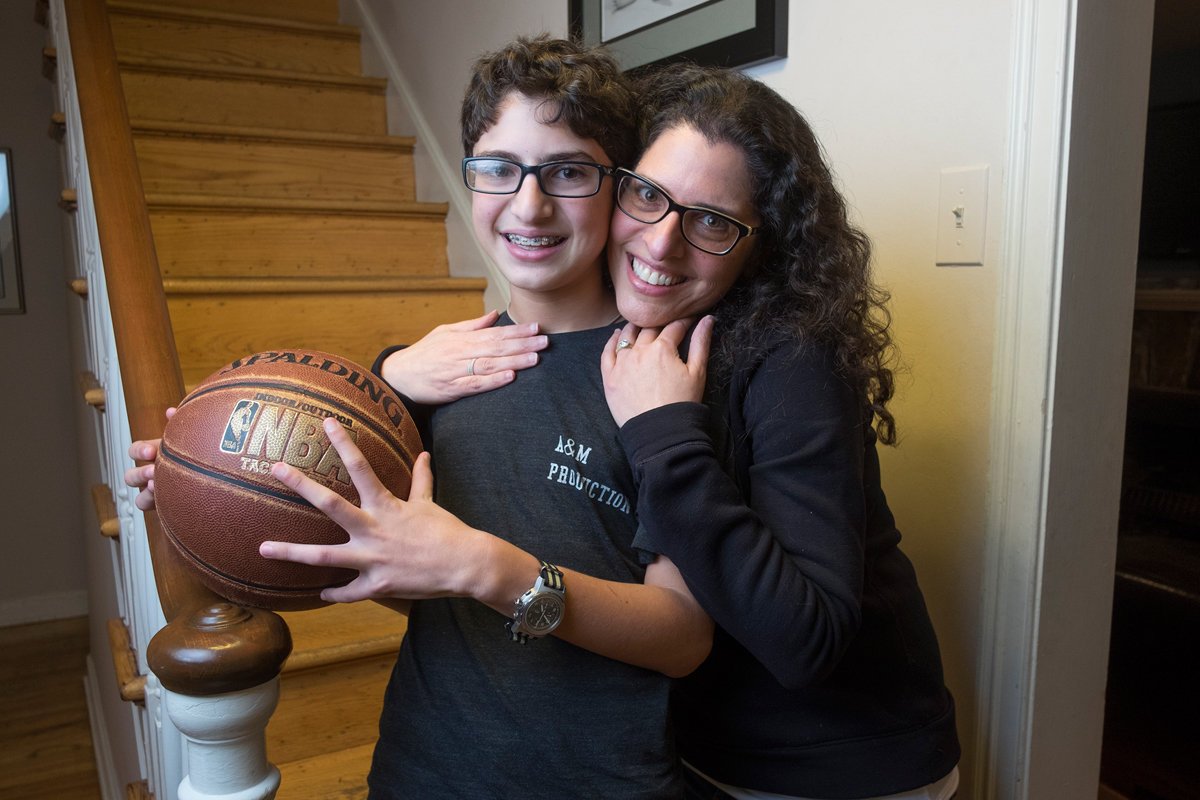
    ariYesterday I went to the Wells Fargo Center to watch some kids play a pick-up game of Basketball. It was not your typical basketball game, however, but not because they were playing on the home court of the Philadelphia 76ers. This was a game involving students from Temple Beth Hillel-Beth El in Wynnewood and the Al Aqsa Islamic Academy of North Philadelphia, the Bar Mitzvah project of  a young man named  Ari.

    Kids got together to play ball. The kids played on blended teams. So this was not a competition between schools or even religions. It was a pickup game of basketball.

    I met Ari and his mom, Meirav, and chatted about how amazing this was. I then spoke with my friend Rabbi  Cooper, Senior Rabbi at Beth Hillel about this extraordinary achievement who was spending far more time teaching court-side than coaching.

    It was an extraordinary achievement indeed. No, they did not create world peace nor did they resolve the Mid-East conflicts (any of them). They played basketball together and met each other on the court to play and then perhaps to talk and begin the process of getting to know one another. This is one of the most amazing things that we can do: play together, talk together, see an opportunity for a relationship with someone we had not considered before.

    It is ironic that the kids played on the court without problems, but persistent condensation issues afterward forced the professionals to cancel their game for that evening. What might the message be in this?

    I can only hope this game has legs; that the conversations that began on the court yesterday continue. Meirav, Ari’s mom, told me that her daughter’s Bat Mitzvah project in two years would be another such game. We can only pray that the message of coming together continues both on and off the court and we do everything we can to support it.

    Mazal Tov Ari, on your Bar Mitzvah and this wonderful event!

    For those who did not see the press report, here is a link:

    http://www.philly.com/philly/news/20161130_For_this_bar_mitzvah_boy__Jewish-Muslim_friendship_is_no_long_shot.html


  • Life Lessons from my Sukkah

    Sukkot 5777

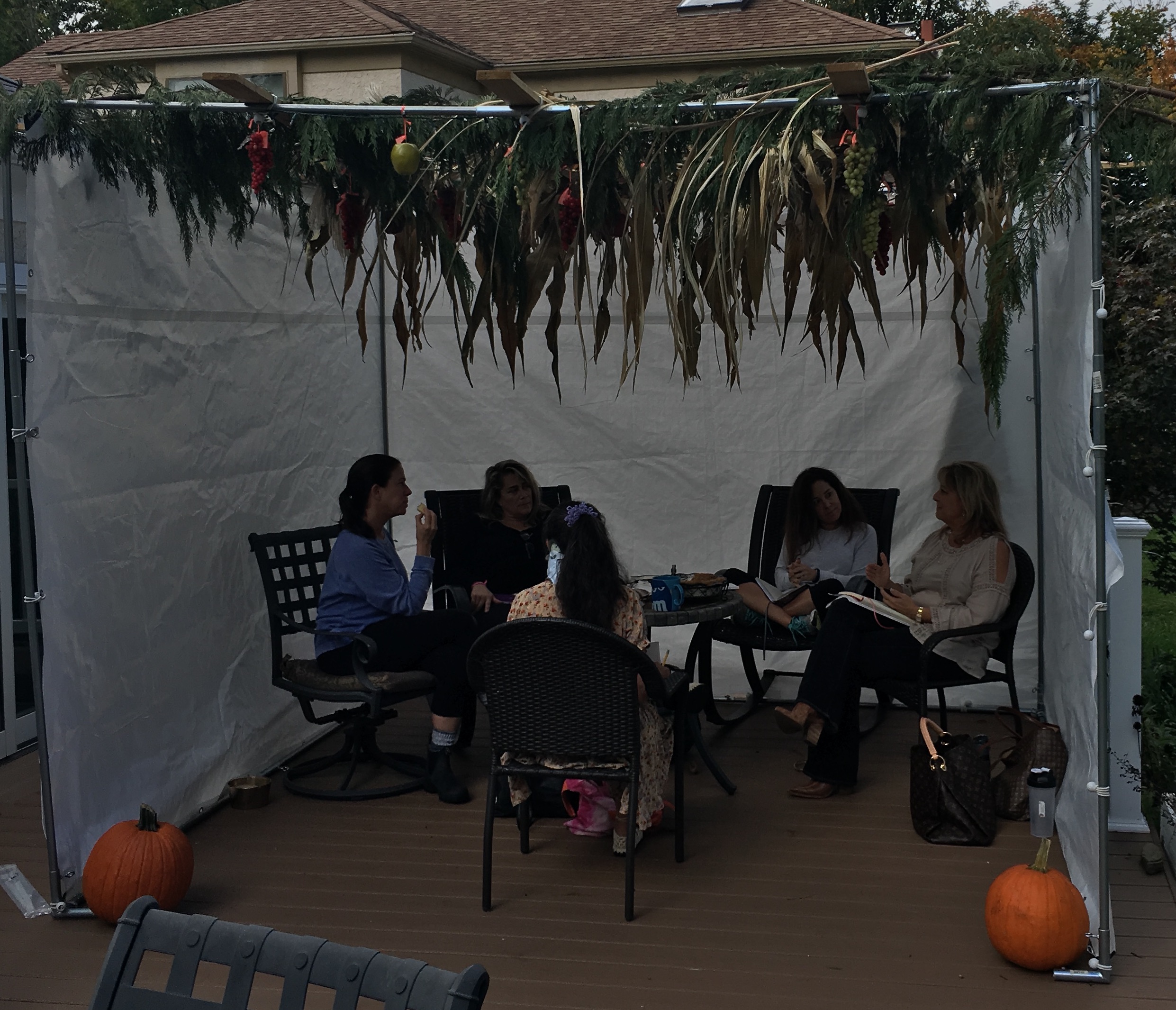
    sukkah5777I didn’t know it at the time, but Friday evening would be our last time in our sukkah this Sukkot. Our sukkah was beautiful. We decorated with branches from our trees and grasses in our yard, corn stalks from a farm, fruits, vegetables and string lights. We brought our guests into the Sukkah to welcome Shabbat, the wind was kicking up, it even blew out the Shabbat Candles after we lit them and said the blessing. Later in the evening, the wind picked up even more and the rain began. I loosened the straps on the sides to let the air to blow through, but that was not enough. In the morning I found the sukkah partially fallen, leaning against the house, metal support bars of the frame irreparably bent. Our sukkah succumbed to nature’s force and had collapsed.

    What an amazing metaphor. I pondered how the sukkah was like my body. Yes, I was beautiful once too- well maybe not. But I pulled my hamstring the other day at the gym trying to exercise and maintain my health. I realized that things don’t work the way they used to. Given also that a focus of my rabbinate is in the area of bereavement, it is only natural to ponder mortality.  I saw my sukkah as a representation of me.

    I like to think I am still vibrant both mind and body, however as noted, different from when I was younger. And although parts of my body have broken before, they have always healed. The bent poles of my sukkah remind me that this may not always be so. But like the walls and roof of a sukkah, I wonder how much of the world do I let in? Do the walls I have built during my life still permit the outside to enter like the Ushpizin we welcome each evening of The Chag (holiday)? Or perhaps have my openings shut, the walls and ceilings becoming thicker and less permeable, have I become less open to new experiences, learning, and growth?

    It is an important question as I do my work and live my life. For it is precisely these things that keep me progressing and figuring out how the new experiences,  with younger people, the unaffiliated or under-engaged Jews can be viewed using Jewish meaning to give them context and meaning. This lies at the heart of developing wisdom and sharing it with others to create meaning particularly when to do so is a challenge.

    The wisdom of Ecclesiastes runs through my mind. There is nothing new under the sun. All that is and all that was has already happened. Pushing this biblical wisdom even further wrapping it into Einstein’s theory of space and time, perhaps Ecclesiastes understood that the infinite God understood that everything, even my own life and death, has already occurred. The end that will come in my linear three-dimensional world has been in the realm of the Eternal One. A frightening thought perhaps that could lead to the despairing claim that “All is but Vanity!” Drawing from my economics background, “in the long run it doesn’t matter.”

    But we don’t live in the long run. We live in life’s moments. The day-by-day set of experiences that are our lives. My sukkah was destined to fall down perhaps and the Being of another dimension knew this to be (or maybe already to have been). But Naomi and I put up our sukkah, we invited guests inside and had wonderful times with our honored guests. We made meaning in the moments we had together and drew on another part of Solomon’s wisdom, to live each moment and infuse our lives with meaning, planning for tomorrow even if tomorrow is not a promise but only a hope.

    Sukkot has given me the chance to be in the moment appreciating the fragility of life while also celebrating the gift of life. Tomorrow the metaphor continues as we enter Simchat Torah and start the cycle all over again, although this time with the wisdom of another year’s worth of living.


  • The Godliness of Forgiveness- It’s all about me


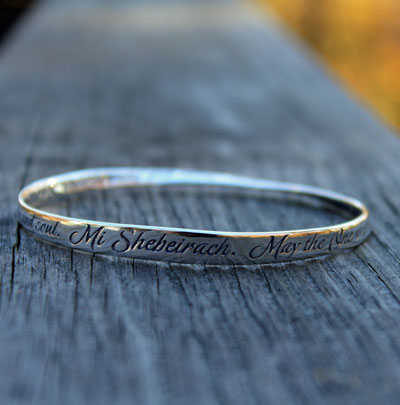
    mobiusbraceletHow do I forgive? I am supposed to use the month of Elul to prepare for Rosh Hashanah. It is a time of introspection, to reflect on how I can improve in the year to come by looking at where I went astray in the year past. I need to seek forgiveness from God as I bare my soul. But our tradition teaches I cannot ask God for forgiveness until I have sincerely attempted to reconcile with my fellows. It all starts and ends with me.

     Who among us does not deserve an apology from someone who has treated us improperly? But am I ready to welcome that apology if it comes? And if it does not come, am I prepared to reach out and help those who do not know how to ask for forgiveness and how would I do that? It is very hard to rise above my pain and hurt to embrace the humanity in the other.

     And what about those whom I have wronged? Can I find it in myself to be contrite and ask forgiveness from them? Pride and principle often get in the way, blocking what could otherwise be a caring relationship. Even when I sincerely believe I am right, standing on principle creates an impasse. Then I must consider whether it is more important to be right or to be the one who can reach out and embrace someone I care about.

     Finally and very importantly is forgiving myself. I look inside and see my shortcomings, the places where I did not do as I hoped I would, the places where I am shackled by guilt, immobilized by my personal sense of shame or deficiencies. I am the victim of the harshest critic of all, me. What can I do to finally say I am sorry; I forgive me so I can finally begin to heal from my wounds and move forward, not place a bandage over them. Keeping them locked inside only chains me to a past filled with hurt.

     Sins and transgressions are big and small. Whichever they are, my inability to move beyond them and sit in judgment places barriers between us. They estrange me from those I love locking me into a narrow place. If I can move beyond the pain and hurt, however, forgiveness can be a transformative experience. It is quite difficult but when I truly forgive, a great weight is lifted from me. Barriers that once separated fall and I can reunite with those who had become distant whether it is another I love or the child within. If I can temper “din” (judgment) with “rachamim” (mercy), then I am acting in a more Godly, selfless way. And perhaps it is through these acts of human forgiveness I might attain forgiveness from the Eternal One.

     Perhaps the first step on this path is through our traditional MiShebeyrach prayer for healing. May the one who blessed our fathers and our mothers bless those in need of healing with a refuah shlemah, a restoration of completeness. I will speak the words for them and for me too.

     May this be a year of health, wholeness, and healing for us all~

    L’Shana Tova!

  • Elul and Mercury in Retrograde- what happens when Astrology and Judaism collide?

    MercuryRetrogradeMercury is in retrograde. From August 30 through September 22, Mercury is moving backward in the sky from our perspective. This is the third of four such occurrences this year according to the Old Farmer’s Almanac. Astrologers say this event is supposed to mark a time for reflection rather than new action. This is not a time for decision-making. Instead, we are to assess priorities and plan to move forward by reviewing projects and determining where to appropriately focus energy.

     Elul is the month preceding Rosh Hashanah. It is our Jewish time for deep reflection and repentance as we prepare for the High Holidays. For many of us, this is our period of Teshuva, the “return to God” that requires seeking and granting forgiveness as we strive to understand where we went astray and how we can get back on the path of living a meaningful righteous life.

     I’m not suggesting that there is some equivalence between Astrology and Judaism or that the early astrologers were Jews. But I believe that making time to take stock of whom we are is of utmost importance to finding fulfillment. The unexamined life is not worth living, so teaches Socrates in Plato’s Apology. So many of us are consumed by the day-to-day issues of living, sometimes, it is all but impossible to step back and assess where we are and where we are going.

     In life we often awake to find we have been blown off course. Anyone who has ever piloted a plane or a boat knows navigation is an ongoing process of course corrections, so too life. Currents and tides constantly push us off course and our aim has to compensate if we are ever to arrive at our destination. For some of us, we don’t even take the time to determine what our destination might be. For all of us Elul is an appointed time to engage in the process.

     As we approach these High Holidays may you find forgiveness for those who have offended you, be forgiven by those whom you have offended and find your true path of meaning, relationships, and fulfillment.

     L’Shana tova