Tag: relationships

  • Sacred Work in Pittsburgh

    Sacred Work in Pittsburgh

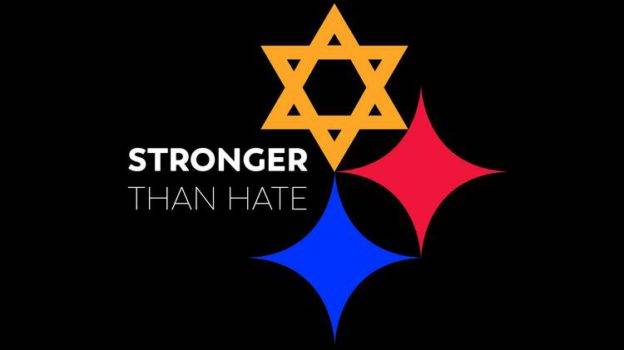
    I have just returned from a deployment to Pittsburgh with the American Red Cross.

    For any of my colleagues who have experienced grief, the trauma experienced by the Pittsburgh Jewish community is similar, but orders of magnitude larger.  Despite all of the wonderful Jewish institutions that make up the community, Federation, JFCS, the JCC, and all the synagogues, the event was bigger and more catastrophic than anyone could have imagined would happen in 2018.  The American Red Cross (ARC) stepped in to help as it does in all disasters and I was called upon to join in the effort.

    I joined the Disaster Spiritual Care Team of ARC as a volunteer watching their work in the aftermath of Hurricane Harvey.  As a rabbi, I believe this is important and sacred work, and I needed to be part of the team that did that.  So, when the call came to assist my own people in the wake of this unspeakable horror, I knew I had to go.

    For the Pittsburgh massacre, Rabbis were selected because of the Red Cross’ desire to work with the Jewish community; we know the “language” and are the people to help in creating a liaison, bridging more effectively to the community to share the wealth of services offered with those in need.  We focused on communications with institutions and then reaching out to individuals as was possible.  It is impossible for two rabbis to care for a community of almost 50,000, so we worked to create connections.  It was also clear that we needed to support the rabbis and others who were desperately trying to serve their people while struggling themselves to find strength and succor.   Much of the healing work that needs to be done won’t be accurately assessed for some time. As others have noted, this past week we have been sprinting at the beginning of a marathon.   And furthermore, the nightmare and the work of healing goes far beyond the Jewish community, all of Pittsburgh suffered this trauma

    I was there to help bury people, say Kaddish, attend services and vigils and do what I could, as meager as that sometimes seemed.  I held people and I cried (a lot), but mostly I was just present- an empathetic embrace to those in awful anguish and pain to let them know they were not alone in their time of extraordinary grief.

    There are multiple levels to this event, like ripples from a stone hitting the water.  The families, the congregations, the Jewish Community, the people of Pittsburgh, Jews across the country and the people of America, each has been touched by these murders in Pittsburgh.  Each community needs to understand how it has been impacted and how we relate to the others who have also been impacted.  It is complicated and it will take time.

    The Jewish Community came together. The denominational differences that often separate us were set aside. Funeral services were packed to overflowing as were Friday and Saturday services.  And so importantly, we were not alone.

    I was heartened to see the greater Pittsburgh community response to this tragedy.  The outpouring of love, the sharing of the horror, clearly said to me that the Jews of Pittsburgh are part of the community of Pittsburgh and the community is appalled by this horrible thing perpetrated on a part of it.  This sense of unity is an extraordinary and wonderful counter-response to the feelings of isolation or the existential threats that members of the Jewish community may be feeling.

    Many others from other faith traditions joined us.  For example, I spent time with a family of the Bruderhof tradition (an Anabaptist denomination) who I met at a funeral service held in the Reform Temple Rodeph Shalom and again at the Shabbat morning services held at the Conservative Synagogue Beth Shalom. They were there to be with us.  I found some comfort in expressing my deep appreciation for their presence and helping them to understand our siddur, the readings from Torah and Haftarah, and some of the common themes of our faith traditions.

    The Moslem community raised hundreds of thousands of dollars for the Victim’s fund.  They also offered to create a physical wall of people to surround synagogues in a show of solidarity and protection.  All faith traditions joined with us in solidarity as this was an assault against all of us.  Our common humanity brought us all together.  It was an inspiring message of hope and love.

    Rabbi Jeffrey Myers has been remarkably eloquent speaking to the community with important messages as a witness to the horror and as one who has been harshly criticized by some for his welcoming of the President to Tree of Life Synagogue.  Rabbi Myers taught in his D’var Torah this past Saturday that if he was to truly practice the values we preach, he was obligated to respectfully welcome the President of the United States into his Jewish home.  This also gave Rabbi Myers the opportunity to directly state to the President the need for him to stop the hate speech.

    In the midst of it all, the Kiddush after Shabbat services was used to share Sheva Brachot, the recitation of blessings to a wedding couple.  For one of the extraordinary Pittsburg rabbis and his wife were just married.  We sang the blessings and then everyone burst out in Od Yeshama and we started to dance.  Watching my two new friends lead the community in joy and celebration of the hope represented by their marriage brought all of us to our feet.  Her unbridled exuberance made all of the pain disappear for a short while.  I cried as I clapped and sang as hard as I could.

    People are quick to explain why this happened offering ideas that are more pronouncements rather than thoughtful quiet dispassionate analysis.  I suggest that it is premature to try to address the question why.  It is deeply layered and complex and we are still in the midst of the acute trauma making such conversation and inquiry too highly charged and all but impossible.  Instead, as a thoughtful colleague in Pittsburgh suggested, we might instead look towards the question how.  How do we move forward in the aftermath is a question that will yield more pragmatic answers that will help those struggling to get through.  We will do better to engage in those conversations for now.

    The people of Pittsburgh are strong and resilient.  But they are hurting badly and deeply.  In the name of Klal Yisrael and as fellow Americans, we have an obligation to be there for Pittsburgh’s Jews as the immediacy of the trauma and shock wears off and the struggle to heal begins.  We are forever changed by this.  May we learn constructive lessons so that those lost as true martyrs in the Jewish tradition will not have died in vain.  May their memories be for a blessing.

  • Sadly, It is all about the Money

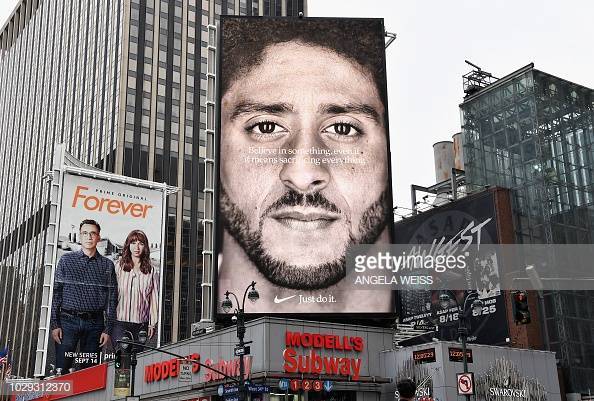
    ANGELA WEISS/AFP/Getty Images

    The current uproar over the new Nike ad featuring Colin Kaepernick has served to wonderfully pit right against left in another puerile chapter of the culture wars.  Instead of seriously grappling with issues in our country we’d prefer to scream at each other about whether one side or the other is sufficiently patriotic.  The sad truth is that the ad is really about selling sneakers and generating buzz.

    The group that is feeling offended by this ad is not the Nike target demographic.  The people that align with Kaepernick are the demo that Nike wants to sell their product to.  The ad is provocative on many levels.  That is precisely what is intended.  The advertisers did their job and now everyone is talking about it.  The increased sales bear this out.

    Colin Kaepernick is portrayed as a champion.  Whether Kaepernick is a villain, hero, or even heroic victim is beside the point.  That is unfortunate.  But there is another agenda.

    The NFL is concerned about generating revenue and retaining fans.   Kaepernick found a means to make a living as a spokesperson.  The President is using the opportunity to rally his base.  If any were interested in addressing the issue, this is an extraordinary opportunity to join in the fight for the virtues that those who kneel and those who stand both embraces; namely a country dedicated to life, liberty, and the pursuit of happiness.  A nation of laws that stands for equality and justice.  The vast sums of money generated by the corporations (NFL and Nike) could underwrite a campaign to get healing conversations started, patriotic conversations that address the issues of inequality that continue to keep us from fully realizing the American Dream and perhaps even help create positive change.  And the President could use the power of his office and his strength as a marketer to be the convener to make it all happen.  But unfortunately, we prefer to revel in the buzz.

    Buzz on!

  • Living a Meaningful Life, we begin Elul with Parsha Re’eh

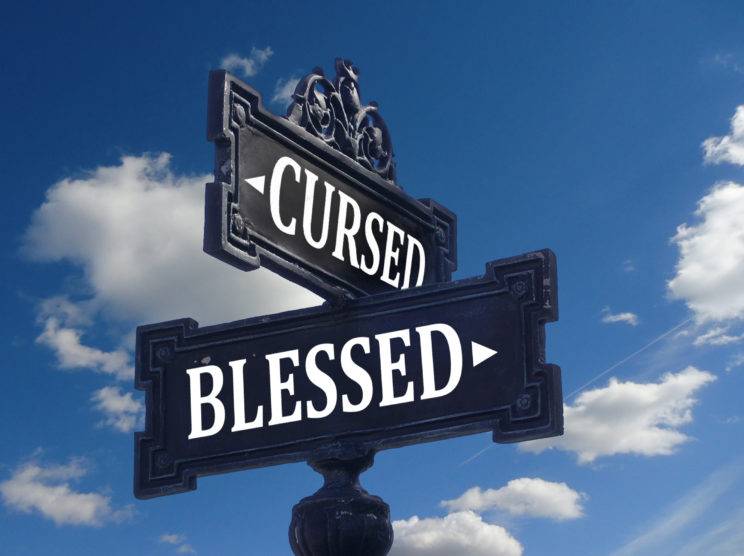
    In the Torah, Moses sets out a choice for us this past week.  Blessings and curses.  It is a deceptively easy binary choice.  Given good stuff or bad stuff as alternatives, it seems like a no-brainer.  I opt for the good stuff!

    But it’s really not so simple.  For what does that mean for us to choose the Blessings,  especially to us in the modern world?  That is the fundamental question to consider in the month of Elul, leading up to the Yamim Noraim, these special High Holidays.  Perhaps we, like our ancestors, are metaphorically also on the verge of entering into our own Promised Land. It is more complicated than: Choose Blessings and you go in; Choose Curses and you stay out.  Because it is about more than entering The Land; it is about living fully while there, possessing it and becoming one with it.

    During Elul, as we prepare for Rosh Hashanah and Yom Kippur, we ponder the choices we make in our lives.  As we reflect on the year past, we see successes and failures. And as we look ahead, we use this understanding to chart our course.   Are we on the path we want to be on, the one we should be on, the one we need to be on?  And presuming we have been blown off course by the winds and currents of life, how do we right our ship and get back on our path?

    Elul is our time to consider these questions.  Before we can ask for forgiveness we need to know where we went astray and maybe understand why.  Before we can ask to be written in the book of life, we need to know what it means to choose a life of blessings so that this coming year brings us meaning and connection.  Then we are able to approach the Divine to make things right and set a course forward for a year where we deliberately choose blessings, knowing what they are and how we might pursue them.

    L’Shanah Tova!

  • Shabbat Shalom on Shabbat Nachamu

    We Rise- an inspiring song by Batya Levine sung by my friends at the Interfaith Music Project of Philadelphia.

    Shabbat Shalom!

  • Shabbat Shalom

    An interesting way to welcome Shabbat from 8th Day, an American Chasidic pop-rock band from California.

    Enjoy and Shabbat Shalom!


  • How will you look back on your life?

    As we begin the last book of the Torah, Moses confronts this question in Parshat Devarim.

    Even the title begs the question.  Devarim, what are the words and things?   What is the story we will tell to those we hope will carry it in their hearts after we are gone?

    For most of us, this requires us to project forward in order to look back.  But it cannot be make-believe; our legacy will be based on the life we live.  The things we do will be the basis for the memories our loved ones will recall.  How we touch their lives will define whether they can celebrate having had us in their lives.  Our legacy will not have the great accomplishments of Moses, of course as our tradition tells us, there has never been another like Moses. Our legacy will be the impact and influence we have had on our loved ones.  But will we be the best version of ourselves?

    The story is told of Reb Zusya, the Chasidic Master, who struggled at the end of his life.  He awoke panicked from a dream about the prospect of entering Heaven.  His students tried to support their beloved teacher claiming he was indeed great like Moses and Abraham.  Zusya replied that he knew that God would not compare him to Moses and Abraham but instead, God would ask why Zusya wasn’t more like Zusya?

    If we do not live up to all that we can be, we do not realize our full potential.  And importantly, we let ourselves and our loved ones down.  Only we can write our story by living our lives as best and as fully as we can.  Then we will truly leave a worthy inheritance, a life of merit and honor, of love and accomplishment that will touch the hearts of those we care about.


  • I/Thou and a parking ticket

    I saw the meter maid stepping towards the back of my car to get license plate info.  The meter had expired a few minutes before and like clockwork, she was there at the ready to write the ticket.  I called out “Excuse me Ma’am!” and started to cross the street hopefully catching her in time.  As I stepped off the curb, I felt a snap in my knee and down I went.  The pain was excruciating.  She looked up and saw me.  I knew I had to get to her so I limped over as best I could, needing to catch my breath before I could say anything.  She reached out to me to help me and asked if I was okay.  We started to talk and she made it clear that she would not leave me until I was safely in my car.

    She went from “meter maid” or “traffic enforcement officer” to caring human being.  Actually, she was a lovely caring human being all along.  It took me a while to realize that.

    I do not know who she is.  I never got her name.  I reached out to the Parking Authority to try to find her and say thank you.  They likely do not get too many of those kinds of letters.

    And as I was sitting in my car, gaining my composure, I could not help but notice the person a couple of cars behind me frantically waving a ticket in his hand as he ran towards a confrontation with my good Samaritan.

    So thank you my nameless good Samaritan.  Thank you for sharing your humanity when I needed it.


  • What to do

    In response to the horrible acts perpetrated by the American government, people are planning marches and demonstrations against United States Immigration Policy and the Trump Administration implementing said policy.  But there is a very important point to remember: Trump was elected President.  The members of Congress who actively support his policies, including this one, were also elected.  Only through our electoral system can we affect change.   Marches might feel good, but they are ineffective against those who hold and exercise raw unbridled power, using a politics of division to keep their minority base firmly in control.  To prevail in the fight we must wage, we must use politics to change those governing and the policies they pursue.

    The wholesale assault on heretofore fundamental American principles of decency and values combined with the message of divisiveness rather than unity are the primary domestic issues giving license to the basest instincts of self-protection and self-promotion.  These are narrow and short-sighted attempts to impose the will of the stronger upon the weaker.  We must convince the American voting public that there is a better way.  And only through galvanizing the vote can our ideas triumph.

    If we are to do anything of enduring value we should register people to vote and then make sure they do so.  People like James Chaney, Andrew Goodman, and Michael Schwerner, and John Lewis should be the great iconic figures that inspire us to action because never has there been so much at stake.

    March and demonstrate, but do not be surprised if the sun rises tomorrow in the East and the Trump Administration continues its policies unabated and unaffected. For that alone will not create change.  Actively engage in the political process and perhaps our system of government will again offer a constructive message of hope.


  • On the Ramparts

    The appalling misuse of the Bible to defend stripping children from their parents at the border adds insult to injury, something I would have thought all but impossible given the heinous underlying act.  It makes the indefensible downright obscene.

    Whatever our personal position on strong border controls may be, this inhumane action undermines our most fundamental values.  We are a nation of laws, but very importantly we are also a nation of hope.  Our laws can be applied humanely with mercy and compassion.  This egregious violation of our values is a symptom of a growing cancer in our society.

    In an age of increasing division and antipathy, this moment needs to serve as a tipping point.  Can we aspire to be the light unto the other nations, leading by example or must we retreat building walls that separate us in the name of protecting us?  History shows us time and again that the latter approach ultimately fails.  And by the time the walls are ultimately breached, what found inside is a hollow shell of the greatness that once lived.

    Our greatness comes not from the domination of a ruler, or even the majority.  Our greatness springs from America’s ability to protect and defend the minority when the majority prevails, exercising its will civilly and compassionately.

    To those who find the actions on our borders justifiable, shame on you for your heartlessness.  To those who find these actions unjustifiable, our thoughts must be backed by action that will cause change.  Otherwise, we too will be responsible for the horrors wrought upon the children.


  • Shabbat Shalom

    This Shabbat I wanted to share Give Me Your Tired, Your Poor, Irving Berlin’s musical rendition of Emma Lazarus’ poem at the base of the Statue of Liberty, sung by the Texas Children’s Choir.

    As you listen to this song, children are being detained and forcibly separated from parents at our border.  Regardless of your stand on illegal immigration, this inhumane and cruel act is nothing more than a blight on the greatness that is supposed to be our nation.  Demand Congress act immediately to spare children from this.

    Shabbat Shalom