Tag: relationships
-
Shabbat Shalom
 It’s National Be Nice to In-Laws weekend!
There is a wonderful commercial on the airways. The “Good Hands” insurance folks have Tina Fey driving with her mother-in-law, aka Mayhem, portrayed by Dean Winters. It is a caricature of the tensions intrinsic in this relationship. But it is not always so, as we see in this week’s Parsha, Yitro. This week we see how the wisdom of the elder father can be shared with the son. Yitro is transferring knowledge borne from the experience of leading others, he is a Midianite priest after all, to Moses, a relative “newbie” to this challenge.
The wise should share their wisdom. That is straightforward enough. But it is in the transferring that things can often be complicated. If I try to impose my wisdom, it likely won’t be heard, shunted aside instead of embraced. I must find a way to communicate successfully, requiring understanding and sensitivity. And on the other side of this relationship, the one benefitting from wisdom needs to be ready for the learning. Jethro had to listen and find a way to connect with his son-in-law, and Moses needed to be overwhelmed enough to realize he was in over his head and was in a desperate place. Only then could that wisdom be shared.
Both sides of the relationship are challenged to set aside ego and power so that they can find a place to work together for a common purpose. How timely a message for all of us.
Shabbat Shalom!
(I have been away for a few weeks traveling in Israel and Rome. I bring home many new experiences I look forward to sharing soon.)
-
A Thanksgiving message from Toldot
 So, it turns out that maybe mine is not the only family described as dysfunctional. Family dynamics have always been difficult. Toldot shares unique stories of the tensions that can exist, based on things like sibling rivalries, deception, favoritism, and selfishness.
We can see ourselves and our own family of origin in Toldot, even if not quite as extreme as portrayed here or in other cultural storytelling such as Game of Thrones, Succession, and an almost countless list of movies and literature. Any story involving family draws on the deep well of our own experiences creating drama that imagination alone could never rival.
I am blessed to have a special brother. We have found each other again after too much time apart. He is a person I admire and respect as well as love, but it took a while for me to mature enough to put the sibling rivalry in its proper place and embrace him. Families are complicated.
The members of a family are individuals, each with distinct personalities and gifts. Each of us is different. But, we can still be united in the bond that is family. It is said that Blood is thicker than water (a saying traced back to 13th century Germany)[1]. I always knew that my brother would be there if I needed him, as I would for him, regardless of where we were.
Isaac, Rachel, Esau, and Jacob all had parts to play in the strange stories we recount in Toldot. The drama played out in ways that left indelible stains, scarring people like blood on cloth. Overcoming bad actions or even bad actors is a great challenge. This is a crucial message of this week’s Torah portion. Although we are unable to control things happen to us, we can control how we respond to them. Events and life experiences can shape our view of the world and our relationships. How we understand those lessons will determine our course.
This Thanksgiving, I am grateful for the blessing in my life. Today is not the day to dwell on past disappointments (unless your football team loses perhaps). We can approach today with an open heart. Although my brother and I will be at different tables, he and his family are present in my heart. I hope that we all find ways to come together united in friendship, fellowship, and love.
Happy Thanksgiving!
[1] https://en.wikipedia.org/wiki/Blood_is_thicker_than_water
-
Shabbat Shalom
The whole world is a narrow bridge, but do not be afraid; you are not alone.
These are the immortal words of Reb Nachman of Bratslav. Rabbi Yosef Goldman put these words to new music creating an inspiring message, a beautiful way to welcome Shabbat.
Shabbat Shalom
-
Chayei Sarah-Life lessons for us all
 “And the life of Sarah was 100 years and twenty years and seven years, the years of the life of Sarah”.
It would be easier to say she died at the age of 127. But we would miss an important message. The text seems to ask us to examine Sarah’s life, not that it was over, but that it was lived- there were distinct phases to her life, each of which is worth examining and celebrating and using as a guide for us to navigate our lives.
Parshah Chayei Sarah goes on to share the story of her death and burial. But the opening is a peek into the life of an extraordinary person, our Matriarch.
We also have distinct phases in our lives. For example, each of us has a childhood, young adulthood, and that period known as middle-age. But each of us is unique. Sarah’s three phases are written at the end of her life. So, we look back and see how her story unfolded and the legacy she leaves for the generations to come. There is another implication to this as well; we can start a new chapter in our lives. It takes courage to change course midstream deliberately, but it can be done. We are not bound to follow a path. We can make changes that will bring more profound meaning and connection. Some changes are subtle, some are more radical, perhaps not as drastic as Sarah giving birth at 90, but radical none-the-less.
We can look forward to what might be rather than only looking back at what was. Sarah scoffed at the idea of becoming a mother at her age. But she was a protective nurturer of the next leader of our people, her son Isaac. The future possibilities seemed incredible when they were presented, but it became her reality. So too, with us. May we have the courage to reach beyond what is easily within our grasp, and perhaps we also will realize what had only been a dream and make it real.
-
Vayera – What did Abraham hear when God spoke?
I, like so many others, have struggled with Abraham’s responses to God in the stories of Vayera. Why was our Patriarch eager to confront God and bargain to save Sodom and Gomorrah and then be so passively accepting of God’s command to kill Isaac? Abraham responds to what he heard, a message filtered by his own biases and his perception of God, the other in this relationship.
In the Akedah, God instructs Abraham in painful detail, “Take your son, your only son, the one that you love, Isaac, go to Moriah and offer him as a burnt offering.” God is carefully staking out Abraham’s test of faithfulness. There is no room for a conversation. The Akedah is so intense; it is almost impossible for Abraham to catch his breath, let alone say something in response. Although there is no conversation, the ensuing language makes it clear that the next three days, Abraham is thoroughly deliberate traveling to Mt. Moriah. Abraham cannot deliberate with God, but it is clear he is consumed in his mind by what is to come.
Sodom and Gomorrah were decidedly different. God deliberates about telling Abraham His plan, which included assessing the situation on the ground, framing an invitation to a conversation. Abraham joins in, and God encourages it by continuing to engage Despite the trepidation of arguing with the God of Justice about acting justly, Abraham bargains to lower the number of righteous needed to spare the city until he reaches what he perceives as the best he can do, 10- a minyan. The negotiating ends with the best deal Abraham believes he can achieve.
How we hear and understand something sets the table for how we respond to it. Why Abraham feels he has license to argue in one case and not in the other remains one of the mysteries of our text. But it is all too familiar territory for all of us. Each of us responds to what we think we have heard, rendering very different responses, even to the same person, based on the facts and our emotional and situation, among other factors.
What do we hear when another speaks? Have they spoken undeniable truth, or is it an invitation to engage to achieve a better understanding of each other? Knowing when to speak and when to be silent is among the more difficult decisions we make. Grappling with this issue is as hard for us as it was for Abraham. Our tradition encourages us to confront it.
The practice of Mussar works hard at getting us to understand the virtues, or middot, that drive both the person with whom we are in relationship and us. We learn that the successful relationship requires that we appreciate the middot are working on both of us so that it can be complicated. We often do not get it right, but we stand a better chance of engaging in meaningful dialogue when we try. Abraham’s inconsistent reactions to God is a lesson with a timeless message, certainly one that is pertinent to today. Torah is a profound understanding of the human condition. The issues Abraham and all the characters of our tradition confront are genuinely human issues, as relevant today as they were when first written down. Let’s try harder to listen better to understand each other.
Shabbat Shalom
-
Whose side would you be on?
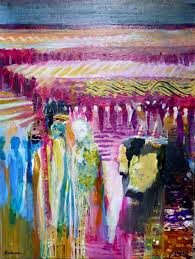
by Yoram Raanan As I engaged with Parshat Korach this time around, I found myself asking an interesting question: If I were there, which side would I have been on?
With the benefits of Torah and hindsight, it is clear that Moses’ was the winning side of the argument. Moses did more than actually prevail, God had Korach and his followers swallowed by the earth. But up until the final moment, Korach was making a persuasive argument about the appropriate leaders of B’nai Israel. Would I have been swayed?
Korach makes a compelling case. He charges that Moses and Aaron have usurped power that rightfully does not belong to them. Now that the Hebrews are free, they should have right leaders, the Levites for the priestly matters and the descendants of Reuven as the true political leaders of the people. We believe that Korach had ulterior motives and saw the opportunity for personal power, but he made a cogent argument, on the surface at least, and many people were likely swayed. As uncomfortable as it might appear, initially there were likely good people on both sides. But just because an argument sounds good on the surface, does not mean it is acceptable without first digging deeper.
The return of leadership to Reuven is in keeping with the concept of primogeniture. And the return of the Levites is consistent with their status as the priestly class. But even before God stepped in placing Moses and Aaron as the leaders, we have seen primogeniture is not automatic and leadership is based on character and deeds before anointing takes place. Before anyone could ultimately align with Korach, a deeper understanding of Korach’s motives and the relationship to the Divine had to be probed. It was not enough that Korach was persuasive. It was not enough that Korach’s agenda aligned with our own. We are also obligated to think in terms larger than our own self-interest. In other words, we are responsible for determining what is right for ourselves and for the greater good and taking a stand toward making that possible.
The people were fearful. Moses ascended the mountain and the anxiety of a slave people feeling abandoned when he did not return was overwhelming. The mob mentality took over and Korach exploited that. Unfortunately, the people went astray. But that could not absolve them of the responsibility to return to rationality and make thoughtful correct choices. I too might have been swept up in the initial emotions in the moment, but then it would be incumbent on me to soberly reflect on whether I was indeed pursuing the right course. This is the burden of freedom.
But there is more to this story, and it gets even more interesting. There is actually a third side to the situation. What about the people who did not take sides? Usually, in arguments, there are the traditional two camps, but there is also a third group. This group remains uncommitted to either side, preferring instead to wait on the sidelines to see who actually wins. And then they throw in with the winning side, never losing and also never risking. These people are more insidious than the losing or wrong side Doing nothing is feckless at best, or likely even more conniving than Korach himself. Nechama Leibowitz’s commentary on Korach references our Sages condemning this kind of opportunistic behavior (Korach 3, Studies in BaMidbar).
Driven not by a belief in something but instead a desire to be on the winning side, to survive and thrive without ever risking anything. These people are more than rootless, they are not to be counted upon for loyalty or sacrifice for a greater good. These opportunists undermine any cause that requires a measure of devotion, as they are devoted only to themselves. They would be the voices that would undermine the report of the spies, they might be among the spies themselves, not appreciating the opportunity offered by Joshua and Caleb, only seeing the personal risk involved. In many ways, this group is the more dangerous one. Focused only on themselves, they fight for nothing. Sometimes it is apathy, sometimes it is selfishness, but it always keeps us from moving forward towards what could be, mired instead in the safety of being nameless in the crowd. Hoping to land on their feet, they are little more than mercenaries, fair weather friends who ultimately cannot be trusted to do anything other than enjoy the fruits of someone else’s labors.
At the end of the day, there was only one side-to align with Moses in service to the Divine. Today these issues confront us in sometimes subtle but often blatant ways. Determining who we are as a people and nation require taking an active and bold stand, championing our values, speaking truth to power and speaking truth to those desirous of power.
Which side are you on?
Rabbi David Levin is a second career rabbi. Trained at Hebrew Union College-Jewish Institute of Religion, Rabbi Levin’s rabbinate focuses on outreach to seekers of meaning, bringing Jewish Wisdom to their life journey. Rabbi Levin’s work is trans-denominational, embracing and drawing knowledge from all aspects of Judaism. He is a member of the CCAR (Reform Rabbinical Association), OHALA (Renewal Rabbinical Association), NAJC (Neshama, Association of Jewish Chaplains), a Fellow of Rabbis Without Borders, serves on the regional board of NIF (New Israel Fund), and is a volunteer on the Disaster Spiritual Care Team of the American Red Cross.
Rabbi Levin currently teaches subjects including Ethical Wills Re-imagined, Mussar at the Jack M. Barrack Hebrew Academy, Introduction to Judaism for the URJ, “Kavod v’Nichum, Understanding Jewish end-of-life rituals”, and the acclaimed series “L’Chaim, Jewish Wisdom for the End of Life Journey” with two esteemed rabbinic colleagues. Rabbi Levin officiates in complex lifecycle events including non-traditional burial and works with interfaith couples. Rabbi David leads interfaith trips to Israel through the CLAL Stand and See project. Rabbi Levin is the organizer of Death Café of Greater Philadelphia
Rabbi Levin is a teacher and speaker appearing nationally and is available to be with your congregation.
-
Stand and See

I am excited to share that I am co-leading a group of emerging Christian leaders on a trip to Israel as part of the Stand and See Fellowship. This unique initiative sponsored by CLAL brings seminarians to the Holy Land with a rabbi, a Christian scholar, and a local guide. Although our threesome might sound like the beginning of an amusing joke, this is a serious enterprise designed to connect these future faith leaders emotionally, spiritually and intellectually to Israel and promote a nuanced understanding of contemporary Palestinian life.
Learn moreat: https://standandsee.org/Here is the press release from CLAL:
CLAL is excited, honored and proud to announce our Stand and See Fellowship trip being conducted with Minneapolis’ Luther Seminary. The trip will be co-lead by our colleague and RWB alum, Rabbi David Levin, and Luther Professor, Rev. Matt Skinner Ph.D. Both bring deep experience and intellectual depth to this work — Matt as a professor of New Testament Studies and David with years of congregational, communal and educational leadership — and each is a genuine thought partner whose contributions to Stand and See will be felt far beyond this particular journey.
-
This Christmas, Let’s enjoy what we have

Each year I hear the following:
~Put Christ back into Christmas
~Get materialism out of Christmas
~Don’t Mix Hanukkah and Christmas
Do this, don’t do that; lots of proscriptions and prescriptions. But maybe we might pause and appreciate it precisely as it is.
Christmas is more than the birthday of Jesus. Indeed, as we all know, it is not the day of his birth. That Christmas is more than the marking of Jesus’ birth is not new. The idea that we may universalize the message of the holiday has been at the heart of a Christian message, softly spreading of the values at its core. I have always been taken by the beauty of the idea expressed in John 3:16: “For God so loved the world that He gave His only begotten son…” It is a message of love and light and our world does not have enough of either. The message is enlightening and one I can deeply appreciate even if I do not embrace the theology.
To those who attend mass or use this as a moment of sacred holiness, I stand respectfully quiet. To those who decorate homes with all kinds of festive lights, I drive by like a tourist taking in the spectacle, even grading for taste, presentation, originality, and use of the secret ingredient (with deference to Iron Chef). For those who gather the family to share a meal and time together, I only wish we had more reasons to do that. For those who give gifts, no matter how big or small, I hope that each gift is an expression of love and caring for both the giver and the receiver, bringing both close together.
Christmas in America is beautiful, even those parts some of us just don’t get. But that is okay. So, to everyone, a very Merry Christmas (and a Happy New Year)!
-
What now?
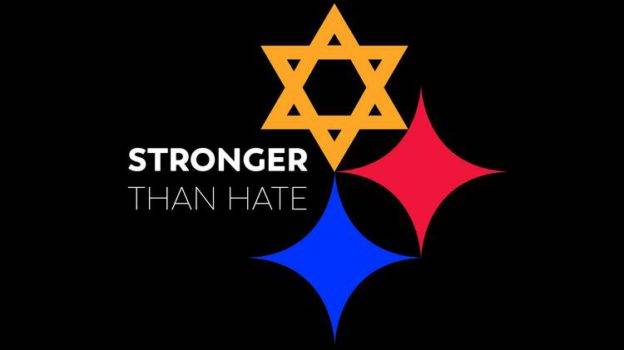
With the marking of Sheloshim for the victims in Pittsburgh and the passage of time, an important question is now being raised, where do we go from here? Or more simply put, What Now?
In the aftermath of tragedy, it is important to rebuild and move forward. In response to a natural disaster, the need to rebuild is clear. Houses, infrastructure, all of the things physicallydamaged or destroyed need to be put back into place, often rebuilt from scratch. But with a disaster of this nature, the rebuilding is not so clearly defined. What is the enduring message we want our rebuilding to carry?
How do we honor the legacy of those taken from us, the outpouring of support from the greater community, the lastingJewish values that have kept our people and our tradition and will continue to do so? Other difficult but important questions to consider include these: Anti-violence training prompted someone to ask how can she run to safety, when saving herself means she leaves behind the more vulnerable? Another question, how do we practice hospitality and welcome people into our Jewish homes (synagogues), when the front door is locked or attended by an armed guard? How can we feel safe when anti-Semitic incidents are not only on the rise, but finding new levels of public acceptance?
There is an urge to rebuild the physical structures quickly, to return to normal and stand up to the hatred with defiance. But there was an important lesson learned from rebuilding lower Manhattan post 9/11. The deliberate but protracted process achieved amazing results. What was no longer is and recreating something from before does not acknowledge the event that has irrevocably changed us. The memorials honor the event and the human tragedy as well as the spirit of courage, hope and love. So too, the Shanksville memorial that I visited on my return from Pittsburgh is a moving and thoughtful tribute to the brave men and women on that fateful flight, United #93. It is prudent to resist the temptation to act too quickly, opting instead for aslower and deliberative process. The result will hopefully become an enduring symbol of strength, courage, hope and love, the best aspirations of our tradition.
The process of recovery will take time. It is a natural desire to try to shorten, if not deny, the grieving process. But our tradition clearly understands the importance of this special time. We grieve and then slowly begin the process of reintegrating ourselves into life with the experience and pain of loss a new part of us. Only then might we gain a new perspective. And from this perspective, we can create something honoring those we have lost and promoting our values for the sake of the generations to come.