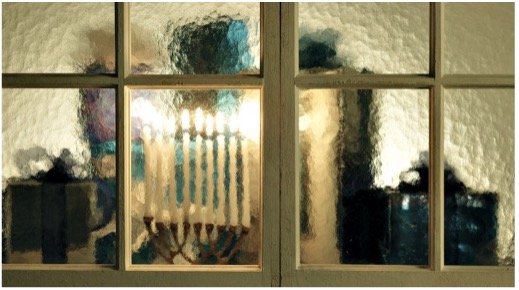
Shabbat Shalom

The traveler’s prayer is shared as we embark on a journey hoping:

May it be Your will that You should lead us in peace and direct our steps in peace, and guide us in peace, and support us in peace, and cause us to reach our destination in life, joy, and peace.

This Shabbat lets pray that our journey might be so and that our destination itself is Peace.

Shabbat Shalom

Thanks to the gifted Marni Loffman.


The Masks We Wear

Courtesy of Vlad Hilitanu

As we approach Purim, I began thinking about our holiday and our celebration, which includes costumes.

I’ve always thought that Reform Jews needed better uniforms.

In our desire to embrace modernity, we’ve adopted the clothing commonly worn by others, rendering us indistinguishable as we blend into the broader culture.

Our more traditional brethren have uniforms—items that set them apart and make them easily recognizable: payot, kippot, shtreimel, sheitels, long black coats, and other garments depending on the particular denomination. Many of us will dress in costumes to celebrate Purim, but we wear masks as part of a wardrobe that reflects aspects of who we are all the time.

The truth is, we all wear uniforms.  It is easy to identify a firefighter, a police officer, or a member of the military; their uniforms indicate that they are part of an elite group with a specific purpose. Those of us who are slaves to fashion publicly claim we are au courant, while those of us who deliberately choose to rebel against such norms wear uniforms that proclaim we are iconoclasts.  These public displays of identity convey that we are part of a group motivated by pride, belonging, or sometimes even fear.  Are these masks, reflections, or projections?

Does our outward appearance reflect who we are inside, who we aspire to be, or how we want the world to perceive us?  When these aspects do not align, it’s essential to pause and reflect on why.  Why do we present ourselves in ways that do not match our true selves?  Sometimes this discrepancy is aspirational, while at other times it may stem from feelings of inadequacy or a fear of revealing our authentic selves to the world.

I hope my mask is revealing. It shares my identity and signals that I am approachable, an authority, and a source of comfort in whatever way my intended audience needs to see me, while remaining authentic to my true self on Purim and every day.  May we all find the space to be the best version of ourselves.  May we be unafraid to be who we are and grateful for that, even if we aspire to more.


Shabbat Shalom

Playing for Change brings musicians from around the world together to perform songs of unity, peace, and love. Amazing Grace is not usually on the Kabbalat Shabbat Playlist for most of us, but if you watch and listen, the singers in Jerusalem and the lyrics convey hope and faith, which is what we need as we enter Shabbat.

Shabbat Shalom

Parshah Terumah- A deeper timely meaning

Yoram RanaanThe key to a deeper message in Terumah, or Offering, is the phrase:

“They shall make for me a sanctuary that I shall dwell among them.”

The people bring contributions, or offerings, of precious items, Gold, Silver, copper, spices and gems, wool, animal skins, olive wood- precious materials- they bring so much that Moses needs to ask them to stop bringing any more.  And then, they proceed to build an elaborate Mishkan, a Home for God to dwell amongst the people.  This comes after two previous Parshiot discussions on the Ten Commandments and the Mishpatim, the details of the laws, and notably the application of Law without bias, that create a civil society as the people coalesce into a nation.

This has modern implications—not that any of you need to bring some olive wood to work or offer your wedding bands for ornamentation.

It IS about embracing the idea that this was to be a nation of Laws sanctified by God’s presence. People actively accepted this covenantal relationship with God and the law’s central importance so they could live together.  The idea that the Mishkan could be readily moved from one location to another– that there was portability means that the law went wherever the people were.  And it was the same law whether they lived in the desert of the Midbar or the Promised Land.

We are currently struggling with the notion that we are a nation of laws.  For some, the law is just only when it rules favorably for them and unjust when it does not or even limits what they want to do.  Trust in the system has been the bedrock of the national and local judiciary. The dedication to the ideal of serving justice, although not always lived up to it, was still the notion that kept our faith in the judicial institutions.   This is evidenced by the enforcement of rulings of law by another branch of government operating in support of this institution.  The erosion of trust, the questioning of authority, and the attack on judges and institutions all seriously undermine the capacity of the courts to hold civil society together.  The other branches of government have been held in check in a system expressly set up to keep guardrails in place when other branches of government step too far outside their lanes.

The system is flawed and has much room for improvement. Equitable application of the law for all is not a practical reality. An overwhelmed court system struggles to seek and deliver justice. Although “efficient,” Plea deals often deny justice for the poor, and outcomes are too frequently based on the accused’s ability to hire the best legal representation. The jury system is under pressure since serving is often seen as a burden rather than a responsibility and privilege of citizenship.

As Lady Justice depicts, the court should be a special and sacred place where justice is dispensed based on the merits. However, the system seems to be abused by the wealthy and against the poor. A lack of civics education contributes to a population that is unappreciative of its importance in maintaining civil society.

We need capable courts that enjoy the full support of the people. Although our system is resilient, it can only tolerate so much stress. As the new nation birthed at Sinai, our nation and government require its people from which to derive its legitimacy and also shine as a beacon to the world.  Our challenge is to imbue society with the embrace of the courts as a foundation for our way of life.  We must ensure jurists are seen as above reproach and incorruptible and that the dispensing of justice and the enforcement of the court’s rulings is done so that a nation of laws believes in this sacred covenant, maintaining a vibrant, healthy society.


Throwing the Baby Out with the Bathwater

A colleague shared ideas in a forum, ending with the words “unrepentantly Zionist and Politically Incorrect.”

He proudly resisted, and while I value his essential work and support as a rabbi, I wonder if he, like many of us, is “throwing the baby out with the bathwater.” Now is the time for nuance, to stand up for our core values, and to eliminate much of the noise that makes those values challenging to embrace. Backlash often lacks focus; now, focus on our values is needed more than ever.

I am a Zionist.  But my Zionism is a belief in identity and rights to a safe and secure place to call one’s own.  It is precisely my Zionism that compels me to understand this same need for the Palestinian people.  Both are true; I must accept the other to validate the one.  Before railing against this, let me reiterate that this modern Zionism is premised on both people having the right to safety and security.  That requires people to be committed to peaceful coexistence, which requires serious and difficult compromises from each side.

Another colleague, friend, and teacher commented on the so-called Black Lives Matter movement. He is appalled by their alliance with radical pro-Palestinian groups that are also anti-Israel. I agree that they have betrayed their righteous cause of equality under the law. This is another instance where a core idea is co-opted, diluted, and ultimately betrayed by those with different political agendas. However, we cannot allow these individuals to deter us from our core belief in equality for everyone and our commitment to working with others to realize the promise of our nation’s founding principles.

Navigating through the fog is a significant challenge, but it is what we are trained to do. Our tradition of Makhloket l’Shem Shamayim, argument for the sake of Heaven,  revolves around how our values are understood when tested under various circumstances. This is precisely the challenge we face today. Whether we agree with our government’s current policies and procedures is an essential but separate conversation; how these impact our cherished beliefs should be our focus.  Our fundamental values of caring, including feeding the hungry, clothing the naked, housing the homeless, and caring for the widow and orphan, are constantly threatened, now evermore so.  Therefore, the need to champion our beliefs has never been more crucial.


Give Me Your Tired, Your Poor

Emma Lazarus’ famous words, inscribed at the base of the Statue of Liberty, beckon the forgotten and desperate to look towards America. Our economy is based on everyone’s contribution.

Elon Musk recognizes the need for highly skilled workers, the ‘Gifted-Minds,’ to advance productivity in our economy. He advocates for the immigration of such workers, including expanding H1B visas. However, the United States also requires physically capable workers, the “Abled-Bodies.” As much as we need engineers and scientists, we need skilled and unskilled labor for the fields, factories, and construction. Without these workers, the supply of goods and products will decrease, pushing higher prices. Even in Musk’s vision of a new technological age, we need both kinds of workers.

The unskilled view us as a land of opportunity. A functioning immigration system managing the process benefits our economy and promotes their well-being. The current system exploits workers in the worst of ways while giving us cheap food.  A comprehensive system, regulations, and unionization are ways to ensure they are not exploited in the dark meaning of the word.

Arguably, the shift toward a fair living wage benefits all of us. The increased costs of a legitimate worker are offset by the reduced support people need from public assistance and the reduced burdens of immigration and the legal system, which creates taxpayers. However, a comprehensive immigration policy that promotes lawful access to our country’s opportunities is not enough; we need to go further.

The undocumented immigrants are fleeing their desperate homelands in search of economic opportunities. This is a familiar narrative. The same prospects drove many of our families to take the enormous risks of coming here. It is in our national interest to foster stable societies in these otherwise despairing and hopeless regions. By doing so, we can reduce the need to flee and alleviate the pressures on our borders.

We can and must do better than a broken system that functions as a battleground for political parties. We can strengthen our borders, build better relationships with our neighbors, and, just as importantly, create a more dynamic economy right here at home. The promise of Emma Lazarus’s words continues to inspire a new vision for America and hope for the future.


A Prayer for Shabbat

May those in harm’s way be protected from the storms.  Whether it is the fire of nature or war, may you find a haven, and may the horrors afflicting you end quickly and peace come to you. 

May we have the courage to reach out with love and support to those in need and offer solace to those in despair. May these acts of loving kindness spur us to understand the power of humanity and the need for us to care for each other. 

~Amen

And He Lived- Thoughts on Parsha Vayechi

And He lived…

Vayechi is a misnomer.  The chapter that opens with And He Lived is actually the final moments of Jacob’s life.  Jacob is on his deathbed, surrounded by his sons.  He offers frank assessments of them and blessings of a kind as he prepares to die. Indeed, our tradition looks to this chapter as the essence of the Jewish Ethical Will.  It is a centerpiece for me when teaching the Ethical Legacy Will.  What we bequeath as our legacy is genuinely profound; what we offer as our final thoughts, spoken and unspoken, will resonate in the hearts and minds of those we leave behind, framing their understandings of their place in the world and how they forge relationships of their own.  One of the most striking examples lies outside the text. Nowhere is Jacob’s daughter Dinah to be found.

We can surmise that Dinah’s relationship with her father, Jacob, was not close. In the story of her rape, she is identified as the daughter of Leah.               We never hear her voice telling the story, and Jacob’s concern for his sons’ vengeance focuses on how it will complicate things with other clans.  He seems unconcerned about whether she was harmed.  It is disappointing that Dinah is not at her father’s bed to say goodbye. Every son was there, and even sons not held in particular esteem were present to at least hear their father’s final words.

What is said and what is unspoken, who is in the room, and who is excluded.  We learn so much by being aware of these things.  We hold an extraordinary power as parents.  We are exemplars of behavior and also models of misconduct.  Both have a profound impact.  We need to exercise caution.  For what we say and to whom will last far beyond our mortality.

Did Dinah grieve for Jacob?  Did she feel excluded from the intimate space, witness to his passing? Did she harbor resentment about being treated so differently from her brothers?  These are only some of the questions the text begs but leaves unanswered.  Some may chalk this up to Jacob’s milieu and the age in which he lived. It is unfair to judge a character from the past by current acceptability standards, particularly one with such eminence in our grounding myths.

I am disappointed, however.  Jacob’s life trajectory has been extraordinary. At the start, he is a stealthy, guileful, and conniving person who grows and evolves to become rightfully someone worthy of the title Patriarch.  His encounters with the Angel at Beth El and his brother Esau exhibit his remarkable growth.  His reunion with his son Joseph and his treatment of Manasseh and Ephriam show that he is loving and caring.  So, the time here at his bed seems a bit off.  I would have thought his compassion and empathy could have extended to all his family.  I expected that his harsh words for Reuven, Shimon, and Levi would have been tempered by the knowledge they already knew the consequences of their actions, and leaving them instead with something positive to remember him would serve these sons better.  And, of course, there is Dinah, or more precisely, there is not.

This was a final moment to offer some reconciliation.  To offer her heartfelt words that might heal wounds that likely could not do so.  Some Midrashim suggested that perhaps she was not even around, but she remained in Shechem.  The rabbis struggled with her story, offering several alternative ideas about what became of her.  There is so much we do not know, and it makes the heart ache to wonder about the pain of being excluded or without a voice.

What we leave behind endures—both the good and the bad. Our legacy is taught in our lives and the examples we set. The Ethical Will offers a chance to leave final words behind, maybe to explain poorly understood behavior, and indeed to provide enduring words of connection.  What we say and to whom will be lasting.  We need to exercise care for our own sake and on behalf of the hearts of others.

And he lived…


Rabbi Info:

Rabbi David Levin is dedicated to creating a meaningful life journey with Jewish wisdom. He teaches on these subjects, including the Ethical Legacy Will, and can be found at RabbiDavidLevin.com and EthicalLegacyWill.com.