Category: ethics
-
Shabbat Shalom
We still believe that there is a better place, a promised land, and the way there is through the wilderness. There is no way for us to get from here to there, except by joining hands, marching together. (Mishkan Tefillah, adapted)
If you can, be at the rally in New York this Sunday to express solidarity as a first step toward achieving the values that are at the center of Judaism and America. Together as the Jewish community of the United States with all others of goodwill, we will overcome forces of hatred and bigotry. There is much work to be done and miles to go before we sleep. Together we can get there.
Stopping by Woods on a Snowy Evening
By Robert Frost
Whose woods these are I think I know.
His house is in the village though;
He will not see me stopping here
To watch his woods fill up with snow.My little horse must think it queer
To stop without a farmhouse near
Between the woods and frozen lake
The darkest evening of the year.He gives his harness bells a shake
To ask if there is some mistake.
The only other sound’s the sweep
Of easy wind and downy flake.The woods are lovely, dark and deep,
But I have promises to keep,
And miles to go before I sleep,
And miles to go before I sleep.Shabbat Shalom
-
Vayera – What did Abraham hear when God spoke?
I, like so many others, have struggled with Abraham’s responses to God in the stories of Vayera. Why was our Patriarch eager to confront God and bargain to save Sodom and Gomorrah and then be so passively accepting of God’s command to kill Isaac? Abraham responds to what he heard, a message filtered by his own biases and his perception of God, the other in this relationship.
In the Akedah, God instructs Abraham in painful detail, “Take your son, your only son, the one that you love, Isaac, go to Moriah and offer him as a burnt offering.” God is carefully staking out Abraham’s test of faithfulness. There is no room for a conversation. The Akedah is so intense; it is almost impossible for Abraham to catch his breath, let alone say something in response. Although there is no conversation, the ensuing language makes it clear that the next three days, Abraham is thoroughly deliberate traveling to Mt. Moriah. Abraham cannot deliberate with God, but it is clear he is consumed in his mind by what is to come.
Sodom and Gomorrah were decidedly different. God deliberates about telling Abraham His plan, which included assessing the situation on the ground, framing an invitation to a conversation. Abraham joins in, and God encourages it by continuing to engage Despite the trepidation of arguing with the God of Justice about acting justly, Abraham bargains to lower the number of righteous needed to spare the city until he reaches what he perceives as the best he can do, 10- a minyan. The negotiating ends with the best deal Abraham believes he can achieve.
How we hear and understand something sets the table for how we respond to it. Why Abraham feels he has license to argue in one case and not in the other remains one of the mysteries of our text. But it is all too familiar territory for all of us. Each of us responds to what we think we have heard, rendering very different responses, even to the same person, based on the facts and our emotional and situation, among other factors.
What do we hear when another speaks? Have they spoken undeniable truth, or is it an invitation to engage to achieve a better understanding of each other? Knowing when to speak and when to be silent is among the more difficult decisions we make. Grappling with this issue is as hard for us as it was for Abraham. Our tradition encourages us to confront it.
The practice of Mussar works hard at getting us to understand the virtues, or middot, that drive both the person with whom we are in relationship and us. We learn that the successful relationship requires that we appreciate the middot are working on both of us so that it can be complicated. We often do not get it right, but we stand a better chance of engaging in meaningful dialogue when we try. Abraham’s inconsistent reactions to God is a lesson with a timeless message, certainly one that is pertinent to today. Torah is a profound understanding of the human condition. The issues Abraham and all the characters of our tradition confront are genuinely human issues, as relevant today as they were when first written down. Let’s try harder to listen better to understand each other.
Shabbat Shalom
-
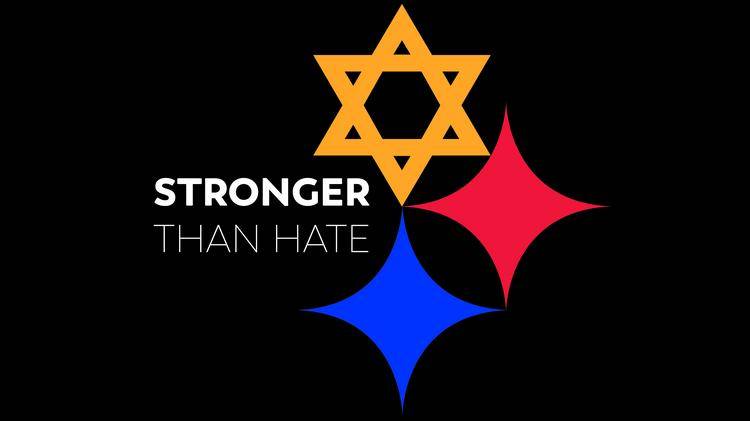
Remembering Pittsburgh- Stronger than Hate
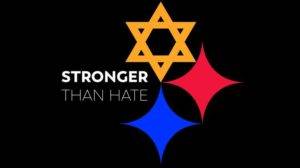 The tragic murder of 11 people one year ago in Pittsburgh is a harsh reminder that hatred is real and we are not always in control of events. Things often happen to us. As painful, hurtful, or even devastating as something can be, how we react is in our control. What is the life-lesson that we learn and how do we actively embrace that life lesson going forward?
Do we react cynically or with an open, albeit wounded, heart? Can we forgive? Will this event haunt us holding us back, or compel us to move onward? What is the vision of the future we see that is shaped by what happened, what is the world we want to see, and how will we get there?
I struggle with an anger and pain that could be overwhelming, especially as one of the Rabbis initially deploying to Pittsburgh with the Red Cross in the immediate aftermath of the shooting. Our Jewish tradition helps me re-center myself. Here I can embrace the timeless values that understand the human condition and provide a framework for a just society where we all might live in peace, based on the idea that we should treat our neighbors as ourselves. But it is a hard climb up to that mountaintop.
This is the challenge of Pittsburgh. Our hearts ache for those lost as a result of violent Anti-Semitism. We take solace in the love of our neighbors and find strength standing shoulder to shoulder with other people of goodwill to continue to strive for the kind of just society we want America to be.
Our tradition is one of deeds. Our response to this tragedy needs to be more than a feeling. There are many ways to respond through civic involvement and community activism. Judaism requires that we belong to a community committed to promoting our values be it a synagogue, philanthropy, or civil rights group. The important thing is that you are compelled to respond with actions to live the values of our tradition and to build a better world. What will you do?
Zichronam Livracha and Shabbat Shalom.
-
Whose side would you be on?
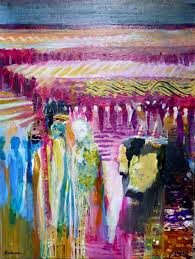
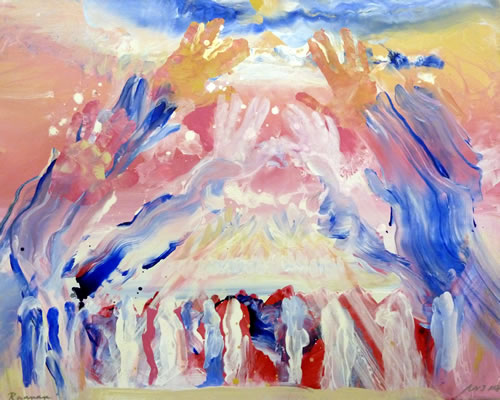
by Yoram Raanan As I engaged with Parshat Korach this time around, I found myself asking an interesting question: If I were there, which side would I have been on?
With the benefits of Torah and hindsight, it is clear that Moses’ was the winning side of the argument. Moses did more than actually prevail, God had Korach and his followers swallowed by the earth. But up until the final moment, Korach was making a persuasive argument about the appropriate leaders of B’nai Israel. Would I have been swayed?
Korach makes a compelling case. He charges that Moses and Aaron have usurped power that rightfully does not belong to them. Now that the Hebrews are free, they should have right leaders, the Levites for the priestly matters and the descendants of Reuven as the true political leaders of the people. We believe that Korach had ulterior motives and saw the opportunity for personal power, but he made a cogent argument, on the surface at least, and many people were likely swayed. As uncomfortable as it might appear, initially there were likely good people on both sides. But just because an argument sounds good on the surface, does not mean it is acceptable without first digging deeper.
The return of leadership to Reuven is in keeping with the concept of primogeniture. And the return of the Levites is consistent with their status as the priestly class. But even before God stepped in placing Moses and Aaron as the leaders, we have seen primogeniture is not automatic and leadership is based on character and deeds before anointing takes place. Before anyone could ultimately align with Korach, a deeper understanding of Korach’s motives and the relationship to the Divine had to be probed. It was not enough that Korach was persuasive. It was not enough that Korach’s agenda aligned with our own. We are also obligated to think in terms larger than our own self-interest. In other words, we are responsible for determining what is right for ourselves and for the greater good and taking a stand toward making that possible.
The people were fearful. Moses ascended the mountain and the anxiety of a slave people feeling abandoned when he did not return was overwhelming. The mob mentality took over and Korach exploited that. Unfortunately, the people went astray. But that could not absolve them of the responsibility to return to rationality and make thoughtful correct choices. I too might have been swept up in the initial emotions in the moment, but then it would be incumbent on me to soberly reflect on whether I was indeed pursuing the right course. This is the burden of freedom.
But there is more to this story, and it gets even more interesting. There is actually a third side to the situation. What about the people who did not take sides? Usually, in arguments, there are the traditional two camps, but there is also a third group. This group remains uncommitted to either side, preferring instead to wait on the sidelines to see who actually wins. And then they throw in with the winning side, never losing and also never risking. These people are more insidious than the losing or wrong side Doing nothing is feckless at best, or likely even more conniving than Korach himself. Nechama Leibowitz’s commentary on Korach references our Sages condemning this kind of opportunistic behavior (Korach 3, Studies in BaMidbar).
Driven not by a belief in something but instead a desire to be on the winning side, to survive and thrive without ever risking anything. These people are more than rootless, they are not to be counted upon for loyalty or sacrifice for a greater good. These opportunists undermine any cause that requires a measure of devotion, as they are devoted only to themselves. They would be the voices that would undermine the report of the spies, they might be among the spies themselves, not appreciating the opportunity offered by Joshua and Caleb, only seeing the personal risk involved. In many ways, this group is the more dangerous one. Focused only on themselves, they fight for nothing. Sometimes it is apathy, sometimes it is selfishness, but it always keeps us from moving forward towards what could be, mired instead in the safety of being nameless in the crowd. Hoping to land on their feet, they are little more than mercenaries, fair weather friends who ultimately cannot be trusted to do anything other than enjoy the fruits of someone else’s labors.
At the end of the day, there was only one side-to align with Moses in service to the Divine. Today these issues confront us in sometimes subtle but often blatant ways. Determining who we are as a people and nation require taking an active and bold stand, championing our values, speaking truth to power and speaking truth to those desirous of power.
Which side are you on?
Rabbi David Levin is a second career rabbi. Trained at Hebrew Union College-Jewish Institute of Religion, Rabbi Levin’s rabbinate focuses on outreach to seekers of meaning, bringing Jewish Wisdom to their life journey. Rabbi Levin’s work is trans-denominational, embracing and drawing knowledge from all aspects of Judaism. He is a member of the CCAR (Reform Rabbinical Association), OHALA (Renewal Rabbinical Association), NAJC (Neshama, Association of Jewish Chaplains), a Fellow of Rabbis Without Borders, serves on the regional board of NIF (New Israel Fund), and is a volunteer on the Disaster Spiritual Care Team of the American Red Cross.
Rabbi Levin currently teaches subjects including Ethical Wills Re-imagined, Mussar at the Jack M. Barrack Hebrew Academy, Introduction to Judaism for the URJ, “Kavod v’Nichum, Understanding Jewish end-of-life rituals”, and the acclaimed series “L’Chaim, Jewish Wisdom for the End of Life Journey” with two esteemed rabbinic colleagues. Rabbi Levin officiates in complex lifecycle events including non-traditional burial and works with interfaith couples. Rabbi David leads interfaith trips to Israel through the CLAL Stand and See project. Rabbi Levin is the organizer of Death Café of Greater Philadelphia
Rabbi Levin is a teacher and speaker appearing nationally and is available to be with your congregation.
-
The Priestly Blessing- A message of hope deliberately placed
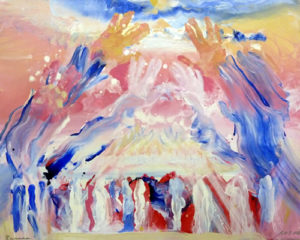
Naso by Yoram Raanan The Priestly Blessing is a message of hope in a troubled world. We have long wondered about the Priestly Blessing being placed in Parshat Naso. Many have posited it was out of place, belonging instead in Leviticus (9:22) when Aaron is told to bless the people. But I believe it is placed here purposefully as a message of assurance, to make sure we understand how important we are to each other and to the Almighty.
Naso contains a census of the Tribe of Gershon, the extraordinary stories of the Sotah, a test for the unfaithful wife, and the issues surrounding the intense vows of becoming a Nazirite. And only then do we read the Priestly Blessing; The three-line expansive blessing upon each of us that God protects us, is kind to us, and grants peace to us. It is actually the perfect response to the perplexing and difficult issues that preceded.
We are told we count. That was central in the previous Parsha, BeMidbar, and reiterated as the census to count the Gershonites. But then we are confronted with the Sotah and the Nazirite, as if to ask are there times when we do not count. We all struggle with life. We seek God’s blessings, we seek meaning, we seek good things, namely peace and a good life. But we find ourselves going off the rails. When this happens are we cut off from God’s blessing?
The Sotah is about accusations of infidelity. But in the absence of anything but circumstantial evidence, the magical test is administered by the Priest. The gravitas of this must be overwhelming. But even if a woman survived the test, would her husband fully welcome her home, without harboring some suspicions. Would trust ever be restored fully? Would others in the community maintain lingering doubts, rumors, and stories placing an indelible stain on the woman’s reputation?
Someone taking the vow of a Nazirite may do it for lofty purpose, but based on our understanding of the things that motivate such action, we see the wisdom of Gersonides’ analysis that, A person takes such a vow to silence the unhealthy turmoil inside a person arising from a physical desire that might lead one to sin. Does the person who needed to take the Nazirite vow feel rejuvenated or reborn when the vow is complete? Does the thing that required such focus continue to linger in their souls? Such impulses can extend beyond lust to other impulses that can plague us emotionally or spiritually.
The Priestly Blessing is deliberately and thoughtfully placed here to say we struggle and we continue to struggle. It comes at us from all angles. It is part of being human in a world that is often fraught and difficult. Each of us has a struggle, a demon, a bad action, a feeling of inadequacy. It is part of who we are as human beings.
The Priestly Blessing is a wish for wholeness, a wish for Peace in an unpeaceful world. The Priestly Blessing is a wish for Peace; it is our yearning that these struggles do not mire us in a life that feels dark or hopeless. It is the profound hope that God is there to love and protect us even when we feel we have strayed so far away that we are beyond the reach of even the Almighty’s loving protective wings of peace.
Hope remains. God is there. We are not alone.
May the Almighty Bless you and Protect you.
May the Almighty deal kindly and graciously with you.
May the Almighty bestow Divine favor upon you, granting you wholeness and peace.
Shabbat Shalom.
Rabbi David Levin is a second career rabbi. Trained at Hebrew Union College-Jewish Institute of Religion, Rabbi Levin’s rabbinate focuses on outreach to seekers of meaning, bringing Jewish Wisdom to their life journey. Rabbi Levin’s work is trans-denominational, embracing and drawing knowledge from all aspects of Judaism. He is a member of the CCAR (Reform Rabbinical Association), OHALA (Renewal Rabbinical Association), NAJC (Neshama, Association of Jewish Chaplains), a Fellow of Rabbis Without Borders, serves on the regional board of NIF (New Israel Fund), and is a volunteer on the Disaster Spiritual Care Team of the American Red Cross.
Rabbi Levin currently teaches The Ethical Will Re-Imagined, as well as Mussar at the Jack M. Barrack Hebrew Academy, Introduction to Judaism for the URJ, “Kavod v’Nichum, Understanding Jewish end-of-life rituals”, and the acclaimed series “L’Chaim, Jewish Wisdom for the End of Life Journey” with two esteemed rabbinic colleagues. Rabbi Levin officiates in complex lifecycle events including non-traditional burial and work with interfaith couples. Rabbi David leads interfaith trips to Israel through the CLAL Stand and See project. Rabbi Levin is the organizer of Death Café of Greater Philadelphia
-
Blaspheming in the Name of the Sacred- The warning of Parshat Tzav
We have seen the enemy and he is us. So were the immortal words of the great American philosopher Pogo, the satirical cartoon creation of Walt Kelly. That droll quip speaks to a dark sinister reality about what is happening in the Jewish world, in direct contrast to the warning offered by Parshat Tzav.
God directs Moses to command the priests on what to do and how to do it as they fulfill their sacred responsibilities on behalf of the people Israel. It is clear that the sacred tasks require special ways of acting. There is too much at stake; for these are the priest making offerings to God on behalf of God’s people. The priest learn the strict code to which they must adhere. Deviating is not acceptable, and the consequences can be severe, as Nadav and Abihu will learn.
Later on, we learn that the nation itself is a nation of priests. That we as a nation are similarly charged with a series of behaviors that are required of us to fulfill our responsibilities. These laws are put forward in Torah and then developed by the rabbis and shared in the Oral Torah and the great works that expound upon these laws. Like our priestly class, the nation of Israel is bound to the laws of Torah on how to act in order to fulfil our sacred responsibilities of being a light to the nations.
That light has been dimming as a result of a move away from our role as faithful servants to something that embodies a hubris endangering and attacking our core values as a people. We have moved from the sacred work of Sanctifying God’s name to profaning God’s name, from Kiddush ha-Shem to Hillul ha-Shem.
At the most recent Rosh Chodesh at the Kotel we witnessed a brutal and tragic display of violence against the Women of the Wall. We do not agree on how we should engage in ritual. I respect other approaches to Judaism, even though I do not practice them. Likewise, there are many who would see my religious practice as unacceptable. However deep the disagreements may be, there is no justification for the violence perpetrated on the Women at the Kotel. I would argue that the shouting is an undermining of the special space that is the Kotel and place. But physical battery is blasphemy, plain and simple. It curses God’s name and everything that Judaism is supposed to represent. In the name of the sacred, everything sacred has been trashed, God’s great name was trampled in the mud. The violent encounter was in violation of all of Jewish Law and culture. This moment is a tipping point for us as a people. And this is not the only arena where our behavior needs to be critically examined. Tzav, commanded behaviors, require adherence to standards of decency and ethics. Are we acting as God has directed?
There is a rise in racism in Israel is an insidious cancer eating away at the very soul of the State. This racism dehumanizes the non-Jew, whether they be citizens of Israel or Palestinians of the West Bank and Gaza. The inability to see the other as one with fundament human and civil rights, entitled to dignity and respect, undermines the ideals of both the Jewish State and the Jewish religion.
The violent racist Kahanists, Otzmah Yehudit, have a new-found acceptance in Israeli politics. The inclusion of these group dedicated to an extreme racist view, enforced by thuggery, should be unthinkable, but instead of repudiating them and everything they stand for, they are legitimized and welcomed. There are appeals to the courts seeking redress, but ultimately the Israeli people must speak out unequivocally against this base and baseless hatred.
This issue also confronts American Jewry. As anti-Semitism is on the rise, American Jews must respond. The manner in which we move forward will determine if we are no better than those who hate us. Can we be strong and resolute without resorting to similar tactics as those whose ideas we find dangerous and contemptible? Can we find sufficient security in this extraordinary place and time in our history to battle anti-Semitism and not feel disenfranchised by those contemptible people on the margins of society who seek to do us harm?
The second temple was destroyed, our sages say, due to Sinat Chinam, the baseless internecine warfare that existed within the Jewish people. Instead of a tolerant society with many different interpretations of Judaism, the People of Israel became a fractious group of competing sects intent on imposing their particular view on everyone, ultimately sacrificing everything. Can we reclaim the ideals of Klal Yisrael, or is history repeating itself?
Our leaders from across the breadth of our tradition including Rabbi Nachman the Hasidic master, Rav Kook the founder of religious Zionism, and Rabbi Abraham Heschel an American Prophetic voice, to name only three, all warned against hatred against others, no matter how deeply offensive we might find certain practices. They encouraged us to embrace the best of our tradition so that we may bring forward our values in the world. Tzav as part of the book of Leviticus, as part of Torah, lays out the rules for how to act as a people in sacred service to God. These rules are based on core values that are central to every expression of Judaism, religious, ethnic, and cultural. When we violate the values that are at our core, we betray the sacred aspirations of our tradition. Tzav reminds us of our duties and sacred obligations and admonishes us not to stray. Tzav demands more of us, we need to take heed and act better.
-
We’ve made it here after all
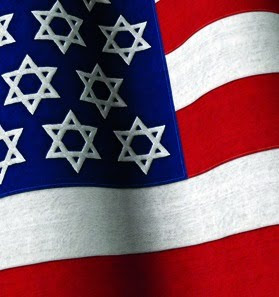
There is much we can learn from the tragedy of Pittsburgh. Important among them is that we have realized our parent ’s dream; we are truly a part of America. This awful incident marks a new understanding of our community’s place within the larger American society. Yes, we have made it here. But what that means is now different.I am suggesting a new definition of “making it here” which is not about assimilation but rather acculturation, maintaining a blended Jewish and American identity, an American subgroup securely joining not only in the fight for our American ideals but also in the proximate threat of Anti-Semitism. This ability to fully and unapologetically embrace our dual identities, engage in championing and defending the ideals and values for us and for all, while confident and secure of our rightful place as citizens; this is what it means to “make it in America.”
Many of our forebears were content with the economic opportunity America offered, as well as the refuge from violence and persecution that were part the life of their homelands. They sought survival, not equality, imagining they might assimilate and become Americans. Although great strides were made, lingering fear and insecurity kept the American Jewish voice from being bolder in demanding action to save the Jews of Europe. The “go along to get along” mentality is part of our past. We are secure enough in our place as Americans to fight for ourselves and for others. Yet darkness lingers and Anti-Semitism persists.
We have long embraced the notion that none are free until all are free and we fight on behalf of others yet to enjoy the full blessings of our country. But now, with White Nationalism and Anti-Semitism, on the rise we have a renewed personal stake in the fight. This struggle against hate and violence is harsher and more hardscrabble than our previous contests for justice and equality, such as those against quotas or deed restrictions. The “no coloreds, Jews, or dogs “ signs from what we thought was a vanquished past reappears in our consciousness. The privileged position many thought we enjoyed needs to be reconsidered and recast.
For most of our history, we Jews have taken care of ourselves. Our morning prayer, Eilu D’varim, include the obligations we set out for ourselves as responsible members of the community: visiting the sick, burying the dead, comforting the mourner among them. We have developed our own institutions devoted to assisting in those practices. HIAS, Jewish Hospitals, and Jewish Universities were created to respond to the needs of our people. Our modern Federation, JCC, and JFCS can trace their roots to this historical understanding that we have been segregated from the broader society; that we had to rely on ourselves to provide for us, as the larger society in which we lived would not. From this self-reliance, we have then reached out to assist others.
The understanding of our mission of helping those in need, the social justice mission at the heart of Tikkun Olam and Tzedakah, emanates from the values of compassion and outreach to the unheard and unseen. Because of our history, Jews have been reluctant to accept help from outsiders, even as we support others. We have been quick to join the fight for Civil Rights but slow to bring outsiders into our places of need. Perhaps, due to our history, such help is suspect, perceived in our collective psyche as a sign of weakness or vulnerability. Pittsburgh has changed that.
When we examine our history, we wonder whether our golden age in America was fleeting or is it enduring. I believe it is the latter, but it is none-the-less threatened by malevolent forces. A recent poll[1] indicated that almost 6% of the non-Hispanic American population, or about 11million, subscribes to the views of the Alt-Right. This means two very important things: First, 94% don’t accept these hate-filled views AND second, that a real Anti-Semitic threat exists. Both of these are part of our reality and we must be alert to the implications of both.
The overwhelming nature of the horror perpetrated upon the Jews in Tree of Life Synagogue has knocked us down with a blunt force that was overwhelming. Every resource we have is insufficient to provide a full measure of comfort. We are indeed vulnerable at this moment. And at this moment, something miraculous happened. The community of Pittsburgh rose up and is trying its best to hold us. Pittsburgh’s various communities, Moslem, Christian, and practically everyone else have come to our aid saying to our Jewish community, “you are one of us and we are appalled. An attack on you is an attack on Pittsburgh, and this will not stand.”
We have in our history experienced extraordinary acts of kindness from outsiders, such as the King of Denmark and the Righteous Gentiles of the Holocaust. And here in 2018 America, the Jewish community needed help and the broader community responded. We are not alone, we are America, supporting and now being supported by our brothers and sisters. It is an extraordinary light shining on a very dark experience. Thank you for your love and support. The refugees who are our forebears have seen their dream of America come true. We are inextricably part of the fabric of America, in both its glory and in its struggle. In the names of those Jewish martyrs so tragically lost, let us join with all others of good will continuing the hard and fraught process to realize the aspirations of the American dream.
[1] University of Alabama, George Hawley, published by UVA’s Institute of Family Studies indicates 5.64% of the 198mm non-Hispanic Whites in the United States have beliefs consistent with the Alt-Right’s worldview.
-
J’Accuse- Recuse!
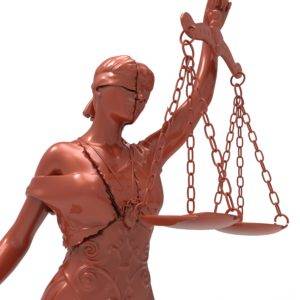
Can you ask a Supreme Court judge to recuse him/herself from a case before the Court?
In this hyper-partisan age, the question seems particularly relevant. During the Senate Judiciary Committee Hearings, Judge Kavanaugh defended himself with a zeal that arguably betrayed a mistrust and contempt of people including the Clintons and Democrats, in general, that would seem to bias any considerations of law that would involve them.
Arguably, Associate Justice Ginsberg might find herself in such a position as well given the intemperate comments she publicly made regarding Donald Trump. Although she has apologized for these admittedly inappropriate remarks, she may have disqualified herself from any issues relating to Donald Trump that may come before the court.
The Supreme Court is a sacrosanct institution. Sadly, the other two branches of government, the Executive and Legislative, are mired in political calculations. The Court has been ostensibly above that. It is political on some levels; the justices are nominated and confirmed by the President and Senate respectively, concepts of judicial activism and interpretation of the Constitution have worked within and often reflected the cultural milieu of the country. Nominees to the Court are often subjected to litmus tests either during the nominating process or confirmation process, and both President and Senate hear the voices of potential voters as they make their inquiries and decisions.
As politics has become blatantly a part of the Judicial and Constitution review, one wonders what happens to the legitimacy of a Court with members biased not by an interpretation of the Constitution or moral conviction but biased by the harsh tribal political climate in which we currently live. This question sadly needs to be asked and actually undermines the legitimacy of the Court. The implications of what happens to our Democracy when this sacred institution falls is a frightening existential threat, not only to the Court but the very Republic it was conceived to serve.
-
Sadly, It is all about the Money
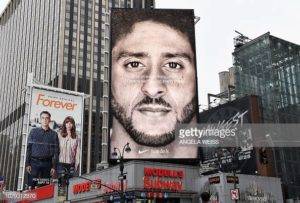
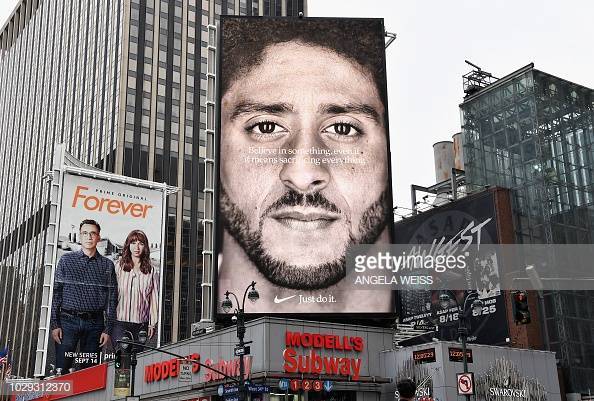
ANGELA WEISS/AFP/Getty Images The current uproar over the new Nike ad featuring Colin Kaepernick has served to wonderfully pit right against left in another puerile chapter of the culture wars. Instead of seriously grappling with issues in our country we’d prefer to scream at each other about whether one side or the other is sufficiently patriotic. The sad truth is that the ad is really about selling sneakers and generating buzz.
The group that is feeling offended by this ad is not the Nike target demographic. The people that align with Kaepernick are the demo that Nike wants to sell their product to. The ad is provocative on many levels. That is precisely what is intended. The advertisers did their job and now everyone is talking about it. The increased sales bear this out.
Colin Kaepernick is portrayed as a champion. Whether Kaepernick is a villain, hero, or even heroic victim is beside the point. That is unfortunate. But there is another agenda.
The NFL is concerned about generating revenue and retaining fans. Kaepernick found a means to make a living as a spokesperson. The President is using the opportunity to rally his base. If any were interested in addressing the issue, this is an extraordinary opportunity to join in the fight for the virtues that those who kneel and those who stand both embraces; namely a country dedicated to life, liberty, and the pursuit of happiness. A nation of laws that stands for equality and justice. The vast sums of money generated by the corporations (NFL and Nike) could underwrite a campaign to get healing conversations started, patriotic conversations that address the issues of inequality that continue to keep us from fully realizing the American Dream and perhaps even help create positive change. And the President could use the power of his office and his strength as a marketer to be the convener to make it all happen. But unfortunately, we prefer to revel in the buzz.
Buzz on!