How do you serve two masters-the interfaith marriage debate

How do you serve two masters?

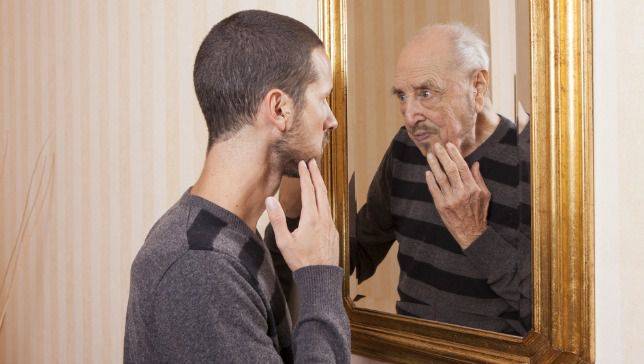
We are called upon to do this regularly including in the current discussion about the marriage of a Jew to a non-Jew. As Rabbis, we serve Jews and we serve Judaism. These often do not align. How these two competing missions live in tension and how we resolve the issues is something our wisdom tradition teaches us.

We serve Jews. As I have been taught, my service to them requires me to go where they are to help them along their paths, using the wisdom of our tradition to connect and shine light upon the journey. I am also in service to Judaism, charged with Shamor v’Zachor in all of its complexity. These often align with each other, but often they do not. We live in a complicated world where we usually do not choose between good and evil (that’s an easy one of course) but we choose between competing good things. Which one takes primacy? Must they be mutually exclusive, or can they co-exist? Our great tradition including Talmud urges us to grapple with these questions.

We all know minority opinions are kept because they add value, depth, and nuance to the conversation. We have seen Hillel and Shammai duel. Even though Hillel usually prevails, Shammai remains as insight into important issues that cannot be overlooked. It is incorrect to dismiss Shammai as wrong.

We all recall the story of Teaching Torah on one foot. Two radically different approaches are offered, both containing deep wisdom. Ultimately we are left with, “What is hateful to you do not do to another, the rest is all commentary. Now go study,” but not before we understand the gravitas and respect that one must have to approach the process.

The conversation about officiating weddings between Jews and Non-Jews should be viewed through this lens. Is our primary allegiance to preserving and protecting Judaism, or to reaching out to Jews wherever they may be? What precisely does each of these things look like? Where we ultimately define ourselves and cast our allegiance will determine what each of us can do and what is beyond our ability. I have no doubt about the seriousness that each of us approaches this task. And I am not criticizing the considered decision of anyone.   However, there are real ramifications to our decisions. How we are perceived in our respective communities and how will our decisions affect the couple requesting our services as officiant are two profoundly important questions we must ask ourselves as we consider the issue.

There is a substantial segment of Jews who seek to marry someone who is not Jewish. How we approach them may forever affect them and their relationship to Judaism. When someone approaches us, what will we do? If we cannot officiate based on a principled position, do we dismiss them, or find a colleague who can be present in this important and critical time? Will you be Hillel or Shammai?


Shabbat Shalom- A Reflection from Mt. Carmel

I have just returned from Mt. Carmel Cemetery to provide presence and support to the volunteers who came here. I was moved, being with people honoring the past and affirming their identities.


As Americans and Jews, we arise with a sense of unity and rededication of purpose. Like a phoenix rising from the ashes, we stand arm in arm with all victims of hatred and domestic terrorism. Our values bring us together.


Although disturbing acts underlie this awakening of spirit, we need to focus on the good that has come from these cowardly and ugly actions. From ugliness comes beauty, from despair comes hope, from aloneness comes community, and from hatred comes love.


We stand together against hate.

Hate has no home here.

Shabbat Shalom.

Talmud teachings about the ACA


Yesterday’s reading of the Daf Yomi (daily page of Talmud), was remarkably timely in its discussion about destroying and replacing things. Rav Hisda taught that a Beit Knesset, synagogue, cannot be destroyed until a new one is ready to replace it. The Affordable Care Act (ACA) seems to be the modern day equivalent of this conversation.

The Gemara explains that just ripping down what exists opens the real possibility that irresponsible people will never follow through with the replacement, and the people will be left without a place for prayer. As we watch the government begin steps to dismantle “ObamaCare” through Executive Order and Congressional actions, we must ask, what is there to replace it?

What does Healthcare for our people look like? What is our responsibility to our fellow Americans? This is an important conversation for our nation. Regardless of the flaws both real and perceived in the existing structure, it is grossly irresponsible to destroy the ACA without a clear plan to replace it seamlessly with something clearly articulated before we take a sledgehammer to what we have.

As long as our government is of, by and for the people, there is no king with the authority to decree what shall be. Our elected representatives must be accountable for building not destroying.

This essay is based on the insights of Rabbi Steinsaltz as published in the English version of the Koren Talmud Bavli with Commentary by Rabbi Adin Steinsaltz and edited and adapted by Rabbi Shalom Berger.

We will be Okay

Will we be okay?

What do I tell my kids?wethepeople

Those are two questions that have been asked since the nation elected Donald Trump as President of the United States last night.

The answer to the first question is: Yes. And we will tell our children the following: On November 8, our country elected Mr. Trump to be our next President. For many of us, he was not the person we wanted but our nation has spoken in a way that makes this country extraordinary. We voted and we decided. Our process worked. Despite our deep disagreements, we all have a President-elect.

Now it is time to find a way to move forward. We will pray our new President embraces the idea that he is the President of all people of the United States and that the United States has unique responsibilities because it holds a unique role in the world. Whether we agree with Mr. Trump’s personal or political views, we hope for his success as the leader of our nation. At the same time, we need to embrace our important place to fight for what we believe to be right especially given the circumstances that brought us to this place.

We have long relied on government intervention to address the issues and solve problems. However, for many in America, that did not work. They felt abandoned if not betrayed, with promises of protection broken and a system unresponsive to their needs. And for many others of us, we have been lulled into complacency and a false sense of security. This election is a harsh wake-up call and rouses us to action, not against the government, but aware of governments’ limitations to help the governed. It is up to us to create the change we seek now more than ever. Voting is only a first step in a process of engagement. Showing up at local meetings, petitioning Congressman, and holding the new president and every part of government accountable must ensue. Community organizing is vital. Our aspirations and goals are in our hands. We cannot relegate them to another’s care, certainly not now. Our community groups, both religious and civic, can use this moment in our history to reinvigorate and rededicate themselves, advancing important values of dignity, equality, and justice.

Yes, we will be all right.   The United States of America is strong and we her people are resilient.   But the future is in our hands. It is our work as Rabbis and other faith leaders to help guide and support the people as teachers, chaplains and champions of social justice and the values we hold dear. There is much to do and our work has never been more important.

Witness or Activist?

Uncle_Sam_(pointing_finger) The political contest unfolding in the race for President is unlike anything we have witnessed. Not in recent memory have such divergent views been offered as the vision for the United States of America. But will we merely watch from the sidelines or will we engage?

It is incumbent upon us to engage. We can engage by learning all we can about the visions each candidate puts forward and sharing our thoughts with those around us. We were taught it was impolite to discuss politics. So I suggest that we discuss the issues at stake instead. We discuss our view of the government’s role in the lives of its citizens and we discuss the role of our nation in the world. Jewish values of tzedakah, social responsibility through sharing our blessings with the disadvantaged among us and creating the world we aspire to see, are at the heart of who we are as Jews and as a nation. We stand for protecting the oppressed, feeding the poor, clothing the naked, and sheltering the homeless.  We must continue to champion these ideals.

Instead of delving into ugly character assassinations, let us seek to promote our particular worldview and discuss which person and which party supports our view and is equipped to fight the fights necessary to achieve that vision.

Respectful conversations about who we are and where we are going should  always be welcome and they are never more important than they are now. The ultimate expression of this conversation is voting and casting a ballot for a candidate. This is the highest declaration of our commitment to our future.

 Will you be a witness to history or an active part in its unfolding? The choice is yours.

What the Spies of Shlach ask us about ourselves

There is a TV commercial that distinguishes between simply monitoring and actively preventing identity theft. A violent bank robbery is in process. The monitor surveys the situation as the customers fall to the floor imploring this uniformed man to take action. He responds that he is merely a monitor; taking action is not his job. And yes indeed, there is a bank robbery underway.

shlachThe story of the spies in Parshat Shlach seems similar. Twelve men were selected and sent out to survey the land of Canaan and report back. They did what was asked and reported what they believed they saw. An insightful rabbi taught me that the answer to a question depends on the question you ask. It also depends on the nature of the respondent.

These were twelve men, “…one man each from his father’s tribe; each one shall be a chieftain in their midst” (Num. 13:2). They were leaders within their respective clans, but were they capable as conquerors? The Hebrew word is Nasi, or Prince. They were princes of the individual tribes but not necessarily the top dog, or the General of the Army to use a military term. So were these spies conquerors or bureaucrats, men of action or fearful men of complacency and conservatism?

Had the idea of freedom and freedom’s responsibilities permeated this new Israelite society? It

Spies Scout Out the Land by Yoram Raanan

seems not; for only two spies, Caleb and Joshua believed they could actually overcome their foes and possess the land. It is possible that a deliberate selection of strategists and warriors as the twelve spies would have yielded a unanimous joining of Caleb’s assessment that they could vanquish the Canaanites. However, the spies’ ability to sway the people indicated that the Israelite people were not yet ready to enter the Land and receive the promise and responsibilities that go with it.

We also, both individually and collectively, need to ask ourselves which are we? Are we agents of change like Caleb and Joshua, or agents of the status quo? Are we willing to find ways to achieve lofty goals or fearful of the risks and unwilling to reach for more hoping to preserve what we have? Often, trying to maintain the status quo is riskier than taking the chance to make something better.  Although we should always be grateful for what we have, when it comes to values such as human rights, peace, justice, equality, and security, we can always aspire to something greater. The question remains, Are we willing to take the risk?


Hope from Desperation

JohnLewis_NEW_300x380 So many of us are rooting for Representative John Lewis. An icon of the civil rights movement and leader in the House of Representatives, he has stood up to injustice by sitting down. We applaud Mr. Lewis for galvanizing other members of the House to declare that Congress can no longer ignore its responsibilities.

 Our government, as Abraham Lincoln noted, is extraordinary because it is ‘of, by and for the people’. The overwhelming popular frustration with our government is largely because it lost sight of this value and has been serving particular special interests, be they political, economic or personal. The violence that pervades our land is like cancer, insidiously growing and infecting our society, killing off vital parts, threatening to metastasize and destroy this great place we call our home.

 We are desperately seeking some relief from this disease. And although a cure remains elusive, we see an opportunity to curtail the ability of the outlaws of our society to use weapons to inflict carnage. For the Love of God and our own children, the commonplace slaughter of people with these weapons needs to be curtailed. Curtailed, because sadly we cannot stop all gun violence. That does not permit us to do what we can to at least reduce the ease with which these horrific events take place.john-lewis-1

 Sensible and responsible rules to regulate access to guns and ammunition is not an attempt to repeal the Second Amendment or its current interpretation that citizens have a right to bear arms. There is no inexorable slippery slope leading to complete removal guns from society. But there is a desperate need for us to enact and enforce responsible access and use of firearms.

 The extraordinary action of Representative Lewis on the House floor is welcomed by a nation filled with heartache and despair. I pray that Representative Paul Ryan as the leader of both his party and the House of Representatives finds a way to join forces with Mr. Lewis and guide this nation with the vision and leadership we so desperately need.

The Greatest Nation on Earth is greater than its Fears

circle-line-cruisesI keep repeating that thought as I hear Americans clamoring to shut the doors to Syrian refugees.  It is about fear of terrorists infiltrators I have been told.  I am fearful too, but I am fearful that we risk losing our way and our fear for our security are making us xenophobic and racist in ways not seen since the Japanese were interred in American Concentration camps and Jews were returned to Germany for extermination.  I am fearful that we risk losing the moral bearings that have been our guiding star.  I am fearful that the principles upon which our country was founded are becoming empty words of a time gone by.

We cannot let fear overwhelm us.  We claim the words of Emma Lazarus, immortalized at the Statue of Liberty. We welcome the tired and poor, the huddled masses yearning to be free.  The Syrian refugees certainly fit that description and so did we.  We were once considered the refuse of the world, each of us with an ancestor who came here for the chance at a better life. When lives are hanging in the balance, how can we turn our backs?  The US has a very robust process in place to screen immigrants and the total number of people who endure this almost two-year procedure is small.  We are more than able to absorb these people.  We can save their lives.lazarus1

There is a war underway.  And war is a frightening prospect.  There are extremists who view us as an enemy to be destroyed.  Our defenders have done an amazing job protecting us thus far.  There will be attempted attacks on our soil, and some may even be successful.  We need to be cautious and alert in defending ourselves. They can hurt us, but they cannot defeat us.  Only we can do that.  If we turn our backs on our own core principles, these extremists win an important victory.  If we no longer believe in what makes us great, then we are great no longer.  I fear that more than anything else. 

I urge everyone who believes in our nation to write both Congressperson, Senator and Governor and urge them to defeat measures that close us off from helping refugees.  Support a robust vetting process that is already in place and support groups like HIAS who are dedicated to helping refugees get started here in America.  Then we can still hold our heads up high and ask that God Bless America.

Jewish Refugee Letter

November 19, 2015

Dear Senator/Representative,

We, the undersigned Jewish organizations, write to express support for refugee resettlement. We urge you to oppose any legislative proposals that aim to halt U.S. resettlement efforts or restrict funding for any groups of refugees, include Syrian refugees.

In 1939, the United States refused to let the S.S. St. Louis dock in our country, sending over 900 Jewish refugees back to Europe, where many died in concentration camps. That moment was a stain on the history of our country — a tragic decision made in a political climate of deep fear, suspicion, and antisemitism.

Last week’s devastating attacks in Paris and Beirut are examples of the brutal violence that Syrian refugees are fleeing. We are disheartened to see many U.S. politicians citing these tragic events as a reason to put safe haven further out of reach for refugees. At this critical moment, when there are more refugees and displaced persons than at any time since World War II, we must protect refugees and asylum seekers, not scapegoat them.

The U.S. government has extensive security measures in place to distinguish between those fleeing violence and those seeking to commit it. In fact, refugees are the most thoroughly vetted of all types of immigrants entering the country. Security is an important part of the U.S. Refugee Admissions Program, as it must be, but so is compassion.

In 1939, our country turned away victims of persecution and violence. We implore you to not make that same mistake today.

Sincerely,

Ameinu
American Jewish Committee (AJC)

Anti-Defamation League
Association of Jewish Family & Children’s Agencies (AJFCA)
Central Conference of American Rabbis (CCAR)
Habonim D’ror North America
Jewish Council for Public Affairs
Jewish Labor Committee
HIAS
National Council of Jewish Women
Reconstructionist Rabbinical Association
Reconstructionist Rabbinical College/Jewish Reconstructionist Communities T’ruah: The Rabbinic Call for Human Rights
Union for Reform Judaism
Uri L’Tzedek

A Nation of Laws is Tested

Themis

The situation in Israel seems to be deteriorating. Violence continues to escalate with the knife as a weapon of choice and fear is spreading as attacks come from seemingly out of nowhere. The natural and proper inclination is for law enforcement to become even more vigilant in order to prevent attacks and not only respond. But the police however must be judicious in how they protect the citizens of Israel.

Israel is a nation of laws. She prides herself on having a legal system similar to the American ideal founded on the principle of Equal Protection under the law. Now this system is being severely tested and Israel’s heart and soul are at risk. If Israel permits the profiling of people and the preemptive assault on individuals outside the prescribed due process of the legal system, then she loses and the terrorists win.   Israel cannot be democratic if she limits the application of law to select privileged classes, such as Jews, while others, such as Arabs, fall outside that sphere. A crack down on terrorism cannot come at the price of the foundational principles of Israel. A restoration of calm is necessary. The violence and barbaric nature of these attacks on civilians (police included) are certainly not random acts.  Israel must carefully consider how to properly respond.

Is this a mass response to “occupation” or are these individual actors perpetrating crimes as copycats? It certainly seems to not be the latter. Even if not expressly ordered by a central control, the attacks are coordinated. The first order is to restore calm. The second order is to cool the boiling over of the cauldron. Repression of an entire group, such as the Arabs of East Jerusalem, and sealing off of that portion of the city, will provide a temporary subduing of these attacks. A closer and deeper look at the grievances that encourage this violence as a legitimate response is required. Then deliberate steps must be taken to create a society that is fair and just.

I do not condone or legitimize the violence. Those that have perpetrated these attacks should be duly punished for breaking the laws of the State and of civilized society. Now it is up to the State and civilized society to solve the problems that have contributed to fomenting such deep discontent with a system of justice that speaks to everyone.