I saw the meter maid stepping towards the back of my car to get license plate info. The meter had expired a few minutes before and like clockwork, she was there at the ready to write the ticket. I called out “Excuse me Ma’am!” and started to cross the street hopefully catching her in time. As I stepped off the curb, I felt a snap in my knee and down I went. The pain was excruciating. She looked up and saw me. I knew I had to get to her so I limped over as best I could, needing to catch my breath before I could say anything. She reached out to me to help me and asked if I was okay. We started to talk and she made it clear that she would not leave me until I was safely in my car.
She went from “meter maid” or “traffic enforcement officer” to caring human being. Actually, she was a lovely caring human being all along. It took me a while to realize that.
I do not know who she is. I never got her name. I reached out to the Parking Authority to try to find her and say thank you. They likely do not get too many of those kinds of letters.
And as I was sitting in my car, gaining my composure, I could not help but notice the person a couple of cars behind me frantically waving a ticket in his hand as he ran towards a confrontation with my good Samaritan.
So thank you my nameless good Samaritan. Thank you for sharing your humanity when I needed it.
This Shabbat I wanted to share something delightfully offbeat. This is Cantor Moshe Mendelson singing the Yiddish song Romania Romania. For about 45 years he has been the Jazan (Cantor) of Mexico City and yes, he is accompanied by a Mariachi Band. It is a delightful blending of cultures and nationalities and Judaism. This song is my chance to share a vision of Klal Yisrael.
It has been another tumultuous week filled with challenge and pain. Shabbat is here. For a moment, enjoy this respite.
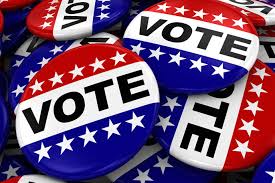
In response to the horrible acts perpetrated by the American government, people are planning marches and demonstrations against United States Immigration Policy and the Trump Administration implementing said policy. But there is a very important point to remember: Trump was elected President. The members of Congress who actively support his policies, including this one, were also elected. Only through our electoral system can we affect change. Marches might feel good, but they are ineffective against those who hold and exercise raw unbridled power, using a politics of division to keep their minority base firmly in control. To prevail in the fight we must wage, we must use politics to change those governing and the policies they pursue.
The wholesale assault on heretofore fundamental American principles of decency and values combined with the message of divisiveness rather than unity are the primary domestic issues giving license to the basest instincts of self-protection and self-promotion. These are narrow and short-sighted attempts to impose the will of the stronger upon the weaker. We must convince the American voting public that there is a better way. And only through galvanizing the vote can our ideas triumph.
If we are to do anything of enduring value we should register people to vote and then make sure they do so. People like James Chaney, Andrew Goodman, and Michael Schwerner, and John Lewis should be the great iconic figures that inspire us to action because never has there been so much at stake.
March and demonstrate, but do not be surprised if the sun rises tomorrow in the East and the Trump Administration continues its policies unabated and unaffected. For that alone will not create change. Actively engage in the political process and perhaps our system of government will again offer a constructive message of hope.
So many of us have expressed outrage at the separation of children from parents at the border. Now the real work begins; for now that we are aware of the situation, the responsibility to change it is ours.
Write your Congressional representative and Senators and demand this policy stop immediately. This is not a negotiation, this is wrong. Anyone unwilling to unconditionally terminate this policy now will be held accountable at the ballot box.
In case you do not know your representative, find out here:
The appalling misuse of the Bible to defend stripping children from their parents at the border adds insult to injury, something I would have thought all but impossible given the heinous underlying act. It makes the indefensible downright obscene.
Whatever our personal position on strong border controls may be, this inhumane action undermines our most fundamental values. We are a nation of laws, but very importantly we are also a nation of hope. Our laws can be applied humanely with mercy and compassion. This egregious violation of our values is a symptom of a growing cancer in our society.
In an age of increasing division and antipathy, this moment needs to serve as a tipping point. Can we aspire to be the light unto the other nations, leading by example or must we retreat building walls that separate us in the name of protecting us? History shows us time and again that the latter approach ultimately fails. And by the time the walls are ultimately breached, what found inside is a hollow shell of the greatness that once lived.
Our greatness comes not from the domination of a ruler, or even the majority. Our greatness springs from America’s ability to protect and defend the minority when the majority prevails, exercising its will civilly and compassionately.
To those who find the actions on our borders justifiable, shame on you for your heartlessness. To those who find these actions unjustifiable, our thoughts must be backed by action that will cause change. Otherwise, we too will be responsible for the horrors wrought upon the children.
This Shabbat I wanted to share Give Me Your Tired, Your Poor, Irving Berlin’s musical rendition of Emma Lazarus’ poem at the base of the Statue of Liberty, sung by the Texas Children’s Choir.
As you listen to this song, children are being detained and forcibly separated from parents at our border. Regardless of your stand on illegal immigration, this inhumane and cruel act is nothing more than a blight on the greatness that is supposed to be our nation. Demand Congress act immediately to spare children from this.
In my early training as a lifeguard, I was taught that you can only do so much to save another. You swim out to the distressed and offer a life ring, once they grab on to it, you can swim into shore rescuing him/her. But they had to grab hold of the flotation device otherwise you would risk both of your lives. You could go most of the way, but you needed the participation of the other. Later on, I learned a more aggressive approach to lifesaving using grips and evasive maneuvers to assert control over the victim. Finally, I learned that sometimes to save a life required knocking the other person out with a swift cross to the jaw. You saved two lives in that precarious moment, yours and the victim’s.
How actively and strongly do we intercede when it comes to saving another? How do we determine the appropriate course of action? Sadly, it often devolves into a matter of personal convenience. Whether it is suicide, drug abuse, or so many of our civic/social problems, we often find it easier to ignore them. How often do we step over the person sitting in the street begging rather than at least engage their humanity?
People need to be seen and heard. The silent scream of despair of one soul should ring as loudly in our ears as the giant thunderclap from the heavens. Wringing hands and feeling another’ pain consoles our own ego, but it does nothing to help another in need. If there is something we all need more of, it is human connection. Every one of us is nurtured by interactions with others. It makes us feel cared for, it makes us feel human. The loss of this most basic need dehumanizes us and only bad things can ensue.
We have reached a tipping point. It is time for each of us to reenergize human connection. Social media is a place to share, but it is does not replace the interpersonal one-on-one experiences with another. Government programs can provide safety nets but cannot create the human warmth and validation each of us so desperately needs. Communities of caring such as synagogues and churches can bring us together in important ways. But it all begins with me and my ability to see you, as an individual in your humanity; every one of us realizing that we need each other to truly be complete. And in that critical precarious moment, I am the person who can rescue you and you are the person who has the power to rescue me.
Parashah Shelach helps me understand a fundamental part of the human condition giving perspective into the fickle nature of the Israelite people’s relationship to their God as the Almighty leads them from bondage to the Promised Land. Put simply, the people lack trust. Not just in God, but more fundamentally in themselves. The text asks if I am unable to trust in myself, how can I be in a relationship with anyone else including even God?
The Almighty has been steadfast as a protector and provider, out of Egypt, across the Red Sea and to Sinai. Yet, at every turn, the people complain, unable to place their trust in God. In Parashah Shelach, God asks the people to send a reconnaissance team into the land that God has promised. The scouts return with more than information about the people and the land; the scouts conclude that they are like giants and we are like grasshoppers. They are of greater Middot[1] than we. Any attempt to conquer the land is doomed, even though this was the Land that God had promised. I was perplexed baffled by this lack of trust in God until I realized that in actuality, this was fundamentally a lack of trust in themselves, making it impossible to trust in God.
This insight remains as true today as it was then. Only when we are able to trust in ourselves can we then trust in another. Trust is the capacity to open ourselves to a deeper sharing, creating a more profound relationship. But this also requires becoming vulnerable to someone else. Our lack of trust, or fear of what bad might happen, is overcome by the hope of what good could be by establishing bonds of trust.
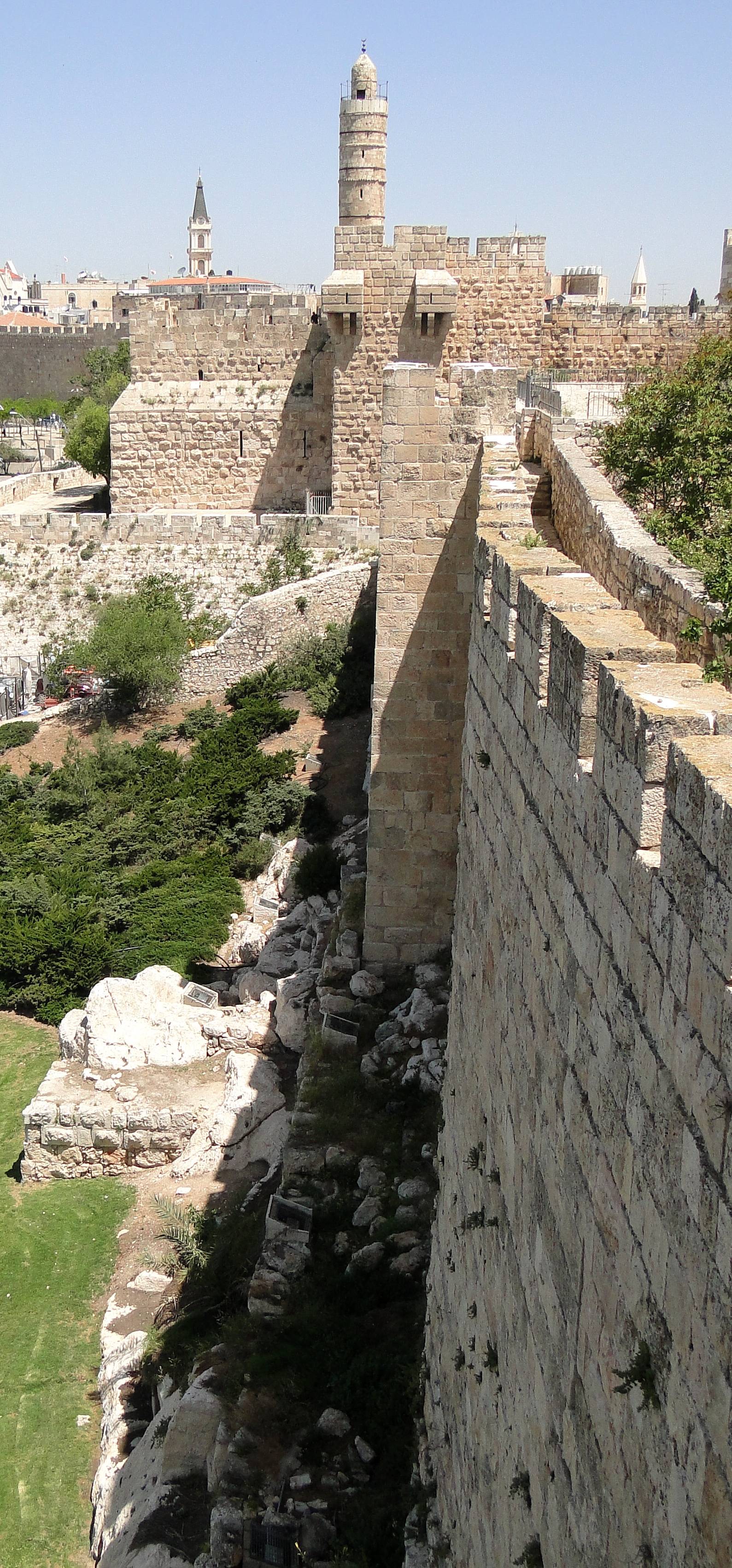
We so often build emotional walls around us. We believe the walls are meant to protect us. But in fact, these walls shut us off, creating a spiritual and emotional prison that keeps us from others as surely as they shut others out. But our greatest joy comes when we are in a relationship with others, when we can trust in ourselves enough to entrust others with the most intimate parts of who we are. Although it is scary to admit our fears, it is also empowering; for it opens us up to the possibilities of the heart.
This trust and openness is not a place of weakness; it takes a strong person who is able to show vulnerability. To show someone else, a spouse or a child, that you need them and their help requires inner strength and courage. It reinforces and deepens the relationship bringing you closer than before. Together you can face what certainly would have been a lonely battle by yourself. This becomes a message of hope.
The meaning of Shelach is ultimately this message of hope, which might seem counterintuitive. The older people are consigned to die in the desert so that the next generation is properly prepared to enter the Land. But it is this older generation who are the teachers of the generation that will enter the Promised Land. Even though they suffer the consequences of mistrust, the rest of the Torah shows them grapple with this important lesson and strive to teach their children well.
_________________________________
[1] The term Middot, in Numbers 13:32, has been translated to mean size or stature. However, in the context of Mussar, Middot also means measure, character, or values. The Torah might have this broader understanding of this word, strengthening the argument posited in this essay.
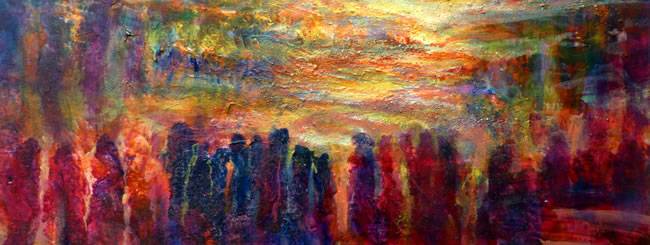
Idan Raichel brings us Beresheet – a new song which he wrote during his travels, inspired by several unexpected encounters with people from Africa and India.
The song is accompanied by a beautiful video created by the sand artist Ilana Yahav, who brings her visual interpretation of the song in a sensitive and heartwarming way.
My thanks to Adam Wishkovsky for sharing this piece with me.
“As we express our gratitude, we must never forget that the highest appreciation is not to utter the words, but to live by them”.- President John F. Kennedy
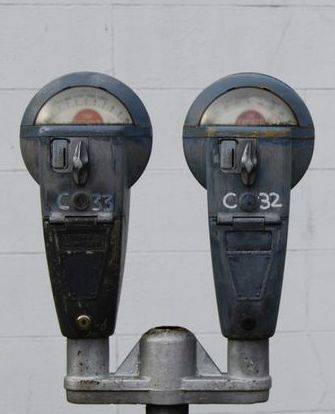 I saw the meter maid stepping towards the back of my car to get license plate info. The meter had expired a few minutes before and like clockwork, she was there at the ready to write the ticket. I called out “Excuse me Ma’am!” and started to cross the street hopefully catching her in time. As I stepped off the curb, I felt a snap in my knee and down I went. The pain was excruciating. She looked up and saw me. I knew I had to get to her so I limped over as best I could, needing to catch my breath before I could say anything. She reached out to me to help me and asked if I was okay. We started to talk and she made it clear that she would not leave me until I was safely in my car.