Yehi Shalom
A wish for peace performed by Neshama Carlebach and Josh Nelson.
~Shabbat Shalom
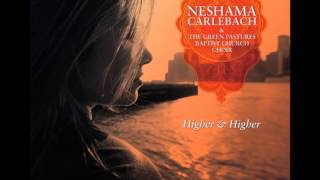
Yehi Shalom
A wish for peace performed by Neshama Carlebach and Josh Nelson.
~Shabbat Shalom
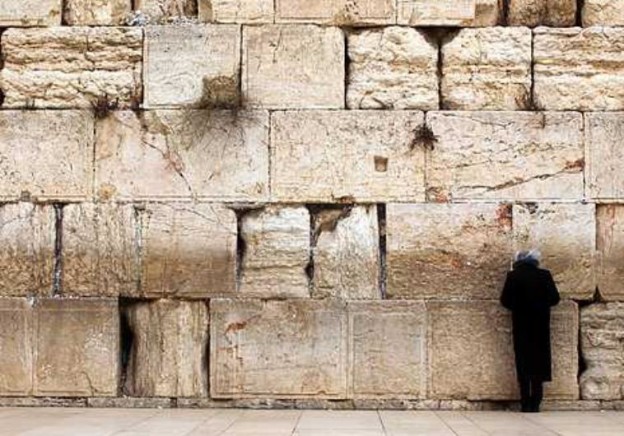
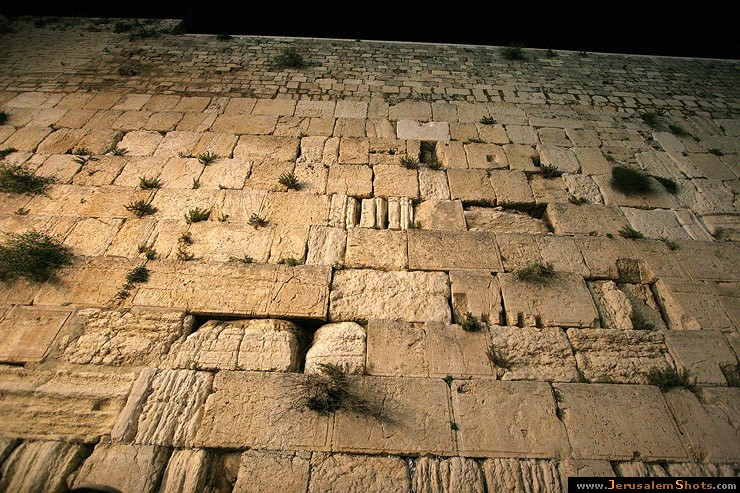 The Kotel is a special place. As a remnant of the Temple, we have gravitated to it to feel a special closeness to our history, to a Divine place, the home for the Almighty that we built. We feel a deep emotional and often mystical connection that draws us into the space. Otherwise it is nothing more than a large brick wall.
I recall arriving in Jerusalem for my first year of rabbinical school in Israel. I got off the plane, hopped into the sherut to Jerusalem dropped off the bags and then headed to the Wall. It was late. I had traveled for what seemed like days and although exhausted, I was compelled to go to the Wall. The emotions welled up from deep inside. I stood in the plaza gazing upon this place. With the kind of intense reverence and awe that happens rarely, I slowly approached the Wall. It was powerful. The thing that happened to me was an extraordinary moment, an encounter between my history, my people, my God and me. But the Kotel is not the sole place of my Judaism. The Makom or place of my Judaism extends beyond time and space and includes the idea of a Jewish people. This vision of Judaism however is compromised by the very compromise announced to create separate spaces for different kinds of Jews to pray.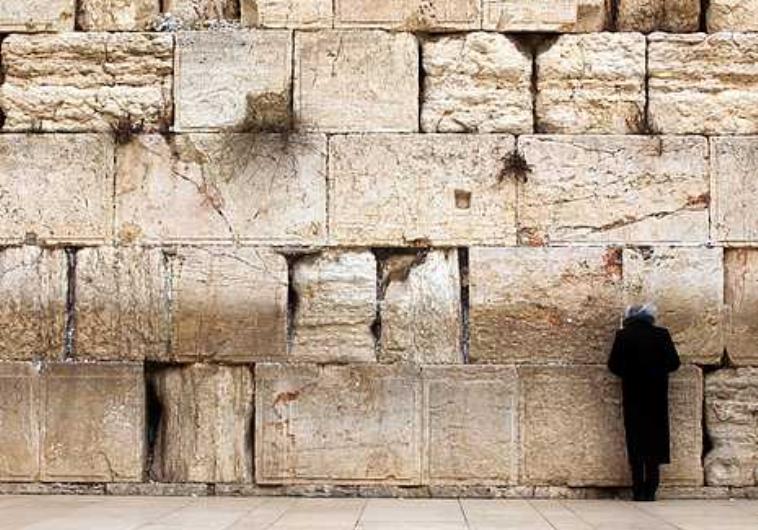
The arrangement for the space at the Wall has in many ways undermined what the space itself means for Judaism. Each denomination of Judaism now has a place it can call its own. The Wall of the Temple has been segregated, sliced and diced so each sect has an area where it can feel comfortable. The gain of a place for egalitarian Jews at the wall however is also the loss of the symbol of the Wall for us all as a place of unity; for these partitions are along the fault lines of Ashkenazic observances segregating us from each other instead creating a place accessible to everyone. The remnant of where God dwelled amidst the Jewish people has become a place of division and discord within God’s people.
We have all seen the photographs of the wall at the turn of the century. Men and women were 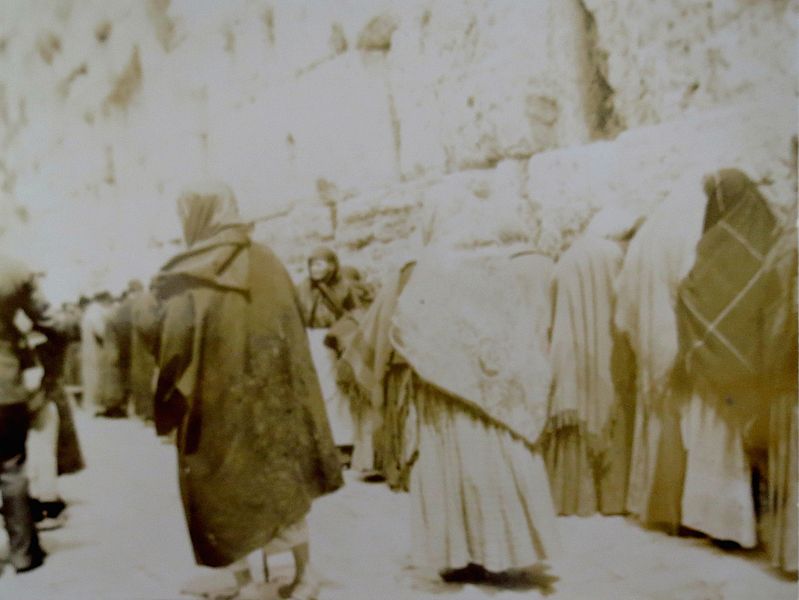 there together. The Wall was a private space to connect individually in a public place. How you practiced or the community with which you identified did not matter. In the early post-1967 days that sense of Klal Yisrael permitted a similar experience. It was fleeting, and sadly, it has devolved into staking territory in a turf war. Although liberal Judaism may have won something important in getting a place at the wall to pray, we must regretfully acknowledge that in this agreement something else important continues to elude us, namely the unity of the Jewish people.
Perhaps we should re-focus the issue as one regarding the kind of ceremony and ritual that are generally permitted in this public private space. The kinds of rituals that permit us to be together could be more important in the grand scheme of things than the particular observances that create schisms among us. In my experience I was solitary but in communion with Am Yisrael. Under our current circumstances an experience at the Wall might require we visit both areas, one to be among those who share our beliefs and practice and the other to be with another part of our people, to taste their experience and ponder the ideas of the Judaism values that guides us all and strive to create a Judaism that connects us all.
Source: Marines’ First Jewish Chaplain
As a co-editor of the Philadelphia Jewish Voice, I reviewed this wonderful and fascinating story that we posted today to commemorate Veteran’s Day. It is a moving story about a certain Jewish chaplain who transcended boundaries to honor the memory of all the fallen.
One of our great teachers, Rabbi David Wolpe, shared the following Kavannah, prayer, for this Shabbat. I am honored to share his eloquent and thoughtful words below:
We invite people around the world to recite this kavannah in unity with the State of Israel this Shabbat, October 17, 2015
El Maleh Rachamim — Compassionate God,
We pray not to wipe out haters but to banish hatred.
Not to destroy sinners but to lessen sin.
Our prayers are not for a perfect world but a better one
Where parents are not bereaved by the savagery of sudden attacks
Or children orphaned by blades glinting in a noonday sun.
Help us dear God, to have the courage to remain strong, to stand fast.
Spread your light on the dark hearts of the slayers
And your comfort to the bereaved hearts of families of the slain.
Let calm return Your city Jerusalem, and to Israel, Your blessed land.
We grieve with those wounded in body and spirit,
Pray for the fortitude of our sisters and brothers,
And ask you to awaken the world to our struggle and help us bring peace.
As Yom Kippur approaches this evening, we offer each other words of kindness, “Have an easy fast.” But this self-affliction is purposeful and not meant to be easy. We fast to help create an atmosphere of contemplation and deep reflection as we bare our souls.
So instead, I want to wish everyone a “Tzom Chashuv,” a “meaningful and important fast.”
Today the community lays to rest Reverend Clementa Pinckney along with the others murdered last week: Cynthia Hurd, Rev. Sharonda Coleman-Singleton, Tywanza Sanders, Ethel Lance, Susie Jackson, Depayne Middleton Doctor, Rev. Daniel Simmons, and Myra Thompson.
We have much to learn from the power of faith and the power of forgiveness of these extraordinary people and those who are left behind. The survivors of those who were slain by a human consumed with hate have shown the power of love and forgiveness. Jewish tradition views forgiveness differently. Personally, I struggle to think I could forgive as they have. We all have something profound to learn from these wonderful people imbued with a faith based in love.
We say zichronam livrachah, may their memories be for a blessing. The nine people assassinated during bible study in their church truly were a blessing to us. They and those they leave behind are an inspiration to all of us. We are all blessed. May that blessing be merited, may we build on what they have left to us.
Wishing you all Shabbat Shalom,
The swirl of events both at home and abroad makes keeping an even keel difficult if not almost impossible. The storm rages and calls out to us to react harshly, which can only add to the anger. Some may recall Jonah offering himself up to be sacrificed and when the sailors threw him overboard, the seas calmed. But that is not how it is here. Instead it is more like Nadav and Abihu, the priests and sons of Aaron who brought offerings ostensibly honoring God. But God rejected their alien fire and they were destroyed. The storms call out for more sacrifices but to give in would consume not only our offerings but us as well.
We are compelled to act against the injustice and the evil we see in the world around us, compelled to act against the injustice and evil that seduces its followers to do wrong while believing they champion a worthy cause. Now more than ever, each of us is compelled to seek the wisdom of our texts, the Ethics of our Fathers, to guide us on straight paths. This Erev Shabbat, I share with you the poem “IF” by Rudyard Kipling:
If you can keep your head when all about you
Are losing theirs and blaming it on you,
If you can trust yourself when all men doubt you,
But make allowance for their doubting too;
If you can wait and not be tired by waiting,
Or being lied about, don’t deal in lies,
Or being hated, don’t give way to hating,
And yet don’t look too good, nor talk too wise:
If you can dream—and not make dreams your master;
If you can think—and not make thoughts your aim;
If you can meet with Triumph and Disaster
And treat those two impostors just the same;
If you can bear to hear the truth you’ve spoken
Twisted by knaves to make a trap for fools,
Or watch the things you gave your life to, broken,
And stoop and build ’em up with worn-out tools:
If you can make one heap of all your winnings
And risk it on one turn of pitch-and-toss,
And lose, and start again at your beginnings
And never breathe a word about your loss;
If you can force your heart and nerve and sinew
To serve your turn long after they are gone,
And so hold on when there is nothing in you
Except the Will which says to them: “Hold on!”
If you can talk with crowds and keep your virtue,
Or walk with Kings—nor lose the common touch,
If neither foes nor loving friends can hurt you,
If all men count with you, but none too much;
If you can fill the unforgiving minute
With sixty seconds’ worth of distance run,
Yours is the Earth and everything that’s in it,
And—which is more—you’ll be a Man, my son.
Shabbat Shalom
This Shabbat brings to a close a sorrowful week. The tragic deaths of five were senseless and all the more so that they were in synagogue when the assailants struck. We are left with our grief and profound sadness and a fork in the road, a choice for us to determine how we react and how we move forward.
A prayer to God in this moment is not sufficient. For I am sure God’s Will is for peace. Now, my prayer reaches out to humanity. May we find it in ourselves to refuse to succumb to blind hatred. May we have the strength to resist the temptation for sadness and grief to devolve into blind hatred and we not seduced by the desire for revenge. May we take the proper time to mourn our loss and support the grieving families. Then let us arise and find ways to move forward along a path that brings peace and compassion. May our leaders help to bring calm and not incite or place blame with incendiary rhetoric.
There has been enough hate this week to last us a lifetime. Hate has only brought us despair, distrust and deep loss. May the time of hate come to a close and a new chapter rise from the ashes of this tragedy. May we find the way to peace.
Shabbat Shalom
May this year be one of meaning and fulfillment to each of us. May we enjoy health and the love of family and friends.
May peace show us the glimmers of hope that we can build a better world and someday learn to live in harmony.
לשנה טובה ומתוקה
לשנה טובה תכתבו
Tradition asks us to recite Psalm 27 during the month of Elul as we prepare for the High Holidays.
I share the following beautiful translation of the psalm by Rabbi Yael Levy, on Congregation Mishkan Shalom, Philadelphia
TO THE BELOVED,
THE INFINITE PRESENCE is my light and expanse, whom should I fear?
The Infinite Presence is the strength of my life, what shall I dread?
When forces come close
Seeming to devour me
When narrowness threatens
And opposition attacks
All that is menacing stumbles and falls
EVEN AS AN ARMY of mistrust besieges me
My heart does not fear
Even as thoughts and desires rise up against me
I still have trust
ONE THING I ASK of the Infinite, One thing I seek
To dwell in the Presence all the days of my life
To awaken to the beauty of each moment as I pass through this world
THE INFINITE shelters me as I encounter difficulty and pain
The Infinite holds me close in deep and hidden places
And lifts me high upon a rock. Now I can see through to what is true
And I will offer my gifts of thanks
And I will sing and make music to the Eternal
Please, Infinite One, Listen to my voice, hear my call
BE GRACIOUS WITH ME
Answer me
You call to my heart, “Seek my presence”
Your presence I seek
Please don’t hide from me
Please don’t let me turn away in anger
I long to serve
You are my help
Do not let me feel abandoned
Do not let me turn away
In You I am safe
For my Mother and father have left me
And it is you who gathers me in
Teach me Your ways. Guide me on the path of integrity
THERE IS SO MUCH to lead me astray
Don’t let me give in to all that torments me:
the lies, the illusions, the menacing threats
I MUST HAVE FAITH that I can see through all of this
I can see the good, the blessings, the ways of life
CULTIVATE HOPE in the Infinite Presence
Let your heart be strong and filled with courage
CULTIVATE HOPE
– Translation by Rabbi Yael Levy