Six13 brings us a welcome to this Shabbat with the Prince of Egypt medley.
Enjoy the music and the story in the lyrics. Count the Omer with us as we travel towards Sinai.
Shabbat Shalom
Six13 brings us a welcome to this Shabbat with the Prince of Egypt medley.
Enjoy the music and the story in the lyrics. Count the Omer with us as we travel towards Sinai.
Shabbat Shalom
As we rise toward Shabbat, this song I found on Ulpan La-Inyan by Shai Gabso, I lift My head- Arim Roshi, offers us a chance to reflect at the end of another tumultuous week.
Shabbat Shalom
We Rise!
Sung by Batya Levine and members of Hadar, we welcome Shabbat in song. As we pray for the Peace of Jerusalem, we know there is much work to be done.
Let us Rise together-
Shabbat Shalom
In these particularly turbulent times, this pensive song from the incomparable Rabbi Debra Sacks Mintz is a soulful prayer to help us enter Shabbat.
May peace and wholeness come to all.
Shabbat Shalom
Love (with)… all your perfect imperfections
John Legend’s beautiful song All of me, inspired by his love for his wife, Chrissy, moved and inspired many of us with the romance. But what happens when reality falls so far short of the romantic vision, pushing the boundaries of acceptable, even tolerable? Unfortunately, divorce is often the result.
I am struggling with my relationship with Israel. The aspirations of our ancient homeland land and our history drew me to the miracle that was and, in many ways, continues to be this place. But the state is pressing on issues such as racism, tolerance for pluralism, and checks and balances in government. I was suckled in a mythic Israel but have learned to ween myself, given the practicalities of a nation-state that cannot live solely by the hopes and dreams of the Jewish people. However, as Ben Gurion understood, to be a nation like other nations. It was a pragmatic understanding of survival in the harsh real world. Today, the ideals of a homeland that is both Jewish and a democracy are threatened by raw political power and expediency.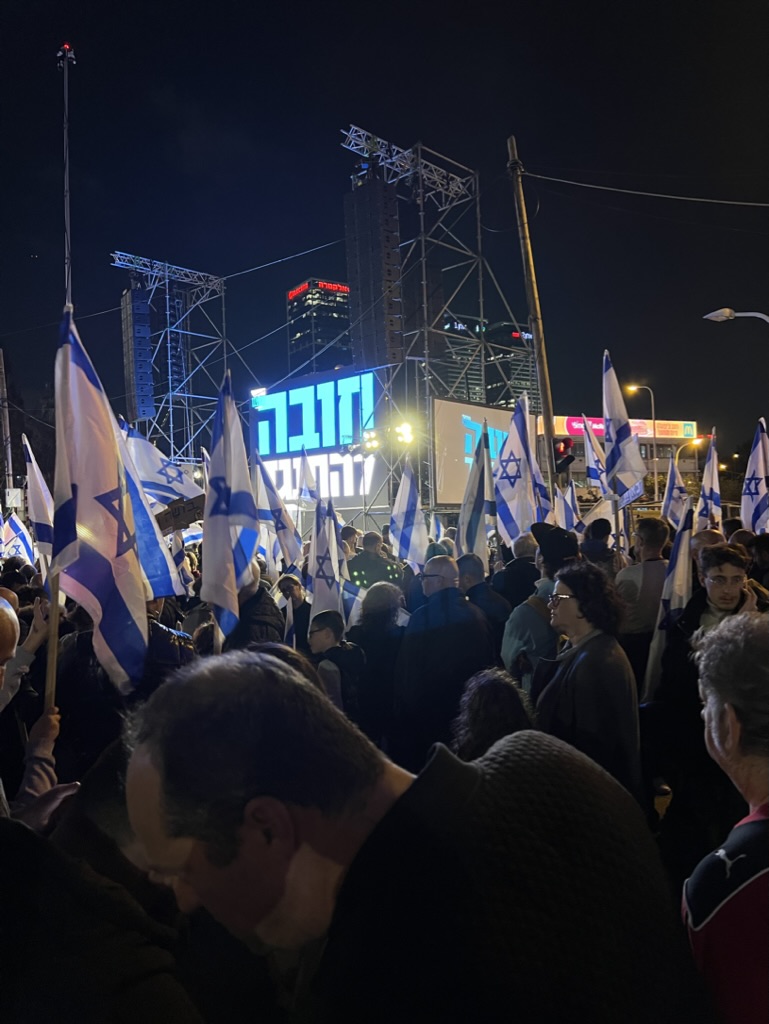
We had come to accept Jewish and Democracy in tension. But, for the first time, we face the existential crisis of threatening both. The fractious rough and tumble nature of Israeli politics and the need to form a governing coalition in Knesset has brought us to a new place.
Over time, we developed complacency in our attitudes. Israel, as a Jewish Democratic state, was always considered a given. Laws and policies often were merely annoyances and opportunities for workarounds. “Religious” marriage meant a weekend in Cyprus. The orthodox church that has become the Kotel was not an issue for the secular. Israelis have enjoyed unprecedented prosperity and unrivaled military strength, making this a safe and secure place for most. Palestinian rights, west bank settlements, and civil rights were not on the radar screen of most and were relegated to the margins.
Then came Bibi 3.0. The assault on cherished rights, once considered unassailable, has awoken many from slumber. The protests in the streets by hundreds of thousands are sending a strong message that this is unacceptable. “Guns and butter” at any cost are not enough. The extensive unbridled settlement program is intolerable, and the Israeli terrorist response to terrorism is rightly called a pogrom. To use a familiar Jewish word, it is a Shanda.
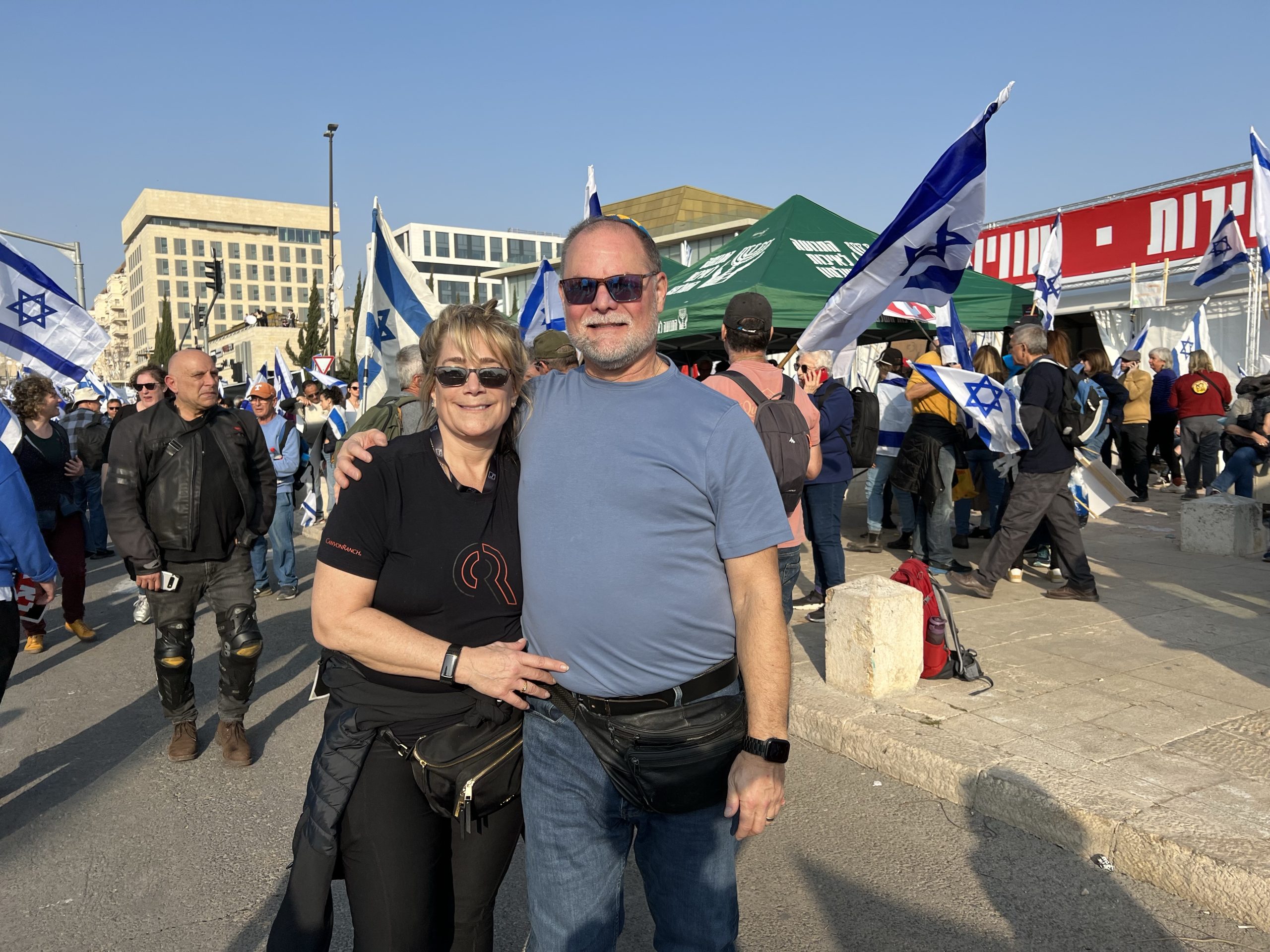 I struggle to love the country as I continue to love the land that held a people charged to be a light unto the nations. This is my heritage. Last week during my trip to Israel with the CCAR, I was proud to be at two demonstrations in Jerusalem and Tel Aviv. I was deeply moved to see the sea of Israeli flags and patriotism on display. However, I was disgusted and deeply aggrieved to be spat on when attempting to bring our Torah for Rosh Chodesh and assaulted by yeshiva bochers as trying to stop my expression of Judaism in the Kotel space.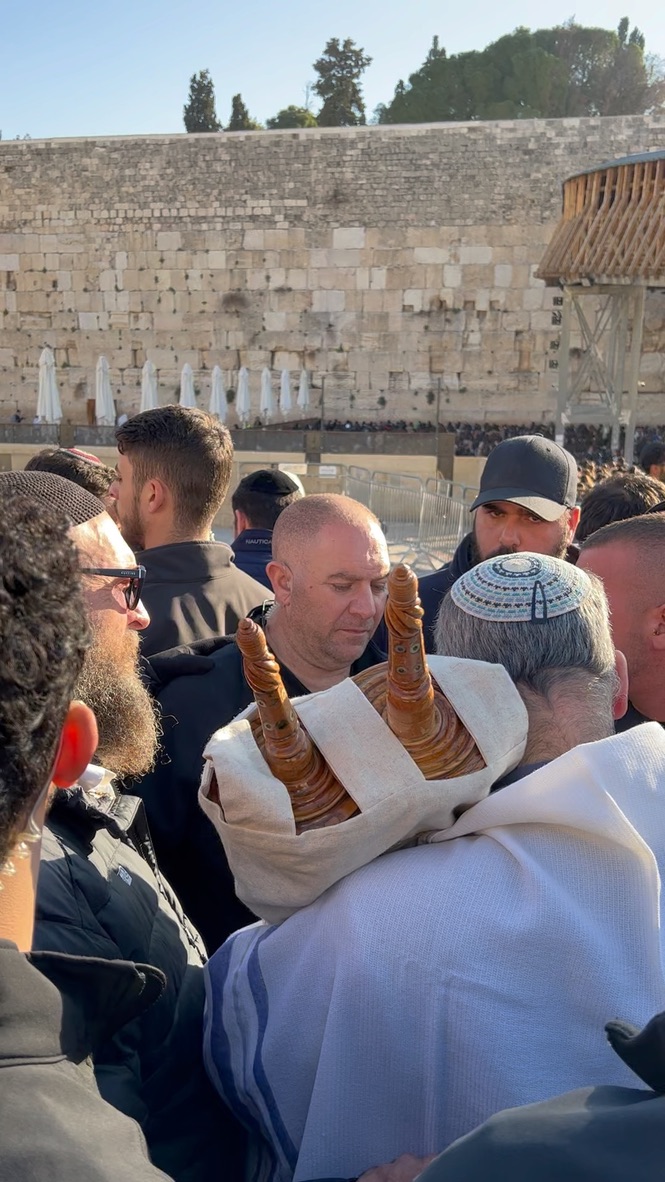
I cannot turn my back on this precocious and precarious experiment. But I am distraught. I support those who do the work, including the Israeli Religious Action Center and the brave Women of the Wall. I also proudly support NGOs who envision a place where people can live in a shared society, including the Yad b’Yad schools and the New Israel Fund, on whose regional board I serve. I am actively considering dual citizenship, not to lessen my devotion to the United States, but to achieve a voice in shaping the destiny of Israel as only a voting citizen can do. I urge everyone to evaluate where they stand and what they want to do at this critical juncture.
No one can sit on the sidelines any longer.
Shabbat closes a painful week both here and abroad.
El Na Refa Na La- the prayer for healing is our prayer that healing of the broken may be. May this Shabbat bring you peace and wholeness, and may we find ways to reach out to you.
Shabbat Shalom
Oseh Shalom is our prayer wishing for peace
Elana Arian brings her beautiful composition and voice to this prayer with Julia Cadrain.
Shabbat Shalom
This stirring mash-up of speeches by the Reverend Martin Luther King Jr. set to the Haftarah trope (the chanting used for the Prophetic books) reminds us how we are connected.
Shabbat Shalom
We use Shir Hashirim as part of the imagery in welcoming Shabbat.
12 Tribes Music shares this love song.
Shabbat Shalom