Category: ethics

  • Rashi and Discernment

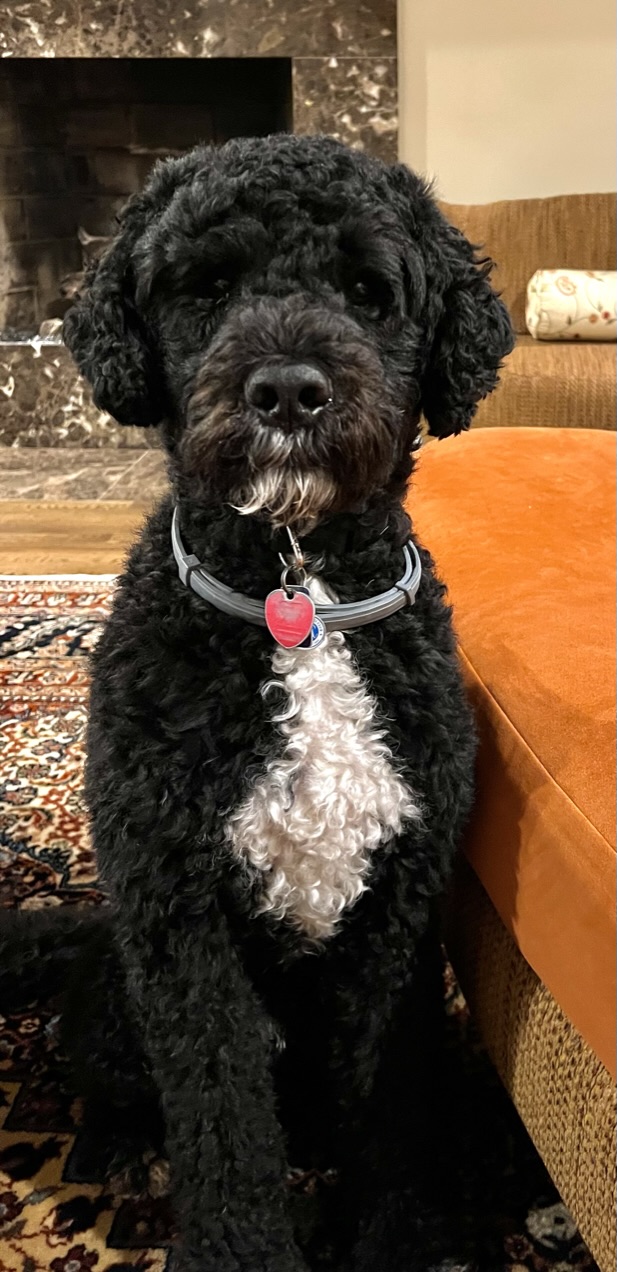
    I have a wonderful dog. His name is Rashi (if you know, you know), and he holds his post on the sofa in my study, keeping watch over the road and the property below. He announces the mail carrier. He announces every delivery truck, the refuse trucks, every dog on the sidewalk, and every neighbor who dares to walk past on our sidewalk or the one across the street. Heaven help the car that turns into our driveway without a written invitation he has personally endorsed, which is to say almost never. It would be admirable, this loyalty, if it did not arrive with a force capable of waking the dead. I sit at my desk, holding a fragile thought together, when Rashi decides the moment has come to alert the household to a squirrel. I have started to suspect he is in league with my cardiologist, testing whether my heart can survive the shock. So far, so good.

    This morning I looked at Rashi, whom I am fairly convinced understands English when it suits him, and asked whether he might practice a little discernment. It is not, in this house, an unreasonable request. My wife and I have spent years studying Mussar, and discernment is a word Rashi has heard often enough to have an opinion on.

    He did not have opinions. He barked at a falling leaf.

    Here is what I did not say to him, because a dog cannot be expected to absorb a full teaching between barks. Discernment is not a demand for silence. It does not ask Rashi, or any of us, to stop noticing the world. The instinct that makes him bark at the mail carrier is the same instinct that makes him a genuinely good dog: alert, loyal, unwilling to let anything on this property pass unremarked. Mussar has a name for the discipline I was actually asking of him. Zehirut, watchfulness, is the first rung Rabbi Moshe Chaim Luzzatto builds in Mesillat Yesharim, and its claim is modest. Before you act, look. Examine your ways, whether they are good or not, rather than moving through the day on reflex. The word shares a root with azhara, meaning warning, which tells you something about its purpose. Watchfulness does not exist to shut the alarm off. It exists to ask, in the half-second before the alarm sounds, whether this is actually the moment for it.

    That half-second is the whole of it. Discernment lives in the gap between the thing arriving and the response leaving your mouth. It asks you to be present enough in that gap to notice what you are about to do, what it will cost the person standing in front of you, and what it will cost you, too, if you are willing to admit it. There is an old line, usually credited to the Stoic Zeno of Citium and just as often misattributed to Epictetus, about why we have two ears and one mouth: so that we might listen twice as much as we speak. I have always found it easier to quote than to practice. It does not tell you to say nothing. It tells you where the ratio ought to sit.

    If you imagine Rashi without the bark at all, you have not pictured a wiser dog; you have pictured a stuffed one, and I would miss the real animal, alarms and all. What I actually want from him, and from myself, is smaller than silence. It is the pause. The moment when you are self-aware enough to feel the bark forming and to ask whether this squirrel, this comment, or this reply typed in anger needs to leave you right now. Some of them do. Most of them, in my experience, do not.

    We are in Elul, walking toward the Yamim Noraim, and the season brings a familiar instruction: look back at where you fell short. I want to offer a different use for looking back. Not an accounting of what you got wrong so much as a record of what you learned and where you might pause next time, so that the person you are becoming in 5787 carries slightly better judgment than the one writing this sentence. That is the real work of Teshuvah. Not punishing the self you were, but training the self you are still becoming.

    I have not figured out how to ask this of myself in all the moments it actually matters, at my desk, mid-sentence, mid-argument, mid-life. I suspect I am not alone in that. Rashi, for what it is worth, slept through the entire writing of this essay. No comment on the squirrels.

    Wishing you all a year sweetened by a few more pauses than the one behind us.

    L’Shanah Tovah u’Metukah

  • This Is Not a Security Problem

    (This Essay was published in the Jewish Exponent on July 27, 2026 and reprinted here)

    Each time I enter the Weitzman National Museum of American Jewish History, I stop at the security checkpoint. The guards may recognize me from previous visits, but I still empty my pockets and remove my belt. Beyond the checkpoint, I put myself back together. Inside this special space, I am safe. Located on Independence Mall, across Market Street from the Liberty Bell, the museum acknowledges the Jewish community’s extraordinary place in the United States. But that specialness also makes it a target. Just two weekends ago, someone defaced the sculpture outside the Weitzman, and someone else violated the sanctity of New York’s Central Synagogue.

    I won’t tell you how to feel about it. Anger, fear and grief are valid responses to these and many other assaults. We are deeply saddened that our country harbors hatred that betrays the great promise we believe in. Yet anger, fear and grief can be paralyzing. Paralysis becomes silence, and silence is the goal of those responsible for these heinous, cowardly acts. I will not give them what they want.

    There is a phrase in the Talmud that I keep returning to, Kol Yisrael arevim zeh bazeh: all of Israel is responsible for one another. Arevim shares its root with eiruv, the boundary that turns separate private courtyards into a shared domain on Shabbat, so that carrying between them becomes simply what neighbors do. Arevim is about creating community. It is about refusing to treat your neighbor’s doorway as the limit of your concern.

    Here is what I think a lot of us get wrong about that phrase. We hear “all of Israel” and assume it’s drawing a line: our people, not others. I don’t think that’s what it’s teaching; instead, it’s teaching that responsibility has to start somewhere concrete before it can go anywhere. For us, it starts here with us. It was never supposed to end there.

    This is not a security problem. It is a relationship problem disguised as a security problem.

    Let me be plain. I am not minimizing guards, locks, magnetometers, or cameras. =The Jewish Federation of Greater Philadelphia has invested real money through its community security initiative to harden facilities and keep a bad Saturday morning from becoming a funeral. I’ve sat in briefings and learned what a trained guard and a hardened building can prevent. If you give to Federation, some of what you gave helped build that. You should know it, and you should give more this year because the need did not go down this month. It went up.

    But there is more for each of us to do than write a check. It’s an extension of believing we are part of a larger society, invested in each other’s safety, not just our own. We tend to treat interfaith friendship as something for calmer times: a shared meal, a joint text study, or a panel discussion with refreshments afterward. I want to suggest we have that backward. The friendships built during calm times are the real infrastructure that concrete barriers can’t replace. The guard who might recognize me at the Weitzman is not Jewish. Neither is my friend who will stand beside me and publicly declare that we support each other. Those relationships did not happen because of a program. They happened because we showed up enough times to become people to each other, not categories. Some weeks, that feels like a small thing next to everything else rabbis are supposed to do. This week, it doesn’t feel small at all.

    I also want to be honest about something closer to home. The Board of Rabbis of Greater Philadelphia, which I have the honor of leading, brings Orthodox, Reform, Reconstructionist, Renewal and Conservative rabbis into the same room, even though we disagree about enormous things. Areivut does not ask us to resolve those disagreements before we act together. It asks us to act together anyway, because responsibility supersedes disagreement. If that’s true inside our own house, it has to be true at its borders, too.

    So here is what I am asking of Philadelphia Jewish Exponent readers, who are already inside the tent, already connected enough to a Jewish institution to hold this publication in your hands. Call your legislators. Not an email, but an actual voice on the phone, so a staffer has to hear it and take a name. Ask what they are doing to fund security at houses of worship, ours and our Muslim neighbors’ alike, because we are both targets of the same hatred. Increase what you give to Federation’s security fund and say why.

    Then do the harder thing. Think of one person outside this community, a neighbor, colleague, or parent from your kid’s soccer sideline, and call them. Share what happened at the Weitzman. Tell them what it would mean if they showed up outside your synagogue some Saturday morning, not to do anything, just to be there. They will not know you want this until you ask.

    Finally, show up yourself. This Shabbat, go to shul and be counted. It costs only getting dressed and going, and it matters more than every paragraph I’ve written here. An empty sanctuary tells whoever did this that their plan worked. A full sanctuary, with a few unfamiliar faces near the door because you asked them to come, tells them something else entirely.

    My email tagline says, “God’s miracle is not in the thunder and lightning. It’s in people sheltering each other from the storm.” I believe this more than ever, not because it is easier to believe now, but because I watched what happens when a community decides to test whether it is true. Areivut is not a slogan on a wall. It is your presence. It is a phone call you have not yet made.

    Who is it to?

    Rabbi David Levin is president of the Board of Rabbis of Greater Philadelphia and founder of the Jewish Relationships Initiative.

  • Shabbat Shalom

    We are to tell our story as an act of gratitude.  “Ki Tavo commands us to bring our first fruits and tell our story — not as boasting but as gratitude. Andra Day rises because the story she carries demands it.” 

    Shabbat Shalom

    עוֹשֶׂה שָׁלוֹם בִּמְרוֹמָיו הוּא יַעֲשֶׂה שָׁלוֹם עָלֵינוּ וְעַל כָּל יִשְׂרָאֵל וְעַל כָּל יוֺשְׁבֵי תֵבֶל וְאִמְרוּ אָמֵן

    Oseh shalom bimromav, hu ya’aseh shalom aleinu, v’al kol Yisrael, v’al kol yoshvei tevel v’imru amen.

    May the One who makes peace in the high places, bring peace upon us, and upon all Israel, and all humankind, and let us say: Amen.

  • The Night They Rewrote the President’s House

    In the middle of the night this past July, National Park Service crews removed the panels at the President’s House on Independence Mall and replaced them with a different version of the story. No announcement. No public unveiling. That was probably the point.

    In the musical Gigi, there is a song called “I Remember It Well.” Two former lovers recall the same night, and their memories don’t agree on a single detail. Neither is lying. They illustrate what history frequently does too: the story we tell ourselves is often incomplete and rarely matches what actually happened.

    We like our history tidy and uncomplicated, an unblemished hero, and an easily understood meaning. History, like most human stories, is not a record of what happened. It is processed and filtered, then handed back by the storyteller/redactor as meaning.

    In 2010, a new exhibit titled “Freedom and Slavery in the Making of a New Nation” opened at the President’s House. It told two stories at once: the birth of the presidency and the story of the nine people Washington enslaved in that same house while he governed. He led a nation founded on the proposition that all men are created equal, yet he owned slaves. This fuller, more honest story is both complex and ironic.

    In March 2025, a presidential executive order directed the National Park Service to remove exhibit content that portrayed our founding in a negative light. Last January, the Park Service removed the panels at the President’s House. Philadelphia sued to have the original panels restored and lost. This is a fight over the manner we understand history, including whether we can hold two truths about the same man at the same time.

    George Washington was a brilliant general and a remarkable first president. He nobly and voluntarily walked away from power when he could have kept it. He was also a slaveholder who relied on enslaved labor to run his household while building a nation on the language of liberty. All of this is true. Nothing cancels the other. A history that tells only the first part isn’t protecting Washington for us; it’s attempting to protect us from him and from what his contradiction asks us to see in ourselves.

    I don’t think the answer is to tear him down or to build him up. Our responsibility is harder than either: to let him stand as he was, admirable and implicated at once, and to ask what that implies for us.

    Washington is not a special case. Shlomo Carlebach rewired how a generation of Jews sang and prayed, and he used his standing to harm women who trusted him. Richard Wagner composed music that can move people to tears and also wrote antisemitic tracts that the Nazis later claimed as their own. Genius and leadership often come with their shadow.

    Do we dismiss a person’s achievements because of their faults? Or do we hold the gift and the fault together, refusing to let either erase the other? That is the real work before us, at the President’s House and whenever someone or something we admire also carries the inexcusable.

    The comfortable version of history asks little of us. We may learn some new facts, but otherwise it essentially confirms what we already believe and sends us home unchanged. The complicated version asks us to sit with imperfect people, including our ancestors and even ourselves, who were capable of both nobility and cruelty in the same lifetime.

    Some see this as a weakness in the story; I believe it is the story itself.

    What would it mean to let the fault sit right beside the gift, in Washington, in Carlebach, in anyone on whom we’ve built an inheritance, not as a footnote but as part of the story? What would it mean to do the same with our own history, our own families, or our own choices? We don’t get to answer that question once and be done. We have to keep answering it, generation after generation, argument after argument.

    That is where learning from history truly lives, not in the tidy version but in the argument we’re still willing to have.


  • You’ve Made It- a message of Ki Tavo

    You’ve made it.

    I remember standing in a robe I’d never worn before, waiting for my name to be called at ordination and receive my Smichah. Five years of arduous struggle with text and new learning, self-doubt and yearning, brought me to a door with a new life just on the other side of the threshold.

    Ki Tavo opens on the same threshold: the name means “when you come” or “when you enter.” After forty years of a life lived one day’s manna at a time, B’nei Israel is told what happens on the other side of the wandering. Stand half the tribes on Gerizim, half on Ebal, and hear the blessings and curses called out across the valley. Near the parsha’s close, Moses says something startling: “Until this day, the Lord has not given you a heart to know, or eyes to see, or ears to hear.” (Deut. 29:3)

    Rashi, citing the Talmud, calls the sojourn a forty-year apprenticeship: a student doesn’t fully grasp a teacher’s wisdom while still living within it. Freedom and despair held the whole trek, neither ever defeating the other. The same generation that walked out of Egypt upright, unowned for the first time in memory, kept begging to go back, the terror of the open desert outweighing whatever freedom was supposed to feel like. Both built the organs Moses says only now work.

    I am sure you also remember the Wizard of Oz: the Wizard sends Scarecrow off with a diploma and Tin Man off with a heart-shaped watch. I used to read this as a secret they always had. They didn’t. Scarecrow learned to solve real problems along their journey, badly at first, better as the miles went on. Tin Man ached for Dorothy until the ache became, undeniably, a heart. The diploma and the watch mark the end of the apprenticeship. Moses closes one too, forty years later, on the plains of Moab.

    I have a deeper appreciation now of what I didn’t know in that robe. The Smichah didn’t hand me anything. It marked the point where five years of study and work had built enough of a rabbi to be trusted with the door. The building continued, with no ceremony, the following Monday.

    Which may be why Ki Tavo doesn’t let the forging stop at the border. It follows its own graduation line with a list: honest weights, field corners left for the hungry, a tithe handed over before you’ve decided you can afford it. None of it is glamorous. All of it is the forty years continued in miniature: a heart needs exercise to stay strong, and it gets that on ordinary days, not mountaintops.

    Ki Tavo’s list is not merely a set of ledger entries, God tallying rewards for the obedient and punishment for the defiant. I buried that pediatric theology long ago, when a good man’s chart recorded things his heart hadn’t earned. Good people lose everything; careless people prosper for decades, and no verse explains it away. What I trust is quieter: what we do in the small, unwatched hours still matters, and it adds up.

    The freedom didn’t turn into relief once they crossed, and the despair didn’t lift either. That may be why the mountains remain two, standing across from each other, neither ever collapsing into the other, both still true today. I know people who believe in a zero-sum game think a finite pile means grabbing first, before the next person can, treating others as threats rather than neighbors. I know others, driving across town with food for someone they’ve never met, paying a cost that isn’t theirs because someone had to. Gerizim hasn’t canceled Ebal. They’re both still standing, and so are we, somewhere between them.

    I have a heart to know now, more than I did years earlier, that it was built the way B’nei Israel was: not handed over but earned over years, with no one else watching. Ki Tavo isn’t really asking whether we possess it. It’s asking what we do with it on the Tuesdays after the ceremony ends, when no one is watching, and every day thereafter.

    Which mountain are you standing on today?


  • Shabbat Shalom

    As we welcome Shabbat and read from Ki Tetzei, the musical connector is Lecha Dodi.  Based on a verse from Isaiah, we are told “Dont be ashamed” despite the trials of the week, welcome the comfort of Shabbat.

    David Sasso brings Lecha Dodi to us with Bluegrass.  Using this genre is a metaphor about reaching out to others and creating relationships wherever they may be.

    Shabbat Shalom

    עוֹשֶׂה שָׁלוֹם בִּמְרוֹמָיו הוּא יַעֲשֶׂה שָׁלוֹם עָלֵינוּ וְעַל כָּל יִשְׂרָאֵל וְעַל כָּל יוֺשְׁבֵי תֵבֶל וְאִמְרוּ אָמֵן

    May the One who makes peace in the high places, bring peace upon us, and upon all Israel, and all humankind, and let us say: Amen.

  • What Happens to the Stragglers? Parsha Ki Tetzei

    Why does a portion overflowing with civil law stop, in the middle of everything else, to tell you how to build your roof?

    When you build a new house, Torah says, put a ma’akeh, a guardrail, on the roof, so no one falls. It sits in Ki Teitzei almost an afterthought among dozens of other laws: return the lost ox, pay the worker before sundown, leave the gleanings for the poor. But ma’akeh is the right word for the whole portion. Every law here is a guardrail, a protection for those who could fall or be pushed.

    We build guardrails because we don’t fully trust each other, and a society honest about that protects people exactly where power tends to slip: the wife accused without evidence, the son a father wants to disown, the worker whose wages could vanish if no one were watching. Ki Teitzei is guardrail after guardrail, each one placed where someone could fall.

    Madison wrote the same instinct into the Constitution: if men were angels, no government would be necessary, and since they are not, government must be given enough power to govern and then be obliged to control itself. Checks and balances in our government are guardrails by another name, built because we know what power does when no one is watching or nothing is stopping it.

    What they were built to keep out has a name: Amalek. Torah tells us exactly what he did. He attacked from the rear, cutting down the stragglers, the elderly, and the exhausted, too weak to keep pace after Egypt. The Hebrew for it is zanav, to tail. And Torah adds one line about why: he did not fear God. Fearing God, in this text, means knowing something stands above you, that your own strength is never the final word. Amalek feared nothing greater than himself, and a man who fears nothing greater than himself decides soon enough that the weak exist for his convenience.

    Hubert Humphrey put it plainly, dedicating a federal building: the moral test of government is how it treats those at the dawn of life, the children; those at the twilight of life, the aged; and those in the shadows of life, the sick, the needy, and the handicapped. Society is judged by how it treats its most vulnerable. Those are exactly Amalek’s targets.

    I recognize that fault line right now, and it does not belong to another country. Those same guardrails, due process, the courts, a Congress willing to check power rather than defer to it, get treated as obstacles rather than as boundaries. Immigration raids treat frightened, exhausted people the way Amalek treated the stragglers, as targets of opportunity rather than as human beings owed protection. Settlers in the West Bank, claiming to act in the name of my own tradition, terrorize Palestinian families with brutality that has everything to do with Amalek’s logic and nothing to do with Torah. When the government looks away from these or blesses them outright, I no longer consider them legitimate by the standards of our tradition.

    Ki Teitzei commands us to erase Amalek’s memory precisely because that instinct never fully leaves: the appetite for treating a guardrail as an inconvenience rather than a covenant. What do we do when the stragglers being picked off are visible right now, on the news, at the border, in cities, villages, and olive groves? It is one of Moshe’s final charges to his people before he dies: make sure we are never mistaken for Amalek, or for the government, or for the neighbor who lets him operate unchecked.

    I have no program to offer, no plan for how a rabbi in Philadelphia moves the world’s cruelty. But I know what my tradition asks of me before I know what to do about it: let the stragglers, wherever they are this week, be people I am responsible for, not a category I have learned to tolerate.

    What would it cost you to do the same?

  • Shabbat Shalom : Justice – Shoftim,

    “The most urgent imperative in Devarim: justice, justice — pursue it. Dylan has been asking the same question his entire life. So has Torah.

    This Shabbat, both voices together, with the artistry of Peter, Paul and Mary.

    Shabbat Shalom


    עוֹשֶׂה שָׁלוֹם בִּמְרוֹמָיו הוּא יַעֲשֶׂה שָׁלוֹם עָלֵינוּ וְעַל כָּל יִשְׂרָאֵל וְעַל כָּל יוֺשְׁבֵי תֵבֶל וְאִמְרוּ אָמֵן

    Oseh shalom bimromav, hu ya’aseh shalom aleinu, v’al kol Yisrael, v’al kol yoshvei tevel v’imru amen.

    May the One who makes peace in the high places bring peace upon us, and upon all Israel, and all humankind, and let us say: Amen.

  • Why does justice have to be chased? Parshat Shoftim

    Tzedek tzedek tirdof, says Moses in this week’s Parshah, Shoftim. Justice, justice shall you pursue. Not achieve. Not establish. Pursue, tirdof, the same root you’d use for chasing something running from you.

    I keep circling the doubling. Rashi reads it as ends and means: one can’t justify the other. True, but not enough. Justice never holds still long enough to be caught in one hand: the justice of the letter and the justice of the spirit, what the law permits and what it should permit. Say it once, and you’ve named half of it. Say it twice, and you’ve admitted the whole thing is bigger than any single verdict.

    Moses gets specific: appoint judges and officers, gather two witnesses, investigate meticulously, take no bribe, “for a bribe blinds the eyes of the wise and perverts the words of the righteous.” Then, almost without transition, a line that should unsettle us: in every generation someone will interpret this law for you, and you are not to deviate, right or left.

    Read plainly, that’s a demand for total deference. The Talmud makes it stranger, not simpler. Rosh Hashanah 25b insists this applies “even if the judge before you is Yiftach,” a flawed, minor judge from the book of Judges, “in his generation as though he were Samuel in his generation,” the greatest judge Israel ever had. The law itself hasn’t changed. But the period and society in which it is interpreted have.

    That should unsettle us more than it comforts us. A judge can be wrong, or bought, or certain he holds all of justice in his hand when he’s holding half of it. But a judge can also be persuaded, and this is less a flaw than the whole point.

    We call ourselves a nation of laws, one that holds together only if it applies to everyone alike. We build precedent so no single ruling carries that weight alone. But precedent moves too: we watched the Supreme Court overturn nearly fifty years of it, reversing Roe v. Wade. Whatever you believe about the merits, Shoftim already taught the deeper lesson: no court of last resort is anything but some version of Yiftach. We can appeal upward, term after term, but the appeal ends somewhere, and we are bound to comply, whether we agree or not. A shared law is only shared if it binds the people who lose the argument too.

    I remember waiting for test results, my wife beside me, the room dark and lonely, my imagination filling in what the doctor hadn’t said yet. The doctor could have been wrong about the diagnosis, about the treatment. What I noticed was how little the verdict had to do with the anguish. It was the not-knowing whether whoever held my chart was seeing me or processing me. Lo takir panim, the Torah tells judges: do not recognize faces. It’s a warning against favoritism, and equally a demand to see the face in front of you clearly enough to recognize the humanity looking back. You cannot do that with a law no one is left to interpret in the present moment.

    We are handing more of our judgment to systems that can never be Yiftach in any generation: built once, unable to say, “the letter of the rule does not serve the person in front of me.” Risk-assessment algorithms in sentencing. Automated denials in insurance and benefits. A frozen rule can’t be bribed, nor does it tire at the end of a long docket. But Torah already knew that a system incapable of being persuaded isn’t the same thing as a just one. Tzedek tzedek tirdof describes a pursuit, and a pursuit requires someone alive enough to be moved.

    When was the last time I let a rule be argued with? When was the last time I trusted a person in front of me more than the process built to replace them? Tirdof doesn’t promise you’ll catch it. It only takes stopping off the table.

    Shabbat Shalom.

  • Re’eh  ·  O Say, Can You See?

    My father kept one of those hokey maxims framed on his office wall: “When you are up to your a** in alligators, it’s hard to remember that your initial objective was to drain the swamp.” I used to smile at it and move on. Lately, I can’t. This week, Moses stands before the people and does something that should stop us cold. He says, Re’eh, See. And then he sets before them a blessing and a curse.

    See. As if seeing were the easy part.

    The parasha opens with the Hebrew imperative re’eh: look, perceive, take it in with your own eyes. Not sh’ma, hear, the verb that opens the great declaration of faith. Moses is not asking the people to accept a teaching on someone else’s authority. He is asking them to see for themselves, to recognize blessing and curse when the two stand right in front of them. Arguably, that is the hardest thing he asks of us in the whole Torah.

    Because in the moment, we almost never can. Blessing and curse do not come labeled. They arrive tangled together, wearing each other’s faces. The job that looked like a curse turns out to be the doorway. The relationship that felt like blessing slowly hollows us out. We are down in the swamp, swinging at alligators, and the reason we came has vanished from view. Moses says, “See,” and honestly: from here? I can barely make out my own hand.

    I have to be honest about what the text does, because it does not obviously agree with me. Moses plants the blessing and curse on two mountains, blessing upon Gerizim, curse upon Ebal (Deut. 11:29). When the ceremony plays out, the labels are fixed in advance. The Levites call each curse and the people answer amen (Deut. 27). Nobody is squinting across the valley, agonizing over which mountain is which.

    So let me name my own leap rather than smuggle it in. I want to ask what this ceremony means for those of us who never get the labels in advance. Here is what I notice: Moses does not send one lonely seeker up the mountain. He gathers the whole people into the valley and assigns half to each height, and the words travel back and forth across the divide, out loud. The seeing is not solitary. It happens in the space between us.

    Which lands me in a contradiction I would rather hold than hide. The command is re’eh, see for yourself, take no one’s word for it. And the surprise is that I cannot. I am too deep in my own swamp to trust my own eyes about it. The only way I reach the view “from thirty thousand feet” is to turn to you, on the other mountain, and let you tell me what I cannot see: that thing you call a blessing, look again. That thing that feels like a curse, stay with it. The verb is see. The practice turns out to be sh’ma, to heed another voice. I can only see through you.

    Which brings me back to the title. O say, can you see? The anthem asks it at dawn, straining to see whether something precious survived a night of thunder and rockets and glare. That is the honest condition. We are all peering through the smoke of our own night, unsure by ourselves whether what we love is still standing. The miracle was never in the thunder and the lightning. It is in people sheltering one another from the storm, calling across to each other at first light so no one has to read the sky alone.

    I still cannot always tell the blessing from the curse in the moment I am living it. I have stopped expecting to. But I have learned who to ask.

    So, since you can see a valley of mine that I cannot: who is standing on your far mountain, and what have you not yet asked them to help you see?