Author: Rabbi David Levin

  • The somber and painful message of Adult Purim

    The somber and painful message of Adult Purim

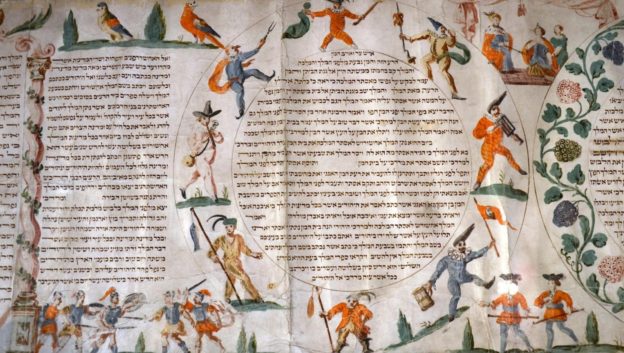
    A person should drink on Purim until the point where he can’t tell the difference between “Blessed is Mordechai” and “Cursed is Haman. (Talmud – Megillah 7b) “Ad d’lo yada…”

    Why do we drink so that we can no longer distinguish between the “Blessed” Mordechai and the “Cursed” Haman?  Perhaps because in this world of Purim where things are turned  upside down, the two men had changed places and toward the end of this story, it is impossible to distinguish between them.  And this serves as a warning for us to take great care in how we act.  The rabbis are admonishing us that underneath this story of triumph and joy lies an ominous message. 

    Towards the end of the Megillah, the story takes a dark turn.  Briefly, the Jews are saved, Haman is hanged.  The King grants the Jews permission to annihilate anyone that poses a threat to them, including women and children and to plunder their possessions. Mordechai methodically plans the Jew’s revenge;  and the oppressor becomes the victim as the Jews dominate their enemies.  First in Shushan, the Jews killed 500 men and Haman’s 10 sons, then another 300 were killed, and then across the kingdom the Jews proceeded to kill seventy-five thousand more.  The death and destruction recounted is dreadful.  Jews slaughtering in retribution are as horrible as those actions Haman had planned.  Mordechai accomplishes what Haman had plotted. 

    We are admonished to destroy the Amalekite, and Haman is a descendant of Amalek himself. But if we annihilate the enemy, even one who planned to annihilate us, aren’t we just as guilty of murder and bloodshed? It is not only the Amalek who lives as another that should concern us; A piece of Amalek lives inside all of us, call it the yetzer hara, or inclination toward evil.  Our yetzer tov, or inclination toward good, is always in competition with it.  Purim asks which of these will prevail in our lives?  At its core, the destruction of Amalek and the story of Purim are existential questions of our humanity.

    And perhaps that is why we drink to oblivion.  Usually, we drink wine as a symbol of our joy.  But drinking to excess is something else entirely.  Heavy drinking is a form of self-medicating.  Drinking until losing rational senses is drinking to forget.  We drink heavily to escape the brutal reality.  Although our people were saved, we committed atrocities- not as a crime of passion,  but a deliberate plot to methodically exterminate tens of thousands of people.  We drink to forget our shame and horror at what we had done. 

    To underscore this grave situation, the Gemara on Megillah 7b continues with the bizarre story of Rabba and Rabbi Zeira, where in a drunken stupor, Rabba slaughtered his dear friend Rabbi Zeira.  Otherwise good people can do profoundly terrible things.  This is what can happen when you lose control, when you lose sight of what is right, betray your core and operate in the absence of God (it is noteworthy that Megillat Esther does not mention God). And it is precisely here that the rabbis insert God back into the discussion as Zeira is resurrected after Rabba beseeches God to intervene and set right what Rabba had destroyed. 

    When we arise from our stupor, we have a hangover; a brutal headache from the excesses of the night before.  We know that a hangover is an indication of dehydration, a lack of water , which further intensifies the message.  Water is a metaphor for Torah, and maybe it is the lack of Torah that permitted the carnage. 

    Megillah Esther warns us to be very careful.  The Megillah  cautions us to not become “like them” and react to extract revenge, sacrificing both them and our humanity.  Megillat Esther challenges us instead to rise up with dignity and respect, embracing the values that have made Judaism the extraordinary gift to the world that it is.  

    Purim is a layered complicated story filled with cause for celebration and sorrow and an profound admonitory note to soberly review who we are. 
  • Shabbat Zachor Shalom

    Shabbat Zachor Shalom

    In the wake of yet another inhuman tragedy, we stand in silence and solidarity mourning lives senselessly taken in the name of hate and pray this Shabbat that we may someday find peace and wholeness. 

    Shabbat Shalom

  • What do you see?

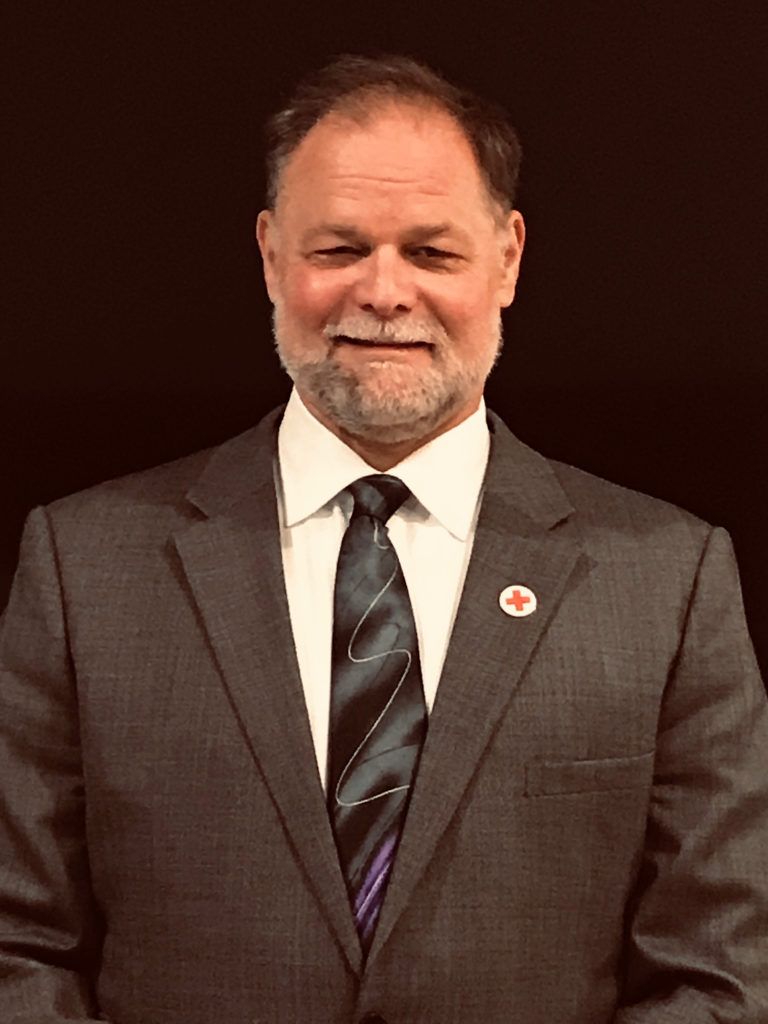
    It is me sporting an American Red Cross lapel pin saying, I am a proud volunteer with a great organization and I am asking you to join me.   The American Red Cross is a wonderful humanitarian organization devoted to helping people in need during times of crisis. 

    I am part of the Disaster Spiritual Care team. I was deployed to help the people of Pittsburgh in the wake of the shooting.  Every time there is a need, from house fire to conflagration, from minor flooding to hurricanes, from natural to man-made disasters, the American Red Cross is there.  And we need more help.

    As a volunteer, you will be trained to share in the amazing work we do.  It is an incredible way to give back to your home community, in my case the Jewish community, or wherever the need might take you.  It is a wonderful and rewarding experience.  Please join me. Go online at your local American Red Cross chapter to begin the process.  JOIN US!

  • Shabbat Shalom

    Dror Yikra, Proclaim Freedom, is a part of our Shabbat tradition. A poem written in Arabic by Dunas ben Labrat, a Sephardic Jew who lived in the 10th Century, it is brought to the Shabbat table by the extraordinary Maccabeats.

    Shabbat Shalom

    Thanks to JewishReflections.org for the background on this wonderful part of our cultural heritage.

  • Shabbat Shalom

    Shabbat Shalom!

    I found this acapella rendition of Psalm 29 sung by the Beth Shalom Ruach Singers! I hope you enjoy as we welcome Shabbat.

  • Shabbat Shalom

    Rav Kook, considered the father of religious Zionism, penned this poem Ben Adam, Son of Man:

    Son of Man rise up For you have great strength
    You have wings of spirit the wings of great eagles
    Don’t deny them lest they deny you
    Claim them Son of Man and they shall be immediately found

    Here it is performed by Orot in a singing circle in 2015:

    Shabbat Shalom

  • Stand and See

    I am excited to share that I am co-leading a group of emerging Christian leaders on a trip to Israel as part of the Stand and See Fellowship. This unique initiative sponsored by CLAL brings seminarians to the Holy Land with a rabbi, a Christian scholar, and a local guide. Although our threesome might sound like the beginning of an amusing joke, this is a serious enterprise designed to connect these future faith leaders emotionally, spiritually and intellectually to Israel and promote a nuanced understanding of contemporary Palestinian life. 
    Learn more at: https://standandsee.org/

    Here is the press release from CLAL:

    CLAL is excited, honored and proud to announce our Stand and See Fellowship trip being conducted with Minneapolis’ Luther Seminary. The trip will be co-lead by our colleague and RWB alum, Rabbi David Levin, and Luther Professor, Rev. Matt Skinner Ph.D. Both bring deep experience and intellectual depth to this work — Matt as a professor of New Testament Studies and David with years of congregational, communal and educational leadership — and each is a genuine thought partner whose contributions to Stand and See will be felt far beyond this particular journey.

  • Shabbat Shalom

    Adon Olam has many recognizable melodies we use. These extraordinary Cantors performed some of them Thanksgiving 2017. Listen for one of your favorites.

    Shabbat Shalom

  • Shabbat Shalom

    As we enter this Shabbat, the last of the year 2018, I share Craig Taubman’s Hashkiveinu.

    This prayer as part of the evening service asks for Divine protection from the darkness. May God’s shelter of peace bring us safety and peace.

    Shabbat Shalom

  • This Christmas, Let’s enjoy what we have

    Each year I hear the following:

    ~Put Christ back into Christmas

    ~Get materialism out of Christmas

    ~Don’t Mix Hanukkah and Christmas

    Do this, don’t do that; lots of proscriptions  and prescriptions.  But maybe we might pause and  appreciate it precisely as it is.

    Christmas is more than the birthday of Jesus.  Indeed, as we all know, it is not the day of his birth. That Christmas is more than the  marking of Jesus’ birth is not new.  The idea that we may universalize the message of the holiday has been at the heart of a Christian message, softly spreading of the values at its core.  I have always been taken by the beauty of the idea expressed in John 3:16: “For God so loved the world that He gave His only begotten son…”  It is a message of love and light and our world does not have enough of either.  The message is enlightening and one I can deeply appreciate even if I do not embrace the theology.

    To those who attend mass or use this as a moment of sacred holiness,  I stand respectfully quiet.  To those who decorate homes with all kinds of festive lights, I drive by like a tourist taking in the spectacle, even grading for taste, presentation, originality, and use of the secret ingredient (with deference to Iron Chef).  For those who gather the family to share a meal and time together, I only wish we had more reasons to do that.  For those who give gifts, no matter how big or small, I hope that each gift is an expression of love and caring for both the giver and the receiver, bringing both close together.

    Christmas in America is beautiful, even those parts some of us just don’t get.  But that is okay.  So, to everyone,  a very Merry Christmas (and a Happy New Year)!