Author: Rabbi David Levin

  • What am I entitled to?

    What am I entitled to?

    What can I or any member of society reasonably expect? What is it that each of us deserves, and who provides it? This is a question to ask of our society and the communities in which we live. I think it’s fair to say that most of us want to be valued, seen, heard, and shown a modicum of respect and dignity. Our Jewish tradition offers us “rules of the road” to guide proper behavior, including how we treat others and how others treat us. Our government has also set certain expectations. According to our founding documents, we are entitled to life, liberty, and the pursuit of happiness. Of course, understanding what these mean and how to provide them to each citizen is a very complex task. Sometimes we handle it well, but often we fall short as a country. This creates the core tension and highlights the need for ongoing conversation to truly understand what these rights mean.

    The lack of conversation and understanding that there are multiple ways to achieve solutions creates problems in our society. Both the left and the right become more entrenched in political arguments instead of engaging in meaningful discussions about what these issues truly mean. For example, regardless of politics, most people of goodwill would agree that allowing children to go hungry should not happen in this country. But how do we feed the hungry children?

    This is a process argument, not about the underlying value, and here is where our faith tradition becomes a vital guide.

    One of our core wisdom texts, known as the Talmud, provides a roadmap for understanding. A fundamental value is introduced, followed by a series of discussions, debates, and disagreements. “Makhloket L’Shem Shamayim,” an argument for the sake of heaven, seeks to understand how the underlying value manifests itself in various circumstances. The arguments, including both the majority and minority views, are presented in this book. The reason is that even the winning argument may not always be correct. In the future, the dissenting opinion that was once preserved may be proven right if cultural or societal norms change.

    In the debate about feeding hungry children, parents are primarily responsible, but if they are unable to do so, the community should step in and provide food. But how does the community feed the hungry child? That raises an important question about the process. There is also legitimate disagreement about how to deliver food to hungry children. It can be through a government program. It can be achieved by providing money so that others can obtain food, or by helping parents improve their living standards, enabling them to afford to feed their children. And to make things even more complex, what does alleviating hunger actually mean?

    Are we required to feed children according to a specific nutritional standard? How much influence should outside forces have over family decisions? What happens when parents are incompetent, and what occurs when nutritional standards are set or changed—something we’ve seen happen many times in the past? All of this assumes that well-meaning people are committed to preventing children from going hungry.

    Some people only care about themselves, ignoring everyone else. Others realize that society should be judged on whether all who are hungry are fed. Still, others believe it is simply the morally right and ethical thing to do.

    Questions like these are fundamental, which is why today’s tribal politics are counterproductive. These politics don’t help us address our societal obligations or what I am entitled to; instead, they emphasize power and control and vilify the opposing side. We must ask the right questions, engage in meaningful conversations, reach a conclusion, and then act on that decision. This presents both a significant challenge and a valuable opportunity for building a thriving, vibrant, and just society. Let’s start discussing what truly matters.

     

  • Psalm 27 is added to our prayers during Elul and through the chagim.

    We prepare ourselves for this special time with the prayer that we might dwell in the house of the Divine.  May your experience this season be meaningful, filled with reflection, repentance, and renewal.

    Thanks to Chava Mirel for this beautiful rendition of Psalm 27:4.

    Shabbat Shalom

    #BringThemHomeNow


  • Shabbat Shalom

    This Hungarian orchestra shares Tumbalalaika.

    It is a love song in which a young man seeks a bride who can answer three riddles as the balalaika plays.  As we greet the Shabbat bride during Elul, the question perhaps is flipped: Will we be worthy of the bride?

    Shabbat Shalom

    #BringThemHomeNow

  • Children slaughtered again

    What does it say about a society that allows, even supports, the murder of its children? That society is headed to Hell, if it isn’t already there.

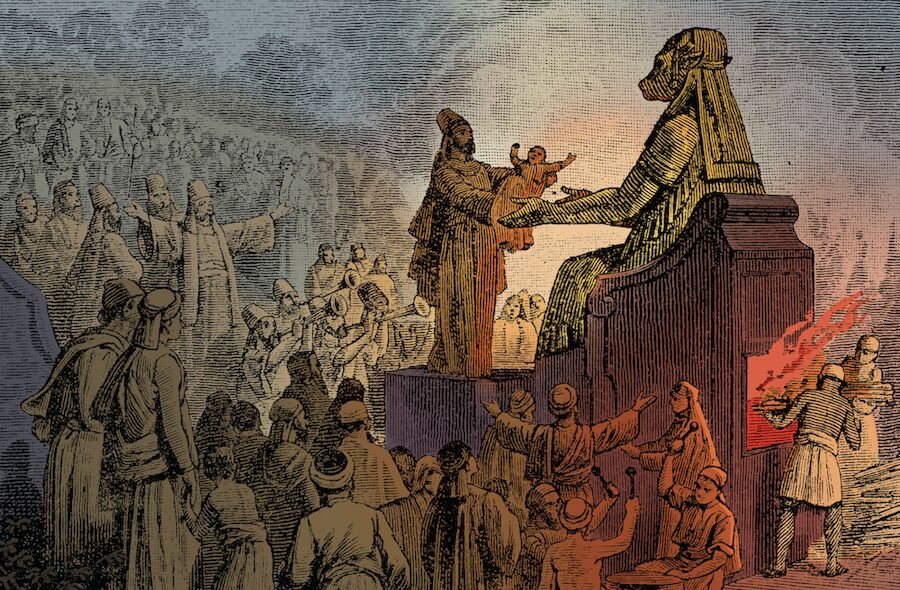
    In biblical times, the Valley of Hinnom was a place where people practiced child sacrifice to the god Molech. The name of that place became Gehenna, which is now synonymous with Hell.

    As strange as it may seem, we appear to accept child murder. The ways to prevent it are within our reach. However, we prefer to keep the right for people to wield deadly weapons unfettered rather than to protect the lives of our youth. Once again, a disturbed individual obtained guns, brought them to a church, and slaughtered children while they were praying. Two dead, 17 injured. It is almost incomprehensible, but true. It is another episode of the carnage of our kids by guns.

    Furthermore, we are to blame.  The blood of those innocent children is on our hands because we refuse to enforce oversight to keep guns out of the hands of people who do such heinous things—shame on us.

    There is something profoundly wrong here. A society that accepts child murder as the price of freedom to bear arms has a name. Welcome to Hell.

  • Shabbat Shalom

    This song caught my heart today.  Thanks to the Maccabeats for Minyan Man.

    With so much divisiveness, it’s good to remember Kol Arevim Zeh laZeh, All Israel is responsible for one another.  Each of us is important. Each of us can make a difference.  Together, let’s welcome Shabbat and welcome God’s peace.

    Shabbat Shalom

    #BringThemHomeNow

  • MAN DOES NOT LIVE BY BREAD ALONE- THE MESSAGE OF EIKEV

    MAN DOES NOT LIVE BY BREAD ALONE- THE MESSAGE OF EIKEV

    When life becomes easier and we start to relax, hard-won battles fade into distant memories. We then drift into a new reality, and instead of staying alert and valuing our principles, we relax, enjoying a good life and the rewards of our hard work, daring to believe we’ve earned it and that it will always be ours. The hunger that once motivated us diminishes and we face the consequences. It is human nature to become complacent, but we must not.

    This is Moses’s cautionary message to the people in his final speech. He warns them that change is coming. The generation that met God in the wilderness is passing away, and a new generation will take their place and settle in the promised land. Without that personal experience, these new generations risk losing their close relationship with God.

    Turning away from God is dangerous. Forgetting how you arrived here and showing gratitude through consistent reverence and practice will lead people to ruin. Just as the current inhabitants who are about to be displaced from the land, you, too, will eventually lose the blessings of this place and be forced to leave as well.

    The wilderness has taught you to be strong.

    There’s an old story that teaches us tough times build strong people, and strong people then create easy times. Those easy times lead to soft people, who in turn produce tough times again. It’s a cycle that can only be broken by staying committed to God, because God’s gift of the promised land won’t lead us to complacency. It remains a constant challenge.

    We see this in our community today. The previous generations worked hard and built a better life for their children and our children. They will inherit wealth that makes life easier. However, they may not fully remember the sacrifices others made for them. We are currently experiencing one of the biggest transfers of wealth in history. Money and property are passed to this new generation to simplify life. But this is only material wealth. The true challenge is how to pass down the lasting core values that emphasize hard work, sharing our abundance, and working to improve the world by carrying forward the values of our tradition for everyone. We face this challenge today just as Moses did then.

    I recently spoke with a woman who was worried that her death might come too soon. Although her body was ready, she felt her children were not; they were unprepared to manage without her. The question was more complicated than the answer. Moses, too, is struggling to give final words of advice, admonitions to remember God and follow His word. At the end, it is too late to change the course. We hope that the lives we live and the values we model become lessons learned and embraced.

    A midrash about the patriarch Jacob depicts him surrounded by his sons as he nears death, reflecting on whether his children have learned the lessons and will uphold the values or if those values will die with him. The adult children respond, “Listen, Father, we hear you and it shall be,” saying, “Shema Yisrael, Adonai Eloheinu, Adonai Echad.” With his final breath, Jacob says, “Praised be Adonai forever.” Baruch Shem kavod malchuto l’olam va’ed.” (Gen Rab 95)

    We would all sleep better knowing everything will work out. We do our best. For Moses, it was to be a prophet, a liberator, a teacher, a priest, a judge, and a man. For forty years in the desert and many years before the Exodus, he showed how to serve his people through his devotion to God. In our own ways, as parents, we also have those same responsibilities. As loving parents, we do our best to nurture and provide our children with what they need to find their way in the world. Then, it’s time for them to stand on their own. We work toward this moment diligently and can only hope it will be enough.


  • Shabbat Shalom – Oseh Shalom

    Oseh Shalom, May there be peace for all of us.

    Thanks to Cantors Benji Schiller, Azi Schwartz, and Shira Lissek for this beautiful prayer.

    Shabbat Shalom

    #BringThemHomeNow

  • What’s in a name?

    What’s in a name?

    Genocide is a highly charged word.

    In Shakespeare’s Romeo and Juliet, Juliet asks, ‘What’s in a name?’ Names are simply labels we use to identify things, but the true nature of those things exists regardless of what we call them. Genocide is a highly charged word. We get so caught up in the word and all of the intense emotional baggage it carries that we forget the underlying tragedy: it is an attempt to understand what is happening in Gaza.

    One side calls it a genocide; the other disputes that term, accusing the accusers of deliberately misusing the word, targeting the victims of such an experience as if they were the perpetrators of that very same horror. We get caught up in definitions, a kind of territorialism, claiming ownership of that word, and in doing so, we completely miss the point.

    The people suffering in the war in Gaza are truly experiencing pain. It’s not just about numbers—whether it’s one person or many—innocent victims of the Hamas-Israel conflict have died. They go hungry. They are homeless. They are victims. Although I do not trust the statistics from the Gaza Health Ministry, there’s no way to measure the full extent of the carnage accurately, and Hamas’s role in this is dehumanizing Palestinians, echoing what the Nazis did to Jews.

    We must navigate this challenging space and find ways to offer humanity and hope that we were denied, and, sadly, to the Palestinians as well. From the ashes of Auschwitz, we proclaimed Never Again. Was this declaration meant only for us? Our Jewish duty to be a light to the nations requires that it not be. We must uphold our tradition’s promise by maintaining our humanity and embracing the virtues of Pirkei Avot (2:5); in a world that has no worthy men, strive to be a man.

    Whatever you call it, the war and anguish must end.


  • What Story Do We Tell Ourselves- V’etchanan

    What story do we tell ourselves? Our memory of events often differs from what actually happened. The deviation from the facts is not due to faulty memory; instead, it reveals a story that better meets deeper personal needs as we try to find meaning in the experience. This tendency to reshape narratives is a profoundly human trait, one that is powerfully explored in the Parsha V’Etchanan through Moses.

    In the second Parsha of Deuteronomy, Moses recalls the Exodus and God’s giving of the Torah. The word V’Etchanan means “I pleaded.” Moses recounts his encounter with God, beseeching God to allow him to enter the Promised Land. Moses’s plea, filled with a heartbreaking sense of injustice, is denied.  He explains his fate to the people with an accusatory tone: “The Lord was angry with me on your account and would not listen to me.”

    Taken at face value, Moses appears to be shifting the blame for his own mistake—striking the rock at Meribah—away from himself and onto the Children of Israel. He isn’t just holding them responsible for the act itself but also for his suffering caused by his unfair punishment for that act. After 40 years of leading often ungrateful and rebellious people, Moses was exhausted, broke down, and acted in a way that was uncharacteristic for him, but he is held fully accountable. Moses isn’t merely recounting a story but revealing a fundamental aspect of human nature: blaming others for our own actions.

    We often face these situations. How do we respond when confronted with insult or injustice? Too often, we avoid taking responsibility for our actions and instead blame others. We react with harshness or indifference, rationalizing rather than owning up to the situation. The “whataboutism” mentality justifies bad behavior by claiming that if someone wrongs me, I am justified in doing something wrong too. However, our tradition teaches us that ultimate responsibility lies with the individual. The lesson is not that others’ actions can justify our own, but that we are accountable for our behavior, regardless of the circumstances. We cannot point fingers at others to absolve ourselves.

    This theme of personal accountability is closely connected to Moses’s chilling prophecy. He warns the people that after they have lived in the land for some time, they will inevitably “deal corruptly” and turn away from God. This human weakness and tendency toward complacency lead to a future of exile. However, Moses offers a remedy for this bleak future: a return to the fundamental principles of their faith, sharing both the “Ten Commandments” and the Shema and V’ahavta.

    Our tradition teaches that living by our values is non-negotiable. What we know as Derekh Eretz—the ethical “rules of the road”—must always be followed. We are only given dispensation when we are prevented from fulfilling our obligations. The strength and enduring nature of Judaism require that we respect others and live in a way that benefits both ourselves and our community.

    We stand against all hatred—not just antisemitism.  We support the laws of the land and everyone’s rights to those protections. We believe in feeding the hungry, no matter who they are, housing the homeless, and upholding the dignity of work and the ability to support one’s family. Judaism teaches us to do these things because we understand what it means to be a stranger and to honor every person, since we are all created in God’s image.

    A society is judged by how it cares for its most vulnerable. This is a core principle of Judaism. Especially during difficult times like these, we are called to reaffirm and champion our values. They are more than just guidelines; they ground us, giving us clarity, meaning, and purpose.


  • Mizmor Shir – Shabbat Shalom

    Nava Tehillah shares Psalm 92 A song for Shabbat.

    May this Shabbat give us peace and strength.

    We pray for peace that reaches over everyone.  That the suffering of war ends and the healing can begin.

    Shabbat Shalom

    #BringThemHomeNow