Blog

  • What do we leave behind? Thoughts on Glenn Frey and our Personal Legacies
    What do we leave behind? Thoughts on Glenn Frey and our Personal Legacies

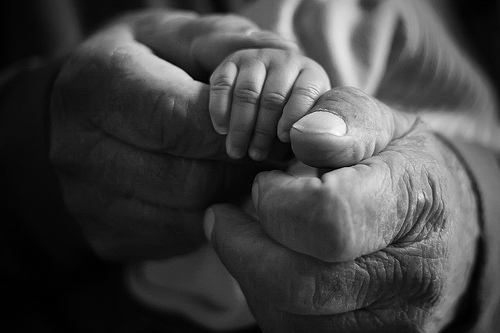
    What do we leave behind?oldhandsholdingyoung

    I was saddened to learn of Glenn Frey’s passing. His music and artistry were amazing gifts he shared with us all as a solo artist and through the Eagles. I watched the documentary and thought we will never see him perform again or share new poetry with us. But his legacy of music will endure. I could not help but turn inward and wonder what is my legacy?

    This accounting is often referred to as Cheshbon HaNefesh in the Jewish Tradition. But it is more than looking back and making a list; the Cheshbon is more than a list, it is an assessment by us of ourselves. Such a perspective is much more than a posthumous accounting or someone else’s reflection; it means that we can be proactive managing this list and our lives for whatever time we have. We are active, not passive in the process of this accounting. Since it “ain’t over ‘till it’s over,” as the American Philosopher Yogi Berra said, we could change the course of our lives if we are willing to do so.
    handsOldYoungOften we leave important conversations unspoken. The discomforts we believe these conversations will cause make us shy away from them. But then we miss an extraordinary opportunity. It is never too late to tell those we love that indeed we do love them, until they are gone. We can talk about our lives, the triumphs and the tribulations, the things in which we had success and the times when we missed the mark. We can give them an understanding of their meaning to us; for too often those thoughts are not expressed. By sharing our aspirations and our vulnerabilities we can elevate our relationships by bringing those we care about close to us.

    Not all of us possess the gifts of a Glenn Frey and not all of us will have the ability or opportunity to change the whole world. But we do have the capacity to change our piece of the world. We can decide what kind of relationships we create or nurture with those we care about. We choose to add our voice and our support to the people and causes we care about. Through these we change our piece of the world and our legacy is written by us.
  • Shabbat Shalom


    Many of us have embraced the prophetic call of Dr. King to build a better shared society.  In honor of Dr. King’s birthday, we join to remember and honor both him and his vision, in prayer and in service.

    Enjoy this wonderful song performed by the Maccabeats and Naturally 7.

    Shabbat Shalom

  • Remembering my Father

    Remembering my Father

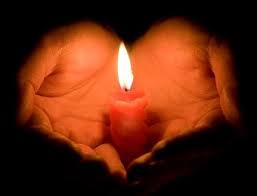
    Memorial candle copyThis week marks the fifth anniversary of my father’s passing, z”l. I lit a candle and will say Kaddish commemorating his Yarhzeit. Around the same time dad died, another person, Debbie Friedman also passed away. She was indeed a special individual, an iconic figure in the Reform Movement, and her passing is marked by several public acknowledgements this week.

    I recall returning to my studies at the seminary after Shiva and hearing the buzz about the ceremonies planned to mark Debbie’s passing and feeling the sense of loss that pervaded the institution. Her contribution to Judaism was great and many of us, including me, will miss her. I could not help but notice the disparity in the treatment of the two. Although my dad touched fewer lives, he did touch lives and many cared about him. And what’s more of course, he was my dad and the loss is profound for me.

     As a Reform Jew I usually stand on behalf of those for whom there is no one left to say Kaddish as a respectful reminder of the victims of persecutions throughout our history. I also stand with those who mourn. This week I will also do it as a son remembering his father. It is acknowledging this personal loss that makes Kaddish Yatom, the orphan’s Kaddish.

     Our losses whether personal or communal can be intimate, closely felt. Many people may figure prominently in our lives, deeply affecting us even if we never met them. My father and Debbie both died that week five years ago. The loss of one does not impact the loss of the other. Each person who touches us can be a blessing and an inspiration for us to remember, their best motivating us to live our lives better and more fully. Zichronam Livrachah, May their memories be a blessing.

  • Shabbat Shalom

    As we enter Shabbat, I wanted to share this beautiful soulful rendition of Hashkiveinu, the prayer of our evening service asking for Divine protection and peace.

    Shabbat Shalom

  • Am I my Brother’s Keeper?-  Israel and Me

    Am I my Brother’s Keeper?- Israel and Me

    The haunting question from Cain’s lips in response to God was the rhetorical non-answer when asked of Abel’s whereabouts. Cain and God both knew what had become of Abel and Cain’s response has been read as a guilt-ridden deflection from the true answer: Yes.connection

     As a Diaspora Jew, so too, I am responsible to my Israeli brothers and sisters. The understanding of our relationship as family contextualizes the obligation. I cannot force my sibling to act, but I am certainly invested in her welfare. I do not walk in my sibling’s shoes, but if I see him appear to go astray I am duty-bound to voice my concern. Whether my perspective is accepted or rejected, I am compelled to share my thoughts because I care. This is harder to do however when I feel my voice is rebuffed or my views disrespected, when it feels as though my sibling acts with the arrogance of the prodigal son.   But my love for my brothers and sisters obliges me to speak nonetheless.

    PeoplewithJoinedRaisedJoinedHands It is in that tension that we find ourselves now. Chemi Shalev, the eminent Israeli journalist, is right to express his concern that we in the United States are not speaking up forcefully enough. But an Israel Prime Minister that foments the political divide among American Jews and a Chief Rabbinate that expressly refuses to acknowledge my practice of Judaism are but two ways my voice is repressed.   And yet I must speak.

     I care deeply about Israel, both the state and the aspirations it represents. Israel is a homeland to my people. It is deeply rooted in my narrative creating profound meaning. Israel is also a refuge for my people from a hostile world. Equally important, Israel is also a place where Jewish values might live and thrive. These values include belief in the sanctity of human life and a system of laws that guide just behavior. These principles guide a place where they can be lived and realized, no longer the province of a powerless people. Rather than a nation like all other nations, Israel is a light unto the Nations.Screen Shot 2016-01-07 at 1.04.44 PM

     Israel can be a beacon of hope, striving to better herself through the proper treatment of her citizens and the protection of the weak. She is to be a nation of laws equally applied, a country striving towards the highest moral standards internally and externally in her treatment of friend and foe alike. Sometimes Israel falls short. It is our responsibility to lovingly speak out when she does, based on our deep caring for Israel and what Israel means to us and to the world. And we must continue to speak up undeterred by those who might find us an annoyance or at odds with their particular worldview.

     I am my brother’s keeper.

  • One Small Significant Step Forward against Gun Violence

    One Small Significant Step Forward against Gun Violence

    hugRabbi Tarfon taught: “It is not your responsibility to finish the work [of perfecting the world], but you are not free to desist from it either” (Pirkei Avot 2:16).

     The Executive Orders signed by President Obama is such an example of Rabbi Tarfon’s teaching. We cannot eliminate all acts of gun violence, but we must do what we can to advance the cause. Regardless of one’s stance on the Second Amendment or the effectiveness of these Executive Orders, we cannot turn a blind eye to the horrifying levels of violence and death that occur in our country. These limited executive actions seek to better enforce existing laws. The idea that criminals and emotionally disturbed people will find it harder to gain access to weapons of death is a good one.

     I wish we could do more, but that is not a reason to do nothing. Progress comes in small steps, an incremental march toward what should be from what is. We measure a great civilization not by its great monuments but by its ability to protect the weak within its society. The victims of mass shootings, the victims of urban gun violence, the victims of suicide are all testimony to how much more we have to do to protect ourselves and lift everyone to a better place.

     “A journey of a thousand miles begins with a single step,” says the Chinese philosopher Laozi (Tao Te Ching). We have a long way to go before the work is complete, but at least we are started on the path.

  • Live Long and Propser

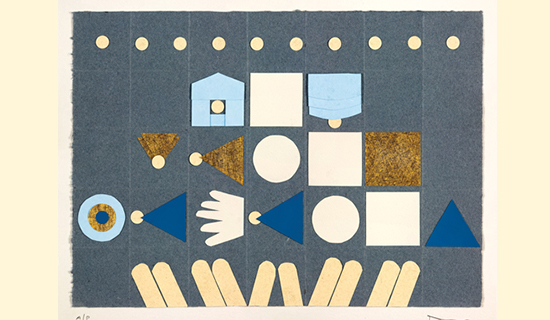
    "The Priestly Blessing of Peace" by Israeli artist David Moss.
    “The Priestly Blessing of Peace” by Israeli artist David Moss.

    As the year 2015 draws to a close, my wish to you:

    May the Eternal One bless you and keep you

    May the Divine’s face shine upon you and be gracious to you

    May you encounter the Divine Presence all along your way and may it bring you peace and wholeness.

  • Shabbat Shalom and Merry Christmas

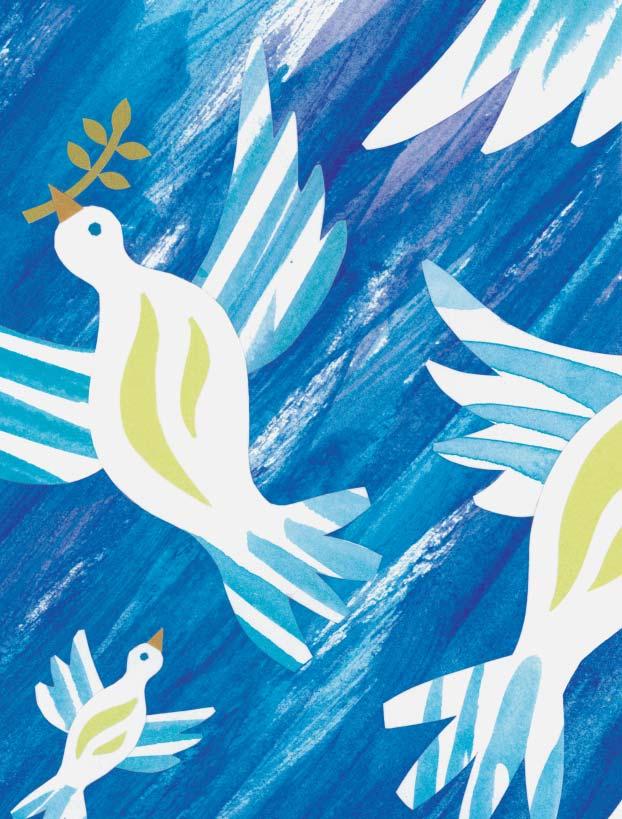
    dovesThis year Shabbat and Christmas coincide.

     Although our theologies are different, Jews and Christians share values of the Divine; this is a time of peace, love and hope, a taste of the world to come. This year, as we have celebrated the 50th anniversary of Nostra Aetate, we continue to build bridges of learning and understanding. We are finding opportunities in what we share even as we celebrate our differences. As it was for the visiting Angels for Shabbat in the song Shalom Aleichem, so too we pray, “May this always be so.”Shabbat Angels


    Wishing our Christian brothers and sisters  a very Merry Christmas and to my fellow Jews a Shabbat of peace and wholeness.

  • Good Shabbos

    A wonderful upbeat tune from Six13 to welcome Shabbat.

    Wishing all a Shabbat of Peace and rest~

  • Appropriate or Participate?

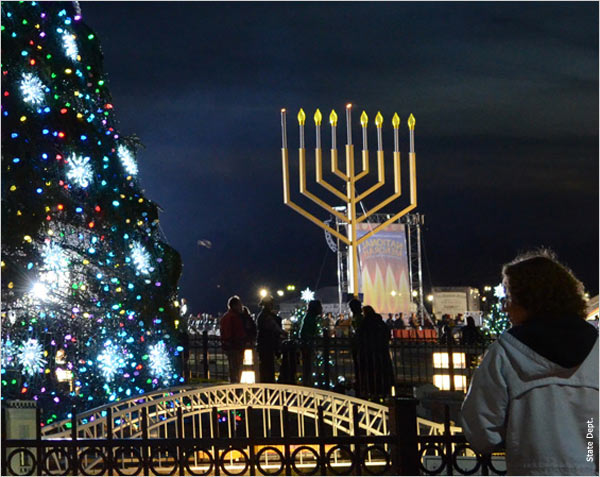
    NatlMenorahTree Historically, Jews have been actively influenced by the cultures in which we have lived. We learn and borrow from the cultures we live along side. Often our holidays are influenced by these civilizations. Today in the United States we also have the opportunity to take part in national celebrations as full-fledged Americans. How do we, as modern American Jews, engage in rituals that bind Americans together? How do we participate without risking our identity? We have done it with Thanksgiving, but can we do it with Christmas?

     There are now effectively two Christmases in the United States. There is Traditional Christmas and there is American Christmas. Traditional Christmas is the religious celebration of the birth of Christ. It is an event with deep meaning for those of the Christian faith. The themes of Divine Love, Peace on Earth and Goodwill are universal values at the core of this deeply religious and holy holiday.

     Traditional Christmas is properly the purview of Christians. We cannot presume to enter that space, only respectfully watch from the outside. However, secular American Christmas has become a quintessentially American holiday. It has been reframed and modified into an earthly and commercial season that traditionally started with Santa arriving in front of Macy’s during the Macy’s Thanksgiving Day Parade and continuing with other markers including the major retail events known as Black Friday and Cyber Monday.

     American Christmas is a secular event that builds on the values of Traditional Christmas but has been reimagined through a secular and highly commercialized lens. Stripped of its religious elements, American Christmas embraces the joy and other positive emotions of the holiday. Christmas Trees, festive lights and decorations, Rockefeller Center, the windows of Lord & Taylor, Rudolf, Santa Claus, Burl Ives, Irving Berlin, Christmas Songs of all kinds. The list goes on and on.

     American Christmas is a time for good cheer, holiday parties, gift giving, family gathering, tree decorating. It has greatly influenced and elevated our celebration of Chanukah. A message of goodwill towards all, peace and love still underlies the season. The promotion of these universal values is something we might actively embrace. Interestingly, we already do it from the other side.

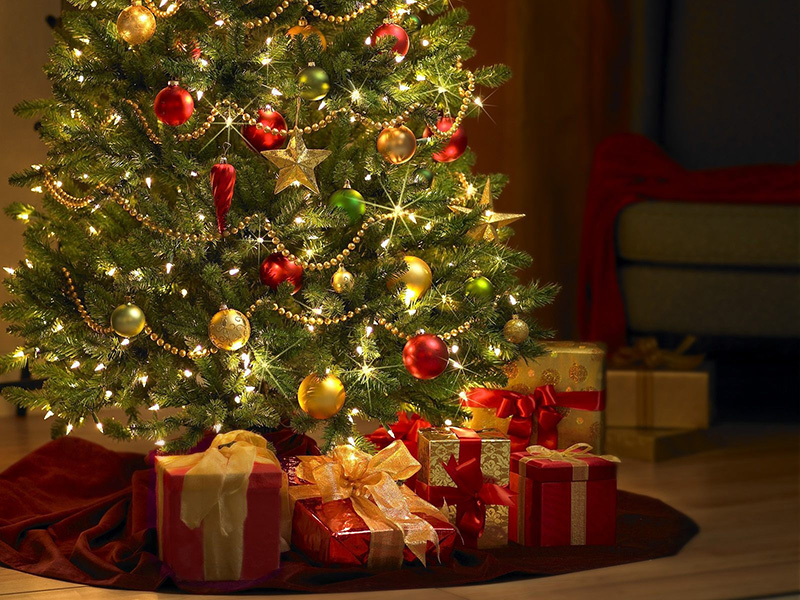
     Chanukah has become one of the most popular celebrated Jewish holidays. This is in response to the overwhelming presence of Christmas but also because we have actively promoted Chanukah as part of the American landscape. There is hardly a public square that does not contain a large menorah. Chabad is ubiquitous, lighting the Chanukiah across America from the Washington Mall to the Suburban Square Shopping Center on the Main Line in Philadelphia. Dreidels and Latkes have become part of the American consciousness. Chanukah is promoted as a proclamation of Judaism as a public good, espousing universal values for all to embrace. As we have given the gift of Chanukah to America, can we accept the gift of American Christmas?GiftsunderTree

     We claim to be a nation that shuns the boundaries that separate us. Our millennial generation has embraced that message. And they have an important point, for we can maintain our identity while sharing with others. Opportunities to bring us together as a human family are too few and deeply needed. We often find ourselves separated from others by fears and prejudices that could and should be set aside. Sharing the universal messages of American Christmas with our fellow citizens might be an opportunity to build bridges that deepen our relationships.  For our sake let’s celebrate and embrace the holiday season.

     Happy Holidays, Chag Sameach and Merry Christmas!