Korach’s Question Is Still Ours-Who gave you the right?

“Rav lachem — you have gone too far. The entire congregation is holy, every one of them, and God is in their midst. So why do you raise yourselves above God’s assembly?” (Num. 16:3). It sounds almost democratic. Everyone is holy, and power should be distributed. Who appointed you?

The word Korach uses for “raise yourselves” is hitnassu, from the root nasa, meaning “to lift” or “to carry.” This is no accident. Throughout the Book of Numbers, nasa is precisely what leaders are called to do for others. The census begins seu et rosh, “lift the heads” of the Israelites (Num. 1:2). In the Torah’s own grammar, leadership is the elevation of people. Korach takes that same word and turns it reflexive: you have been lifting yourselves. What began as a vocation becomes, in his telling, a vanity.

He has a point. Jacob Milgrom, in his landmark JPS Torah Commentary on Numbers (1990), notes that Korach’s protest reflects a genuine theological tension: the democratization of holiness at Sinai (“a kingdom of priests,” Ex. 19:6) sits uneasily alongside the hierarchical priestly structure that follows. Rashi, commenting on the opening verse, is more direct: his eyes misled him (Rashi on Num. 16:7). Korach understands the letter of the law. His error is not theological ignorance. It is envy dressed as principle. He deploys a genuine grievance to serve personal ambition, thereby corroding the very community whose holiness he claims to champion.

This is where Korach becomes unsettlingly contemporary.

Robert Putnam’s Bowling Alone (2000) documented the collapse of social capital, the networks of trust, reciprocity, and civic engagement that hold communities together. Yuval Levin’s A Time to Build (2020) identified the specific pathology: our institutions have stopped forming people and have become platforms for individual performance. Leaders no longer serve the institution; they use it. The congregation becomes an audience. The office becomes a stage.

Korach doesn’t want to serve the assembly. He wants the assembly to confirm him.

A moment in the story is often overlooked. When Moses summons Datan and Aviram to speak, they refuse to come: lo na’aleh, “we will not come up” (Num. 16:12). The very men accusing Moses of inappropriate elevation refuse to engage. Their grievance has become more important to them than the community they claim to represent. This is how populism curdles: the aggrieved insist on the legitimacy of their anger while refusing the relational work that legitimate challenge requires.

What does legitimate challenge look like? Moses, for all his flaws, shows us something: he falls on his face (Num. 16:4). Not in capitulation, but in recognition of the stakes. He doesn’t reach for power. He keeps asking whether there is another way.

The erosion of trust in our moment is not simply the result of bad actors. It is the result of a culture that has learned to reward Korach’s move: mobilize grievance, claim to speak for everyone, and leverage that claim for personal advancement. It feels like democratic accountability, but it functions like its opposite.

The text poses a genuine question to us. Holding leaders accountable is an obligation. But how do we do it without Korach’s self-serving use of righteous language? How do we distinguish the prophet from the demagogue when both speak the language of liberation?

The Torah does not resolve this. It leaves us with it, deliberately.

Discernment is itself a form of holiness. And it has to be cultivated. It doesn’t arrive by earthquake or fire.

It comes, as it usually does, in relationship.


Key Citations

Rashi on Numbers 16:1 (s.v. va-yikach Korach).

Milgrom, Jacob. Numbers: The JPS Torah Commentary. Philadelphia: Jewish Publication Society, 1990.

Putnam, Robert D. Bowling Alone: The Collapse and Revival of American Community. New York: Simon & Schuster, 2000.

Levin, Yuval. A Time to Build: From Family and Community to Congress and the Campus. New York: Basic Books, 2020.
Acharei Mot- How do we help people move forward?

Acharei Mot

 God’s Miracle is not in the thunder and lightning but in people sheltering others from the storm. ~The Radmal

Our recent Hineini Mission to help Ukrainian refugees in Poland gave me a new perspective on Parshah Acharei Mot, teaching me how to help people move forward in the wake of catastrophe. Acharei Mot opens with God telling Moses to instruct his brother. Moses serves as the compassionate human connection so that Aaron can serve as the High Priest of the community, the children of Israel. For those of us watching the Ukraine tragedy unfold, we play the part of Moses, and the refugees are in the role of Aaron. We are like the loving brother who carries the message of moving forward and offering caring support. Helping the mothers and the children is our role.

The Parshah opens with God directing Moses, after the death of Aaron’s two sons, to tell Aaron to abide by the detailed instructions to follow. Moses shares what  Aaron must do to fulfill his responsibilities as the High Priest. Many interpret this as a way to get Aaron’s full attention lest he suffers the same fate as his sons. But there is more here than that. Moses brings humanity to the otherwise stark directives and comforts his brother by serving as the carrier of the message. As a result, Aaron can begin to focus on how to move forward with his life so brutally and irreversibly changed by the death of his sons.

Aaron’s loss is a harrowing event. We witness similar excruciating anguish in the war on Ukraine.   The brutality of the country’s destruction; the torture and murder of its civilians, including the elderly, babies, and children; the depravity of routinized rape and torture practiced by the Russian invaders are staggering. In our time in Krakow and at the border, we witnessed women and children coming to Poland to escape the horrors of this war, seeking asylum and leaving everything behind, including their men left to defend the homeland,  knowing they too might be slaughtered. Such is the Ukrainian reality.   These women and children refugees are like Aaron.

Aaron receives specific instructions on doing his job as the High Priest. These continued instructions coming after the deaths of Nadav and Abihu tell Aaron, and us too, that life must continue even after a catastrophe. Responsibilities to the children do not cease because of personal loss, even the most challenging kind. Our work and our lives remain in front of us. We must move forward. But it is almost impossible to do that alone.

Moving forward is complicated and often overwhelming. Moreover, the loss brings a sense of isolation. Aloneness makes us feel cut off from the community, from life itself. But Moses’ presence informs Aaron that he is not alone. And the instructions Moses carries help Aaron move forward.

Moses informs Aaron that he may enter the Shrine only with a specific offering, and he must appear dressed appropriately. In other words, moving forward is deliberate, done with forethought and intention. It requires structure and resolution and others to help you through the fog of loss.

We support our brothers and sisters of Ukraine. In our rabbinic mission to help the Ukrainians, we brought needed supplies to heal the physical needs and our presence as rabbis to heal the emotional and spiritual needs. We did this sacred work with the support of our communities and congregations. But the task is barely begun. The people of Ukraine continue to need everything- food, shelter, clothing, and a place to make their forever changed lives. After death, life must continue, but only with the help of us, their loving brothers and sisters, will the victims find a path forward. May this be our continued mission.


God’s Miracle is not in the thunder and lightning but in people sheltering others from the storm. ~The Radmal

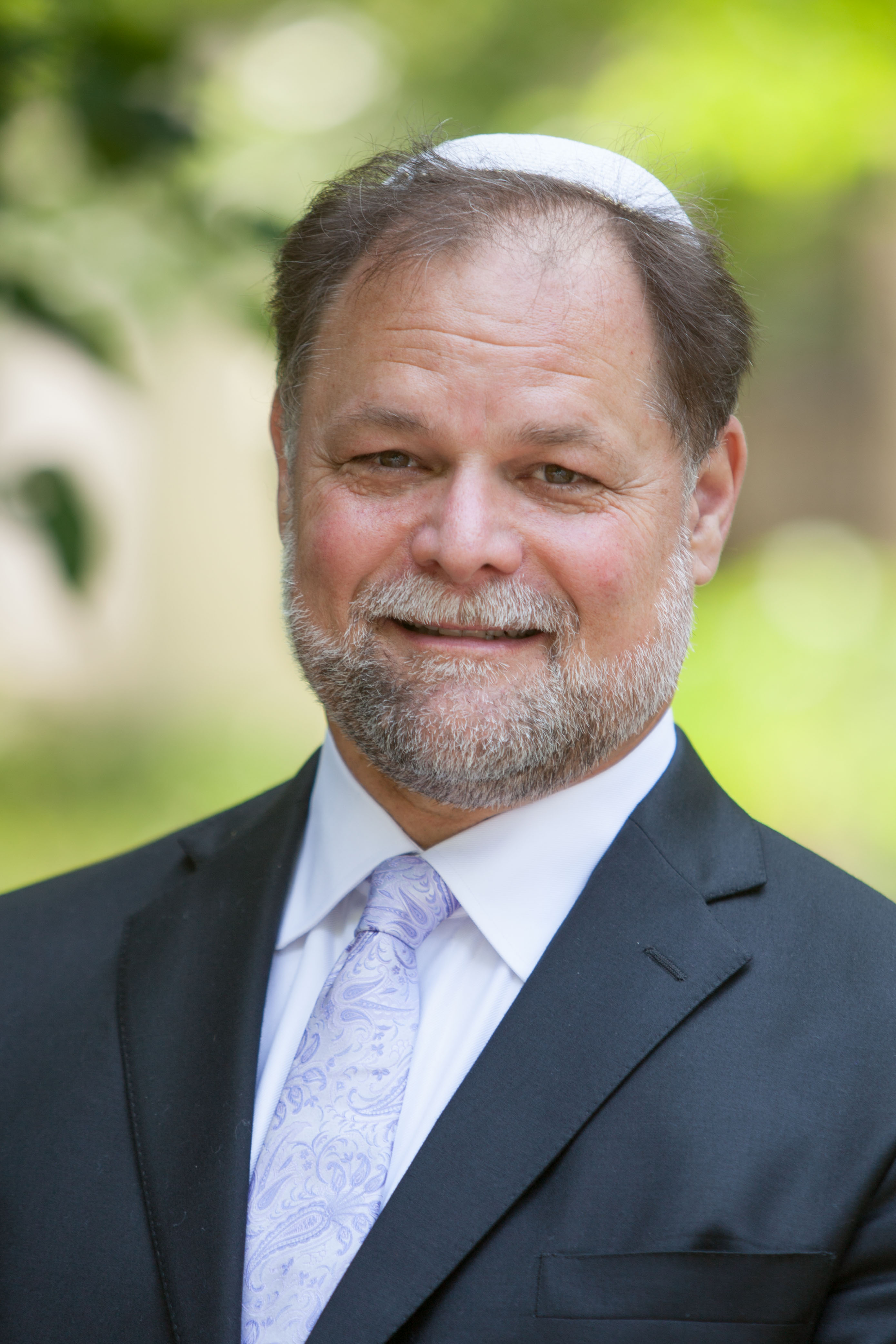
Rabbi David Levin focuses on bringing Jewish wisdom to seekers of meaning. He is the Founder and Director of Jewish Relationships Initiative, a 501(c)3 focused on human relationships, end-of-life challenges, and outreach. Rabbi Levin’s teachings include “The Ethical Legacy Will, Jewish Wisdom Reimagined“- a new approach to the Ethical Will, “Gleanings of a Wandering Jew,” the lessons of our history and personal travel, Kavod v’Nichum, Understanding Jewish end-of-life rituals,” exploring the ‘why’ underlying our practice,” Resilience” a mash-up of Jewish Wisdom and Disaster Spiritual Care training.

Rabbi Levin is the co-editor of the acclaimed book Jewish End-of-Life Care in a Virtual Age: Our Traditions Reimagined.