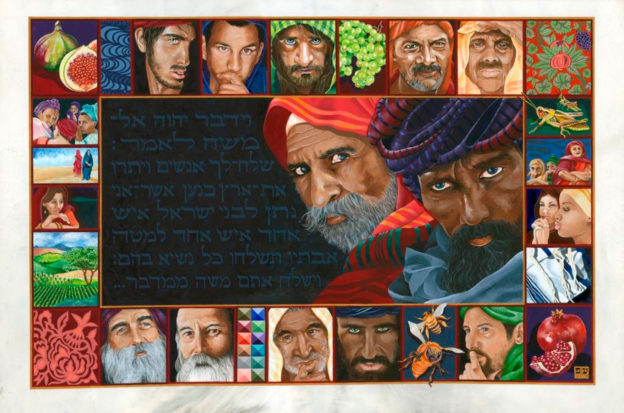
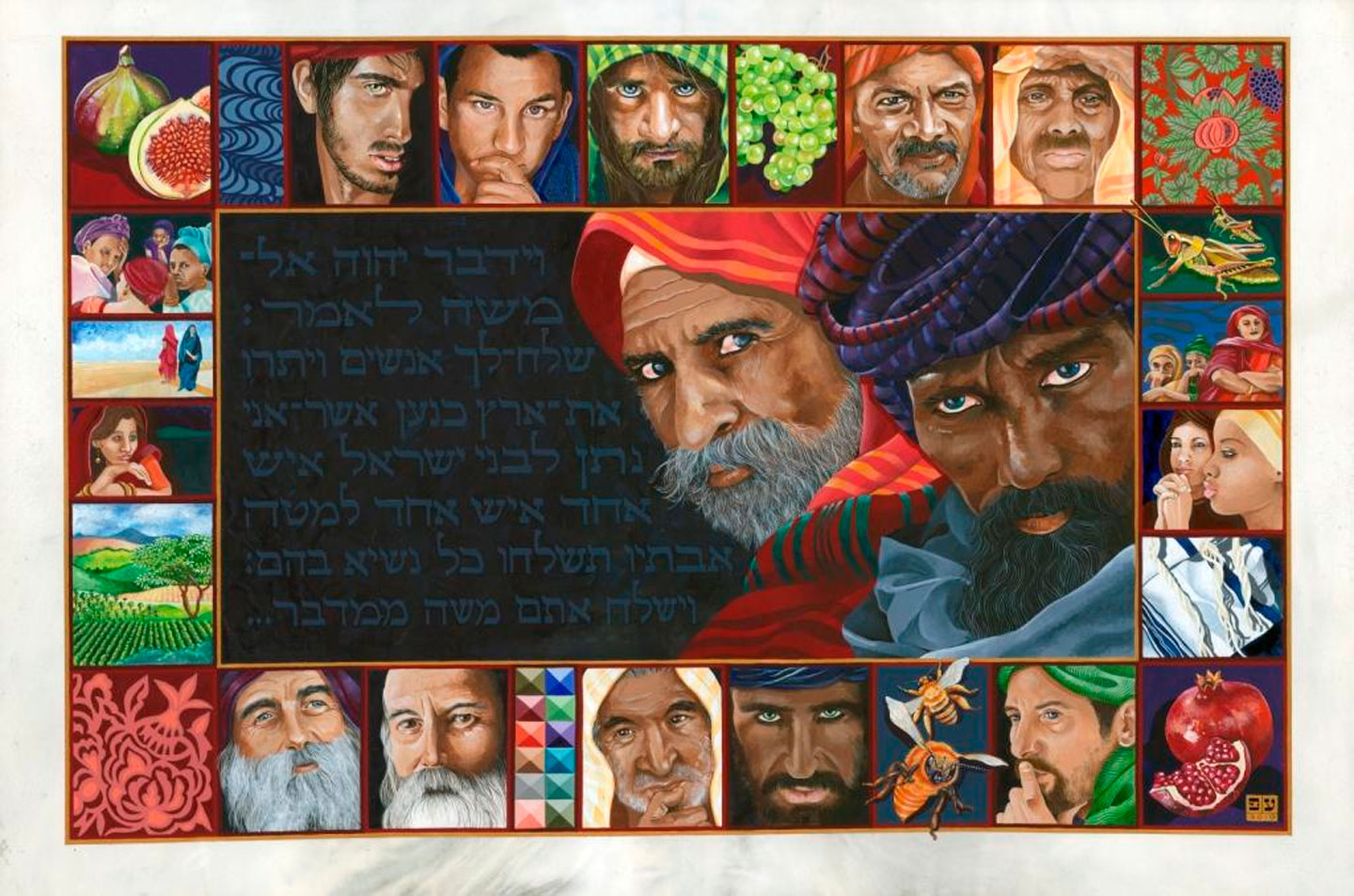
The ten spies weren’t lying. That’s what makes Parashat Shelach so difficult to sit with.
They went. They looked. They came back and reported exactly what they saw: a land flowing with milk and honey, yes, and also giants and fortified cities. And as we so often feel, they add: we felt like grasshoppers in our own eyes, and so were we in theirs. Numbers 13:33.
This is not dishonesty. It is about perception.
It is also a deeply human thing. The spies were not weak people. They were the chosen leaders of their tribes, sent precisely because they were capable. And yet standing before the walls of Canaan, something in them collapsed inward. The text doesn’t tell us why. It doesn’t need to. We know why. We have felt it ourselves. Fear has a way of shrinking our self-image before we have had a chance to act. We look at what is in front of us and conclude, before taking the first step, that we are not enough. The journey’s end is determined. Before they ever walk into Canaan.
The word for spies in the Torah is meraglim, from the root regel, foot. They were sent to walk the land. To touch it. To feel its soil. But what the ten spies brought back wasn’t the earth. It was their terror, projected onto the landscape. They looked at the land through the lens of their own smallness and concluded that the smallness was the land’s fault.
This is not a report on Canaan. It is a teaching about how fear shapes what we are capable of seeing.
Caleb and Joshua walked the same hills and tasted the same grapes. They came back with a different report, not because they were braver or stronger, or had seen something the others had not. They came back differently because they remembered differently. They carried with them the sea splitting, the manna falling, the cloud by day and the fire by night. They understood that they had not arrived at this border by their own strength alone. That memory, of miracle, of deliverance, of promise fulfilled along the way, gave them a self-image the ten could not sustain. They looked at what stood before them and saw not the size of the obstacle but the fullness of what they were capable of becoming.
Fear doesn’t lie to us about what’s in front of us. It lies to us about what we’re capable of.
B’nai Yisrael. In their fear, they condemned themselves to forty more years of wandering. Not as divine punishment but as the consequence of having decided before the battle was joined that they had already lost. You cannot enter a land you have already surrendered in your imagination.
We have all stood at the edge of a promise, one made to us, or one we made. And the voice insisting the battle is already lost before it has begun is most often our own.
We each carry more proof of what we have survived than fear would have us remember.
The giants are real. That was never the question.
The question is whether you are willing to believe in yourself enough to walk through your fear anyway.